
Short Answer
In the decades after the first oil exports in 1946, Kuwaiti society was shaken by forces that neither the ruling al-Sabah family nor the merchant elite had fully anticipated. The old economy of pearling, boat-building, and trade gave way to a new world of oil wealth and rapid urban development. Amid this upheaval, women emerged as both symbols and agents of change. By the 1990s, after the trauma of the Gulf War, women’s demands for political participation had become a central national debate, one that pitted reformers against defenders of a patriarchal order. This article reconstructs that journey, using the accounts of scholars who interviewed activists and witnessed the struggles of the era, to show what it meant to be a woman in Kuwait as the country modernized.
What Happened?
Kuwait’s modernization began with the initiation of commercial oil exports in 1946, a turning point that transformed the economy and society. Before oil, the mainstays of the economy were trading, fishing, boat-building, and pearling. Society was dominated by the ruling al-Sabah family and a few important merchant families, with a tribalist ideology that established a status hierarchy among clans and a well-entrenched system of paternal and conjugal patriarchy that set age and gender hierarchies. While most Kuwaitis accepted these hierarchies, the relatively cosmopolitan lifestyle of the merchant elite encouraged opposition to oppressive domination by the ruling family, and a few merchants even educated their daughters.
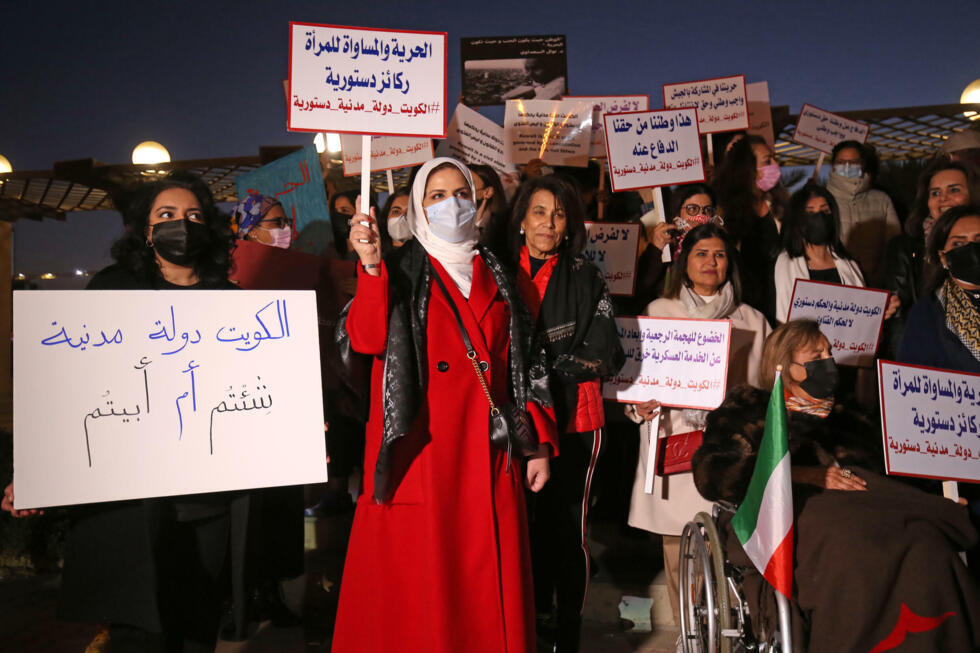
The changes accelerated after the Gulf War of 1990–1991. The war and the Iraqi occupation left a profound mark on Kuwaiti society, and it was in this period that the women’s rights movement grew and declined. Scholars studying the movement have identified structural, cultural, and dynamic elements operating in the campaign for women’s rights. The movement focused on the right to vote and stand for office, which was denied to women even as the country moved toward a more democratic parliamentary system. The campaign for women’s suffrage became a key issue in the 1990s, with activists organizing, lobbying, and sometimes facing backlash.
- 1946 – Commercial oil exports begin, initiating rapid modernization.
- 1990–1991 – Gulf War and Iraqi occupation; women’s activism intensifies.
- 1990s – Women’s rights movement grows and then declines; the struggle for suffrage becomes prominent.
How It Was Seen at the Time
Contemporaries in the 1990s understood the women’s movement as part of a broader political development. Many observers saw the struggle for women’s rights as deeply embedded in the larger effort to build a democratic state. In a 1995 study, scholars described the pre-oil society as one where a “tribalist ideology established and supported a status hierarchy among Kuwaiti clans,” and where “paternal and conjugal patriarchy” defined gender roles. These structures were seen as natural and God-given by many, but also as an obstacle to modernization by others.
“Our findings underscore the embeddedness of the struggle for women’s rights in political development generally.” – Tétreault, Meyer, and Rizzo, 2009.
Activists framed their demands not as a break with tradition but as an extension of Kuwait’s democratic promise. They pointed to the paradox that Kuwait had a parliament and a constitution, yet women could not vote. The mood was one of cautious hope and frustration. As one scholar noted, the movement faced “paradoxes of democratic progress” – the same structures that allowed some political openness also restricted women’s participation.
Historical Snapshot
| Aspect | Detail |
|---|---|
| Date | 1946–1990s |
| Place | Kuwait |
| People | Kuwaiti women, merchant elite, al-Sabah family, women’s rights activists |
| What Happened | Oil wealth transformed society; women’s roles evolved, and the movement for political rights grew after the Gulf War |
| Why It Mattered | The struggle over women’s rights became a central test of Kuwait’s democratic development and modernization |
What People Knew at the Time
| What People Knew Then | What We Know Now |
|---|---|
| Women’s role was largely confined to the private sphere, but the merchant elite had begun to educate daughters. | Women’s education expanded rapidly after oil wealth, but political rights lagged. |
| The Gulf War was a catalyst for women’s activism, but the movement declined in the late 1990s. | The struggle continued into the 2000s, with women finally gaining the right to vote in 2005. |
| Contemporaries saw the issue as a struggle between tradition and modernity. | Historians now see it as a complex interplay of class, tribe, and state-building. |
Different Perspectives
Women Activists
Activists saw the fight for suffrage as a natural extension of Kuwait’s democratic constitution. They organized rallies, wrote open letters, and lobbied the parliament. Their perspective was that women had contributed to the nation’s development and deserved equal citizenship.
Conservative and Tribal Leaders
Many tribal and religious leaders argued that women’s participation in politics violated Islamic principles and traditional gender roles. They feared that giving women political rights would destabilize the family and social order. This opposition was a major obstacle in the 1990s.
The Ruling Family
The al-Sabah family often took a cautious stance, sometimes supporting women’s rights to gain legitimacy, but also accommodating conservative opposition. Their position reflected the delicate balance between modernization and tradition.
What People Feared
Conservative Kuwaitis feared that women’s political participation would lead to the collapse of the traditional patriarchal family. They worried that if women gained voting rights, they would also demand other social changes, such as the ability to travel or work without male guardianship. Some also feared that women’s rights would be a foreign import, a Western idea that would undermine Kuwaiti identity. On the other hand, activists feared that without political rights, women would remain second-class citizens and the country would never fully modernize. These fears were rational in the sense that they reflected genuine divisions, but they also were often exaggerated.
What People Expected Would Happen Next
In the mid-1990s, many expected that women’s suffrage would be achieved quickly. The Gulf War had shown women’s contributions, and the government seemed open to reform. However, the movement declined, and by the end of the decade, women still could not vote. Some observers predicted that the issue would remain a long-term struggle. As it turned out, women did not gain the right to vote until 2005, a decade later than many activists had hoped. The expectation of rapid change was wrong, but the eventual outcome confirmed the activists’ determination.
Timeline
- 1946 – Oil exports begin, transforming the economy.
- 1960s–1970s – Women’s education expands; some women enter the workforce.
- 1990–1991 – Gulf War; women’s roles in the resistance and support efforts.
- 1992 – First parliamentary elections after the war; women are not allowed to vote.
- 1993–1999 – The women’s rights movement grows and then declines; several attempts to pass suffrage legislation fail.
- 2005 – Kuwaiti women gain the right to vote and run for parliament.
How Historians See It Today
Modern scholars view the women’s rights movement in Kuwait as a complex interplay of structural, cultural, and dynamic forces. They argue that the struggle for women’s rights was not separate from the broader political development of Kuwait, but rather was embedded within it. The 2009 study by Tétreault, Meyer, and Rizzo highlights that the movement grew and declined during the 1990s, and that its successes and failures were linked to the changing political opportunities. Historians today also stress that the role of women in modernization was not simply a matter of “tradition versus modernity,” but rather a negotiation between class, tribe, and state. The eventual success of the movement in 2005 is seen as a result of both long-term activism and the shifting political context after the Iraq War.
Common Misconceptions
Women in Kuwait were entirely excluded from public life until the 2000s.
Some merchant elite women received education, and women participated in economic and social activities, but they were excluded from formal politics.
The Gulf War gave women the right to vote.
The war increased activism, but the right was not granted until 2005, after a long struggle.
The women’s movement was a Western import.
The movement drew on Islamic and Kuwaiti traditions of justice and democracy, and its leaders were Kuwaiti women.
FAQ
When did Kuwaiti women first get the right to vote?
Kuwaiti women gained the right to vote and run for parliament in 2005, after a long struggle that intensified in the 1990s. The first time they were able to vote in parliamentary elections was in 2006.
How did the Gulf War affect the women's rights movement in Kuwait?
The Gulf War (1990-1991) was a catalyst for women's activism, as women took on new roles during the Iraqi occupation and the liberation. However, the movement's growth was not immediate; it grew and declined during the 1990s, and the vote was not granted until a decade later.
















Leave a Reply