
Short Answer
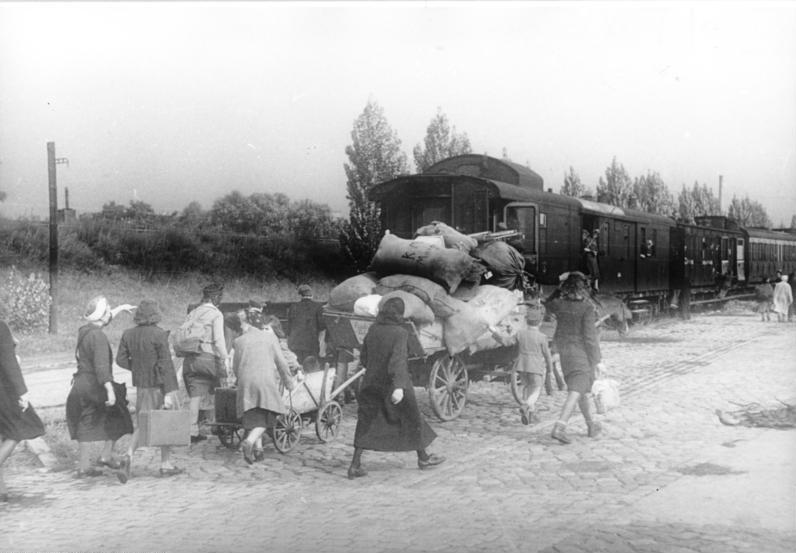
In the winter of 1944/45, the German population of the eastern provinces began to flee in the face of the Red Army’s advance. The roads of East Prussia, Pomerania, and Silesia were choked with columns of refugees—women, children, the elderly, and the wounded—carrying their belongings on their backs, in prams, and on wheelbarrows. The war was ending, but for millions of Germans the ordeal was only beginning. By the summer of 1945, the Allies were redrawing the map of Europe, and the Potsdam Conference would approve the “orderly transfer” of German populations from areas east of the Oder and Neisse Rivers. The result was one of the greatest mass movements of Germans in history: at least 10 million people were uprooted from their homes. This article reconstructs the crisis as it was witnessed and recorded at the time, drawing on contemporary reports, official reports, and eyewitness accounts to understand the scale, the suffering, and the way contemporaries made sense of this upheaval.
What Happened?
The displacement of Germans from Eastern Europe unfolded in two distinct phases. The first was a desperate flight from the advancing Red Army in the winter of 1944–45. As the Soviet forces pushed westward, the population of Germany’s eastern provinces—East Prussia, Pomerania, Silesia, and Brandenburg—fled in massive numbers, often with little more than what they could carry. The Deutsches Historisches Museum records that “the population of Germany’s eastern provinces fled in the face of the Red Army’s advance in the winter of 1944/45.”
The second phase was a series of organized expulsions after the war ended. In June and July of 1945, the first wave of expulsions began as parts of East Prussia, Brandenburg, Silesia, and Pomerania were placed under Polish administrative control. Many Germans were forced to leave their cities and villages. At the Potsdam Conference (July–August 1945), the Allies agreed on an “orderly transfer of German populations” from the areas east of the Oder and Neisse Rivers. Poland implemented this resolution over the following years, and the Deutsches Historisches Museum notes that “all together, over eight million Germans were forced to leave.”
The situation in Czechoslovakia was similar. Beginning in January 1946, trains filled with Sudeten Germans—forty wagons, thirty passengers per wagon—left Czechoslovakia daily for the American Zone of occupied Germany. By the end of 1946, the Czechoslovak government had completed the “organized transfer” of almost 2 million Germans, as described in a study published in Central European History. The overall scale of the displacement was staggering: a Time magazine report from 1945 put the number at “at least 10,000,000 hungry Germans” being uprooted from East Prussia, Pomerania, Silesia, and the Sudetenland.
How It Was Seen at the Time
Contemporaries understood the crisis as a massive humanitarian disaster, but their language and interpretations varied. Time magazine’s report, published during the chaos, described “an anguished tide of humanity” and emphasized the scale of the suffering:
“At least 10,000,000 hungry Germans were being uprooted from their old homes in East Prussia, Pomerania, Silesia, Sudetenland by the new Polish, Czech and Russian owners. The wanderers choked the roads in Russian-occupied Germany. Ragged, barefoot, with children in their arms, and the shabby remains of homes stacked on perambulators, carts and wheelbarrows, they trudged westward.”
At the same time, official German authorities in the Soviet occupation zone struggled to manage the influx. A report from the Central Administration for German Resettlers (December 23, 1945) openly denounced the situation, noting that the ad-hoc reception camps and administrative offices were “unable to give proper attention to individuals who were traumatized and often ill.” The report also acknowledged that the local German population was “hostile toward these outsiders,” complicating the integration of the refugees.
Historical Snapshot
| Aspect | Detail |
|---|---|
| Date | Winter 1944/45 – 1946 |
| Place | East Prussia, Pomerania, Silesia, Brandenburg (eastern Germany); areas under Polish administration; Czechoslovakia (Sudetenland) |
| People | German civilians, ethnic Germans, Red Army, Polish and Czechoslovak authorities, Allied occupiers |
| What Happened | Flight from the Red Army followed by organized expulsions and forced transfers of German populations |
| Why It Mattered | Redrew the ethnic map of Central and Eastern Europe, displaced over 10 million people, and created a lasting refugee crisis |
Official Reports
One of the most revealing official documents is the Report by the Central Administration for German Resettlers in the Soviet Occupation Area (December 23, 1945). This report, produced by the German bureaucracy under Soviet supervision, described the chaos of the reception camps and the inadequacy of the infrastructure. It called on political parties to show more commitment to the resettlers, and it candidly admitted that the local population was unwelcoming. The report is a key primary source because it shows the internal German perspective and the challenges of absorbing millions of refugees in a destroyed country.
The Potsdam Agreement itself is another essential official document. Signed on August 2, 1945, it declared that the transfer of German populations from Poland, Czechoslovakia, and Hungary should be “orderly and humane.” Yet the agreement’s language of “orderly transfer” masked the chaotic and often brutal reality of the expulsions, as contemporary accounts make clear.
Contemporary Terminology
The language used at the time reveals a great deal about how the crisis was framed. The German term “Umsiedler” (resettler) was used by the Central Administration, a bureaucratic euphemism that downplayed the forced nature of the movement. In contrast, the term “Vertriebene” (expellee) would later become common in West Germany, but in 1945, the official language often spoke of “transfer” or “resettlement,” as in the Potsdam Agreement’s “orderly transfer of German populations.” The term “Sudetenland” referred to the German-speaking borderlands of Czechoslovakia, and “Oder-Neisse line” denoted the new border between Germany and Poland. These terms were not neutral; they carried political weight and shaped how the events were understood.
Numbers at the Time
| Figure | Source |
|---|---|
| Over 8 million Germans forced to leave from areas east of the Oder-Neisse | Deutsches Historisches Museum |
| At least 10 million Germans uprooted from East Prussia, Pomerania, Silesia, Sudetenland | Time magazine, 1945 |
| Almost 2 million Sudeten Germans transferred from Czechoslovakia by end of 1946 | Central European History article |
Aftermath
The immediate aftermath of the expulsions was a humanitarian crisis in the occupied zones of Germany. The refugees who arrived in the Soviet occupation zone were met with overcrowded camps, limited food, and a hostile local population. The Central Administration report of December 1945 captured the desperation: the ad-hoc camps were “unable to give proper attention to individuals who were traumatized and often ill.” In the western zones, the situation was also severe, as the British and American authorities initially barred the refugees from entering their zones, according to the Time report. Eventually, the refugees were integrated into both German states, but the process took years and left lasting social and political scars.
How Historians See It Today
Modern scholarship has fundamentally reinterpreted the events of 1945. While contemporary officials spoke of “orderly transfer” and “resettlement,” historians now describe the expulsion as a form of ethnic cleansing. The Central European History article, “National Mythologies and Ethnic Cleansing: The Expulsion of Czechoslovak Germans in 1945,” argues that the organized transfer of the Sudeten Germans was part of a broader project of creating ethnically homogeneous nation-states. The article also notes that the “organized transfer” was often brutal and inhumane, despite the Potsdam agreement’s language. This shift in perspective reflects a broader historiographical movement that looks critically at the role of nationalism and the forced migration of populations in the making of modern Europe.
The German refugee crisis of 1945 was a human catastrophe of immense proportions. The primary sources of the time—the frantic reports, the bureaucratic documents, the newspaper accounts—capture the confusion and suffering of millions. They also remind us of the fragility of the human lives in the face of war, nationalism, and political upheaval. The crisis shaped the demographic and political landscape of Europe for decades, and its echoes are still felt today.
FAQ
How many Germans were expelled from Eastern Europe after WWII?
According to contemporary sources, at least 10 million Germans were uprooted from East Prussia, Pomerania, Silesia, and the Sudetenland. Over 8 million were forced to leave areas placed under Polish administration, and almost 2 million Sudeten Germans were transferred from Czechoslovakia by the end of 1946.
What role did the Potsdam Conference play in the expulsion?
The Potsdam Conference (July–August 1945) formalized the 'orderly transfer' of German populations from Poland, Czechoslovakia, and Hungary. This agreement gave the expulsions a veneer of legitimacy, though the actual process was often chaotic and brutal.
















Leave a Reply