
Short Answer
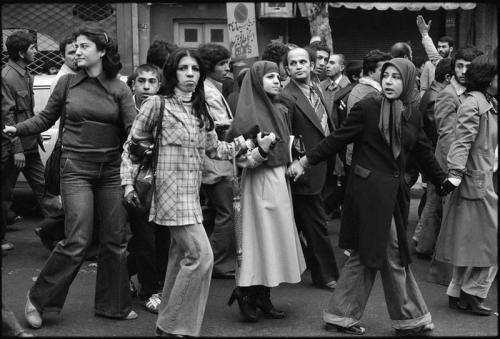
On a cool March morning in 1979, the streets of Tehran were filled with an unexpected sight: thousands of women, many still wearing the chadors they had worn during the revolution, now chanting against the very regime they had helped bring to power. Just weeks after Ayatollah Khomeini had returned from exile and the Shah had fled, the women who had marched for freedom found themselves confronting a new enemy—the mandatory veil and the erasure of their rights. American feminist Kate Millett, who had arrived to join the International Women’s Day celebrations, recorded the chants and the tears on her cassette deck, capturing a moment that would be called “the stolen revolution” by later observers. These women were not only protesting the veil; they were fighting for the soul of the revolution they had made.
What Happened?
The Iranian Revolution, which culminated in February 1979, was a broad coalition of forces—liberals, leftists, and Islamic believers—united against the Shah. Women played a prominent role in the protests, often at the front lines. However, within days of Khomeini’s return, the new regime began to signal a shift. On March 8, 1979, International Women’s Day, women gathered in Tehran to celebrate the revolution and to assert their rights. The event, intended as a celebration, turned into a week of protests as the regime’s intention to impose mandatory veiling became clear. According to the BBC Witness History program, “what happened next would disappoint many of the people who had welcomed the end of the Shah’s rule—particularly the women.” The women marched to show their fury at a revolution that seemed to be turning against them. The protests, which drew thousands of women, were met with hostility from the new authorities, who saw the veil as a religious and political symbol. The demonstrations continued for several days, with women facing intimidation and violence.
How It Was Seen at the Time
At the time, the women’s protests were seen as a betrayal by some and a necessary defense by others. The revolutionary government framed the veil as a return to Islamic values, while the women who had fought for the revolution felt deceived. In a 2019 retrospective, CBC producer Donya Ziaee interviewed three women who were present at the 1979 protests; they described their fury at the regime’s sudden reversal. Kate Millett, who was there, described the events as a “week of protests” that followed the initial celebration. The prevailing mood among the women was one of betrayal and determination. As one of the women interviewed by CBC recalled, they had not fought to replace one dictatorship with another. The BBC’s Witness History program noted that the women had been among the most enthusiastic participants in the revolution, but now they were being told to stay home. The language of the time was full of anger and accusation: the women were called “anti-revolutionaries” by the regime, while the women themselves used the language of the revolution to demand their rights.
Historical Snapshot
| Aspect | Detail |
|---|---|
| Date | March 8–14, 1979 (International Women’s Day and subsequent protests) |
| Place | Tehran, Iran |
| People | Iranian women (including participants in the revolution), Kate Millett, Ayatollah Khomeini’s regime |
| What Happened | Women gathered to celebrate International Women’s Day but turned to protest against the mandatory veil and the regime’s rollback of women’s rights. |
| Why It Mattered | It marked the first public resistance to the Islamic Republic’s gender policies and set a precedent for future women’s rights movements in Iran. |
Eyewitness Accounts
Eyewitness accounts are crucial to understanding the events. The CBC’s 2019 documentary, “The Stolen Revolution,” features three women who were in the streets of Tehran in March 1979. They recalled the shock of seeing the revolution they had supported turn against them. One woman described the moment when she realized that the new government was going to force the veil on them: “We had marched for the revolution, but now they were telling us we had to cover our heads. It was a betrayal.” Another remembered the chants: “No to the veil, no to the dictatorship!” These women were not alone. Kate Millett, who was in Iran as a representative of the international feminist movement, recorded the protests. Her tapes, later analyzed in Negar Mottahedeh’s book Whisper Tapes, capture the revolutionary soundscape—the slogans, the rhythms, the fear. Millett described the events as “a week of protests” that began as a celebration but became a struggle for women’s rights. She noted that the women were not only protesting the veil but also the broader erasure of their roles in the revolution.
Different Perspectives
The Women Protesters
For the women who had participated in the revolution, the new regime’s policies were a profound betrayal. They had fought alongside men for freedom and justice, only to be told that their place was in the home. The women’s protests were an attempt to reclaim the revolution’s promise. Their perspective is captured in the BBC’s Witness History program, which notes that they were “disappointed” and “particularly” affected by the new policies.
The Revolutionary Government
From the perspective of the new Islamic Republic, the mandatory veil was a return to Islamic values and a rejection of the Westernization imposed by the Shah. The government saw the women’s protests as a threat to the revolution’s unity. Although the government did not directly address the protesters in the sources we have, the Cambridge journal article by Adele K. Ferdows notes that “defining the role of women in Islamic society” was a central issue, and that women who had participated in the revolution now found themselves in a “peculiarly difficult position” relative to the state. The regime’s actions—such as the official requirement of the veil—were a clear statement of its priorities.
Kate Millett
Kate Millett, an American feminist, arrived in Iran expecting to celebrate the revolution’s women. She was a witness to the protests and recorded them. Her perspective was that of an outside observer, but one deeply invested in the cause. She saw the women’s struggle as part of a global fight for women’s rights. Her tapes, later analyzed by Mottahedeh, reveal that she did not fully understand the nuances of Iranian culture, but she captured the voices and the atmosphere of the protests. Her presence also highlighted the international attention the protests received.
What People Feared
The women who protested feared the loss of their hard-won freedoms. They had gained the right to vote and work under the Shah, and they feared that the new regime would strip away these rights. The mandatory veil was seen as a symbol of the broader subjugation. There was also a fear of violence and reprisal. The regime had already shown its willingness to use force against its opponents. The women’s protests were risky; they faced the possibility of arrest, beatings, or worse. The CBC documentary mentions that the protests were met with hostility, and some women were physically attacked. The fear was not unfounded, as the regime soon after implemented strict laws that limited women’s participation in public life.
Aftermath
In the immediate aftermath of the March protests, the regime continued its consolidation of power. The mandatory veil was officially implemented, and women’s rights were curtailed in many areas, including marriage, divorce, and inheritance. The protests of March 1979 were suppressed, but they left a legacy of resistance. The women who had marched did not win the immediate rights they sought, but their actions became a symbol of women’s resistance in Iran. The BBC and CBC retrospectives highlight that the women’s movement continued to evolve, with later protests in 2009 and beyond echoing the same demands. The “stolen revolution” label, used by the CBC, underscores the sense of betrayal that the women felt. The events of March 1979 are now seen as a turning point in the history of women’s rights in Iran.
How Historians See It Today
Modern historians have reinterpreted the events of March 1979 through a more nuanced lens. Negar Mottahedeh’s book Whisper Tapes: Kate Millett in Iran (Stanford University Press, 2019) uses Millett’s audio recordings to offer a new interpretive guide to revolutionary Iran. Mottahedeh argues that the women’s movement was not a simple reaction to the veil, but a complex movement with its own slogans and habits. She also suggests that Millett, as an outsider, did not fully understand the Iranian context, but her tapes provide a valuable primary source. The CBC’s 40th anniversary retrospective, “The Stolen Revolution,” reflects a historical perspective that sees the 1979 protests as a foundational moment in the ongoing struggle for women’s rights in Iran. Historians today emphasize that the women’s voices were not silenced, but that their protests were part of a long tradition of resistance that continues to this day.
In conclusion, the women who marched in Tehran in March 1979 were not simply protesting a piece of cloth; they were fighting for the very soul of the revolution they had helped to create. Their voices, captured in eyewitness accounts, Kate Millett’s tapes, and the memories of those who were there, remind us that history is not a single story. The women’s protests, though they did not achieve immediate victory, became a powerful symbol of defiance and a precursor to future movements. Their courage, as recorded in primary sources, continues to inspire and inform our understanding of the Iranian Revolution and the enduring struggle for women’s rights.
FAQ
Why did Iranian women protest after the revolution?
The women who had participated in the revolution were disappointed when the new regime, led by Ayatollah Khomeini, began to impose restrictive policies, particularly the mandatory veil. They saw this as a betrayal of the revolution's promises of freedom and equality.
What was the role of Kate Millett in the protests?
Kate Millett, an American feminist, went to Iran in March 1979 to join the International Women's Day celebrations. She recorded the protests on cassette and film, providing valuable primary source material. Her recordings were later analyzed in Negar Mottahedeh's book, 'Whisper Tapes.'
What happened to the women's protest movement after 1979?
The immediate protests were suppressed, and the mandatory veil was enforced. However, the movement laid the groundwork for future women's rights activism in Iran, which has continued in various forms, including the 2009 protests and the more recent 'Women, Life, Freedom' movement.











Leave a Reply