Short Answer
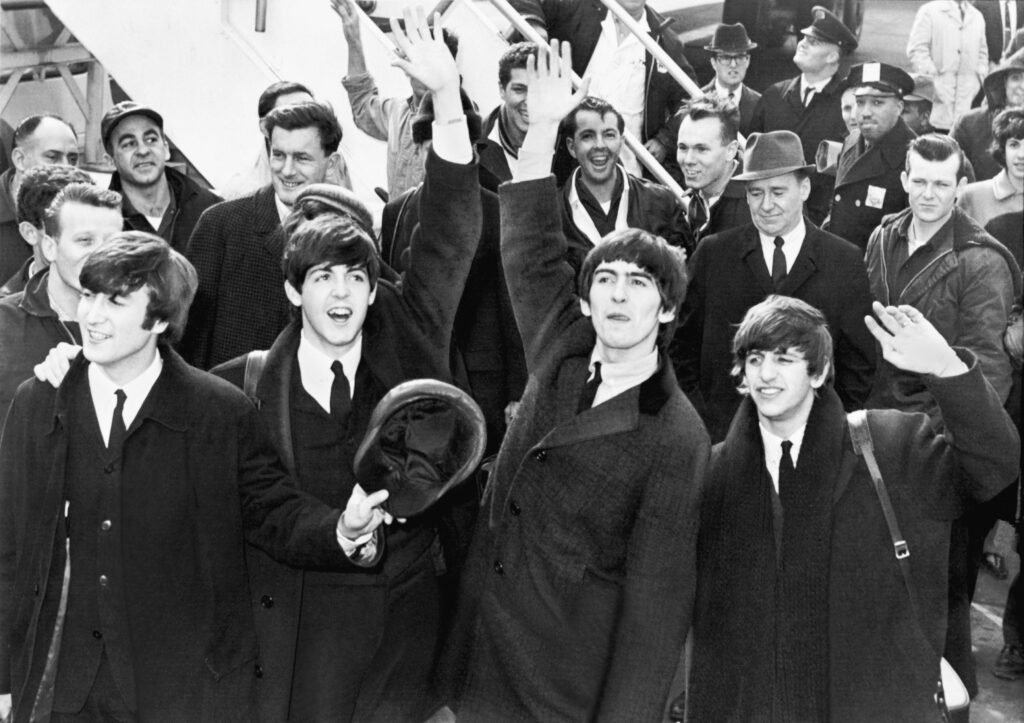
On the cold, grey afternoon of February 7, 1964, four young men from Liverpool stepped off a Pan Am flight at New York’s Kennedy International Airport and into a world that would never be the same. John Lennon, Paul McCartney, George Harrison, and Ringo Starr—the Beatles—were greeted by a throng of screaming fans, a blaze of camera flashes, and the weight of a nation’s expectations. The scene was electric, chaotic, and utterly unprecedented. As the band’s limousine crawled through the streets of Manhattan, it became clear that something profound had shifted in the cultural firmament. The “British Invasion” was not merely a musical trend; it was a wholesale reshaping of youth identity, taste, and rebellion. Over the next two years, a wave of British bands—the Rolling Stones, the Who, the Kinks, the Dave Clark Five, and dozens more—would flood American airwaves, record stores, and television screens, leaving an indelible mark on the generation that came of age in the mid-1960s.
What Happened?
The British Invasion was a sustained cultural phenomenon of the mid-1960s, when rock and pop acts from the United Kingdom became massively popular in the United States, with significant influence on the rising counterculture on both sides of the Atlantic. The Beatles’ arrival in America was the catalyst. On January 25, 1964, the single “I Want to Hold Your Hand” entered the American Top 40; by February 1, it had reached No. 1. On February 7, the Beatles landed in New York for their inaugural U.S. visit, and two days later, on February 9, they played on The Ed Sullivan Show to a record-breaking viewership of over 73 million people—a performance that triggered what contemporaries called “Beatlemania.”
- January 25, 1964: “I Want to Hold Your Hand” enters the American Top 40.
- February 1, 1964: The single reaches No. 1 on the American charts.
- February 7, 1964: The Beatles arrive at New York’s Kennedy Airport to thousands of fans.
- February 9, 1964: The Beatles perform on The Ed Sullivan Show, watched by a record audience.
- 1964–1966: A wave of British acts follows: The Rolling Stones, The Who, The Kinks, The Dave Clark Five, The Animals, The Yardbirds, Herman’s Hermits, The Hollies, and many more.
The term “British Invasion” was coined by the American media to describe the influx of British bands and solo acts that dominated the U.S. charts in the mid-1960s. The phenomenon was not limited to music; it encompassed fashion, language, and attitudes, and it played a key role in the development of the “counterculture” that would later define the decade.
How It Was Seen at the Time
Contemporaries experienced the British Invasion as a cataclysmic cultural shift. In the months following the Beatles’ arrival, the American press was filled with images of screaming girls, fringe haircuts, and near-riotous concert scenes. The term “Beatlemania” was used to describe the frenzy. Yet the Beatles were only the beginning. As Vanity Fair noted in its oral history, “For two years after ‘I Want to Hold Your Hand’ topped the U.S. charts in February 1964, the only sound that mattered had a British accent.” The mood was one of excitement, bewilderment, and, for some, alarm. The Beatles themselves were aware of their impact. John Lennon later recalled the flight to New York: “I began to fall silent as the flight wore on.” Paul McCartney, meanwhile, said he had believed in the Beatles’ success from the moment their debut single appeared on British charts, but even he had apprehensions.
“The Beatles’ arrival in the United States in 1964 marked the start of the British Invasion.” — Encyclopaedia Britannica, 2026
Historical Snapshot
| Aspect | Detail |
|---|---|
| Date | 1964–1966 (peak years) |
| Place | United States, with roots in the United Kingdom |
| People | The Beatles, The Rolling Stones, The Who, The Kinks, The Dave Clark Five, The Animals, and many other British acts; American youth |
| What Happened | British rock and pop acts achieved unprecedented popularity in the U.S., triggering a cultural shift in music, fashion, and attitudes |
| Why It Mattered | It reshaped youth culture, challenged existing musical conventions, and fueled the emerging counterculture of the 1960s |
Eyewitness Accounts
The Beatles’ own recollections offer a unique window into the moment. In the days leading up to the American visit, John Lennon grew increasingly quiet. Paul McCartney later recalled the mixture of confidence and fear that accompanied the flight. “I had believed in the Beatles’ success from the moment in December 1962 when the band’s debut single, ‘Love Me Do,’ first appeared on British charts,” he said, “but I also had some apprehensions, though I might deny it.” The scene at the airport was a blur of noise and chaos. Fans screamed, photographers jostled, and the Beatles were swept into a limousine. “It was Friday, February 7th, 1964, and only a few hours earlier the Beatles had left England, headed for their first American appearances,” as the Rolling Stone article recounts. The band’s own memories of the event are preserved in interviews and later documentaries, providing a primary source of the excitement and disorientation of the moment.
“John Lennon began to fall silent as the flight wore on.” — from the Rolling Stone account of the Beatles’ first U.S. visit.
Contemporary Newspaper Coverage
The press played a central role in amplifying the British Invasion. Newspapers and magazines covered the Beatles’ every move, from the airport arrival to the Ed Sullivan performance. The term “British Invasion” itself was a press invention. The coverage was often breathless, focusing on the screaming crowds, the mop-top haircuts, and the unprecedented sales. The music industry, meanwhile, viewed it with a mix of excitement and skepticism. As the Encyclopaedia Britannica notes, “the continuing industry belief was that this was pop music as transitory novelty.” Many expected the fad to fade quickly, but the charts told a different story. The British acts dominated the Billboard Hot 100, and the press was forced to take them seriously.
“It was an obsession that went beyond the Beatles and initially ignored the Rolling Stones.” — Vanity Fair, November 2002
What People Feared
The British Invasion also stirred fears and anxieties. Some adults saw the Beatles’ long hair, unconventional dress, and loud music as a threat to traditional values. The connection to the rising counterculture—the civil rights movement, anti-war protests, and the loosening of social norms—made the invasion seem dangerous to some. The industry’s fear that the music was a “transitory novelty” reflected a deeper concern that the youth would abandon the mainstream pop of the early 1960s. There was also a fear that the British acts would overshadow American artists. Yet the primary source evidence suggests that the most widespread fear was not of cultural revolution but of a fleeting fad—that the Beatles and their peers would disappear as quickly as they had appeared.
How Historians See It Today
Modern historians view the British Invasion as a pivotal moment in the history of rock and pop music. While contemporaries saw it as a series of chart-topping acts, scholars now understand it as a profound cultural transformation. The Invasion not only changed the sound of popular music but also broke down the boundaries between pop, rock, and art. It gave rise to the concept of the “rock band” as a self-contained unit, and it laid the groundwork for the psychedelic and countercultural movements of the late 1960s. The Rolling Stones, initially overlooked, would become one of the most enduring symbols of the era. The British Invasion also reshaped the relationship between music and youth, making rock the soundtrack of a generation. The historical consensus, as reflected in the Encyclopaedia Britannica, is that the British Invasion had a “significant influence on the rising counterculture”—a legacy that continues to resonate today.
The primary sources from the era—newspapers, interviews, and the memories of those who lived through it—reveal a moment of extraordinary excitement and uncertainty. The British Invasion was not just a musical movement; it was a cultural earthquake that changed how a generation saw itself and its world. The screams of those February nights in 1964 were not just for the Beatles; they were the sound of a new age beginning.
FAQ
What was the British Invasion?
The British Invasion was a cultural phenomenon of the mid-1960s when British rock and pop acts, led by the Beatles, became hugely popular in the United States. It influenced the rising counterculture and reshaped youth culture.
When did the Beatles first arrive in America?
The Beatles arrived in New York on February 7, 1964, and performed on The Ed Sullivan Show on February 9, 1964, which drew a record-breaking audience.
Who were the key bands of the British Invasion?
Key bands included the Beatles, Rolling Stones, The Who, The Kinks, The Dave Clark Five, The Animals, The Yardbirds, and many others.







Leave a Reply