
Short Answer
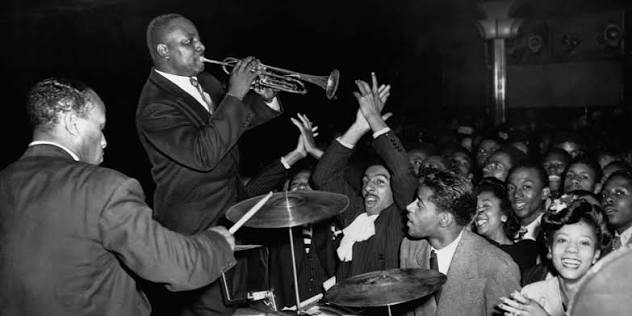
In the early 1920s, Harlem was a destination. After the Great Migration, hundreds of thousands of Black Americans had moved north, and the neighborhood had become the heart of a new cultural and intellectual ferment. On a typical evening, one might find the playwright and critic Carl Van Vechten—a white patron and chronicler—scribbling in his daybook, noting the alliances, feuds, and affairs of the era’s luminaries. Nearby, Langston Hughes, the poet, might be writing a letter to Van Vechten, describing the latest performance at the Cotton Club or the discussions at the NAACP’s The Crisis office. These were the moments that defined the Harlem Renaissance: a period of explosive creativity and self-definition that would later be called the “New Negro” movement. The eyewitnesses—diarists, letter-writers, journalists, and ordinary residents—left behind a rich record of what it felt like to be alive in Harlem during the 1920s.
What Happened?
The Harlem Renaissance, also known as the New Negro Movement, began roughly after the end of World War I and continued through the mid-1930s. The Smithsonian’s National Museum of African American History and Culture notes that it was “one of the most significant eras of cultural expression in the nation’s history.” The movement was rooted in the Great Migration, when hundreds of thousands of African Americans left the South for northern cities, seeking political empowerment, economic opportunity, and cultural self-determination. By the late 1870s, the dream of full participation had been largely thwarted by Jim Crow, but the early 20th century saw a new generation of writers, artists, and musicians demanding recognition.
Key events and figures included:
- 1919–1920: The “Red Summer” of racial violence and the rise of the “New Negro” concept, articulated by Alain Locke in his 1925 essay.
- 1921: Shuffle Along, the first major Black musical on Broadway, premiered, drawing white audiences to Harlem.
- 1923: The Cotton Club opened in Harlem, featuring Black performers for white audiences, including Duke Ellington.
- 1925: Alain Locke published The New Negro, an anthology that became a manifesto for the movement.
- 1926: Langston Hughes’s first book, The Weary Blues, was published, and his essay “The Negro Artist and the Racial Mountain” appeared in The Nation.
- 1928: Carl Van Vechten’s novel Nigger Heaven (a title now considered offensive) was published, creating controversy and bringing Harlem to national attention.
How It Was Seen at the Time
Contemporaries understood the Harlem Renaissance as a profound break with the past. Writers and critics spoke of a “New Negro” who was confident, urbane, and determined to shape his own identity. The Smithsonian’s narrative describes a “new African American identity” that was “forged” in this era. Many participants saw it as a cultural revolution that would lead to social and political equality. As Carl Van Vechten wrote in his daybooks (quoted in the University of Illinois Press edition), he recorded “alliances, drinking habits, feuds, and affairs” of the period’s luminaries, reflecting a sense that the era’s creative energy was intertwined with personal and social drama. The prevailing mood was one of excitement and optimism, though also of tension over the role of white patrons and the question of whether art should be “for the race” or for the universal audience.
“The Negro artist must not be afraid of the white man’s reaction to his art, but must write what he feels,” Hughes wrote in 1926, a sentiment echoed by many of his contemporaries.
Historical Snapshot
| Aspect | Detail |
|---|---|
| Date | 1919–1935 (peak 1920s) |
| Place | Harlem, New York City |
| People | Langston Hughes, Zora Neale Hurston, Carl Van Vechten, Alain Locke, Duke Ellington, Louis Armstrong, and many others |
| What Happened | A flowering of Black literature, music, theater, and visual art, supported by a network of writers, performers, and white patrons. |
| Why It Mattered | It established a new public image of African Americans and laid the groundwork for the Civil Rights Movement. |
Eyewitness Accounts
One of the richest eyewitness records is Carl Van Vechten’s Daybooks, kept between 1922 and 1930. Van Vechten, a novelist, critic, and photographer, was a central figure in the Harlem Renaissance, both as a patron and chronicler. His daybooks, edited by Bruce Kellner and published by the University of Illinois Press, provide a “startling record of the Jazz Age through the eyes of one of its memorable figures.” They recount not only his own activities but also the “alliances, drinking habits, feuds, and affairs” of the period’s luminaries. For example, on a typical entry, Van Vechten might note a dinner with Hughes, a late-night visit to a jazz club, or the reception of a new manuscript. These entries capture the texture of daily life: the sounds of music, the arguments over art, and the constant exchange of ideas.
“The rooms were full of smoke and laughter, and the music of the jazz band never stopped,” Van Vechten wrote of a 1925 party, as quoted in the University of Illinois Press summary.
Another eyewitness is Langston Hughes, whose extensive correspondence with Van Vechten—collected in Remember Me to Harlem—offers a personal view of the era. Hughes’s letters, written between 1921 and 1967, reveal his ambitions, his struggles with poverty, and his relationships with other artists. In one letter, he describes the excitement of seeing his first book in print, and in another, he discusses the importance of writing about Black life with authenticity.
Letters & Diaries
The letters between Langston Hughes and Carl Van Vechten are a treasure trove of primary source material. Published by the Internet Archive, the collection Remember me to Harlem offers a candid look at the friendship and collaboration between the two men. Hughes, who was young and unknown in the early 1920s, sought Van Vechten’s advice and support; Van Vechten, in turn, promoted Hughes’s work to publishers and critics. Their letters also reveal the racial and social dynamics of the time—Van Vechten’s white privilege and Hughes’s awareness of it. For instance, in one letter Hughes thanks Van Vechten for his help but also gently pushes back on the portrayal of Black life in Van Vechten’s novel. The diaries of Van Vechten, meanwhile, show the broader social world—the parties, the drinking, the gossip—that fueled the creative energy of the era.
Contemporary Newspaper Coverage
The press of the 1920s, both Black and white, covered the Harlem Renaissance with a mixture of enthusiasm and condescension. Black newspapers such as The Crisis (edited by W.E.B. Du Bois) and Opportunity (edited by Charles S. Johnson) celebrated the achievements of Black artists. White publications like The New York Times and The New Yorker often treated the movement as a curiosity, focusing on the exoticism of Harlem nightlife. A 1925 New York Times article, for example, described the “the new Negro” as a “fascinating social phenomenon,” but also questioned whether the art would endure. The coverage was often sensationalized, especially around Van Vechten’s novel Nigger (1928), which was both praised and condemned. The New York Times ran a review that called it “a brutal, honest book,” while the NAACP’s Crisis called it a “disgrace.” This split reflects the broader debate over how Black identity should be presented.
Different Perspectives
Black Artists and Writers
For Black artists, the Harlem Renaissance was a chance to assert their own voice. Langston Hughes argued that Black artists should embrace their “racial” identity and not try to assimilate into white culture. In his 1926 essay, he wrote: “We younger Negro artists who create now intend to express our individual dark-skinned selves without fear or shame.”
White Patrons and Critics
White patrons like Carl Van Vechten and Charlotte Osgood Mason provided financial support and introductions to publishers, but they often had their own ideas about what Black art should be. Van Vechten’s novel Nigger was intended to be a sympathetic portrayal, but it was criticized for its use of racial epithets and its focus on exoticism. Many white critics viewed the Harlem Renaissance as a “fad” and were quick to dismiss it after the Stock Market Crash of 1929.
What People Feared
Contemporaries feared that the Harlem Renaissance would be a passing novelty, that the white public would lose interest, and that the movement would not lead to lasting political and economic gains. There was also anxiety about the role of race: some Black intellectuals, like W.E.B. Du Bois, worried that the emphasis on “exotic” art and jazz would reinforce negative stereotypes. The fear of racial violence was also present, as the 1919 Red Summer had shown that even in the North, Black communities were not safe. The rise of the Ku Klux Klan in the 1920s, which had a presence in New York, added to this fear.
What People Expected Would Happen Next
Many believed that the Harlem Renaissance would lead to a permanent integration of Black culture into the American mainstream. Alain Locke predicted that the “New Negro” would not only transform art but also society, and that the “Harlem” would be a model for Black communities everywhere. However, the onset of the Great Depression in the 1930s shattered these expectations. Federal funding for the arts dried up, and many of the writers and artists left Harlem. The movement’s decline was rapid, though its influence would be felt for decades.
How Historians See It Today
Historians today view the Harlem Renaissance as a complex and contested moment. While contemporaries celebrated it as a cultural “rebirth,” modern scholars emphasize the limitations of the movement—it was largely urban, male-dominated, and often depended on white patronage. They also note that it was not a single unified movement but a collection of individuals with different goals. The Smithsonian’s article stresses that the Renaissance was a “significant era of cultural expression” that helped to create a “new African American identity,” but it also warns that the movement did not fully achieve political equality. Contemporary historians also highlight the role of women, such as Zora Neale Hurston and Bessie Smith, who were often overshadowed by male figures.
Common Misconceptions
The Harlem Renaissance was a purely literary movement.
It encompassed music (jazz, blues), visual art, theater, and dance, as seen in the works of Duke Ellington and the Cotton Club.
All Black artists were united in their goals.
There were fierce debates about the role of art, with figures like Hughes advocating for a “Negro” aesthetic and Du Bois for a more “propagandistic” art.
The Renaissance was purely a Black achievement.
White patrons like Van Vechten and photographers like James Van Der Zee played important roles, though their influence was often problematic.
Related Primary Sources
- Carl Van Vechten’s Daybooks, 1922–1930 – A diary that provides an intimate view of the Harlem social scene.
- Langston Hughes and Carl Van Vechten, Remember Me to Harlem (letters) – A collection of correspondence that spans the movement.
- Alain Locke’s The New Negro (1925) – An anthology of essays, fiction, and art that defined the movement.
- The Crisis and Opportunity magazines – Contemporary periodicals that published many Harlem Renaissance writers.
FAQ
What primary sources are available for studying the Harlem Renaissance?
Primary sources include Carl Van Vechten's daybooks (1922-1930), the letters between Langston Hughes and Van Vechten, the magazine 'The Crisis' and 'Opportunity', the anthology 'The New Negro' by Alain Locke, and photographs by James Van Der Zee. These documents capture the daily life, artistic debates, and social dynamics of the era.
How did contemporaries view the Harlem Renaissance?
Many contemporaries saw it as a breakthrough moment for Black culture, a 'New Negro' movement that would lead to social equality. However, there were also tensions about the role of white patrons, the 'exotic' stereotype, and the commercial aspects of jazz and nightlife. Some Black intellectuals like W.E.B. Du Bois worried that it might reinforce stereotypes.
What caused the end of the Harlem Renaissance?
The Stock Market Crash of 1929 and the Great Depression led to a decline in patronage and economic support for the arts. Many artists and writers left Harlem or stopped creating. The movement faded by the mid-1930s, but its legacy continued in later civil rights movements.




Leave a Reply