
Short Answer
In the cold winter of 1935, a twelve-year-old girl in Arkansas sat down with a pencil and a scrap of paper and wrote a letter to the First Lady of the United States. She was not asking for an autograph or a photograph. She was asking for a coat, for food, for a way to stay in school. Across the country, thousands of children did the same. Their letters—many preserved in the collection Dear Mrs. Roosevelt: Letters from Children of the Great Depression—offer a raw, unfiltered record of the economic catastrophe as experienced by the nation’s youngest citizens. These were not the polished memoirs of adults looking back, but the urgent, often misspelled cries of children living through the worst economic crisis in American history. Their words, along with the diaries and memoirs collected by historians, form a powerful primary-source record of childhood during the 1930s.
What Happened?
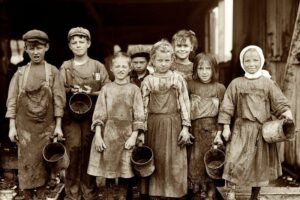
The Great Depression began with the stock market crash of October 1929 and deepened through the early 1930s, leaving millions of Americans jobless and hungry. By 1932, unemployment reached roughly 25 percent, and the economic pain was felt in every corner of the country. Children were not spared. As historian Russell Freedman writes in Children of the Great Depression, middle-class urban youth, migrant farm laborers, and boxcar kids all faced challenges like unemployed and demoralized parents, inadequate food and shelter, and schools they couldn’t attend because they had to go to work, or schools that simply closed their doors. Many children were sent to live with relatives, while others rode freight trains in search of work. The New Deal, launched by President Franklin D. Roosevelt in 1933, brought some relief, but it was Eleanor Roosevelt who became the most visible champion for children. As First Lady, she used her newspaper columns and radio broadcasts to crusade for expanded federal aid to poor children and teens. She was the most visible spokesperson for the National Youth Administration (NYA), the New Deal’s central agency for aiding needy youth, and she insisted that federal aid to young people be administered without discrimination so that it reached African Americans as well as whites. Between 1933 and 1938, children across the nation wrote to her, asking for help, and their letters were preserved.
How It Was Seen at the Time
To the children who wrote to her, Eleanor Roosevelt was not just a political figure; she was a lifeline. According to the University of North Carolina Press, which published the collection of their letters, “Impoverished young Americans had no greater champion during the Depression than Eleanor Roosevelt.” The children’s letters reflect a mixture of desperation and hope. They described their families’ struggles and asked for everything from shoes to scholarships. They also expressed gratitude for the New Deal programs they had heard about. In one letter, a boy from Ohio wrote that he wanted to go to school but had no shoes; in another, a girl from Georgia asked for a typewriter so she could become a writer. The prevailing mood was not despair but a determined optimism, a belief that the government and the First Lady could make a difference. As the description of the collection notes, these letters are a “window on the lives of the Depression’s youngest victims,” showing their fears, their resilience, and their expectations.
Historical Snapshot
| Aspect | Detail |
|---|---|
| Date | 1929–1939 (the Great Depression era) |
| Place | United States, from rural farms to urban tenements |
| People | Children and their families; Eleanor Roosevelt; President Franklin D. Roosevelt; National Youth Administration officials |
| What Happened | The stock market crash of 1929 and the ensuing economic collapse led to mass unemployment, poverty, and hunger. Children wrote to Eleanor Roosevelt asking for help, and their letters were preserved. |
| Why It Mattered | The letters and diaries of children provide a firsthand record of the Depression’s human cost and show how the New Deal’s aid programs were perceived by the youngest Americans. |
Letters & Diaries
The most direct primary sources from children of the Depression are the letters they wrote to Eleanor Roosevelt. Collected and edited by historian Robert Cohen, the letters were published in 2002 as Dear Mrs. Roosevelt: Letters from Children of the Great Depression. These letters were written between 1933 and 1938, during the height of the New Deal, and they are preserved in the Franklin D. Roosevelt Presidential Library. The children wrote from every state, representing a cross-section of American childhood: white and Black, urban and rural, native-born and immigrant. Their letters often contain spelling errors and childish handwriting, but they are unflinchingly honest. For example, a boy from Pennsylvania wrote, “Dear Mrs. Roosevelt, I am eleven years old and I have no father. My mother has to work. I am in the fifth grade. I want to go to school but I have no shoes.” Another child asked for a bicycle so she could deliver newspapers and earn money. These letters were not written for publication; they were private pleas to a public figure, and they give us a direct line to the children’s minds.
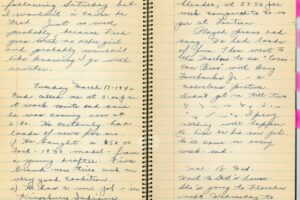
In addition to letters, children kept diaries and wrote memoirs. Russell Freedman’s book Children of the Great Depression draws on these memoirs, diaries, and letters to show the human face of the crisis. Freedman describes how children helped their families by picking crops, collecting scrap metal, or selling newspapers. Many also kept diaries in which they recorded their daily struggles and small joys, such as listening to radio shows or playing games. These personal documents reveal that children were not passive victims; they were active participants in their families’ survival.
Daily Life
Daily life for children during the Depression was defined by scarcity and improvisation. According to Freedman, many children faced “inadequate food and shelter” and had to go to work instead of school. Their families often moved in search of work, so children might find themselves in migrant farm labor camps or on the road as “boxcar kids” who rode freight trains to follow the harvest. Meals were often thin—soup, bread, and whatever could be grown in a garden. Clothing was patched and reused. Children often wore hand-me-downs, and shoes were a luxury. Many schools closed for lack of funds, and even when they were open, children might miss days because they had to work or because they had no clothes to wear. Despite these hardships, children found moments of joy. Freedman notes that they enjoyed favorite games and radio shows, and many remained “upbeat and optimistic about the future.” Their daily lives were a mixture of hardship and small pleasures, of work and play, and of fear and hope.
What People Feared
The primary sources reveal a landscape of fear. Children feared losing their homes, going hungry, and being separated from their families. They feared that they would never be able to return to school, and they feared that their parents would give up. The letters to Mrs. Roosevelt often contain explicit pleas: “Please help us, we are starving,” or “My father is out of work and we are afraid we will be put out on the street.” The children also feared the shame of poverty. They wrote about being teased for their ragged clothes and about the humiliation of receiving charity. There was also a broader fear, expressed in the letters and in the newspapers, that the Depression would never end, and that the children would be permanently damaged by the experience. These fears were rational, not unfounded panic. Many families did lose their homes, and many children did go hungry. The letters show that children were acutely aware of the danger their families faced.
How Historians See It Today
Historians today view the letters and diaries of children as invaluable primary sources for understanding the Great Depression. At the time, the letters were seen as individual pleas for help; they were not systematically studied until later. Modern historians, such as Robert Cohen, have recognized that these documents reveal the Depression’s impact on children in ways that statistics cannot. They show the children’s agency, their resilience, and their understanding of the political events around them. Cohen’s edition of the letters, published in 2002, made these sources accessible to the public and to scholars. Historians now emphasize that children were not merely passive victims but active participants in the national crisis. They also note that the letters demonstrate the importance of Eleanor Roosevelt’s role as a champion of children. The collection has shifted the way historians approach the Depression, encouraging them to look at the experience of children, rather than just the economic indicators.
Common Misconceptions
All Depression-era children were from poor rural families.
Middle-class urban youth also suffered, as Freedman notes. Many had to move to cheaper housing, and their families lost their savings.
Children were too young to understand what was happening.
The letters show that children had a clear grasp of the economic situation, often explaining their father’s unemployment and their family’s lack of food in detail.
The Depression only affected big cities.
Rural children, including migrant farm laborers and those in farm areas, were also severely affected, as described in Freedman’s book.
Eleanor Roosevelt’s help was only symbolic.
She was the most visible spokesperson for the National Youth Administration, which provided direct aid to young people, and she insisted that aid be given without discrimination.
How Historians See It Today
Historians today recognize the letters and diaries of children as essential primary sources. They have been used to reconstruct the everyday lives of children and to understand the emotional impact of the Depression. The collection Dear Mrs. Roosevelt is now a standard reference for students of the era. Historians also point out that these sources help us to understand the New Deal not just as a series of policies, but as a human experience. The letters show that children were aware of the New Deal and its programs, and that they looked to the government for help. This perspective has led to a more inclusive history of the Depression, one that includes the voices of children, who were previously overlooked.
The primary sources from children also reveal the limits of the New Deal. While the NYA and other programs helped many, the letters show that there were still children who went hungry and without schooling. Historians today use these sources to assess the effectiveness of the New Deal’s aid to children, and to show that the government’s response, while significant, was not always enough.
Conclusion
The letters and diaries of children from the Great Depression are a powerful reminder that history is not just about presidents and policies, but about the lives of ordinary people. These primary sources allow us to hear the voices of children who lived through an economic catastrophe, and they show us their fears, their hopes, and their resilience. They also remind us that Eleanor Roosevelt was not just a First Lady but a lifeline for many. The children’s words, preserved in the collection Dear Mrs. Roosevelt and in the memoirs collected by historians, continue to speak to us today, offering a lesson in courage and a reminder of the importance of listening to the youngest voices in times of crisis.
FAQ
Why did children write letters to Eleanor Roosevelt during the Great Depression?
Children wrote to Eleanor Roosevelt because she was a prominent advocate for the poor and used her newspaper columns and radio broadcasts to support federal aid to children. They wrote to ask for help with food, clothing, schooling, and work. Their letters were preserved and later published in the collection 'Dear Mrs. Roosevelt.'
What are the main sources for understanding children's experiences in the Great Depression?
The main primary sources are letters, diaries, and memoirs written by children themselves. The collection 'Dear Mrs. Roosevelt' contains thousands of letters. Russell Freedman's book 'Children of the Great Depression' draws on these diaries and letters to provide a narrative overview.






Leave a Reply