
Short Answer
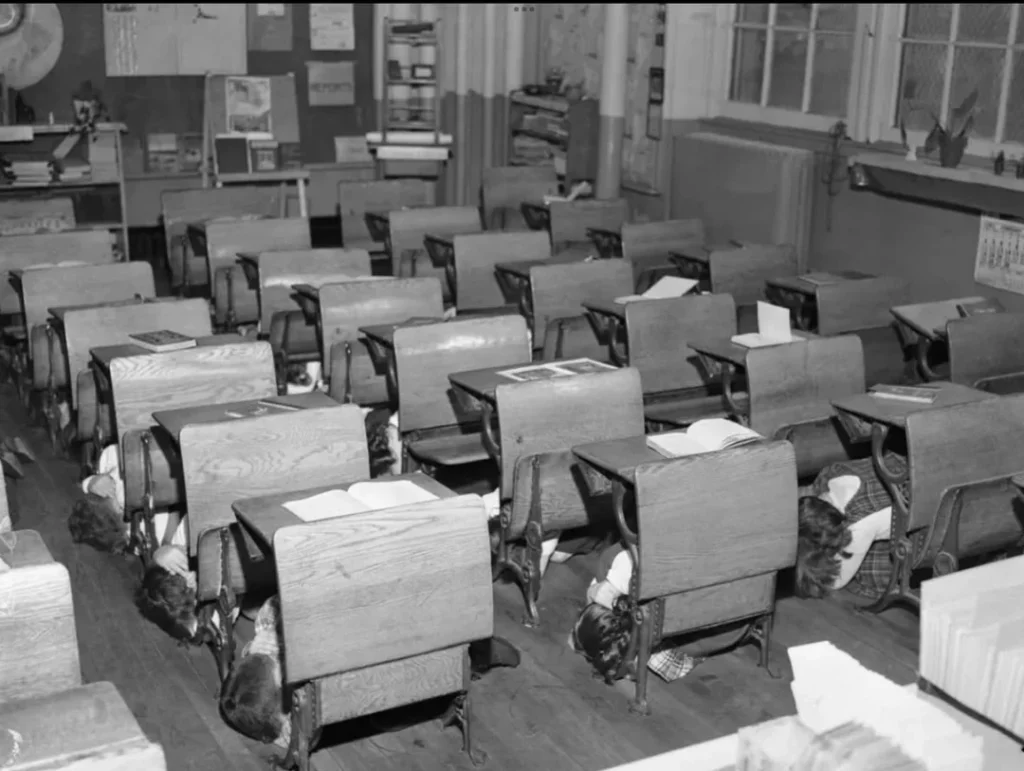
On a crisp morning in 1951, in a classroom somewhere in Ohio, a teacher turned off the lights and said, “Children, we are going to practice what to do if the atom bomb comes.” The first-graders, who had learned to spell “atom” and “bomb” before they learned “mother,” slid off their chairs and crouched under their desks, hands clasped over their heads. The drill lasted two minutes. Then they returned to their lessons, as if nothing had happened. This scene, repeated in thousands of schools across the United States, was the heart of the “Duck and Cover” campaign—a nationwide effort to prepare the youngest Americans for the unthinkable: nuclear war.
What Happened?
The Soviet Union detonated its first nuclear device on August 29, 1949, at a remote site in Kazakhstan, ending the American monopoly on atomic technology and introducing the threat of imminent nuclear annihilation to the American homeland. In response, the U.S. Federal Civil Defense Administration (FCDA) launched a massive preparedness campaign. By the early 1950s, schools across the country were training students to dive under their desks and cover their heads—a practice that became known as the duck-and-cover drill.
The centerpiece of the campaign was a short film, Duck and Cover, produced by Archer Productions and written by Raymond J. Mauer, featuring a helmet-wearing turtle named Bert. The film, released around 1955, combined a catchy theme song with live-action examples of schoolchildren performing drills in various scenarios. It was viewed by millions of schoolchildren during the early days of the Cold War. The film was part of a larger curriculum that included state-level guidelines, such as those produced by North Carolina and Michigan, which instructed teachers on how to talk to children about the atomic threat.
These drills were not merely symbolic. They were practiced regularly, often with a siren or bell signaling the start of the exercise. Children were taught to identify the flash of an atomic explosion, to seek shelter under their desks, and to cover their heads with their hands. The drills were intended to protect children from the heat and blast effects of an atomic bomb, though their actual effectiveness was questionable.
How It Was Seen at the Time
At the time, the duck-and-cover drills were presented as a rational, effective response to a real threat. The film’s cheerful tone and the turtle’s reassuring voice aimed to calm children’s fears while teaching them a simple survival skill. The prevailing mood was one of anxious readiness. As historian Alex Wellerstein noted, the United States was “suddenly having to really reckon with the fact that it is not the only nuclear power out there anymore.” The drills were a way to channel the nation’s anxiety into a concrete, if simplistic, action.
“The first-graders…learned to spell ‘atom’ and ‘bomb’ before they learned ‘mother'” — Elise E. Beiler, Indian Springs School, Nevada, 1952
Children were taught to be prepared, but not to panic. The film’s message was clear: if you duck and cover, you can survive. This message was reinforced by teachers and civil defense officials who emphasized that the drills were “just like a fire drill.”
Historical Snapshot
| Aspect | Detail |
|---|---|
| Date | August 29, 1949 (Soviet atomic test); early 1950s (drills); ca. 1955 (film) |
| Place | United States, particularly schools across the nation |
| People | Federal Civil Defense Administration, Archer Productions, Raymond J. Mauer, schoolchildren, teachers |
| What Happened | After the Soviet nuclear test, schools adopted duck-and-cover drills, and the film Duck and Cover was produced and shown to millions of children. |
| Why It Mattered | It reflected the Cold War’s anxiety and the government’s attempt to prepare civilians for a nuclear attack, shaping a generation’s childhood experience. |
Eyewitness Accounts
Children who experienced the drills later recalled the mix of fear and routine. One teacher from Nevada, Elise E. Beiler, wrote in 1952 that “the first-graders…learned to spell ‘atom’ and ‘bomb’ before they learned ‘mother'” — a striking testimony to the pervasiveness of atomic education. Another account from the film itself shows children calmly practicing the drill, with the turtle Bert telling them, “If you know what to do, you can help yourself and your family.”
“The first-graders…learned to spell ‘atom’ and ‘bomb’ before they learned ‘mother'” — Elise E. Beiler, Indian Springs School, Nevada, 1952
These accounts reveal that the drills were both a source of anxiety and a normal part of school life. Children often practiced duck and cover as they did fire drills, with little understanding of the true destruction a nuclear bomb could cause.
Official Reports
The Federal Civil Defense Administration (FCDA) produced detailed curricular guidelines for schools, outlining how to teach children about nuclear weapons and civil defense. These documents emphasized the importance of “mass preparedness” and instructed teachers to conduct regular drills. The FCDA also distributed the film Duck and Cover as part of its educational program. According to a 1955 National Archives record, the film was placed in the Records of the Office of Civilian Defense, indicating its official status. The guidelines stressed that children should be calm and follow the “duck and cover” technique, which was presented as a simple, effective survival method.
What People Feared
The fear of nuclear annihilation was real and pervasive. The Soviet test of 1949 signaled that the United States was no longer safe from attack. People feared that an atomic bomb could be dropped on any American city at any moment. The duck-and-cover drills were a response to this fear, but they also revealed a deeper anxiety: the fear that children would be caught in a war that could end the world. Many parents and educators worried about the psychological impact of these drills on young minds, but the official response was to treat the threat as a manageable emergency. The fear was also channeled into the arms race, as both superpowers built increasingly powerful nuclear arsenals.
Timeline
- August 29, 1949: Soviet Union detonates its first nuclear device, ending the U.S. monopoly.
- Early 1950s: Civil defense drills, including duck-and-cover, become routine in American schools.
- ca. 1955: The film Duck and Cover is produced by Archer Productions, written by Raymond J. Mauer, and distributed to schools.
- 1950s: Millions of schoolchildren watch the film and practice the drills.
How Historians See It Today
Modern historians view the duck-and-cover drills as a mixture of genuine civil defense preparation and psychological reassurance. As historian Alex Wellerstein notes, the drills were a response to the new reality of nuclear weapons, but they also served to manage public anxiety. The film’s simplicity and its focus on individual action have been criticized as ineffective in the event of a real atomic attack, especially a hydrogen bomb. However, historians also recognize that the drills were an attempt to give children a sense of control in an uncontrollable world. The drills have become a symbol of the Cold War’s fear and the government’s sometimes inadequate efforts to prepare civilians.
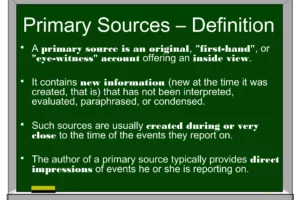
The duck-and-cover drills were a product of their time, reflecting the fear and uncertainty of the early Cold War. They taught a generation of children to be vigilant, but they also left a lasting impression of a world that could end in a flash. The primary sources from the era—the film, the drills, the testimonials—offer a vivid glimpse into how Americans coped with the prospect of nuclear war.
FAQ
Did duck-and-cover drills actually protect children from a nuclear attack?
Modern historians and scientists generally agree that duck-and-cover drills were ineffective against a direct nuclear blast, especially after the development of hydrogen bombs. However, they may have offered some protection against the initial flash and blast debris, and they served to reassure the public during a time of fear.
When was the film 'Duck and Cover' shown in schools?
The film was produced around 1955 and was widely distributed to schools during the 1950s and early 1960s. It was shown to millions of schoolchildren as part of civil defense education.
What was the role of the Federal Civil Defense Administration in school preparedness?
The FCDA produced curricular guidelines, distributed educational films, and encouraged schools to conduct regular drills. It aimed to teach children to remain calm and take protective actions in the event of a nuclear attack.








Leave a Reply