
Short Answer
In the decades after World War II, as historians began to capture the voices of the people on magnetic tape, they discovered that the act of listening carried an unspoken contract. The interviewer’s questions, the recorder’s red light, and the narrator’s gentle voice all demanded a moral reckoning. By the late twentieth century, oral historians had turned their own practice into a critical inquiry, asking not only how to record memory but also how to protect the dignity, privacy, and autonomy of those who shared their lives. This article traces the evolution of that ethical framework, drawing on the foundational documents and scholarly debates that shaped the field.
What Happened?
The oral history movement in the United States took institutional form in 1966 with the founding of the Oral History Association (OHA). For decades, practitioners operated with little formal guidance, relying on individual judgment. In 2009, the OHA adopted its Principles and Best Practices, a document revised in 2018 and accompanied by a separate Statement on Ethics. These documents codified the mutual responsibilities of interviewers, narrators, archivists, and researchers. The OHA statement declares that “everyone involved in oral history work, from interviewers and narrators to archivists and researchers, becomes part of a web of mutual responsibility working to ensure that the narrator’s perspective, dignity, privacy, and safety are respected” (OHA Statement on Ethics).
Scholarly reflection on ethics has moved through three distinct phases, as identified by oral historians Anna Sheftel and Stacey Zembrzycki in a 2016 review: postwar positivism, the subjective turn, and contemporary interdisciplinarity. In the postwar positivist era, oral historians sought to capture objective facts, often overlooking the emotional and relational dimensions of the interview. The subjective turn of the 1970s and 1980s brought attention to the co-created nature of memory and the power imbalances between interviewer and narrator. In the contemporary phase, oral historians engage with interdisciplinary methods and the ethics of shared authority, interpretation, and long-term stewardship.
How It Was Seen at the Time
Oral historians have long been preoccupied with their own ethical failures. Sheftel and Zembrzycki argue that the field’s approach to ethics “emerged from two major fears: the fear of failing as researchers and the fear of failing our narrators and doing harm.” These fears were not abstract. Practitioners worried that their questions might distort a life story, that they might misuse a narrator’s trust, or that they might publish words that the narrator never intended to be public. The OHA statement responds directly to these anxieties by insisting on equitable treatment and transparent communication. It urges oral historians to “become fully informed about oral history theory, methodology, and ethics” and to work “to become informed of oral history practices, including how narrators and interviewers should be treated equitably.”
“We must be mindful that the interview is a relationship, and with that relationship comes a responsibility to the narrator.” – OHA Statement on Ethics
Historical Snapshot
| Aspect | Detail |
|---|---|
| Date | 1966 (OHA founded); 2009 and 2018 (principles revised) |
| Place | United States (oral history practice global) |
| People | Oral History Association, interviewers, narrators, archivists, researchers |
| What Happened | Formal ethical guidelines and scholarly debates emerged to govern oral history practice |
| Why It Mattered | Established consent, dignity, and memory as core ethical commitments in the field |
What People Knew at the Time
| What People Knew Then | What We Know Now |
|---|---|
| Oral history could provide “objective” evidence of the past. | Memory is subjective, co-created, and shaped by the interviewer’s questions and the narrator’s context. |
| Consent was a one-time, signed form. | Consent is ongoing and must be renegotiated at each stage of the interview, interpretation, and publication. |
| The interviewer was a neutral recorder. | The interviewer is an active participant whose identity and positionality affect the narrative. |
| Once recorded, the interview was a finished document. | Interpretation and preservation involve continued ethical choices about access, editing, and use. |
Different Perspectives
Interviewers
Interviewers in the field have often described their role as balancing research goals with human respect. Brigitte Halbmayr, in a study of expectations, notes that oral historians must find “a balance between the conflicting interests to meet the goals of the research project as well as to respect the dignity of the interviewee.” Interviewers may feel pressure to extract a compelling narrative, but the OHA’s principles remind them that the narrator’s well-being takes precedence.
Narrators
Narrators bring their own expectations to the interview: they may want to testify, to educate, or to leave a legacy. The OHA statement emphasizes that narrators’ “perspective, dignity, privacy, and safety are respected.” Narrators often worry about how their words will be used and whether they will be misrepresented. The ethical framework acknowledges that the narrator retains control over their own story, even after the interview is recorded.
What People Feared
Oral historians have articulated a range of fears, many of which have shaped the field’s ethics. The most prominent fears, as identified by Sheftel and Zembrzycki, are the fear of failing as researchers and the fear of harming narrators. Researchers feared that their questions would be too leading, that they would misinterpret the narrator’s words, or that they would not produce a rigorous, usable record. Narrators feared that they might be misrepresented, that their memories would be dismissed, or that they might be exposed to legal or social retaliation. The OHA’s principles directly address these fears by requiring informed consent, transparent use, and the right of narrators to review and edit their own words.
How Historians See It Today
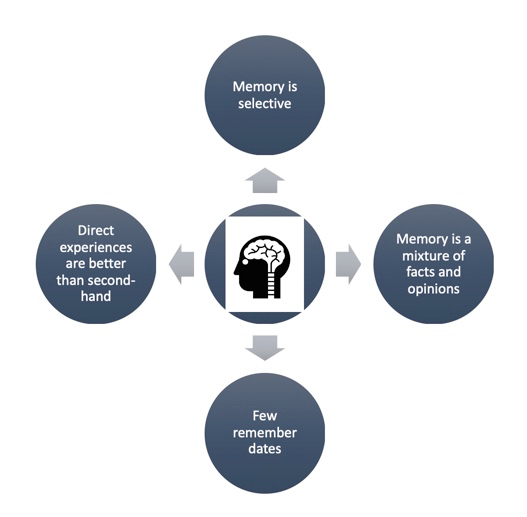
Modern historians and oral historians recognize that the interview is not a neutral extraction of facts but a shared creation of meaning. The OHA’s 2018 Principles and Best Practices are built on the core principle that “oral history is a field of study and a method of gathering, preserving, and interpreting the voices, memories, and perspectives of people.” The field now emphasizes the “ongoing consent” and the need for “careful stewardship” of the recordings. Historians today also stress the importance of transparency about the interviewer’s position and the co-constructed nature of the narrative. This view represents a significant shift from the earlier positivist approach, which treated the interview as a window into the past rather than as a dynamic, relational process.
Key Documents
- OHA Statement on Ethics (n.d., adopted after 2018) – Outlines the mutual responsibilities of all participants in oral history, including preparation, communication, and respect for the narrator.
- OHA Principles and Best Practices (adopted October 2018) – Replaces earlier versions and sets the standard for preparation, collaboration, stewardship, and use of oral sources.
- “Who’s Afraid of Oral History? Fifty Years of Debates and Anxiety about Ethics” by Anna Sheftel and Stacey Zembrzycki (2016) – A scholarly survey that traces the ethical evolution of the field through three phases.
- “The Ethics of Oral History: Expectations, Responsibilities, and Dissociations” by Brigitte Halbmayr – A chapter that examines the expectations and responsibilities in the interview relationship.
Today, oral historians continue to refine their ethical practice, recognizing that each interview is a unique encounter. The primary sources—the OHA’s statements and the scholarly debates—remind us that ethical oral history is not a checklist but a continual, reflective commitment to the people who share their memories.
FAQ
Why is consent so important in oral history?
Consent is fundamental because oral history involves personal, often vulnerable memories. The OHA states that everyone involved must work to ensure the narrator’s perspective, dignity, privacy, and safety are respected. Consent is not a one-time signature but an ongoing process that allows the narrator to control how their words are used.
How has the ethical approach to oral history changed over time?
According to Sheftel and Zembrzycki, the field has moved from a postwar positivist phase, where objectivity was emphasized, to a subjective turn that acknowledged the co-created nature of memory, and finally to a contemporary interdisciplinary phase that stresses ongoing consent, interpretation, and the long-term stewardship of the narrator’s story.












Leave a Reply