Short Answer
The Vietnam War (1955–1975) tore at the fabric of American society, but for the young men who faced the draft, the conflict was intensely personal. In the late 1960s and early 1970s, hundreds of thousands of American men received draft notices, and each had to choose a path: serve, resist, flee, or claim conscientious objection. The letters and diaries they left behind reveal the private fears, moral struggles, and everyday realities of a generation caught between patriotism and conscience. John McCann, a conscientious objector from 1969 to 1971, preserved his correspondence with his parents, who wrote to him every other day during his service. Dan Widemer, a young man from a farm family, wrote to his former teacher explaining why he could not fight. Others, like Richard Yanowitz, kept detailed accounts of their attempts to avoid the draft. These primary sources offer an intimate view of how ordinary people navigated a war that many saw as unjust.
What Happened?
The Vietnam War, in which the United States intervened to prevent the spread of communism in Southeast Asia, escalated with large troop deployments and intense combat. The draft—the Selective Service System—called millions of men to serve. Under the law, conscientious objectors (COs) could be excused from military service if they opposed all wars on moral or religious grounds. Many applied for CO status, while others dodged the draft by fleeing the country, claiming deferments, or simply refusing to report.
John McCann, a conscientious objector, served from 1969 to 1971. His papers, now held at Lafayette College, include a series of letters, four books, military records, school records, and his diaries kept from 1970–1971. The bulk of the collection consists of letters to and from McCann while he served as a CO. His parents, James and Mrs. McCann, wrote to him every other day during the months included in the collection. These letters provide a window into the daily concerns of a CO and his family.
Dan Widemer, a contentious objector, wrote to his former grade-school teacher, Mrs. Walling, in a letter that survives in the PBS archive. He explained that he had been working with his father in a seed store and on a farm, receiving several draft deferments, but finally on June 1st he received a one-way ticket from the draft board to California and to camp. He wrote, “I have been here ever since, except for a few short furloughs.”
Gene Keyes, a draft resister, participated in a pact with two friends in the early 1960s, a forerunner of the acts of solidarity envisioned by the Resistance in 1967. His mother, Charlotte Keyes, wrote an article for McCall’s magazine in October 1966 titled “Suppose They Gave a War and…” The article described her son’s arrest and the family’s ordeal.
Richard Yanowitz, a draft dodger, wrote a statement in 1968 applying for conscientious objector status. He later described his actions: “During the Vietnam War I was a draft dodger—that is, I determined to avoid getting drafted. I made sure my passport was up to date, and I took student deferments every year.” He acknowledged that in the anti-war movement this was a virtue, but for much of the rest of the country it was “at best cowardly and at worst a willingness to let other young men die in my place.”
How It Was Seen at the Time
Contemporaries understood the draft and the CO status through a lens of moral and political conflict. Letters and diaries from the era reveal the intense personal scrutiny and social pressure. In a letter to his former teacher, Dan Widemer wrote:
“As I use a typewriter quite a little and can write faster that way, I hope you won’t mind my using it for this letter even though it is a personal one. I don’t know if Mother said much to you about where or what I am doing so I will sort of give a little ‘history’ of myself from the last two years.”
This letter, written from a military camp, shows the careful explanation a CO felt compelled to give to a respected authority figure. Widemer’s tone is apologetic but firm, reflecting the tension between personal conscience and social expectation.
Richard Yanowitz’s account captures the ambivalence of the draft dodger: “I was certainly scared of fighting or getting killed, and even before Vietnam I sensed that with my propensity to challenge authority I wouldn’t last long in the military; but I also believed (perhaps partly but…)”. He recognized the moral ambiguity of his choice, and the social stigma that accompanied it.
Letters & Diaries
The letters and diaries of conscientious objectors and draft dodgers are among the most powerful primary sources of the Vietnam War era. They record the everyday concerns of men who were not on the battlefield but who were still profoundly affected by the war.
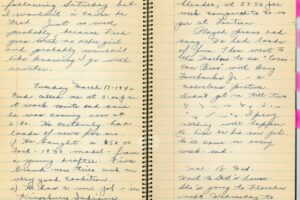
John McCann’s papers, now at Lafayette College, include letters from his parents that arrived every other day. These letters likely contain family news, encouragement, and concerns about his safety and well-being. The diary entries from 1970–1971 provide a personal record of McCann’s daily life as a CO, perhaps detailing his work in hospitals or other alternative service. The collection also includes conscientious objector documents, which would have included his application and supporting letters of recommendation.
Dan Widemer’s letter to Mrs. Walling is a unique primary source. In it, he explains his reasons for being a CO, referencing the moral and religious principles that guided his decision. He writes:
“I have of course almost since out of grade school been working with my Father in the Seed Store as well as on the farm part time and received several draft deferments but finally on June 1st, I received a one-way ticket from the draft board to California and to Camp. I have been here ever since, except for a few short furloughs that were…”
The letter continues, describing his experiences and his hope that his teacher would understand. It is a personal testament to the conflict between duty to one’s country and duty to one’s conscience.
Richard Yanowitz’s statement, written in 1968, is a formal application for CO status. He explains his reasons and his fears, and his later commentary adds another layer: he acknowledges that he was a “draft dodger” and that his choice was seen as cowardly by many. He wrote, “I was certainly scared of fighting or getting killed, and even before Vietnam I sensed that with my propensity to challenge authority I wouldn’t last long in the military; but I also believed (perhaps partly but…)” The ellipsis in his original text suggests his own uncertainty.
Eyewitness Accounts
The eyewitness accounts of conscientious objectors and draft dodgers are often told in their own words. The compilation “We Won’t Go: Personal Accounts of War Objectors” by Alice Lynd, published in 1990, gathers many such stories. One of the accounts is by Gene Keyes, who with two friends carried out a pact in the early 1960s. Keyes’s act was a forerunner of the Resistance in 1967. His mother, Charlotte Keyes, wrote about it in McCall’s magazine in October 1966, titled “Suppose They Gave a War and…” The article likely described the family’s ordeal and the public reaction.
Richard Yanowitz’s account is a direct personal narrative. He describes his decision to avoid the draft, his student deferments, and his application for CO status. He wrote:
“I made sure my passport was up to date, and I took student deferments every year. In the anti-war movement, this was a virtue. For much of the rest of the country, it was at best cowardly and at worst a willingness to let other young men die in my place.”
His words illustrate the deep societal divide over the draft. He also notes that “as I write, it has been fashionable for some years for many to look back on that war, however morally wrong it is now viewed, and extol service in the war. That is, avoiders of that draft still get a bad press.”
Contemporary Terminology
Understanding the language of the era is essential. The following terms were used during the Vietnam War draft era:
- Conscientious objector (CO): A person who refuses to bear arms on grounds of moral or religious principles. The term appears in the John McCann papers, where he served as a CO.
- Draft dodger: A person who avoids the draft, often through illegal means or by fleeing the country. Richard Yanowitz called himself a draft dodger.
- Deferment: A postponement of military service, often granted for students, farmers, or other essential workers. Dan Widemer received several draft deferments.
- Student deferment: A deferment for those enrolled in college, as used by Yanowitz.
- Resistance: The anti-war movement that encouraged men to refuse induction, as mentioned in the Gene Keyes account.
- Induction: The formal process of entering the military, often through a draft notice.
- Selective Service System: The federal agency that managed the draft.
Some of these terms have changed in nuance over time, but they capture the legal and social categories of the period.
Different Perspectives
Conscientious Objectors
Conscientious objectors like John McCann and Dan Widemer viewed their refusal to bear arms as a moral imperative. They often faced skepticism from the public and the military, but they were legally allowed to serve in non-combatant roles. McCann’s parents’ letters show a family that supported his choice, even as they wrote to him every other day. Widmer’s letter to his teacher reveals a young man who sought to explain his decision in terms of the moral principles he had learned in school.
Draft Dodgers
Draft dodgers like Richard Yanowitz chose to avoid the draft altogether, sometimes by leaving the country or by claiming deferments. Yanowitz acknowledges that this was seen as cowardly by many, but he also believed that the war was unjust. His statement reflects the tension between personal safety and moral duty.
Families and Communities
Families were often caught in the middle. John McCann’s parents wrote to him every other day, showing their support but also their anxiety. Charlotte Keyes, Gene’s mother, published an article in McCall’s magazine that likely highlighted the emotional toll on the family. The community’s response varied: some saw COs as traitors, others as heroes.
What People Feared
For those who were drafted or who resisted the draft, the fears were concrete: the risk of being killed or injured in combat, the social stigma of being a CO or a draft dodger, and the legal consequences of resisting the draft. Yanowitz wrote that he was “scared of fighting or getting killed,” and he also feared the social backlash. He noted that “for much of the rest of the country, it was at best cowardly or at worst a willingness to let other young men die in my place.” The fear of being labeled a coward was real, and it influenced many decisions. The parents of COs also feared for their sons’ safety, even if they supported their choice.
How Historians See It Today
Historians now recognize the letters and diaries of conscientious objectors and draft dodgers as crucial primary sources for understanding the Vietnam War era. They reveal the personal cost of the war and the moral complexities that many Americans faced. Contemporary accounts often focused on the political debates, but these personal documents show the everyday reality of young men and their families. Modern scholarship has also emphasized the diversity of experiences, from religiously motivated COs to political resisters. The John McCann papers, for example, are a valuable archive for researchers, as they contain a full set of letters, diaries, and official documents. The collection is a testament to the personal side of the war.
Aftermath
The Vietnam War ended in 1975, and the draft was abolished in 1973, replaced by an all-volunteer force. Many conscientious objectors and draft dodgers were pardoned or had their records cleared. Richard Yanowitz, for example, later wrote about his experiences, and his statement remains a valuable document. The letters and diaries of these men and their families continue to be studied by historians and the public, offering a window into a turbulent time. The John McCann papers were donated to Lafayette College, and they are available for research.
The letters and diaries of conscientious objectors and draft dodgers are more than just historical artifacts; they are a record of human conscience under pressure. They show us that the Vietnam War was not just a conflict of nations, but also a conflict of individuals who had to decide where they stood. Their words continue to resonate, reminding us of the cost of war and the power of personal conviction.
FAQ
What was a conscientious objector during the Vietnam War?
A conscientious objector was a person who refused to bear arms on grounds of moral or religious principles. They could serve in non-combatant roles, as John McCann did from 1969 to 1971, according to his papers at Lafayette College.
How did draft dodgers differ from conscientious objectors?
Draft dodgers avoided the draft entirely, often through deferments or fleeing the country, while conscientious objectors formally applied for CO status and often performed alternative service. Richard Yanowitz described himself as a draft dodger in his 2008 essay.
What kinds of primary sources exist for the study of Vietnam War COs?
Primary sources include letters, diaries, official documents, and personal statements. The John McCann papers include letters from his parents, his diaries, and conscientious objector documents. The PBS archive has letters from objectors, and the La Salle University digital collection includes personal accounts compiled by Alice Lynd.

Leave a Reply