Short Answer
In August 1914, the great powers of Europe marched to war with rifles and cannons—and with a new weapon that proved just as powerful: the printed word. Over the course of the First World War, from 1914 to 1918, propaganda became, for the first time, a pervasive, systematic instrument of every government that threw troops into battle (source [2]). Governments did not simply report the war; they manufactured it. They shaped mass opinion through newspapers, posters, films, and public speeches, and they did so with a degree of coordination never before seen. As the novelist H.G. Wells observed at the time, “The ultimate purpose of this war is propaganda, the destruction of certain beliefs and the creation of others” (source [3]). For civilians and soldiers alike, the war was fought not only in the trenches but also in the pages of the daily press and on the walls of every village hall.
What Happened?
The Great War transformed propaganda as it transformed warfare. Over the course of the conflict, propaganda became a systematic instrument of every government that participated (source [2]). The belligerent governments employed strikingly similar approaches to shaping mass opinion. These included the Manichaean approach—depicting the enemy as utterly evil—the ridiculing of the enemy, the use of scapegoats, the celebration of duty and sacrifice, and the promise of rewards after the war (source [3]).
The key milestones in the evolution of wartime propaganda include:
- 1914: Outbreak of war; governments quickly establish official propaganda agencies. In Britain, the War Propaganda Bureau is created; in Germany, the Central Office for War Propaganda; in France, the Maison de la Presse.
- 1915–1916: Propaganda expands to include atrocity stories, such as the alleged German “corpse factory” and the execution of Edith Cavell, used to stir public outrage.
- 1917–1918: The United States enters the war and establishes the Committee on Public Information (CPI), which produces posters, films, and the famous “Four-Minute Men” speeches.
- 1918: The war ends, but the machinery of propaganda does not disappear; it is adapted for peacetime politics.
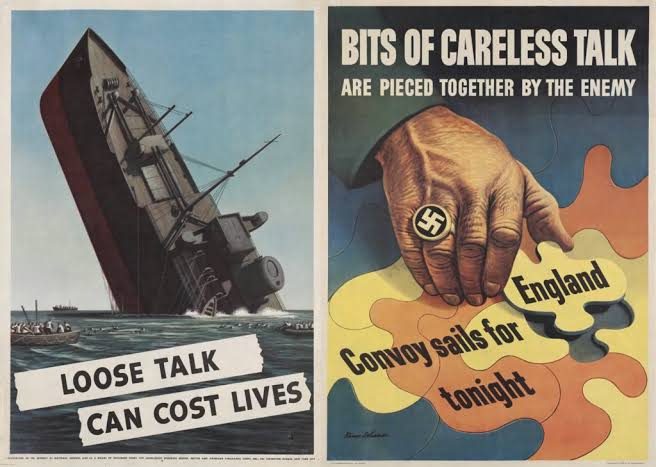
- 1939–1945: The Second World War sees a global propaganda war, with all powers employing the techniques developed in the first conflict (source [4]).
How It Was Seen at the Time
To contemporaries, propaganda was not a dirty word; it was a legitimate instrument of national survival. In the early years of the war, the term still carried its neutral, even positive, meaning of “the spread of ideas.” Governments argued that they were simply telling the truth about the enemy. As H.G. Wells wrote, the ultimate purpose of the war was itself a kind of propaganda—the destruction of certain beliefs and the creation of others (source [3]).
“The ultimate purpose of this war is propaganda, the destruction of certain beliefs and the creation of others.” — H.G. Wells, 1914 (source [3])
Yet even at the time, some observers were uneasy. The British journal The Illustrated War News, published from 1914 to 1918, presented a carefully curated view of the conflict, mixing photographs of the front with patriotic captions (source [1]). Readers knew they were seeing a version of the war, but most accepted it as the truth. The prevailing mood was one of patriotic duty; to question the official story was to be disloyal.
Historical Snapshot
| Aspect | Detail |
|---|---|
| Date | 1914–1918 (First World War); 1939–1945 (Second World War) |
| Place | All belligerent nations, with major centers in London, Berlin, Paris, Washington, D.C., and Moscow |
| People | Government propaganda agencies, newspaper editors, journalists, filmmakers, poster artists, and the general public |
| What Happened | Governments systematically produced and distributed propaganda to shape public opinion and maintain morale |
| Why It Mattered | Propaganda sustained the war effort, influenced neutral nations, and changed the way citizens understood the conflict |
What People Knew at the Time
| What People Knew Then | What We Know Now |
|---|---|
| Most people believed that the propaganda they read was true, and that the enemy was truly evil. | Modern historians know that propaganda was a deliberate, coordinated strategy, with some claims exaggerated or fabricated. |
| The term “propaganda” was used neutrally or positively, meaning the spread of ideas. | After the war, propaganda became a pejorative term, associated with manipulation and lies. |
| Governments presented themselves as defending truth and civilization. | Research reveals that all belligerent governments used similar techniques, including “Manichaean” framing and scapegoating (source [3]). |
Contemporary Newspaper Coverage
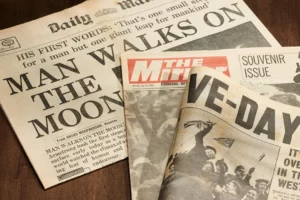
Newspapers were the primary vehicle for wartime propaganda. In Britain, The Illustrated War News (1914–1918) published photographs and captions that depicted the war as a noble and heroic struggle (source [1]). The tone was uniformly patriotic, with headlines such as “Heroic Stand at Ypres” or “The Enemy’s Brutal Atrocities.” Newspapers on both sides of the conflict published similar stories, and they were read by millions of civilians.
One contemporary account, from a British newspaper, described the German army as “a horde of savages,” a phrase typical of the Manichaean approach (source [3]). Such coverage was not accidental; it was the result of government directives and a cooperative press.
Official Reports
Governments produced official reports on their propaganda activities, which now reside in political archives across the United States, Germany, and Britain (source [2]). These documents reveal the deliberate planning behind propaganda. For example, the British War Propaganda Bureau issued memoranda on how to frame the war for different audiences: soldiers, civilians, neutral nations, and the enemy. The reports show that the “universal laws” of propaganda—such as the reliance on emotional appeal and the creation of a clear enemy—were consciously applied (source [2]).
Official reports also reveal a discrepancy: while the public was told that propaganda was simply a matter of “telling the truth,” the internal documents show that governments intentionally exaggerated or invented stories to demonize the enemy.
Different Perspectives
Home Front
For civilians, propaganda was a source of reassurance and a call to sacrifice. Posters urged women to work in factories, men to enlist, and children to collect scrap. The language was one of duty and honor, and the enemy was depicted as a brutal monster. This approach was designed to keep morale high and to encourage support for the war effort (source [3]).
Military Front
Soldiers received propaganda in the form of trench newspapers and leaflets. The aim was to maintain fighting spirit and to demonize the enemy. However, some soldiers were also the target of propaganda from the other side, which attempted to sow doubt and encourage desertion. The propaganda directed at soldiers often differed from that aimed at civilians, focusing more on the honor of the unit and the glory of the battlefield (source [3]).
Neutral Countries
Neutral nations were a crucial target. Both sides tried to win over neutral public opinion through propaganda, as well as through economic and diplomatic pressure. The British, for example, used the sinking of the Lusitania to portray the Germans as barbarians, while the Germans tried to appeal to American anti-British sentiment (source [3]).
How Historians See It Today
Modern historians no longer view propaganda as a mere tool of war, but as a systematic and central feature of modern statecraft. The First World War was the first conflict in which propaganda became a pervasive, systematic instrument of every government (source [2]). Historians have identified nine “universal laws” of propaganda that emerged from the war and continue to shape public communication today (source [2]). These include the principle that emotional appeals are more compelling than objective facts—a phenomenon that has been observed in contemporary politics as well (source [1]).
However, historians also debate the effectiveness of propaganda. While it clearly helped to mobilize consent, it is difficult to measure its precise impact on public opinion (source [3]). What is certain is that propaganda shaped the way contemporaries understood the war, and that its legacy continues to influence how we think about truth and manipulation in the media.
In conclusion, the primary sources of the two World Wars—newspapers, official reports, posters, and personal accounts—reveal a world in which governments sought to control not only the battlefront but also the home front. The theme of propaganda in wartime sources is not simply a matter of historical curiosity; it is a reminder of the power of information and the importance of critical thinking in times of crisis. The sources teach us that propaganda is not a weapon of the enemy alone, but a tool that all governments use, and that the first casualty of war is often the truth.
FAQ
What was the 'Manichaean approach' in wartime propaganda?
The Manichaean approach was a propaganda technique used by all belligerent governments during World War I. It presented the enemy as wholly evil and one's own side as wholly good, leaving no room for nuance. This method was used to dehumanize the enemy and to justify the sacrifices of war (source [3]).
Did propaganda during WWI actually change people's minds?
Historians debate the effectiveness of propaganda. While it clearly mobilized support and kept morale high, it is difficult to measure its direct impact on individual opinions. Some scholars argue that propaganda reinforced existing beliefs rather than changing them (source [3]).
Leave a Reply