
Short Answer
Quick Snapshot
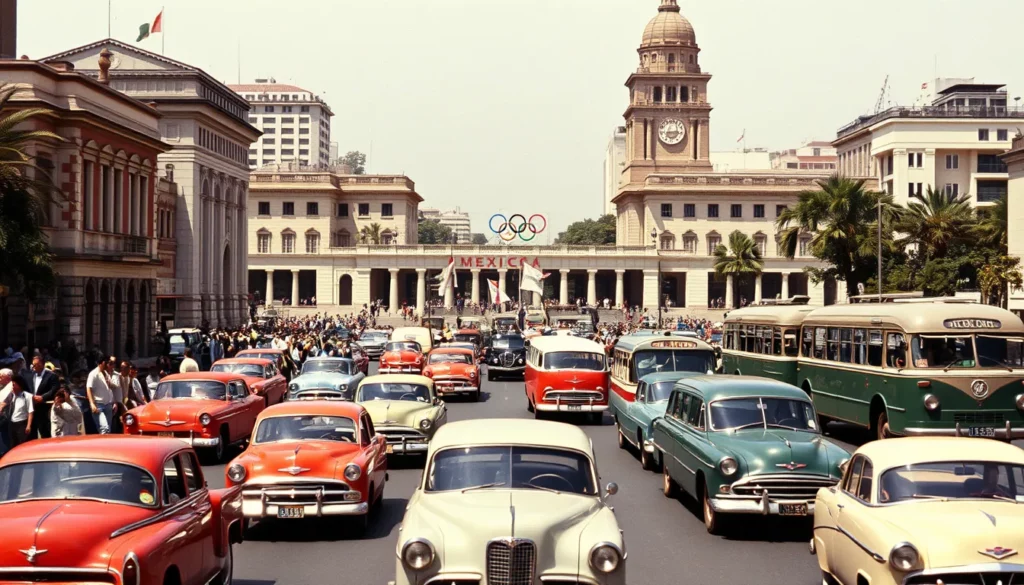
In 1968, Mexico City stood at a crossroads of national pride and political turmoil. The city was preparing to host the XIX Olympic Games, the first ever held in Latin America, under the slogan “Everything is possible in peace.” Yet beneath the surface of modernization and international acclaim, a fierce student movement had erupted, challenging the authoritarian rule of the Institutional Revolutionary Party (PRI). The year culminated in the Tlatelolco massacre on October 2, when government forces opened fire on a peaceful rally in the Plaza de las Tres Culturas, killing hundreds of students and civilians. This tragedy, just ten days before the Olympics, cast a long shadow over the games and marked a turning point in modern Mexican history.
The contrast between the festive Olympic atmosphere and the violent repression defined the city’s experience in 1968. While athletes and tourists arrived to celebrate sport, students and workers took to the streets demanding democratic reforms. The government’s brutal response at Tlatelolco revealed the depths of political repression and sparked decades of debate, artistic expression, and historical reckoning. Mexico City in 1968 was a place where the promise of global modernity collided with the reality of domestic authoritarianism.
Mexico City in 1968
Mexico City, the capital of Mexico, sits in the Valley of Mexico at an altitude of about 2,240 meters. In 1968, it was a sprawling metropolis of contrasts, with modern boulevards and skyscrapers alongside colonial-era churches and sprawling shantytowns. The climate is temperate highland, with mild temperatures year-round and a rainy season from May to October. The city was the political, economic, and cultural heart of the nation, home to the presidential palace, the National Autonomous University of Mexico (UNAM), and numerous museums and theaters.
The atmosphere in 1968 was charged. The city was undergoing rapid modernization, with new infrastructure projects, including the construction of the Metro (which opened in 1969), and preparations for the Olympics. Yet social inequality was stark, and the authoritarian government of President Gustavo Díaz Ordaz maintained strict control over political dissent. The Olympics were seen as an opportunity to showcase Mexico’s development to the world, but the student movement exposed the fissures beneath the surface.
Population & Economy
In 1968, Mexico City’s population was approximately 6.5 million people in the Federal District, with the larger metropolitan area encompassing several million more. The city was experiencing rapid urbanization due to rural-to-urban migration, as people sought jobs in the growing industrial and service sectors. The economy was booming, with an average annual GDP growth of 3-4% during the 1960s, often referred to as the “Mexican Miracle.”
Major industries included manufacturing (textiles, food processing, chemicals), oil refining, and tourism. The city was also a center for banking and commerce. Employment was diverse, but many workers faced low wages and poor working conditions. The cost of living had risen steadily; a kilo of tortillas cost about 1.20 pesos, a bus ticket 0.50 pesos, and a modest apartment rented for around 500 pesos per month. Despite economic growth, income inequality remained severe, fueling social discontent.
Government & Politics
Mexico City was governed by a Regent of the Federal District, appointed by the President. In 1968, the Regent was Alfonso Corona del Rosal, a loyal member of the PRI. The city had no elected mayor; political power was centralized in the federal government. President Gustavo Díaz Ordaz (1964-1970) ruled with an iron fist, maintaining the PRI’s dominance through a mix of patronage, corruption, and repression.
The political climate was tense. The student movement, which began in July 1968 with protests against police brutality, quickly grew into a broader demand for democratic reforms, freedom of political prisoners, and the repeal of repressive laws. The government’s response was to delegitimize the movement and then crush it. The Tlatelolco massacre was the culmination of this repression, and it exposed the authoritarian nature of the PRI regime to the world.
Industry
Mexico City was the industrial powerhouse of Mexico. Key sectors included textile manufacturing, food and beverage processing, chemicals, pharmaceuticals, and metalworking. Large factories and numerous smaller workshops dotted the industrial zones. The city also had a thriving informal economy, with street vendors and artisans.
The oil industry was nationalized (Pemex), and Mexico City housed the headquarters of many state-owned enterprises. Tourism was a growing industry, especially with the upcoming Olympics. The government invested heavily in infrastructure, including hotels, roads, and the Olympic facilities, which created jobs but also displaced communities. The economic boom, however, did not benefit all equally; many workers in the informal sector lived in poverty.
Education
Mexico City was the educational center of the country. The National Autonomous University of Mexico (UNAM), founded in 1551, was the largest university in Latin America, with over 60,000 students. The National Polytechnic Institute (IPN), founded in 1936, was another major institution, focusing on technical and engineering education. Literacy rates in the city were higher than the national average, though precise figures for 1968 are difficult to ascertain; approximately 80-85% of adults were literate.
The student movement of 1968 was rooted in these universities. Students protested against the government’s heavy-handedness, demanded university autonomy, and called for broader political freedoms. The government’s occupation of UNAM on September 18, 1968, using army troops, was a turning point that galvanized opposition. Education was seen as a pathway to social mobility, but the repression of students shattered the illusion of progress.
Transportation
In 1968, Mexico City’s transportation system was a mix of old and new. The city had an extensive network of buses, including private and public lines, and thousands of peseros (shared taxis) that served as informal public transport. Streetcars, once a major mode, were being phased out; the last streetcar ran in 1970. Private cars were increasingly common, but traffic congestion was already a problem.
The construction of the Mexico City Metro had begun in 1967 and was scheduled to open in 1969, just after the Olympics. For the games, special bus routes and improvements to roads were implemented. The city’s airport, Benito Juárez International Airport, was expanded to handle the influx of visitors. However, transportation was also a site of political conflict; students used buses to travel to protests, and the government monitored movement.
Everyday Life
Daily life in Mexico City in 1968 was shaped by tradition and modernization. Most families lived in modest homes or apartments in neighborhoods like Roma, Condesa, or the sprawling outskirts. The extended family was central, and Sundays were often reserved for family gatherings and church. Food was a mix of street tacos, tamales, and home-cooked meals; the city’s markets, such as La Merced, were bustling hubs.
Clothing reflected the era: men wore suits or guayaberas, women dresses or skirts. Entertainment included cinema, radio, and television; Mexican cinema was in its golden age, and television stations broadcast telenovelas and news. For young people, rock and roll and the counterculture were beginning to influence fashion and music, though the government frowned upon such expressions. Social customs were conservative, but the student movement brought a new spirit of rebellion. The Olympics brought a wave of international visitors and cultural events, but for many residents, life continued much as before, with the added tension of political unrest.
Major Events
The year 1968 in Mexico City was dominated by two intertwined events: the Olympic Games and the student movement, which culminated in the Tlatelolco massacre. The student protests began in July 1968 after a clash between rival student groups was brutally suppressed by police. On July 26, a massive demonstration took place, and on August 27, over 300,000 people marched to the Zócalo, demanding democratic reforms. The government responded with force, occupying UNAM on September 18.
On October 2, ten days before the Olympics, a rally at the Plaza de las Tres Culturas in Tlatelolco was surrounded by military and police. Without warning, they opened fire, killing an estimated 300-500 people and injuring thousands. The government claimed it was a shootout between rival groups, but eyewitness accounts and subsequent investigations revealed a deliberate massacre. The Olympics opened on October 12 as planned, but the shadow of Tlatelolco hung over the games. The massacre was largely censored in Mexican media, but international journalists, like John Rodda of The Guardian, reported on it.
What Newspapers Were Reporting
Mexican newspapers were largely complicit in the government’s cover-up. Excélsior, one of the leading papers, on October 4, 1968, reported the official version: that armed agitators had fired on the army. The headline read: “Provocadores armados dispararon contra el Ejército” (“Armed provocateurs fired on the Army”). Similar narratives appeared in El Sol de México and other major dailies. However, some journalists and intellectuals, like Ricardo Garibay in Excélsior (September 27, 1968), wrote critically about the political climate.
International media provided a different account. John Rodda of The Guardian wrote on October 4, 1968: “Trapped at Gunpoint in the Middle of Fighting,” describing the scene. On October 7, he reported “Olympic Torch Arrives in Mexico,” noting the tension. The New York Times and Le Monde also covered the massacre. The discrepancy between domestic and international reporting highlighted the government’s control over the Mexican press.
What People Were Talking About
In the aftermath of Tlatelolco, rumors and fear swept through the city. People whispered about the number of dead, the disappearance of bodies, and the government’s role. Elena Poniatowska’s La noche de Tlatelolco collects testimonies from survivors, students, workers, and parents. One student recalled: “They were shooting at us like dogs.” Others spoke of the smell of gunpowder and the screams. The government’s claim that students were armed was widely disbelieved.
Public debates centered on the Olympic Games: should they go on? Many argued that canceling would be a victory for the government, while others felt it was obscene to celebrate while bodies were still being buried. The slogan “Everything is possible in peace” became bitterly ironic. People also discussed the future of the student movement and the possibility of further repression. The massacre became a taboo subject in official discourse but lived on in family stories and underground publications.
Historical Photographs
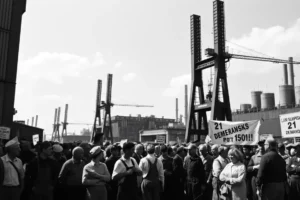
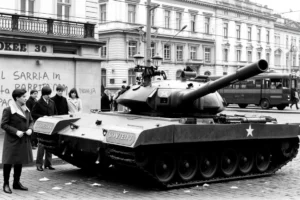
The visual record of Mexico City in 1968 is rich but contested. Photographers like Rodrigo Moya, who worked for Excélsior, captured the student protests, the marches, and the aftermath of Tlatelolco. His iconic images show students with raised fists, military vehicles, and the bullet-scarred walls of the Plaza de las Tres Culturas. Other photographers, including those from international agencies, documented the Olympics and the contrast with the protests.
However, the government attempted to suppress images of the massacre. Many photographs were confiscated or destroyed. Some witnesses took their own photos, which have since surfaced in archives and exhibitions. The National Security Archive has declassified documents and photographs. The visual evidence is crucial for understanding the scale of the violence and the government’s attempts to control the narrative.
Documents & Primary Sources
Historians studying Mexico City in 1968 rely on a variety of primary sources. The Archivo General de la Nación (AGN) holds the records of the Comité Organizador de los Juegos Olímpicos (COJO), including correspondence, budgets, and security plans. The International Olympic Committee (IOC) archives in Lausanne contain minutes of meetings, such as the 67th session in October 1968, which notably omitted any mention of the massacre. Declassified U.S. documents from the CIA and State Department provide intelligence reports on the student movement and the massacre.
Personal testimonies, such as those collected in Poniatowska’s La noche de Tlatelolco, offer eyewitness accounts. Newspapers like Excélsior, La Jornada, and The Guardian provide contemporary reporting. Photographs, films, and audio recordings from the era are held in the Filmoteca de la UNAM and other archives. Legal documents, including arrest records and military orders, are harder to access but have been partially released through freedom of information requests.
1968 Timeline
| Date | Event |
|---|---|
| July 22 | Clash between students and police; protests begin. |
| July 26 | Massive student demonstration in Mexico City. |
| August 27 | Over 300,000 march to the Zócalo; government promises dialogue. |
| September 18 | Army occupies UNAM, arresting hundreds. |
| October 2 | Tlatelolco massacre in Plaza de las Tres Culturas. |
| October 12 | Olympic Games open in Mexico City. |
| October 26 | Olympic Games close. |
What Changed Next
The Tlatelolco massacre had profound consequences. In the short term, the government’s repression silenced public protests, and the Olympics proceeded without major disruption. But the massacre shattered the legitimacy of the PRI regime for many Mexicans. The 1970s saw the rise of guerrilla movements and increased state violence, as well as a gradual opening in the press and civil society. The student movement inspired later generations of activists, and the memory of Tlatelolco became a rallying cry for democracy.
In the longer term, the massacre led to a reckoning with human rights abuses. In 1998, a special prosecutor was appointed to investigate, and in 2001, President Vicente Fox ordered the release of documents. However, full justice has never been achieved. The Plaza de las Tres Culturas now has a memorial, and every October 2, survivors and families gather to remember. The Olympics themselves left a legacy of infrastructure, but also a cautionary tale about the cost of using mega-events to whitewash authoritarianism.
Sources
- Murtha, Ryan T. “When the guns boom”: The 1968 Olympics and the Massacre at Tlatelolco. Texas ScholarWorks, 2018. https://doi.org/10.15781/t2tq5s024
- “The Mexican Student Movement of 1968: An Olympic Perspective.” The International Journal of the History of Sport, vol. 26, no. 6, 2009. https://doi.org/10.1080/09523360902739330
- Poniatowska, Elena. La noche de Tlatelolco: Testimonios de historia oral. Mexico City: Ediciones Era, 1971.
- National Security Archive. “The Declassified Record on the Tlatelolco Massacre that Preceded the ’68 Olympic Games.” 2014.
- Archivo General de la Nación (AGN), Mexico City, Comité Organizador de los Juegos Olímpicos (COJO) collection.
FAQ
What was the population of Mexico City in 1968?
Approximately 6.5 million people in the Federal District, with the metropolitan area being larger.
What major events happened in Mexico City in 1968?
The Tlatelolco massacre on October 2 and the 1968 Summer Olympics, which opened on October 12.
What primary sources are available for studying Mexico City in 1968?
Newspapers like Excélsior, testimonies in Poniatowska's La noche de Tlatelolco, declassified government documents, photographs, and IOC archives.
How did daily life in Mexico City in 1968 differ from today?
No internet or smartphones, fewer cars, no Metro (opened 1969), more traditional social norms, and a climate of political repression.










Leave a Reply