
Short Answer
Quick Snapshot
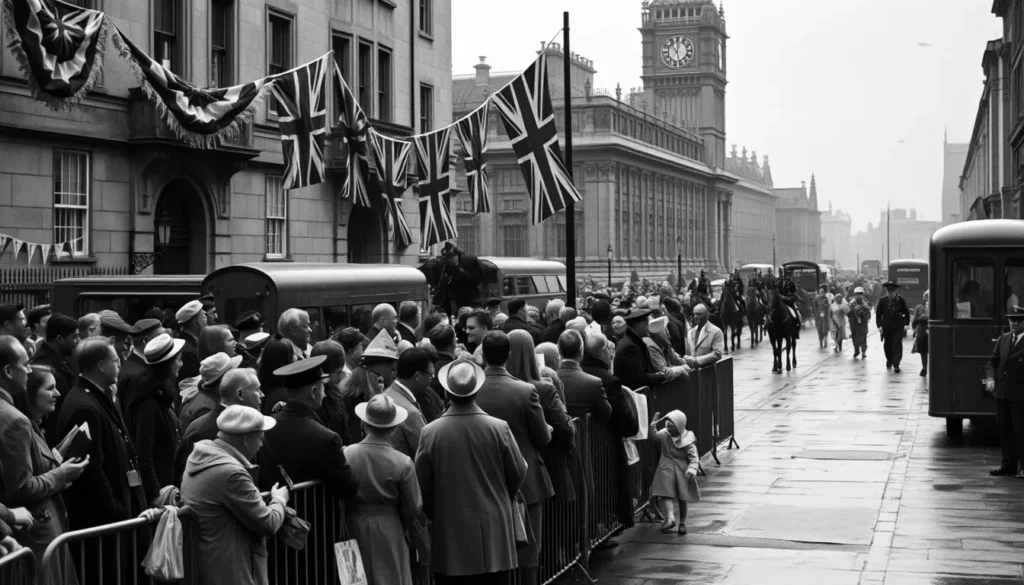
London in 1953 was a capital caught between the grey aftermath of war and the bright promise of a new reign. Bomb sites still pocked the East End and the City, food rationing remained part of ordinary household management, and many families lived in cramped Victorian housing or temporary prefabs. Yet the city was also the stage for the most elaborate public ceremony of the decade: the Coronation of Queen Elizabeth II on 2 June 1953.
The Coronation transformed London into a global theatre. Some three million people lined the procession route between Buckingham Palace and Westminster Abbey, many camping overnight in chilly, showery weather. The BBC mounted its largest outside broadcast, and although only about two million British households owned a television, an estimated 20 to 27 million people watched the live coverage, often gathered in neighbours’ front rooms. The Times called the occasion a “holiday from reality”.
Beneath the pageantry, Londoners were still living with the consequences of the Second World War. Sweets came off ration in February 1953, but meat, butter, cheese, eggs and sugar were still controlled for much of the year. London Transport decorated stations and buses, published two million guide maps and moved vast crowds with military precision. The year was thus both a festival and a lesson in postwar austerity.
London in 1953
This article uses the common encyclopedic meaning of London: the capital of England and the United Kingdom, comprising the County of London, the City of London and the surrounding metropolitan boroughs that made up Greater London. In 1953 the city was still governed by a patchwork of authorities, including the Labour-controlled London County Council, the ancient City of London Corporation and numerous metropolitan borough councils.
Geographically, London sprawled along the Thames, from the docks and industrial riverside in the east to the West End shops and government offices in the centre and the growing suburbs beyond. The climate that year was typically unsettled; Coronation Day itself dawned chilly and showery, as photographs of Royal Marines on the Victoria Embankment make clear. The city still suffered from coal smoke and poor air quality, a legacy that would become impossible to ignore after the Great Smog of December 1952.
Population & Economy
Greater London had a population of about 8.3 million in the early 1950s, with roughly 3.3 million living in the County of London. The capital had passed its pre-war population peak as suburbanisation and slum clearance began to move people outward, but it remained by far the largest urban centre in Britain. Its workforce was diverse: dockers, factory hands, printers, civil servants, shop assistants, transport workers, nurses, teachers and office clerks.
The economy was recovering but still shaped by austerity. The Port of London remained a vast employer, while manufacturing in the East End and inner suburbs ranged from clothing and furniture to engineering and food processing. Fleet Street was the heart of the national newspaper industry, the West End attracted shoppers and theatregoers, and the City of London remained a financial centre. Rationing, price controls and subsidies meant that household budgets were managed with care.
- Food remained rationed for much of 1953, though sweets came off ration in February and sugar rationing ended in September.
- Bomb damage and housing shortages made rent-controlled rooms, shared houses and prefabs common.
- A pint of milk cost about 4d, and a cinema seat might be had from roughly 1s 6d, though prices varied.
- Full employment was high, but wages were modest and many families relied on overtime and careful budgeting.
Government & Politics
National politics were dominated by Winston Churchill’s Conservative government, returned to office in 1951, and by the symbolism of the new Elizabethan age. The Queen’s accession had followed the death of George VI in February 1952; her Coronation in June 1953 gave the nation a ceremonial focus after years of austerity and war. The Cold War, the Korean War and Britain’s changing imperial role formed the wider political backdrop.
At local level, the London County Council was Labour-controlled and led by Isaac Hayward. The LCC ran schools, housing, roads and many public services, while the City of London Corporation maintained its separate historic role. The metropolitan boroughs handled local housing, health and sanitation. No general election took place in 1953, but the previous year’s LCC election had confirmed Labour’s hold on County Hall. London’s politics were increasingly concerned with housing, redevelopment and the shape of the postwar city.
Industry
London’s industry was varied and deeply embedded in the urban fabric. The Port of London and its docks handled goods from around the world, employing thousands of dockers, stevedores and clerical staff. East London workshops produced clothing, furniture and light manufactures, while engineering works and food-processing plants served the metropolitan market. Fleet Street printed national newspapers, the West End supported luxury trades and department stores, and London Transport was itself a major industrial and bureaucratic employer. The BBC, based in and around London, was expanding its broadcasting operations and preparing for the Coronation’s unprecedented television coverage.
Education
The 1944 Education Act had reshaped schooling in England and Wales, and London was in the middle of implementing the tripartite system of grammar, secondary modern and technical schools. The school leaving age was 15, and the eleven-plus examination directed children into different educational routes. The London County Council ran a large network of schools and was responsible for many postwar building projects, although shortages of materials and labour slowed reconstruction. The University of London and its colleges provided higher education, while adult education, evening classes and public libraries remained important for working Londoners. Literacy was near universal, and newspapers and magazines were central to public life.
Transportation
Londoners moved around by bus, trolleybus and Underground, with mainline railways bringing commuters and visitors into the centre. The capital’s trams had been withdrawn by 1952, and London Transport was modernising its bus fleet while maintaining a dense network of tube and rail services. The Thames remained a working river, and the docks depended on road, rail and lighterage connections.
The Coronation required extraordinary transport planning. London Transport decorated stations along the procession route, produced two million guide maps, distributed posters and handled huge volumes of enquiries: in the busiest week, about 34,500 telephone calls and 6,000 letters arrived. Extra trains began arriving in London from 3am, with traffic peaking between 6.30 and 7.30am. Around 20,000 military personnel took part in the procession, and special arrangements helped 15,000 children gather on the Embankment to watch. That three million spectators could arrive and leave smoothly was a remarkable logistical achievement.
Everyday Life
Daily life in 1953 was still governed by the ration book. Housewives juggled coupons for meat, butter, cheese, eggs and sugar, and queued for supplies when rumours of extra stock spread. Sweets were a small cause for celebration after February, but many families remained cautious with food. Housing was perhaps the greatest domestic concern: bombed streets, overcrowded lodgings and long waits for council housing shaped family life. Prefabs, though temporary, offered some families a modern kitchen, indoor bathroom and garden for the first time.
Clothing was practical and often patched or remade, though Coronation fever encouraged new dresses, hats and souvenirs. Entertainment was mixed: radio was a central fixture, cinema remained hugely popular, and television was spreading rapidly. The Coronation gave television an enormous boost, with neighbours crowding into the homes of the few who owned sets. Street parties, decorated tables, bunting and Union Jacks marked the day, especially for children. Pubs, dance halls, churches and working men’s clubs continued to provide social life.
Food and drink reflected the period. Coronation chicken, a mild curry-flavoured dish created for the Coronation banquet, became a lasting culinary memorial. Shops sold commemorative mugs, tins, handkerchiefs and programmes; the government removed purchase tax on souvenirs and restricted foreign imports to boost British production. The legacy of the Great Smog of December 1952 also hung over the city, reinforcing concerns about coal smoke and public health.
Major Events
- 31 January–1 February: The North Sea flood devastated parts of the Thames Estuary and eastern England, prompting later reconsideration of London’s flood defences.
- February: Sweet rationing ended, a small but symbolic relief for households.
- 2 June: Queen Elizabeth II was crowned at Westminster Abbey; the procession and celebrations drew millions into London.
- 2 June: The BBC broadcast the Coronation live, the first major royal event to be televised internationally.
- July: The Korean War armistice was signed, easing international tension though the Cold War continued.
- September: Sugar rationing ended, one of the first steps towards the later dismantling of postwar food controls.
What Newspapers Were Reporting
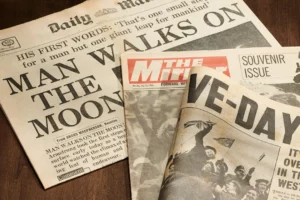
London’s newspapers were filled with Coronation preparations for months. The Times, the Daily Express, the Daily Mirror and the Evening Standard carried processional routes, timings, weather forecasts and advice for spectators. The Times described the Coronation as a “holiday from reality”, capturing the sense that the ceremony offered temporary release from rationing and reconstruction. Papers also reported the television arrangements, the souvenir trade and the vast crowds camping overnight.
The Times called the event a “holiday from reality”, a phrase that summed up the mixture of escapism and national self-presentation surrounding the Coronation.
Newspapers also followed rationing news, housing debates and the weather. Local and national titles printed detailed maps and transport instructions, while photographs of decorated streets and smiling crowds helped create a public memory of the day. Advertisements for Coronation souvenirs, televisions and street-party supplies sat alongside serious reporting on the North Sea floods and the Korean War.
What People Were Talking About
Conversation in 1953 moved between excitement and anxiety. The Coronation dominated talk: neighbours discussed television access, the Queen’s dress, the procession route and whether the weather would hold. Rationing remained a constant practical topic, especially as sweets, sugar and other foods gradually came off control. Housing was another persistent concern, with families discussing council lists, prefabs and the slow clearing of bomb sites. Some commentators spoke of a new Elizabethan age, while others worried about the cost of living, the Cold War and Britain’s place in a changing Commonwealth.
Diaries and letters from the period suggest that many people experienced the Coronation as a genuine communal occasion, not merely official pageantry. Street parties, school pageants and decorated homes allowed ordinary Londoners to participate. Yet the same sources record fatigue, crowded transport, chilly weather and the everyday grind of queuing and budgeting.
Historical Photographs
A rich visual record survives. The London Museum holds photographs and objects relating to the Coronation, including Wolfgang Suschitzky’s image of Piccadilly Circus decorated for the event and Bob Collins’s photograph of crowds waiting for the procession. Henry Grant photographed a Streatham primary school coronation pageant, showing how local schools translated imperial and Commonwealth themes into children’s performances. The museum also holds commemorative souvenirs and clothing associated with the day.
The London Transport Museum collection documents the logistical side: decorated Underground stations, flowers prepared at Acton Nursery, staff handling enquiries, posters advertising Coronation tours and photographs of crowds outside Westminster station. Colin Tait photographed the waiting crowds, while Dr Heinz Zinram recorded Royal Marines on the Victoria Embankment and children arriving at Temple station. Kenneth Wynn’s watercolour painted from Selfridges on Oxford Street captures the Gold State Coach and the vivid decoration of the West End. These images show both spectacle and ordinary labour.
Documents & Primary Sources
- 1951 Census records for London and the surrounding counties, providing population and occupation data.
- London County Council minutes, reports and education records held at the London Metropolitan Archives.
- London Transport staff records, posters, maps and photographs in the London Transport Museum collection.
- The Times Digital Archive and other newspaper archives for June 1953 and the surrounding months.
- Mass Observation diaries, directives and reports from 1953, now held at the University of Sussex.
- London Museum collection objects, photographs and oral histories relating to the Coronation.
1953 Timeline
| Date | Event |
|---|---|
| 31 Jan–1 Feb | North Sea flood affects the Thames Estuary and eastern England |
| February | Sweets come off ration |
| 2 June | Coronation of Queen Elizabeth II at Westminster Abbey |
| 2 June | First live television broadcast of a British Coronation |
| July | Korean War armistice signed |
| September | Sugar rationing ends |
What Changed Next
The years after 1953 brought gradual prosperity and rapid social change. Meat rationing ended in 1954, and the last food controls were dismantled soon afterwards. Television ownership soared, partly because the Coronation had demonstrated the medium’s power. London’s housing debate intensified as slum clearance, New Towns and high-rise estates reshaped the skyline. Immigration from the Commonwealth, especially the Caribbean, changed the capital’s social fabric, while the Clean Air Act of 1956 followed the lethal smogs and began to transform London’s atmosphere. The Coronation year thus marked a hinge between austerity and affluence.
Sources
- London Museum, “The coronation of Queen Elizabeth II, 1953”, https://www.londonmuseum.org.uk/collections/london-stories/the-coronation-of-queen-elizabeth-ii-1953/
- London Transport Museum, “A grand occasion: London Transport’s role in Queen Elizabeth II’s Coronation”, https://www.ltmuseum.co.uk/collections/stories/people/grand-occasion-london-transports-role-queen-elizabeth-iis-coronation
- The Times Digital Archive, 1953.
- Mass Observation Archive, University of Sussex.
- London Metropolitan Archives, London County Council minutes and reports, 1953.
FAQ
What was the population of London in 1953?
Greater London had an estimated population of about 8.3 million, while the County of London had roughly 3.3 million people.
What major events happened in London in 1953?
The central event was the Coronation of Queen Elizabeth II on 2 June, with a vast procession, street parties and the first live television broadcast of a British Coronation. The year also saw the North Sea flood, the end of sweet rationing and the gradual lifting of some food controls.
What primary sources are available for studying London in 1953?
Researchers can use the 1951 Census, London County Council records, London Transport staff records and posters, newspaper archives such as The Times Digital Archive, Mass Observation diaries and the photographic collections of the London Museum and London Transport Museum.
How did daily life in London in 1953 differ from today?
Food rationing, limited television ownership, coal smoke, postwar housing shortages and a smaller consumer economy shaped daily life. Travel relied heavily on buses and the Underground, and many families lived in older rented housing or prefabs rather than owning homes.




Leave a Reply