
Short Answer
Quick Snapshot
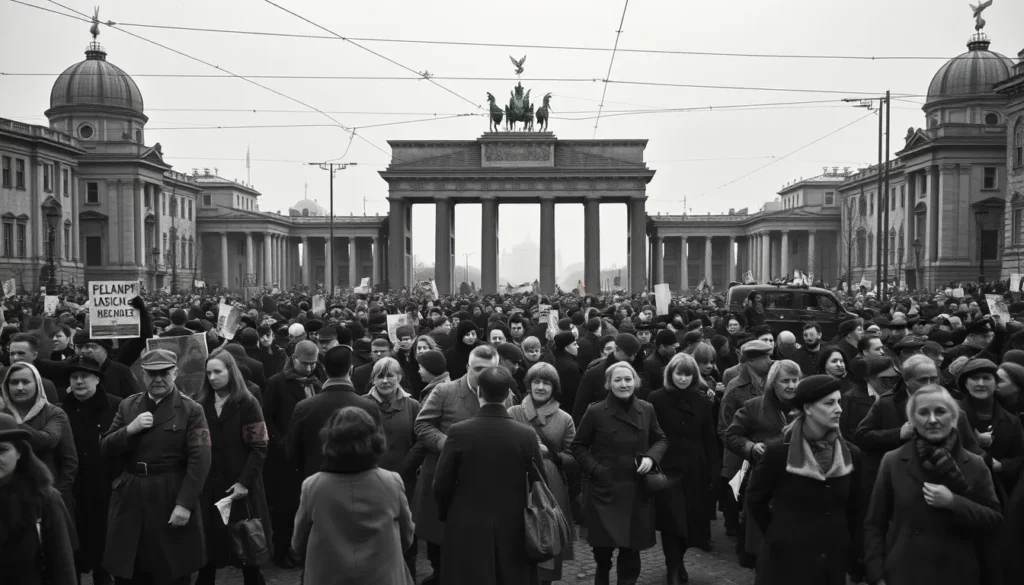
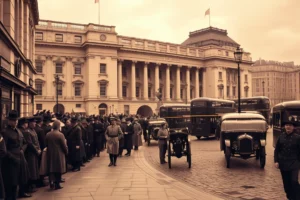
In 1918 Berlin was still the capital of the German Empire and the Kingdom of Prussia, but the city was living through the fourth year of a war that had emptied larders, filled hospitals, and divided politics. The January munitions strikes, the failed spring offensives, and the Allied counteroffensive in the west brought the empire to the edge of collapse. By late October, the Kiel sailors’ mutiny had begun to spread, and in early November crowds filled the streets around the Reichstag, the Berlin Palace, and Unter den Linden.
On 9 November 1918 the old order broke in a single day. Philipp Scheidemann proclaimed a German republic from the Reichstag, Karl Liebknecht proclaimed a socialist republic from the palace, and Kaiser Wilhelm II’s abdication was announced. Two days later the armistice ended the fighting. Berlin became the stage for workers’ and soldiers’ councils, rival socialist visions, press photography, and intense debates over peace, bread, democracy, and order.
The revolution was not a clean tableau. It mixed elation with hunger, armed patrols with cabaret crowds, and radical slogans with urgent demands for elementary stability. This article follows the city within its pre-1920 boundaries.
Berlin in 1918
Berlin lay on the sandy North German plain, astride the Spree and Havel rivers, its skyline a mixture of palace domes, factory chimneys, tenement blocks, railway viaducts, and the new electric tram wires. The city’s heart held the imperial and Prussian government quarter: the Berlin Palace, the Reichstag, the Brandenburg Gate, and the broad avenue of Unter den Linden. Nearby ran the newspaper district, where the Mosse and Ullstein presses gave Berlin a national and international voice. To the north, east, and south stretched working-class districts and industrial suburbs such as Moabit, Wedding, Friedrichshain, and Oberschöneweide.
The climate in 1918 was less notable than the conditions imposed by war. Cold, damp weather aggravated coal shortages, poorly heated flats, and queues for food. The “Turnip Winter” of 1916–17 had already become a bitter memory, and 1918 brought no real relief. The atmosphere was one of exhaustion and expectancy: censored newspapers, uniformed men, women in factory clothes, disabled veterans, and suddenly, in November, red flags, posters, improvised armbands, and crowds that would not disperse.
Population & Economy
Before the war Berlin had been one of Europe’s fastest-growing metropolises, with roughly two million inhabitants in the city proper. Wartime deaths, influenza, troop movements, and the disruption of civilian life make the 1918 figure uncertain; a reasonable estimate is about 1.8 to 1.9 million. The city was younger and more female than in peacetime, with many men at the front and many women drawn into transport, munitions, commerce, and administration.
Berlin’s economy was a war economy. Electrical engineering, machine building, chemicals, clothing, printing, banking, and transport all served the war effort or kept the capital functioning. Firms such as Siemens & Halske and AEG were symbols of Berlin’s industrial power, while the great publishing houses produced newspapers, magazines, posters, and books. Rationing, price controls, and shortages distorted everyday exchange. Bread, potatoes, meat, fats, and coal were allocated by ration card, yet queues and black markets told a different story. Late in 1918 the prospect of demobilization raised a new fear: how would hundreds of thousands of soldiers and war workers be absorbed into a broken economy?
Government & Politics
Until November, Berlin was the seat of the imperial government, the Prussian ministries, and the Reichstag. The October reforms of 1918 made the chancellor responsible to the Reichstag and brought Prince Max von Baden to office, but they came too late to save the monarchy. Political life was already strained between the Majority Social Democrats, the Independent Social Democrats, the Spartacus League, progressive liberals, the Catholic Centre, and conservatives. The January strikes had shown that workers demanded peace, food, and democratization, not merely a change of ministers.
After 9 November, power in Berlin was claimed in the streets and negotiated in offices. Workers’ and soldiers’ councils sprang up, while Friedrich Ebert of the MSPD headed the Council of the People’s Deputies, a provisional government that sought order and early elections. The Independent Socialist Emil Eichhorn became Berlin’s police president, a post that made him a pivotal figure. Ebert’s willingness to work with the old officer corps and bureaucracy reassured moderates but enraged the radical left. The central conflict was already visible: would the revolution lead to a parliamentary republic, a council system, or something more radical?
Industry
Berlin was Germany’s largest industrial city and its leading centre of electrical engineering. Siemens & Halske, AEG, Borsig, and smaller machine shops supplied motors, cables, locomotives, armaments, and precision goods. Clothing and leather trades employed thousands, often in small workshops as well as large factories. Printing and publishing were industries in their own right: the Mossehaus and Ullstein buildings housed presses, editorial offices, and distribution networks that made Berlin the capital of German newspaper reading.
The war had pushed factories toward munitions and substitutes, but by 1918 raw materials, coal, and skilled labour were scarce. Strikes in January and again in the autumn revealed the fragility of industrial peace. Newsreels and posters soon became part of the political economy of the city, as parties and governments competed for the eyes of Berliners. The revolution did not stop work everywhere: trams ran, presses printed, and shops opened even as armed men guarded public buildings.
Education
Berlin possessed one of the densest educational landscapes in Europe. The Friedrich-Wilhelms-Universität, the Technische Hochschule in Charlottenburg, museums, libraries, and a large system of elementary and secondary schools gave the city a formidable intellectual life. Literacy was high by contemporary standards, and newspapers, pamphlets, and posters reached a broad public. The war, however, had emptied lecture halls and classrooms; teachers and students had been drafted, buildings requisitioned, and school meals became a form of relief.
The revolution opened debates about democratizing education, broadening access, and separating church and school, but in 1918 these remained promises and projects rather than completed reforms. University students and young workers were among the crowds in November, and the language of reform competed with the immediate tasks of demobilization and survival.
Transportation
Berliners moved through a dense network of railways, electric trams, the elevated Stadtbahn, the Ringbahn, and the young U-Bahn. Hauptbahnhöfe such as Potsdamer, Anhalter, Lehrter, and Schlesischer linked the capital to the front, the provinces, and foreign cities. Trams and buses carried workers across the city, while horse-drawn carts still served many deliveries. The streets were also the political arena: demonstrations, patrols, and barricades could halt traffic within minutes.
Coal shortages and military priorities made transport unreliable. In November, crowds around the Reichstag and palace disrupted ordinary routes; in the fighting that followed into 1919, overhead tram wires could be shot down and squares turned into armed checkpoints. Even so, the city’s transport system remained one of the structures that made revolution, journalism, and everyday survival possible.
Everyday Life
Daily life in 1918 Berlin was organized around scarcity. Families queued for bread, potatoes, and coal; housewives improvised with ersatz coffee, turnips, and thin soups; clothing was patched and remade. Housing in the Mietskasernen was crowded, and the coal shortage made cold rooms a political grievance as much as a private misery. Disabled veterans, widows, and children appeared in public spaces in ways that kept the human cost of war visible.
Yet the city did not stop seeking pleasure. Cinemas expanded their repertoires, cabarets and revues drew audiences, and dance halls taught the two-step and foxtrot. The end of censorship in November encouraged more daring films and satirical theatre. Revues joked about the housing shortage and strikes; popular songs alluded to the fate of war invalids. This mixture of grief, hunger, amusement, and political excitement is one of the defining features of Berlin in the revolutionary winter.
Major Events
The year opened with the January munitions strike, when hundreds of thousands of Berlin workers stopped work to demand peace, food, and political reform. The strike was suppressed and its leaders arrested, but it exposed the depth of war weariness. In spring and summer the German offensives failed; by autumn the army was retreating and Germany’s allies were collapsing. The Kiel mutiny at the end of October triggered a rapid spread of workers’ and soldiers’ councils across the Reich.
On 9 November Berlin became the centre of the revolution. Mass demonstrations filled the government quarter. Philipp Scheidemann proclaimed the republic from the Reichstag, while Karl Liebknecht proclaimed a socialist republic from the Berlin Palace. The abdication of Wilhelm II was announced, and Prince Max von Baden resigned; Ebert became chancellor and then head of the Council of the People’s Deputies. On 11 November the armistice took effect. In December the Christmas crisis, a dispute over the People’s Naval Division and its pay, brought fighting to the palace and left dozens dead.
“Long live the German Republic!” — Philipp Scheidemann, Berlin, 9 November 1918.
What Newspapers Were Reporting
Berlin’s press was among the most competitive in Europe. The Berliner Tageblatt, Vossische Zeitung, Vorwärts, Berliner Lokal-Anzeiger, and the newly founded Die Rote Fahne offered sharply different accounts of the same events. In the first days of November, papers carried bulletins on the mutiny, the chancellor’s resignation, the abdication, and the proclamation of the republic. After censorship fell, political newspapers became organs of rival visions: moderate socialists urged elections and order, while radical papers demanded that all power pass to the councils.
Newspapers also reported the practical revolution: food queues, troop movements, council meetings, wages, and the armistice terms. Press photographers such as Otto and Georg Haeckel and Willy Römer supplied images to publishers like Mosse and Ullstein. Their photographs of crowds, soldiers, barricades, and ruined squares were reproduced and sold, helping to shape how Berliners understood the upheaval even as it was still unfolding.
What People Were Talking About
Conversation in Berlin turned on the armistice, the fate of the Kaiser, the meaning of the councils, and the next meal. Workers debated whether the revolution would bring peace and bread or simply exchange one set of masters for another. Soldiers returning from the front worried about pay, pensions, and employment. Middle-class families feared disorder and Bolshevism; radicals feared that Ebert’s government would preserve the old bureaucracy and officer corps. Women discussed food, housing, missing relatives, and the new political rights that seemed suddenly possible.
Rumours moved faster than newspapers: stories of advancing Allied armies, of sailors marching on Berlin, of hidden supplies, of Spartacist plots. Housing shortage and strikes became subjects for revues, a sign that public concerns had entered entertainment. Diaries and police reports from the period show a city alternating between hope, exhaustion, and a determined wish for ordinary life to resume.
Historical Photographs
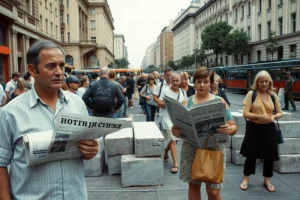
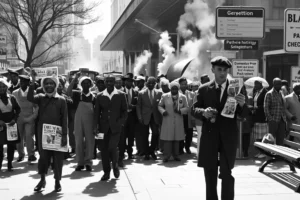
The visual record of revolutionary Berlin is unusually rich. Otto and Georg Haeckel photographed soldiers with guns on Unter den Linden and crowds before the palace. Willy Römer captured machine-gun positions behind barricades built from rolls of newspaper in front of the Mossehaus, as well as Alexanderplatz after fighting had cut overhead tram wires. Walter Gircke and others photographed electioneering, funerals, and street orators. Because fighting made photography dangerous, some scenes were staged during lulls, a reminder that even documentary images are constructed.
Posters, postcards, film stills, and newsreels add further evidence. They show not only revolution but entertainment: cabaret sketches, film premieres, and advertisements for revues. The photographs are significant because they preserve the faces of ordinary Berliners—workers, soldiers, women, children—alongside the famous politicians and iconic buildings of the old capital.
Documents & Primary Sources
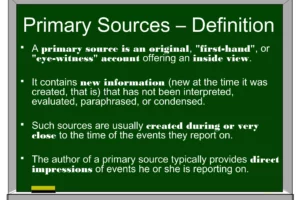
Historians reconstruct Berlin in 1918 from a wide range of records:
- Police reports and administrative files in the Landesarchiv Berlin, which document demonstrations, strikes, food distribution, and public order.
- Newspaper collections, especially the Berliner Tageblatt, Vossische Zeitung, Vorwärts, and Die Rote Fahne, many now digitized.
- Photographs by Willy Römer, the Haeckel brothers, and other press photographers held in the Kunstbibliothek and bpk collections.
- Council minutes, proclamations, posters, ration cards, and armistice bulletins in the Bundesarchiv and Staatsbibliothek zu Berlin.
- Diaries, letters, and memoirs of Berliners, which record everyday hunger, fear, and excitement more intimately than official records.
1918 Timeline
- Late January–early February: Mass munitions strike in Berlin demands peace, food, and political reform; it is suppressed.
- Spring–summer: German offensives fail; Allied counteroffensive and blockade deepen the crisis.
- October: Constitutional reforms and armistice request; Prince Max von Baden becomes chancellor.
- Late October: Kiel sailors’ mutiny spreads and councils form across Germany.
- 9 November: Mass demonstrations in Berlin; Scheidemann and Liebknecht proclaim republics; Wilhelm II’s abdication announced; Ebert becomes chancellor.
- 10 November: Council of the People’s Deputies formed under Ebert and Haase.
- 11 November: Armistice takes effect; Berliners confront peace, uncertainty, and demobilization.
- December: Christmas crisis and fighting over the People’s Naval Division leaves dozens dead.
What Changed Next
The revolution’s second stage was violent. In January 1919 the Spartacist uprising was crushed by government and Freikorps troops, and Rosa Luxemburg and Karl Liebknecht were murdered. Elections to the National Assembly went ahead, and the Weimar Republic was established with Berlin as its capital. The old imperial and Prussian institutions were dismantled or reshaped, but many officials, officers, and judges survived in place. Berlin remained a centre of political violence and cultural experiment through the Kapp Putsch of 1920, the inflation of 1923, and the precarious stability of the later 1920s.
Sources
- Chickering, Roger. Imperial Germany and the Great War, 1914–1918. Cambridge: Cambridge University Press, 2004.
- Haffner, Sebastian. Die deutsche Revolution 1918/19. Berlin: Kindler, 1968.
- Staatliche Museen zu Berlin. “Berlin in the 1918/19 Revolution. Photography, Film, Entertainment.” https://www.smb.museum/en/exhibitions/detail/berlin-in-the-191819-revolution/
- “German revolution of 1918–1919.” Wikipedia. https://en.wikipedia.org/wiki/German_Revolution_of_1918%E2%80%931919
- Staatsbibliothek zu Berlin. “Zeitungsinformationssystem (ZEFYS).” https://zefys.staatsbibliothek-berlin.de/
FAQ
What was the population of Berlin in 1918?
Estimates vary because of wartime disruption, but the city proper likely had about 1.8 to 1.9 million inhabitants within its pre-1920 boundaries.
What major events happened in Berlin in 1918?
Major events included the January munitions strikes, the collapse of the German war effort, the November revolution, the proclamation of the republic on 9 November, the armistice on 11 November, and the December Christmas crisis.
What primary sources are available for studying Berlin in 1918?
Researchers use police reports, newspapers, council minutes, posters, ration cards, photographs by Willy Römer and the Haeckel brothers, diaries, letters, memoirs, and newsreels held in Berlin archives and libraries.
How did daily life in Berlin in 1918 differ from today?
Daily life was shaped by war scarcity, rationing, coal shortages, poor housing, and political violence. Transport, communication, medicine, and entertainment were far less developed, and the city was at the centre of a revolution that ended the German Empire.



Leave a Reply