
Short Answer
Quick Snapshot
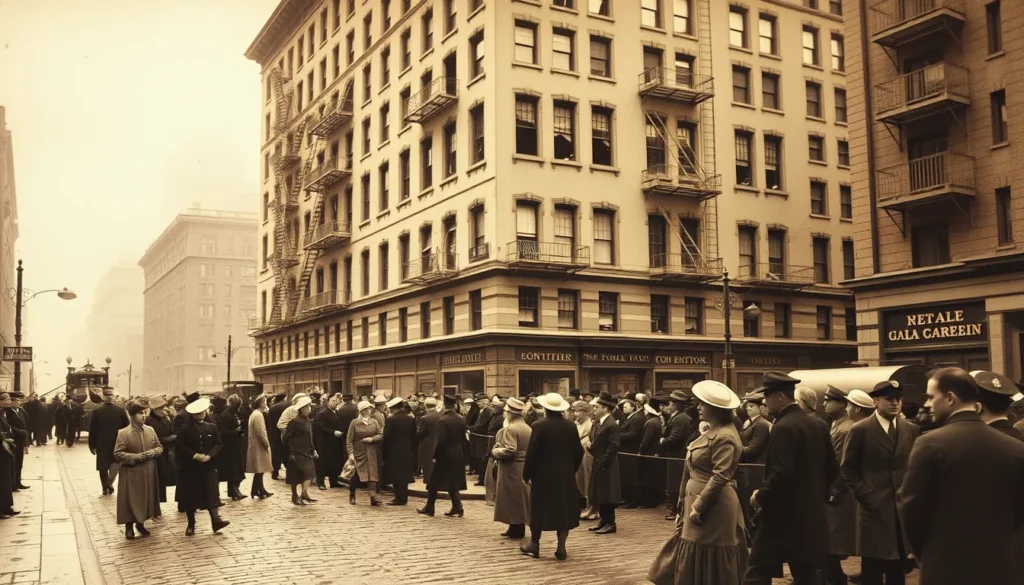
New York City in 1911 was a metropolis of nearly 4.8 million people, a crowded, energetic port city of immigrants, tenements, skyscrapers, streetcars, and garment factories. The year is remembered above all for the Triangle Shirtwaist Factory fire on March 25, 1911, when flames tore through the top three floors of the Asch Building near Washington Square and killed 146 workers, most of them young women and girls.
The fire exposed what many reformers had long warned about: locked exits, overcrowded workrooms, inadequate fire escapes, and a factory system that treated safety as secondary to output. Public grief and anger turned quickly into political pressure. Within months, New York State created the Factory Investigating Commission, chaired by Robert Wagner with Alfred E. Smith as vice-chairman, and the commission became a driving force behind new occupational safety and health laws.
This article focuses on New York City in 1911, with the Triangle fire and the ensuing fight for workplace reform as its central subject. It draws on contemporary newspaper accounts, official investigations, photographs, and later recollections to reconstruct a year when a local tragedy became a national turning point.
New York in 1911
By 1911 New York City had been consolidated into five boroughs for little more than a decade. Manhattan remained the commercial and cultural core, but Brooklyn, Queens, the Bronx, and Staten Island were growing rapidly. The harbor was thick with steamships, ferries, barges, and tugs. Downtown streets mixed horse-drawn wagons with electric streetcars, elevated trains, and a still-new subway, while new steel-frame towers pushed upward above older brick buildings.
The climate was humid and continental: cold winters, hot summers, and weather that shaped the daily routines of rich and poor alike. In working-class neighborhoods, coal smoke, factory whistles, pushcart markets, and crowded tenements defined the atmosphere. New York was also a city of stark contrasts. Wealthy New Yorkers shopped on Fifth Avenue and wintered in grand hotels, while immigrant families packed into dark railroad flats and worked long hours in sweatshops and factories.
Population & Economy
The 1910 federal census counted 4,766,883 residents in New York City, and the population in 1911 was close to that figure. Immigration from Eastern Europe, Italy, Ireland, Germany, and the Russian Empire had transformed the city. Jewish and Italian immigrants were especially prominent in the garment trades, where many women and girls found their first paid work in America.
New York was the nation’s financial capital and a major manufacturing center. The port employed dockworkers, sailors, and warehouse hands. Printing, publishing, banking, insurance, construction, brewing, and utilities all provided work. But the garment industry was one of the largest employers, producing shirtwaists, cloaks, suits, and dresses in factories and tenement workshops. Wages were low and seasonal. Many garment workers earned well under $12 a week, while tenement rents could run from roughly $10 to $20 a month; bread cost only a few cents a loaf, but steady work was never guaranteed.
Economic conditions were volatile. Prosperity at the top coexisted with poverty, child labor, and unsafe housing. Reformers argued that long hours, piecework, and unsanitary shops made the city’s industrial workers vulnerable to accidents and disease.
Government & Politics
New York City’s mayor in 1911 was William Jay Gaynor, a reform-minded but often combative Democrat who had taken office in 1910. At the state level, John Alden Dix served as governor. Tammany Hall still exercised considerable influence in city politics, but the Progressive movement was gaining ground, especially on issues of labor, housing, and public health.
The Triangle fire pushed workplace safety into the center of state politics. After a mass meeting at the Metropolitan Opera and a huge funeral procession, civic and labor leaders lobbied Albany for an investigation. State senators Robert Wagner and Alfred E. Smith became key allies. On June 30, 1911, a law created the New York Factory Investigating Commission, with Wagner as chairman and Smith as vice-chairman. The commission had unusual powers to summon witnesses, take testimony under oath, and examine fire hazards, sanitation, occupational disease, factory inspection, and tenement manufacturing.
Industry
The garment industry was the heart of New York’s manufacturing economy and the setting for the year’s central tragedy. The Triangle Waist Company occupied the eighth, ninth, and tenth floors of the Asch Building, a ten-story structure near Washington Square. The company made women’s shirtwaists, a popular style that required many hands and sewing machines. The building was advertised as fireproof, yet the factory was crammed with fabric, paper patterns, wooden tables, and bins of waste. The owners had been warned about hazards and refused to install sprinklers.
Other industries included docks and shipping, printing and publishing, construction, banking, breweries, and utilities. Thousands of smaller shops operated in tenements, where workers sewed garments in cramped rooms. Safety regulations were weak and unevenly enforced. The Triangle fire made the hidden risks of the garment trades visible to the entire city.
Education
New York’s public schools were overcrowded, especially in immigrant neighborhoods. Many children left school early to work, despite compulsory education laws. Evening classes in English, civics, and vocational skills served adults and older youths. The city also boasted major institutions of higher learning, including City College, New York University, and Columbia University, though these were far removed from the daily lives of most factory workers.
Literacy was rising, and the immigrant press flourished. Newspapers in Yiddish, Italian, German, and other languages connected newcomers to politics, labor organizing, and news from home. Reformers saw education as a tool for citizenship and upward mobility, but poverty and long working hours limited its reach.
Transportation
New Yorkers moved by subway, elevated train, streetcar, ferry, and on foot. The first subway line had opened in 1904, and the system was expanding. Elevated trains rumbled above major avenues, while streetcars and horse-drawn wagons crowded the streets below. Ferries linked Manhattan with Brooklyn, Queens, and New Jersey. The Brooklyn, Manhattan, and Queensboro bridges carried pedestrians, wagons, and trolleys across the East River.
Automobiles were becoming more visible but remained a luxury for most. Traffic congestion, accidents, and street noise were constant complaints. For garment workers, the Asch Building was reachable by public transit, and many lived in nearby tenements within walking distance of their jobs.
Everyday Life
Daily life in working-class New York revolved around work, family, neighborhood, and survival. Tenement families often took in boarders to pay rent. Apartments were small and poorly ventilated; water might be shared in hallways, and fire escapes served as balconies, storage spaces, and sometimes sleeping areas in hot weather. Pushcart markets sold vegetables, fish, and clothing. Bakeries, saloons, cafés, and synagogues or churches anchored neighborhood life.
Clothing followed Edwardian fashions: long skirts, shirtwaists, hats, and heavy coats in winter. Entertainment included nickelodeons, vaudeville theaters, dance halls, public libraries, and, in summer, excursions to Coney Island. For many young women, factory work was a stage between childhood and marriage, but it also fostered friendships, labor activism, and a growing sense of independence.
Major Events
On Saturday, March 25, 1911, fire broke out in a crowded workroom of the Triangle Waist Company. Fed by waste and fabric, it spread quickly. Workers on the eighth and tenth floors escaped, but many on the ninth floor were trapped behind locked exits, doors blocked by machinery, and a single elevator car. Fire department ladders reached only the seventh floor. Some workers jumped from the windows to escape the flames.
"I learned a new sound—a more horrible sound than description can picture. It was the thud of a speeding, living body on a stone sidewalk." — United Press reporter, quoted by the U.S. Department of Labor.
The fire killed 146 workers. Among them was Daisy Lopez Fitze, a 22-year-old newlywed who had taken the job to save money before sailing to Europe with her husband. The factory reopened three days later in the same building, a detail that deepened public anger.
On April 5, 1911, more than 100,000 people marched up Fifth Avenue in a funeral procession while another 400,000 watched. Reformers, labor leaders, and civic groups demanded action. A mass meeting at the Metropolitan Opera helped create a Committee on Safety, which lobbied Albany for a state investigation. The owners, Max Blanck and Isaac Harris, were indicted in April, tried in December 1911, and acquitted on December 27.
What Newspapers Were Reporting
New York newspapers covered the fire with urgent, often graphic detail. Headlines described trapped workers, locked doors, and girls leaping from the burning building. The United Press reporter’s account of the “thud” of bodies on the sidewalk circulated widely. The New York World, The New York Times, the New York Tribune, and the immigrant press all followed the story, along with the funeral procession, the mass meeting, and the calls for investigation.
Reporters emphasized that the building had been called fireproof, that the owners had refused sprinklers, and that exits had been locked or blocked. Coverage of the trial focused on whether the owners knew the doors were locked. For immigrant readers, the Yiddish daily Forward and other foreign-language papers connected the tragedy to broader debates over workers’ rights and immigrant life.
What People Were Talking About
In homes, union halls, churches, synagogues, and saloons, New Yorkers debated who was responsible for the fire. Was it careless owners? Weak laws? Corrupt inspection? The dangers of tenement manufacturing? Many workers spoke of locked doors and fire escapes that were useless in a real emergency. Reformers argued that the city could not wait for another disaster.
Socialite and reformer Martha Bruere watched the funeral procession for six hours and wrote: "Never have seen a military pageant or triumphant ovation so impressive…. it is dawning on these thousands on thousands that such things do not have to be!" Frances Perkins later said the flames of the Triangle fire were magnified into "a torch that lighted up the industrial scene." At a memorial decades later, Perkins said of the victims: "They did not die in vain, and we will never forget them."
Historical Photographs
Photographs from 1911 document the Asch Building, crowds gathered on Washington Place, fire escapes crowded with onlookers, and the vast funeral procession up Fifth Avenue. Press photographers recorded the building’s upper floors, the street below, and the somber faces of mourners. These images are central to the historical record because they show the scale of the public response and the ordinary urban setting in which the disaster occurred.
There are also portraits and family photographs of victims, including Daisy Lopez Fitze, and images of the Factory Investigating Commission’s hearings. No photograph can capture the interior chaos of the fire itself, but the visual record helps historians connect the event to the streets, buildings, and people of 1911 New York.
Documents & Primary Sources
Historians study the Triangle fire and New York in 1911 through a wide range of primary sources:
- Federal and state census records, which document population, immigration, occupations, and household structure.
- New York Factory Investigating Commission reports and testimony, which describe factory conditions and recommend reforms.
- Fire department records, coroner’s inquest materials, and trial transcripts from the prosecution of Blanck and Harris.
- Contemporary newspapers, including the New York World, The New York Times, the New York Tribune, and the Forward.
- Letters, diaries, memoirs, and later recollections by reformers such as Frances Perkins and Martha Bruere.
- Maps, building records, and photographs of the Asch Building and the funeral procession.
1911 Timeline
| Date | Event |
|---|---|
| March 25 | Fire at the Triangle Waist Company kills 146 workers. |
| March 28 | The factory reopens in the same building. |
| Early April | A mass meeting at the Metropolitan Opera helps form a Committee on Safety. |
| April 5 | More than 100,000 march in a funeral procession; 400,000 watch. |
| April 11 | Owners Max Blanck and Isaac Harris are indicted. |
| June 30 | New York law creates the Factory Investigating Commission. |
| December 4 | Trial of Blanck and Harris begins. |
| December 27 | Blanck and Harris are acquitted. |
What Changed Next
The Triangle fire did not end unsafe factories overnight, but it changed the political landscape. The Factory Investigating Commission held extensive hearings and recommended sweeping reforms. In the following years, New York strengthened fire safety codes, factory inspection, and limits on hazardous conditions; workmen’s compensation and revised labor laws followed. Frances Perkins, who had worked with the commission, later became New York State Industrial Commissioner and, in 1933, the first woman to serve as U.S. Secretary of Labor.
The Asch Building still stands and is now part of New York University. The fire became a reference point for later workplace disasters and for the principle that government has a duty to protect workers. For many New Yorkers in 1911, the tragedy transformed private grief into public demand: the names of the dead and the conditions that killed them would not be forgotten.
Sources
- U.S. Department of Labor, "The New York Factory Investigating Commission," https://www.dol.gov/general/aboutdol/history/mono-regsafepart07
- New York State Department of Labor, "Triangle Shirtwaist Factory: Born From Fire!," https://dol.ny.gov/triangle-shirtwaist-factory-born-fire
- Leon Stein, The Triangle Fire (1962).
- David von Drehle, Triangle: The Fire That Changed America (2003).
- New York State Factory Investigating Commission, Preliminary Report and subsequent reports (1912–1915).
FAQ
What was the population of New York City in 1911?
The 1910 census recorded 4,766,883 residents, and the 1911 population was close to that figure.
What major events happened in New York in 1911?
The central event was the Triangle Shirtwaist Factory fire on March 25, which killed 146 workers and led to the creation of the Factory Investigating Commission and a wave of workplace safety reforms.
What primary sources are available for studying New York in 1911?
Researchers use census records, Factory Investigating Commission reports, fire department records, coroner’s inquest materials, trial transcripts, newspapers, photographs, letters, diaries, and maps.
How did daily life in New York in 1911 differ from today?
Most workers traveled by streetcar, elevated train, subway, ferry, or on foot; tenement housing was crowded; garment work was often seasonal and unsafe; and entertainment included nickelodeons, vaudeville, and Coney Island rather than television or the internet.










Leave a Reply