Short Answer
As the 1930s dawned, the global population surpassed 2 billion, and more than 4 million of the United States’ nearly 123 million residents were unemployed—a number that would triple by 1933 (Britannica). The stock market crash of 1929 had shattered confidence in prosperity, and the world was sliding into an economic abyss. In cities across America, breadlines stretched for blocks; in the countryside, farmers watched their land turn to dust. Yet the decade was not solely defined by hardship. It was also a time of remarkable cultural ferment, technological marvels, and political experimentation. People read newspapers by radio, flocked to movie palaces for escape, and listened anxiously to the rise of authoritarian leaders abroad. To be alive in the 1930s was to live between despair and hope, between the wreckage of the old order and the uncertain shape of what would come next.
What Happened?
The 1930s began in the shadow of the Wall Street Crash of October 1929, but the full weight of the Great Depression was felt in the years that followed. By 1933, nearly 12 million Americans were unemployed—a decade-high (Britannica). Banks failed, businesses shuttered, and international trade collapsed. The crisis was global: industrial production in Germany fell by nearly 40%, and unemployment there reached catastrophic levels, fueling political extremism.
In the United States, President Franklin D. Roosevelt’s New Deal introduced a series of social safety net programs, including Social Security and unemployment insurance, aspects of which endure to this day (Britannica). Meanwhile, environmental catastrophe compounded economic misery. The Dust Bowl, driven by extreme drought, turned farms across the south-central United States into dry, barren land, displacing thousands of families (Wikipedia).
Globally, the decade was marked by aggression and the rise of authoritarian regimes. In 1931, the Empire of Japan invaded Manchuria, and by 1937 it had launched a full-scale invasion of China, leading to the Second Sino-Japanese War. That same year, Japanese soldiers massacred civilians in Nanjing (Wikipedia). In Germany, Adolf Hitler and the Nazi Party rose to power, attempting to establish a New Order of German hegemony in Europe. The persecution of Jews intensified, culminating in the violent pogrom of Kristallnacht in 1938. The decade ended with Germany’s invasion of Poland in September 1939, triggering World War II (Wikipedia).
Yet the 1930s also saw moments of inspiration. Mohandas Gandhi led the Salt March in 1930, a powerful act of civil disobedience against British rule in India (Wikipedia). Aviator Amelia Earhart became an American flight icon before her mysterious disappearance in 1937 (Wikipedia). The Hindenburg exploded over New Jersey in 1937, ending the era of commercial airship travel (Wikipedia).
How It Was Seen at the Time
Contemporaries understood the 1930s as a time of profound crisis, but they did not know how it would end. The Great Depression shattered American ideas of opportunity and prosperity (OER Project). In newspapers and letters, people spoke of “hard times” and “the crisis,” often with a sense of bewilderment. A Toronto unemployed workers’ march in 1930 captured the desperation of the era, as men and women demanded work and relief (OER Project).
The prevailing mood was a mixture of fear and resilience. Many believed the economic collapse was temporary, while others feared it signaled the end of capitalism itself. In Germany, the rise of Hitler was seen by some as a bulwark against communism, while others recognized the danger. As one contemporary observer wrote, “The world is out of joint, and we do not know which way to turn.” The language of the time was often apocalyptic, yet it was also marked by a stubborn belief in progress—that science, technology, and human ingenuity would find a way through.
Historical Snapshot
| Aspect | Detail |
|---|---|
| Date | 1930–1939 |
| Place | Global, with epicenters in the United States, Germany, the Soviet Union, and East Asia |
| People | Franklin D. Roosevelt, Adolf Hitler, Mohandas Gandhi, Amelia Earhart, Joseph Stalin, Emperor Hirohito |
| What Happened | The Great Depression, the Dust Bowl, the rise of fascism and authoritarianism, Japanese expansion in Asia, and the prelude to World War II |
| Why It Mattered | The decade reshaped the role of government, redrew global power dynamics, and set the stage for the deadliest conflict in human history |
What People Knew at the Time
| What People Knew Then | What We Know Now |
|---|---|
| Unemployment was high, but the full scale of the Depression was not always clear; official statistics were often incomplete. | Historians estimate that global industrial output fell by more than a third, and unemployment in some countries exceeded 30%. |
| Many believed the Depression was a natural correction that would soon pass. | We know it was a systemic failure of financial regulation and international trade, requiring unprecedented government intervention. |
| The Dust Bowl was seen as a natural disaster, an act of God. | We now understand it was exacerbated by poor farming practices and drought, a man-made ecological disaster. |
| Hitler was viewed by many as a nationalist leader restoring German pride. | We know his regime was genocidal from the start, with the Holocaust as its ultimate expression. |
Contemporary Newspaper Coverage
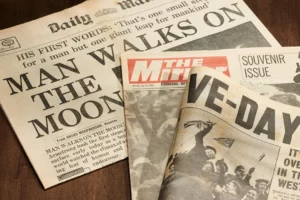
Newspapers in the 1930s were the primary source of information for most people, and their coverage reflected both the gravity of events and the limitations of the era’s journalism. Headlines screamed of “Wall Street Panic” and “Bank Failures,” while editorial pages debated the merits of the New Deal. The New York Times reported on the Dust Bowl with vivid descriptions of “black blizzards” that turned day into night. In Germany, the Völkischer Beobachter celebrated Hitler’s rise, while opposition papers were shuttered.
“The sky was dark with dust, and the sun was hidden. It was like a terrible dream, and we knew not if we would wake.” — A Kansas farmer, quoted in a 1935 newspaper report.
Coverage of the Hindenburg disaster in 1937 was particularly dramatic, with radio reporter Herbert Morrison’s live broadcast—”Oh, the humanity!”—becoming one of the most famous pieces of journalism in history. The press also covered the rise of fascism with a mix of alarm and fascination, often underestimating the threat until it was too late.
Eyewitness Accounts
Eyewitness accounts from the 1930s offer a visceral sense of the era. Dorothea Lange’s photograph of Florence Thompson, a homeless mother, became an iconic image of the Depression, but Thompson’s own words, recorded later, reveal the shame and struggle of poverty. “We were just trying to survive,” she said. “We didn’t ask for much.”
“I saw the dust come rolling in like a wall, and it covered everything. The crops were gone, the animals were dying, and we had nothing left.” — An Oklahoma farmer, recalling the Dust Bowl.
In Germany, Jewish citizens recorded their growing fear as the Nazis tightened their grip. One diarist wrote in 1938, “We are no longer citizens. We are outcasts in our own land.” These accounts, often hidden or smuggled out, provide a harrowing counterpoint to official propaganda.
Letters & Diaries
Personal correspondence and diaries from the 1930s reveal the intimate hopes and fears of ordinary people. A British housewife wrote to her sister in 1932, “The dole is not enough to live on, but we manage. We must not complain.” An American college student wrote in his diary in 1936, “I fear war is coming. Everyone talks about it, but no one wants it.”
These documents are invaluable for understanding the emotional landscape of the decade. They show that people were not passive victims of history but active interpreters of their own lives, making sense of events with the limited information available to them.
What People Feared
The 1930s were a decade of profound anxiety. In the United States, people feared the complete collapse of the economy and the possibility of social revolution. In Europe, the fear of another war was ever-present, especially after Hitler’s remilitarization of the Rhineland in 1936. Many also feared the spread of communism, which drove some to support fascist movements as a lesser evil.
There were also unfounded panics, such as the 1938 radio broadcast of The War of the Worlds, which caused widespread hysteria among listeners who believed a Martian invasion was actually underway. This incident revealed the power of mass media and the public’s readiness to believe the worst.
What People Expected Would Happen Next
Contemporaries had wildly varying predictions for the future. Some economists believed the Depression would end quickly, while others predicted the end of capitalism. Many Americans hoped the New Deal would restore prosperity, while critics feared it would lead to dictatorship. In Europe, some believed that Hitler could be appeased, while others saw war as inevitable.
Few predicted the full horror of World War II or the Holocaust. The primary sources show that people were often wrong in their expectations, but their predictions reveal the limits of contemporary knowledge and the deep uncertainty of the era.
Contemporary Terminology
The language of the 1930s reflected the era’s anxieties and innovations. Terms like “the dole” (unemployment benefits), “breadline,” and “Hooverville” (shantytowns named after President Hoover) captured the experience of poverty. “New Deal” became shorthand for Roosevelt’s policies. In Germany, terms like “Lebensraum” (living space) and “Führer” (leader) gained sinister connotations. The word “totalitarian” entered common usage to describe the new regimes in Germany, Italy, and the Soviet Union.
Some terms from the era are now considered offensive, such as “negro” or “Jew” used pejoratively. Historians must handle these with scholarly detachment, noting their historical context without endorsing them.
Daily Life
Daily life in the 1930s varied dramatically by class, region, and nationality. In American cities, the unemployed stood in breadlines and queued for relief. In rural areas, families struggled to keep their farms, often losing them to foreclosure. The Dust Bowl forced thousands to migrate to California, where they faced discrimination as “Okies.”
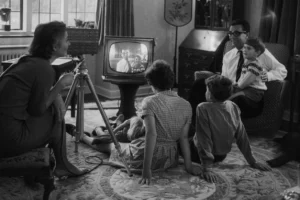
In Europe, rationing and shortages were common, especially in Germany and the Soviet Union. In Britain, the working class endured poverty and unemployment, while the upper classes maintained a semblance of pre-war elegance. Entertainment was a crucial escape: radio, cinema, and dance halls provided relief from the hardships of daily life.
Numbers at the Time
| Statistic | Value | Source/Year |
|---|---|---|
| Global population | Over 2 billion | 1930 (Britannica) |
| US unemployment | 4 million (1930), 12 million (1933) | Britannica |
| US population | ~123 million | 1930 (Britannica) |
| Hindenburg deaths | 36 | 1937 (Wikipedia) |
Timeline
- 1929: Wall Street Crash marks the beginning of the Great Depression.
- 1930: Gandhi leads the Salt March; global population surpasses 2 billion.
- 1931: Japan invades Manchuria.
- 1933: Hitler becomes Chancellor of Germany; US unemployment peaks at 12 million.
- 1935: The Dust Bowl reaches its peak; the Nuremberg Laws strip Jews of citizenship.
- 1936: The Spanish Civil War begins; the Berlin Olympics showcase Nazi Germany.
- 1937: The Hindenburg explodes; Japan invades China; the Nanjing Massacre occurs.
- 1938: Kristallnacht; the Munich Agreement appeases Hitler.
- 1939: Germany invades Poland; World War II begins.
Key Documents
- The New Deal legislation (1933–1938): A series of laws establishing social safety nets in the US.
- The Nuremberg Laws (1935): Legalized racial discrimination against Jews in Germany.
- The Munich Agreement (1938): Allowed Nazi Germany to annex the Sudetenland, a failed act of appeasement.
- The Molotov-Ribbentrop Pact (1939): A non-aggression treaty between Germany and the Soviet Union that paved the way for war.
Aftermath
The 1930s ended with the outbreak of World War II, which would dominate the 1940s. The Depression’s legacy persisted, but the war effort ultimately revived economies. The New Deal’s social programs endured, shaping the modern welfare state. The decade’s political upheavals led to the Holocaust and the most destructive conflict in history, fundamentally altering the global order.
How Historians See It Today
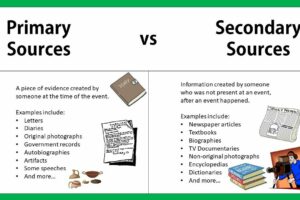
Contemporary observers saw the 1930s as a time of crisis and uncertainty, but they lacked the hindsight to understand its full significance. Modern historians view the decade as a pivotal moment when the world’s political and economic systems were tested and transformed. The Great Depression is now understood as a global phenomenon, not just an American one, and the rise of fascism is seen as a response to economic instability and political polarization. Historians also emphasize the importance of primary sources in reconstructing the era’s complexity, from the voices of the marginalized to the propaganda of the powerful.
Common Misconceptions
Myth: The Great Depression was only an American problem.
It was a global crisis affecting Europe, Asia, and Latin America (OER Project).
Myth: The Dust Bowl was purely a natural disaster.
Poor farming practices exacerbated the drought, making it a man-made ecological catastrophe.
Myth: Hitler was elected to power.
He was appointed Chancellor in 1933, and the Nazis never won a majority in a free election.
Related Primary Sources
- Dorothea Lange’s photographs of Depression-era America (Library of Congress)
- The WPA Federal Writers’ Project oral histories
- Anne Frank’s diary (though written in the 1940s, it reflects the era’s fears)
- Contemporary newspapers like the New York Times and the Times of London
FAQ
What caused the Great Depression?
The Great Depression was caused by a combination of factors, including the 1929 stock market crash, bank failures, a collapse in international trade, and poor economic policies. It was a global crisis, not just an American one, affecting countries worldwide (OER Project).
How did people survive the Dust Bowl?
Many families migrated to California and other western states, where they found work as migrant laborers. Others relied on government relief programs. The Dust Bowl was a combination of drought and poor farming practices, which made the land unusable (Wikipedia).
Was World War II inevitable?
Many contemporaries believed war was coming, but they did not know when or how. The failure of appeasement, the aggression of Nazi Germany, and the expansion of Imperial Japan made conflict increasingly likely, but it was not inevitable until the invasion of Poland in 1939.



Leave a Reply