
Short Answer
{
“title”: “Budapest in 1956: Revolution, Resistance, and the Fight for Freedom”,
“slug”: “1956-in-budapest”,
“excerpt”: “In 1956, Budapest became the epicenter of a national uprising against Soviet domination. This article explores the city’s daily life, the revolution’s outbreak, and its brutal suppression through primary sources and contemporary accounts.”,
“seo_title”: “Budapest 1956: Revolution and Daily Life”,
“meta_description”: “Explore Budapest in 1956: the Hungarian Revolution, daily life, economy, and primary sources. A comprehensive historical overview.”,
“content”: “
Quick Snapshot
Budapest in 1956 was a city on the brink of transformation. After a decade of harsh Stalinist rule under Mátyás Rákosi, the Hungarian capital simmered with discontent. The year began with political tension and economic hardship, but by October it exploded into a nationwide revolution that briefly toppled the communist government. The world watched as students, workers, and soldiers took to the streets, demanding freedom and democracy. The revolution was crushed by Soviet tanks on November 4, leaving Budapest scarred but its spirit unbroken.
The city, straddling the Danube River, was a mix of grand Habsburg-era architecture and still-visible war damage from World War II. Its population of approximately 1.8 million faced food shortages, overcrowded housing, and the omnipresent secret police. Yet the atmosphere was charged with hope as reform movements gained momentum, inspired by Nikita Khrushchev’s secret speech denouncing Stalin. By autumn, Budapest had become the flashpoint of a struggle that would define the Cold War era.
Budapest in 1956
Budapest, the capital of the Hungarian People’s Republic, was a city of contrasts. The majestic Parliament Building on the Pest side and the Royal Palace on the Buda hill symbolized a proud past, while the streets bore the scars of the 1945 siege. The climate in October was cool and autumnal, with occasional rain. The Danube divided the city into Buda and Pest, connected by bridges that had been rebuilt after the war.
The atmosphere was tense. Political rallies were common, but so were secret police informants. The city’s coffeehouses and theaters buzzed with whispered debates about reform. The university campuses, especially Eötvös Loránd University, were hotbeds of student activism. By mid-October, the mood had shifted from cautious hope to open defiance, culminating in the mass demonstrations that began on October 23.
Population & Economy
Budapest’s population in 1956 was estimated at 1.8 million, making it one of the largest cities in Eastern Europe. The economy was centrally planned, with heavy industry dominating. Key sectors included machine building, metallurgy, textiles, and food processing. The famous Csepel Works on the southern edge of the city employed tens of thousands of workers. Living standards were low: rationing of basic goods like bread, sugar, and meat was still in effect, and many families lived in cramped communal apartments.
Unemployment was officially nonexistent, but wages were low and inflation eroded purchasing power. A loaf of bread cost about 2 forints, while a typical monthly rent for a small apartment was around 150 forints. The black market flourished, providing goods that the state could not. The revolution would later demand economic reforms, including workers’ control of factories.
Government & Politics
Budapest was the seat of the Hungarian People’s Republic, governed by the Hungarian Working People’s Party (HWP). The party’s first secretary in early 1956 was Mátyás Rákosi, but he was replaced by Ernő Gerő in July under Soviet pressure. The local government of Budapest was led by a city council, with Károly Kiss serving as mayor. However, real power lay with the party’s central committee and its Soviet advisors.
Political opposition was crushed by the ÁVH (State Protection Authority), the feared secret police. The revolution brought Imre Nagy to power as Prime Minister on October 24. Nagy, a reformist communist, promised multiparty elections and declared Hungary’s neutrality on November 1, appealing to the United Nations for support. The Soviet Union responded with a massive military intervention on November 4, installing János Kádár as the new party leader.
Industry
Budapest was Hungary’s industrial heart. The Csepel Works, a massive steel and engineering complex, was the largest factory in the country. Other major plants included the Ganz Works (machinery and locomotives), the Budapest Textile Factory, and numerous food-processing plants. During the revolution, workers’ councils took over many factories, demanding higher wages and democratic management. The industrial workers played a crucial role in the uprising, joining students in the streets and forming the backbone of the resistance.
The revolution’s impact on industry was profound: production halted during the fighting, and many factories were damaged. After the Soviet invasion, the new Kádár government reimposed central control, but the workers’ councils remained a symbol of resistance for years.
Education
Budapest was home to several universities, including Eötvös Loránd University (ELTE), the Budapest University of Technology, and the Medical University. In 1956, about 30,000 students were enrolled in higher education. The universities were tightly controlled by the party, with mandatory Marxist-Leninist courses. However, students were among the most vocal critics of the regime.
The revolution began with a student demonstration at the Polytechnic University on October 23, where they drafted the “Sixteen Points” demanding free elections, freedom of the press, and the withdrawal of Soviet troops. After the revolution, the universities were purged, and many students were arrested or expelled. The education system remained under strict state control until the end of communism.
Transportation
Budapest’s transportation network in 1956 was a mix of modern and outdated systems. The city had an extensive tram network, buses, and the historic Metro Line 1 (opened in 1896). The Danube was crossed by several bridges, including the Széchenyi Chain Bridge and the Liberty Bridge, all rebuilt after World War II. During the revolution, transportation was disrupted as barricades were erected and trams were overturned. Soviet tanks rolled down the main boulevards, and the city’s transport infrastructure was severely damaged.
After the revolution, the Kádár regime invested in rebuilding the network, but the scars remained. The metro and trams continued to operate, albeit under military surveillance.
Everyday Life
Daily life in Budapest in 1956 was marked by scarcity and surveillance. Most families lived in small, crowded apartments, often sharing kitchens and bathrooms. Food was rationed, and staples like bread, milk, and eggs were often in short supply. Clothing was simple and utilitarian, with many people wearing second-hand or homemade garments. Entertainment included cinemas showing Soviet and Hungarian films, theaters, and the famous thermal baths. However, all media was censored, and political jokes were whispered in private.
During the revolution, everyday life was upended. People took to the streets, built barricades, and distributed leaflets. Women and children helped by making food for the fighters. The brief period of freedom allowed for the reopening of independent newspapers and the formation of political parties. After the Soviet invasion, life returned to a grim normalcy, with curfews and reprisals.
Major Events
The defining event of 1956 in Budapest was the Hungarian Revolution. It began on October 23 with a peaceful student march to the Parliament Building, demanding reforms. The protest turned violent when the ÁVH fired on the crowd at the radio building. Within hours, the uprising spread across the city. On October 24, Imre Nagy became Prime Minister and announced a ceasefire. The revolution seemed to succeed as Soviet troops initially withdrew, but on November 4, Soviet forces launched a massive attack, crushing the resistance. The fighting lasted until November 12, with thousands killed and nearly a quarter of a million Hungarians fleeing the country.
Other notable events included the reburial of László Rajk, a purged communist leader, in October, which became a rallying point for opposition. The revolution also led to the formation of revolutionary councils and the brief establishment of a multiparty system.
What Newspapers Were Reporting
During the revolution, the state-controlled press was overthrown. On October 23, the daily newspaper Népszabadság initially condemned the demonstrators, but within days it was taken over by insurgents and published reform demands. Independent newspapers like Szabad Nép (Free People) and Magyar Nemzet (Hungarian Nation) emerged, printing articles about the revolution’s goals. After the Soviet invasion, these papers were suppressed, and propaganda resumed.
One notable headline from October 24 read: “The Government Calls for Order” while underground leaflets urged citizens to resist. The BBC’s report on October 23 noted: “Tens of thousands of people have taken to the streets in Hungary to demand an end to Soviet rule.”
What People Were Talking About
In letters, diaries, and eyewitness accounts, Budapest residents described a mix of euphoria and fear. Many spoke of the “Sixteen Points” and the hope for genuine democracy. Workers discussed taking over factories, while students debated the role of socialism. One eyewitness recalled: “We believed that the world was watching and would help us.” Others expressed anxiety about Soviet retaliation. After the invasion, people whispered about the courage of the freedom fighters and the betrayal by the West, which had promised support but did not intervene.
Private conversations were dangerous, as informants were everywhere. Yet the revolution’s spirit persisted in underground networks and émigré communities.
Historical Photographs
Photographs from Budapest in 1956 are some of the most iconic images of the Cold War. They show Soviet tanks rumbling down Andrássy Avenue, students waving Hungarian flags with the communist coat of arms cut out, and the smoldering ruins of the radio building. Other photos capture the jubilant crowds in Parliament Square, the barricades made of overturned trams, and the poignant moment when Imre Nagy addressed the nation. These images, taken by both professional photographers and amateurs, are preserved in archives like the Hungarian National Museum and the National Security Archive in Washington, D.C. They provide a visceral record of the revolution’s bravery and tragedy.
Documents & Primary Sources
Historians studying Budapest in 1956 rely on a wealth of primary sources. Key documents include the Sixteen Points, the students’ list of demands; Imre Nagy’s radio speeches, including his declaration of neutrality; and the secret Soviet telegrams that reveal the decision to invade. The National Security Archive’s electronic briefing book on the Hungarian Revolution compiles declassified documents from the U.S., Soviet, and Hungarian archives. Personal letters and diaries, such as those collected in the Open Society Archives, offer intimate perspectives. Photographs, film footage, and oral histories from survivors are also invaluable.
1956 Timeline
| Date | Event |
|---|---|
| July 18 | Mátyás Rákosi is replaced as party first secretary by Ernő Gerő. |
| October 6 | Reburial of László Rajk, a purged communist, draws thousands. |
| October 23 | Student demonstration at the Polytechnic University; march to Parliament; violence at the radio building; revolution begins. |
| October 24 | Imre Nagy becomes Prime Minister; Soviet troops enter Budapest. |
| October 28 | Ceasefire announced; Soviet troops begin withdrawal. |
| November 1 | Nagy declares Hungarian neutrality and appeals to the UN. |
| November 4 | Soviet forces launch massive attack; Nagy broadcasts: “Our troops are fighting. The Government is in its place.” |
| November 7 | János Kádár forms a new government; resistance continues in pockets. |
| November 12 | Last armed resistance ends. |
What Changed Next
The aftermath of the revolution was brutal. János Kádár, installed by the Soviets, initiated a wave of reprisals: thousands were executed, imprisoned, or deported. Imre Nagy was arrested, tried in secret, and executed in 1958. Nearly 200,000 Hungarians fled to the West. However, the revolution’s legacy endured. It forced the Soviet Union to adopt a more cautious approach in Eastern Europe, and it inspired later reform movements. In Hungary, Kádár eventually introduced a more moderate form of communism, known as “goulash communism,” which allowed limited economic freedoms. The revolution remained a suppressed memory until the fall of communism in 1989, when it was officially rehabilitated.
Sources
- Britannica, “Hungarian Revolution” – https://www.britannica.com/event/Hungarian-Revolution-1956
- Wikipedia, “Hungarian Revolution of 1956” – https://en.wikipedia.org/wiki/Hungarian_Revolution_of_1956
- National Security Archive, “The 1956 Hungarian Revolution” – https://nsarchive2.gwu.edu/NSAEBB/NSAEBB76/index.html
- BBC On This Day, “1956: Hungarians rise up against Soviet rule” – http://news.bbc.co.uk/onthisday/hi/dates/stories/october/23/newsid_3140000/3140400.stm
- Litván, György (ed.), The Hungarian Revolution of 1956: A History in Documents (Central European University Press, 1996).
“,
“categories”: [“History”, “Local History”, “Primary Sources”, “Budapest”, “1956”],
“tags”: [“Budapest”, “1956”, “primary sources”, “newspapers”, “diaries”, “photographs”, “everyday life”, “historical events”, “local history”, “Hungarian Revolution”, “Cold War”],
“image_prompt”: “A black-and-white photograph taken in Budapest, October 1956. In the foreground, a group of Hungarian students and workers stand on a cobblestone street, waving a large Hungarian flag with the communist coat of arms cut out. Behind them, a Soviet T-54 tank is parked, its turret facing the crowd. The scene is chaotic: smoke rises from a building on the left, and scattered leaflets litter the ground. The architecture shows classic Budapest buildings with ornate facades, some with bullet holes. The atmosphere is tense, with a mix of defiance and fear on the faces of the people. The photo has a grainy, documentary style, with high contrast and deep shadows, capturing the raw emotion of the revolution.”,
“quick_facts”: [
{“label”: “Population”, “value”: “Approximately 1.8 million”},
{“label”: “Mayor/Governor”, “value”: “Károly Kiss (Mayor of Budapest)”},
{“label”: “Major Industry”, “value”: “Heavy industry, machinery, textiles (Csepel Works)”},
{“label”: “Notable Event”, “value”: “Hungarian Revolution begins October 23”},
{“label”: “Newspaper”, “value”: “Népszabadság (state-run)”},
{“label”: “Transportation”, “value”: “Trams, buses, Metro Line 1”},
{“label”: “Education”, “value”: “Eötvös Loránd University, Budapest University of Technology”},
{“label”: “Cost of Living”, “value”: “Bread ~2 forints; rent ~150 forints/month”},
{“label”: “Population Change”, “value”: “Decrease due to casualties and emigration (~200,000 fled)”},
{“label”: “Weather”, “value”: “Cool autumn, occasional rain”}
],
“related_terms”: [
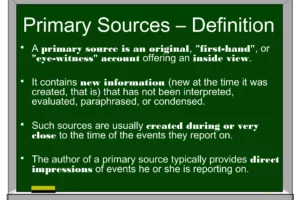
{“term”: “Primary Source”, “definition”: “A document or physical object written or created during the time under study, such as a diary, newspaper, or photograph.”},
{“term”: “Census”, “definition”: “An official count or survey of a population, typically recording various details about individuals.”},
{“term”: “Eyewitness Account”, “definition”: “A report or testimony from someone who directly experienced an event.”},
{“term”: “Local Newspaper”, “definition”: “A publication that covers news and events specific to a particular town or region.”}
],
“references”: [
“Britannica, Hungarian Revolution – https://www.britannica.com/event/Hungarian-Revolution-1956”,
“Wikipedia, Hungarian Revolution of 1956 – https://en.wikipedia.org/wiki/Hungarian_Revolution_of_1956”,
“National Security Archive, The 1956 Hungarian Revolution – https://nsarchive2.gwu.edu/NSAEBB/NSAEBB76/index.html”,
“BBC On This Day, 1956: Hungarians rise up against Soviet rule – http://news.bbc.co.uk/onthisday/hi/dates/stories/october/23/newsid_3140000/3140400.stm”,
“Litván, György (ed.), The Hungarian Revolution of 1956: A History in Documents (Central European University Press, 1996)”
],
“faq”: [
{“question”: “What was the population of Budapest in 1956?”, “answer”: “The population was approximately 1.8 million, making it one of the largest cities in Eastern Europe.”},
{“question”: “What major events happened in Budapest in 1956?”, “answer”: “The most significant event was the Hungarian Revolution, which began on October 23 and was crushed by Soviet forces on November 4. It led to the brief rise of Imre Nagy and the eventual installation of János Kádár.”},
{“question”: “What primary sources are available for studying Budapest in 1956?”, “answer”: “Key primary sources include the Sixteen Points, Imre Nagy’s radio speeches, declassified Soviet documents, photographs, film footage, and personal letters. Archives such as the National Security Archive and the Open Society Archives hold these materials.”},
{“question”: “How did daily life in Budapest in 1956 differ from today?”, “answer”: “Daily life was marked by scarcity, rationing, and political surveillance. Housing was crowded, food was limited, and all media was censored. The revolution briefly changed this, but after the Soviet invasion, conditions returned to a repressive normalcy.”}
],
“related_articles”: [
“Budapest in 1955”,
“Budapest in 1957”,
“A Day in the Life: Budapest in the 1950s”,
“Primary Sources: How Historians Reconstruct the Past”
]
}



Leave a Reply