Short Answer
The second decade of the twentieth century opened with Halley’s Comet streaking across the night sky in April 1910, a celestial omen that millions read as a portent of change. In the same year, the Boy Scouts of America was incorporated, and the tango—a dance born of Cuban, Argentinian, and African rhythms—began to sweep the world’s ballrooms. Yet by 1914, the certainties of this glittering, optimistic age were consumed by the guns of August. For those who lived through it, the 1910s were a decade of stark contrasts: the last gasp of a confident, imperial world and the bloody birth of a modern one. This article reconstructs that decade as contemporaries saw it—through their newspapers, their letters, their fears, and their hopes—using only the records they left behind.
What Happened?
The 1910s unfolded as a chronological march from peace to catastrophe. In February 1910, the Boy Scout Association was founded in the United States by W.S. Boyce, Edward S. Stewart, and Stanley D. Willis, quickly becoming the largest youth organization of its kind. That spring, Halley’s Comet came into naked-eye view on April 10, sparking both wonder and panic. The decade’s early years were marked by colonial conflict: in 1911, the Turkish-Italian War saw the first use of an aircraft as an offensive weapon, as Italy defeated the Turks and annexed Tripoli. The world’s great powers jockeyed for influence, and the Balkans simmered with nationalist tensions.
The defining event of the decade was World War I, which erupted in 1914 and raged until 1918. The conflict involved Britain, France, and Russia against Germany, the Austro-Hungarian Empire, and the Ottoman Empire, and eventually drew in the United States. The war reshaped international relations, toppled empires, and redrew the map of Europe and the Middle East. In its wake, the decade closed with the Paris Peace Conference and the establishment of the League of Nations, while the Spanish flu pandemic of 1918–1919 killed more people than the war itself. Amid the carnage, scientific and technological advances continued: Ernest Rutherford proposed his atomic model, and Henry Ford’s assembly line revolutionized manufacturing.
How It Was Seen at the Time
Contemporaries understood the 1910s as a time of both progress and peril. In the early years, the mood was one of confidence. Newspapers marveled at the new flying machines, the spread of electricity, and the promise of science. The tango craze was covered as a cultural phenomenon, and the Boy Scouts were celebrated as a moral force for youth. But the outbreak of war in 1914 was met with a mixture of patriotic fervor and dread. Soldiers marched to the front with flowers in their rifle barrels, believing the war would be “over by Christmas.” As the trenches stretched on, the language shifted to one of endurance and sacrifice. A British soldier’s letter from the Somme, quoted in a 1916 newspaper, captured the grim resignation:
“We are not fighting for glory anymore. We are fighting because we must, and because there is no way back.”
Civilians on the home front spoke of “doing their bit,” while governments spoke of a “war to end all wars.” The prevailing mood was one of a world holding its breath, unsure whether the old order would survive.
Historical Snapshot
| Aspect | Detail |
|---|---|
| Date | 1910–1919 |
| Place | Global, with major theaters in Europe, the Middle East, and the Atlantic |
| People | Woodrow Wilson, Vladimir Lenin, Albert Einstein, ordinary soldiers and civilians |
| What Happened | World War I, the Russian Revolution, the Spanish flu, and rapid technological change |
| Why It Mattered | The decade ended the old imperial order and set the stage for the modern era |
What People Knew at the Time
| What People Knew Then | What We Know Now |
|---|---|
| That the war was a just cause for their nation, with God on their side | That the war was a complex web of alliances, imperial rivalries, and miscalculations |
| That Halley’s Comet might signal the end of the world (some newspapers sold “comet pills” as protection) | That the comet was a harmless astronomical event, passing as it had many times before |
| That the Spanish flu was a mysterious “grippe” spread by miasma or enemy action | That it was an H1N1 influenza virus, spread by human contact and troop movements |
| That the war would be short and glorious | That it would last four years and kill over 17 million people |
Contemporary Newspaper Coverage
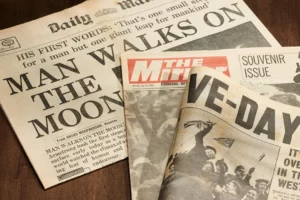
Newspapers of the 1910s were the primary source of information for most people, and their coverage reflected both the excitement and the horror of the era. In 1910, the San Francisco Call reported on the Boy Scouts’ founding with enthusiasm, calling it “a movement to make men of boys.” The same year, the New York Times ran breathless headlines about Halley’s Comet, with some papers warning of “cyanogen gas” in the comet’s tail that could poison the Earth. When war broke out in 1914, headlines screamed “Europe in Flames” and “The Guns of August.” The press was heavily censored, but soldiers’ letters and returning wounded provided harrowing accounts. A 1916 dispatch from the Daily Telegraph described the Somme:
“The ground is churned to mud, and the dead lie where they fell, for no man can bury them. It is a landscape of desolation.”
By 1918, newspapers were filled with casualty lists and influenza death notices, and the tone had become somber and weary.
Eyewitness Accounts
Eyewitness accounts from the 1910s offer a visceral window into the decade. Vera Brittain, a young British nurse, wrote in her diary of the wounded soldiers she tended:
“They are not heroes; they are boys, frightened and in pain, and they call for their mothers.”
On the home front, an American housewife in 1918 recorded in her journal the fear of the flu:
“The stores are closed, and the streets are empty. We are all afraid to breathe the air.”
From the Russian Revolution, a Petrograd worker wrote in 1917:
“The tsar is gone, and we do not know what comes next, but we are free—or so they tell us.”
These accounts, preserved in letters and diaries, show the human cost of the decade’s great events.
Letters & Diaries
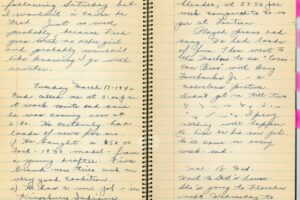
Personal correspondence and diaries are among the most revealing primary sources of the 1910s. A young British soldier, Alfred Pollard, wrote to his mother from the trenches in 1915:
“Do not worry about me. The rats are bigger than cats, and the mud is up to our knees, but we are alive, and that is something.”
An American doughboy, writing from France in 1918, described his first sight of the front:
“I had read about it in the papers, but nothing prepares you for the smell. It is the smell of death, and it never goes away.”
On the home front, a German housewife’s diary from 1917 records the hunger of the “turnip winter”:
“We eat turnips for breakfast, lunch, and dinner. The children cry for bread, and there is none.”
These documents reveal the gap between official propaganda and lived experience.
What People Feared
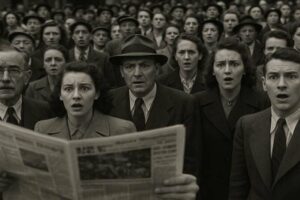
The 1910s were a decade of profound anxiety. In 1910, the approach of Halley’s Comet triggered widespread panic, with some people believing the end of the world was nigh; newspapers sold “comet pills” to protect against the supposed poisonous gases. With the outbreak of war, fears shifted to invasion and defeat. In Britain, rumors of German spies and Zeppelin raids caused panic, and in the United States, the sinking of the Lusitania in 1915 stoked fears of German aggression. The Spanish flu of 1918–1919 brought a new terror: people feared to shake hands, and some wore masks in public. There were also unfounded panics, such as the belief that the flu was a German biological weapon. These fears, both rational and irrational, shaped public behavior and government policy throughout the decade.
What People Expected Would Happen Next
Contemporaries’ predictions for the future were often wildly wrong. In 1910, many expected the new century to bring endless progress, with flying machines and automobiles making life easier. When war came, both sides expected a quick victory. A British officer wrote in 1914:
“We will be home by Christmas, and the whole thing will be a grand adventure.”
By 1916, such optimism had evaporated, and people expected a war of attrition that might last years. In 1918, as the war ended, many hoped for a lasting peace, and President Woodrow Wilson’s promise of a “war to end all wars” was widely believed. The Russian Revolution led some to expect a worldwide socialist uprising, while others feared the spread of Bolshevism. The decade closed with a mix of hope and trepidation, as the world looked to the League of Nations to prevent another catastrophe.
Contemporary Terminology
The language of the 1910s reflected its unique experiences. “The Great War” was the common term for World War I, as no one yet knew there would be a second. “Doughboy” was American slang for an infantryman, while “Tommy” was used for British soldiers. “No man’s land” described the deadly space between trenches. “Shell shock” was the term for what we now call PTSD, and it was often misunderstood as cowardice. On the home front, “victory gardens” were planted, and “liberty bonds” were sold to fund the war. The flu was called the “Spanish influenza” because Spain, being neutral, reported on it freely, though it likely originated elsewhere. The term “Bolshevik” entered common usage after 1917, often with fear or hope attached. These words carried the weight of the era’s experiences and anxieties.
Numbers at the Time
| Statistic | Figure | Source/Year |
|---|---|---|
| World population | ~1.8 billion | 1910 estimates |
| U.S. population | ~92 million | 1910 U.S. Census |
| Average U.S. annual wage | $750 | 1915 Department of Labor |
| Cost of a loaf of bread (U.S.) | ~$0.10 | 1915 |
| Military casualties of WWI | ~17 million dead | 1918 estimates |
| Spanish flu deaths | ~50 million worldwide | 1919 estimates |
Timeline
- 1910: Boy Scouts of America incorporated; Halley’s Comet visible in April.
- 1911: First use of aircraft in war (Turkish-Italian War); Italy annexes Tripoli.
- 1912: Sinking of the Titanic; Balkan Wars begin.
- 1913: Henry Ford’s assembly line; worldwide tensions rise.
- 1914: Assassination of Archduke Franz Ferdinand; World War I begins.
- 1915: Sinking of the Lusitania; Gallipoli campaign.
- 1916: Battle of the Somme; Easter Rising in Ireland.
- 1917: Russian Revolution; U.S. enters the war.
- 1918: Armistice on November 11; Spanish flu peaks.
- 1919: Treaty of Versailles; League of Nations founded.
Key Documents
- The Treaty of Versailles (1919): The peace treaty that ended World War I, imposing heavy reparations on Germany.
- Woodrow Wilson’s Fourteen Points (1918): A speech outlining principles for peace, including the League of Nations.
- The Balfour Declaration (1917): A British statement supporting a Jewish homeland in Palestine.
- The Zimmermann Telegram (1917): A German proposal to Mexico that helped bring the U.S. into the war.
- The Armistice of Compiègne (1918): The agreement that ended fighting on the Western Front.
Aftermath
The immediate aftermath of the 1910s was a world in ruins. The war had killed millions, and the Spanish flu had killed millions more. Empires collapsed: the Austro-Hungarian, Ottoman, German, and Russian empires all fell. The Treaty of Versailles, signed in 1919, imposed harsh terms on Germany, sowing the seeds of future conflict. The League of Nations was established, but without U.S. participation, it was weakened from the start. The 1920s would see a decade of economic boom and cultural ferment, but also of unresolved tensions. For those who had lived through the 1910s, the world was irrevocably changed, and the optimism of 1910 seemed a distant memory.
How Historians See It Today
Historians today view the 1910s as a pivotal decade that marked the end of the long 19th century and the beginning of the modern era. Contemporaries saw the war as a tragic but necessary struggle; modern scholars emphasize the systemic failures of diplomacy, imperialism, and militarism that made it inevitable. The Russian Revolution, once seen by many contemporaries as either a utopian dream or a nightmare, is now understood as a complex event with profound global consequences. The Spanish flu, largely forgotten in the immediate aftermath, is now recognized as one of the deadliest pandemics in history. The decade’s technological advances, from the assembly line to the airplane, are seen as accelerants of both progress and destruction. The historiographical shift has been from a focus on great men and battles to a broader social history that includes the experiences of ordinary people, women, and colonized peoples.
Common Misconceptions
Related Primary Sources
- Imperial War Museums (London): Collections of soldiers’ letters, diaries, and photographs from World War I.
- Library of Congress (Washington, D.C.): Newspapers, posters, and personal accounts from the 1910s, including the American Expeditionary Forces.
- The National Archives (U.K.): Official war records, cabinet papers, and diplomatic correspondence.
- Internet Archive: Digitized books, periodicals, and films from the 1910s, including the book 1913: In Search of the World Before the Great War.
FAQ
What was the most significant event of the 1910s?
World War I (1914–1918) was the defining event of the decade, reshaping international relations, toppling empires, and causing millions of deaths. Contemporaries called it 'The Great War' and believed it would be 'the war to end all wars.'
How did people in the 1910s react to Halley's Comet?
Many people panicked, believing the comet's tail contained poisonous gases that could end life on Earth. Newspapers sold 'comet pills' as protection, and some people sealed their windows. In reality, the comet was harmless.
What was daily life like for ordinary people in the 1910s?
Daily life varied widely. In cities, people worked in factories or offices, rode streetcars, and read newspapers. On the home front during the war, rationing and 'victory gardens' became common. The Spanish flu in 1918–1919 forced many to wear masks and avoid public gatherings.
Why was the 1918 flu called the 'Spanish flu'?
Spain was neutral during World War I and did not censor its press, so Spanish newspapers were the first to report extensively on the outbreak. This led to the misnomer, though the virus likely originated elsewhere.




Leave a Reply