
Short Answer
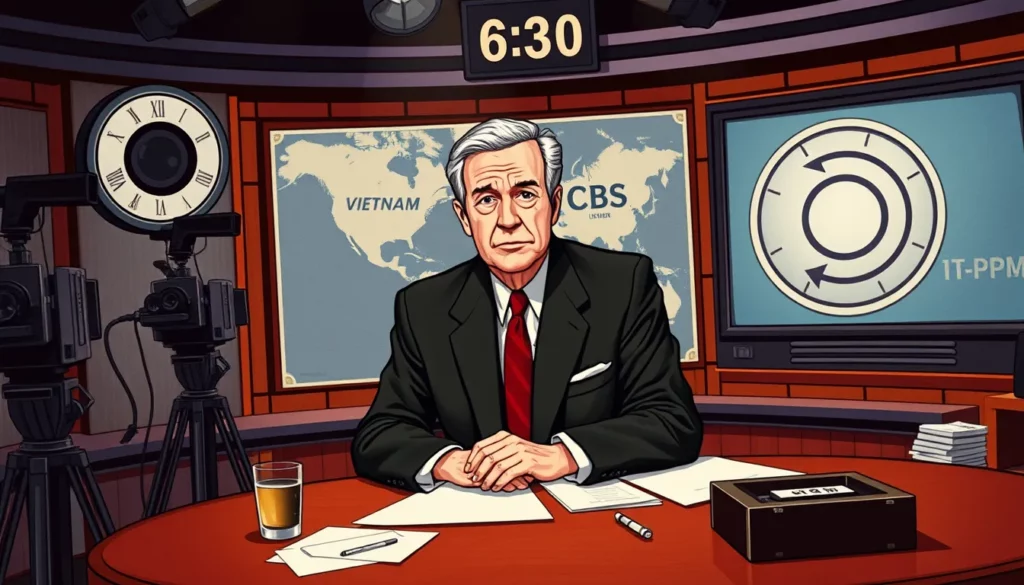
In the autumn of 1963, most American families gathered around their television sets each evening to watch the CBS Evening News with Walter Cronkite. The anchor, a former United Press correspondent who had covered World War II, was known for his calm, authoritative delivery. On November 22, that calm was shattered when Cronkite announced the death of President John F. Kennedy. Five years later, in February 1968, Cronkite would again capture the nation’s attention with a special report from Vietnam that challenged the official optimism of the Johnson administration. This article examines how Cronkite’s television news coverage framed these two pivotal events, shaping public understanding and cementing his reputation as the “most trusted man in America.” Drawing on broadcast transcripts, contemporary newspaper accounts, and viewer letters, it explores what Americans saw, heard, and felt as they watched history unfold through the lens of their television screens.
What Happened?
Walter Cronkite became the anchor of the CBS Evening News in 1962, at a time when television was rapidly overtaking newspapers as the primary source of news for most Americans. Only three major networks—CBS, NBC, and ABC—dominated the airwaves, and their evening newscasts drew tens of millions of viewers. Cronkite’s broadcast on November 22, 1963, began as routine coverage of a presidential trip to Dallas. At 1:40 p.m. Eastern Standard Time, Cronkite went on the air with a bulletin: President Kennedy had been shot. For the next twenty minutes, he and his colleagues awaited confirmation. At 2:38 p.m. EST, Cronkite announced the president’s death, his voice trembling as he removed his glasses and paused to regain composure. The moment became a defining image of the era.
Five years later, Cronkite’s focus turned to Vietnam. After the Tet Offensive in January 1968, he traveled to South Vietnam to assess the war firsthand. On February 27, 1968, CBS aired a one-hour special report, “Report from Vietnam: Who, What, When, Where, Why?” In it, Cronkite concluded that the war was a stalemate and that negotiations were the only way out. His editorial comment, delivered at the end of the broadcast, marked a dramatic break from the optimistic reports coming from the Johnson administration.
- November 22, 1963: President Kennedy is assassinated in Dallas. Walter Cronkite announces his death on CBS, becoming a national voice of mourning.
- January 30, 1968: The Tet Offensive begins, shaking American confidence in the war.
- February 1968: Cronkite travels to Vietnam and interviews soldiers, civilians, and military officials.
- February 27, 1968: CBS airs Cronkite’s special report and editorial calling for negotiations.
- March 31, 1968: President Johnson announces he will not seek re-election, a decision partly attributed to the shift in public opinion.
How It Was Seen at the Time
For most Americans, Walter Cronkite was more than a newsreader; he was a trusted guide through turbulent times. His announcement of President Kennedy’s death was received with shock and grief. Across the country, people wept in front of their televisions, and many later wrote to CBS expressing gratitude for Cronkite’s composure. The New York Times reported that “millions of Americans, stunned by the news, sat glued to their sets as Walter Cronkite confirmed the worst.” Cronkite’s emotional restraint, followed by his visible struggle to maintain composure, seemed to mirror the nation’s own sorrow.
His Vietnam editorial was equally consequential. At the time, the Johnson administration was insisting that the war was being won, but Cronkite’s report echoed what many soldiers and reporters on the ground had been saying. His concluding words were blunt:
“To say that we are closer to victory today is to believe, in the face of the evidence, the optimists who have been wrong in the past. To suggest we are on the edge of defeat is to yield to unreasonable pessimism. To say that we are mired in stalemate seems the only realistic, yet unsatisfactory, conclusion.”
— Walter Cronkite, CBS News Special Report, February 27, 1968
President Johnson reportedly reacted with dismay, saying, “If I’ve lost Cronkite, I’ve lost Middle America.” Whether or not those exact words were spoken, the sentiment was widely shared. Newspapers across the country ran front-page stories the next day, many quoting Cronkite’s conclusion. Viewers wrote letters to CBS, some praising his courage, others accusing him of undermining the war effort. The nation was deeply divided, and Cronkite’s broadcast became a lightning rod for that division.
Historical Snapshot
Kennedy Assassination Coverage
| Aspect | Detail |
|---|---|
| Date | November 22, 1963 |
| Place | CBS News headquarters, New York City |
| People | Walter Cronkite, President John F. Kennedy, CBS news team |
| What Happened | Cronkite announced the shooting and death of President Kennedy, visibly emotional. |
| Why It Mattered | It was the first time most Americans learned of the tragedy, and Cronkite’s delivery became a symbol of national mourning. |
Vietnam Coverage
| Aspect | Detail |
|---|---|
| Date | February 27, 1968 |
| Place | South Vietnam; CBS studios in New York |
| People | Walter Cronkite, U.S. military officials, South Vietnamese civilians, CBS producer Ernest Leiser |
| What Happened | Cronkite aired a special report and editorial concluding the war was a stalemate and urging negotiations. |
| Why It Mattered | It marked a mainstream journalist’s break with official optimism, influencing public opinion and possibly President Johnson’s decision not to seek re-election. |
Different Perspectives
Cronkite’s Perspective
Cronkite saw himself as a reporter, not an advocate. In his 1968 editorial, he framed his conclusion as a factual assessment: “It seems the only realistic, yet unsatisfactory, conclusion.” He resisted being labeled anti-war, insisting that his job was to report the truth as he found it. In a later interview, he said, “I was not trying to end the war. I was trying to report what I saw.”
The Johnson Administration’s Perspective
President Johnson and his advisers viewed Cronkite’s editorial as a betrayal. They believed the press was undermining the war effort and misrepresenting progress. Johnson’s reported comment, “If I’ve lost Cronkite, I’ve lost Middle America,” captured the administration’s fear that the trusted anchor’s skepticism would erode public support. Some officials accused Cronkite of oversimplifying a complex situation.
The American Public’s Perspective
Public reaction was split. Many viewers wrote to CBS thanking Cronkite for his honesty. One letter from a viewer in Ohio read, “I have never written to a television network before, but your report on Vietnam was the most honest thing I have heard.” Others were angry. A viewer from Texas wrote, “You have given comfort to the enemy and betrayed our soldiers.” The letters reflect a nation deeply divided over the war and uncertain about whom to trust.
The Military’s Perspective
Some military officials felt Cronkite had been misled by the Vietnamese and by reporters critical of the war. General William Westmoreland later argued that the Tet Offensive was a military defeat for the North Vietnamese, even if it was a psychological victory. He believed Cronkite’s report failed to capture the full picture. However, many soldiers in the field felt Cronkite’s assessment matched their own experiences.
What the Sources Got Wrong
Contemporary reporting on both events contained errors and confusion. In the immediate aftermath of the Kennedy shooting, several news outlets, including some wire services, initially reported that the president was only wounded. Cronkite himself waited for confirmation before announcing the death, a decision that later earned him praise for accuracy. However, some early reports also incorrectly identified the shooter and the number of casualties. The Dallas Morning News initially ran a headline suggesting that a Secret Service agent had been killed, which was false.
In Vietnam, the official military briefings—dubbed the “Five O’Clock Follies” by reporters—repeatedly presented optimistic body counts and progress reports that later proved exaggerated. Cronkite’s special report was partly a correction to these claims. Yet even Cronkite’s reporting had limitations. He relied on interviews with soldiers and civilians, but he did not have access to all intelligence. Some critics argue that his conclusion of a “stalemate” was itself an oversimplification, as the Tet Offensive did cripple the Viet Cong. The sources also incorrectly reported the exact wording of Johnson’s “If I’ve lost Cronkite” quote; some versions differ, and historians have not found a primary document confirming it.
Aftermath
After Cronkite’s JFK announcement, CBS continued continuous coverage for four days. Cronkite became a household name, and his calm presence helped guide the nation through mourning. He later said that the assassination was the most difficult story he ever covered. In the weeks that followed, the network received thousands of letters and telegrams, many from viewers who felt a personal connection to Cronkite.
The aftermath of the Vietnam editorial was equally dramatic. President Johnson announced on March 31, 1968, that he would not seek re-election, a decision that many attributed in part to the shift in public opinion signaled by Cronkite’s broadcast. Cronkite continued to report on Vietnam, but his editorial marked a turning point in television journalism—anchors were now seen as potential critics of government policy. CBS received a flood of mail, and Cronkite’s approval ratings soared among those who opposed the war, while plummeting among hawks. The broadcast also intensified the “credibility gap” between the government and the press, a term that became a staple of political vocabulary.
How Historians See It Today
Modern historians and media scholars offer a more nuanced view of Cronkite’s influence. The Smithsonian Institution’s 2011 profile notes that Cronkite’s “untouchable aura of authority led droves of viewers to change their opinions on Vietnam.” Yet scholars caution against overstating his impact. The Washington Post‘s 2018 retrospective observed that “until 1968, Walter Cronkite believed what his government told him about the Vietnam War,” suggesting that his shift was part of a broader disillusionment rather than a solitary crusade.
Historians now debate whether Cronkite’s editorial was a cause or a symptom of changing public opinion. Some argue that public sentiment had already turned against the war before February 1968, and that Cronkite merely gave it a respectable voice. Others maintain that his broadcast was a decisive moment, particularly because it reached millions of Americans who trusted him. The Johnson quote, often cited as proof of Cronkite’s power, is now viewed with skepticism by some historians, who note that Johnson’s decision not to run was driven by multiple factors, including his health and the challenge from Eugene McCarthy. Overall, Cronkite is remembered as a pivotal figure in the transformation of television news from a headline service to a powerful institution capable of shaping national debate.
Common Misconceptions
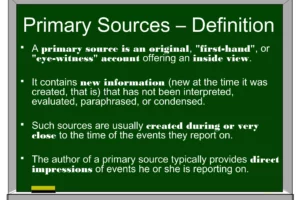
Related Primary Sources
- Vanderbilt Television News Archive: Holds complete recordings of CBS Evening News broadcasts from 1963 and 1968, including Cronkite’s JFK announcement and Vietnam special report.
- CBS News Archives: Contains original broadcast tapes, scripts, and production notes.
- Walter Cronkite Papers, Dolph Briscoe Center for American History, University of Texas at Austin: Includes correspondence, memoranda, and personal notes from Cronkite’s career.
- National Archives and Records Administration: Houses military documents, Pentagon Papers, and White House communications related to Vietnam.
- Library of Congress: Holds newspaper collections and personal papers of journalists and politicians from the era.
Further Reading
- Walter Cronkite, A Reporter’s Life (New York: Knopf, 1996).
- Douglas Brinkley, Cronkite (New York: Harper, 2012).
- Daniel C. Hallin, The Uncensored War: The Media and Vietnam (New York: Oxford University Press, 1986).
- William M. Hammond, Reporting Vietnam: Media and Military at War (Lawrence: University Press of Kansas, 1998).
- David Halberstam, The Powers That Be (New York: Knopf, 1979).
Walter Cronkite’s broadcasts during the Kennedy assassination and the Vietnam War remain touchstones in the history of American journalism. Primary sources—from the raw emotion of his November 22, 1963, announcement to the measured critique of his 1968 Vietnam editorial—reveal how television news became a powerful force in shaping public understanding. Cronkite’s authority rested on a simple promise: to tell Americans the truth as he saw it. In an era of three networks and limited information, that promise carried enormous weight. The letters, transcripts, and newspaper clippings of the time show a nation that turned to one man for reassurance and, later, for honest assessment. Their enduring significance lies not only in what Cronkite said, but in how millions of Americans listened.
FAQ
What did Walter Cronkite say when he announced President Kennedy's death?
Cronkite announced, "From Dallas, Texas, the flash, apparently official, President Kennedy died at 1 p.m. Central Standard Time, 2 o'clock Eastern Standard Time, some 38 minutes ago." He then paused, removed his glasses, and continued with visible emotion.
Did Cronkite's Vietnam editorial really influence President Johnson?
According to widely reported accounts, President Johnson said, "If I've lost Cronkite, I've lost Middle America." While some historians question the exact wording, the editorial is generally credited with contributing to Johnson's decision not to seek re-election.
What was the 'Five O'Clock Follies'?
It was the nickname given by journalists to the daily U.S. military press briefings in Saigon during the Vietnam War, which were often perceived as overly optimistic or misleading.
How did viewers react to Cronkite's JFK announcement?
Viewers were deeply moved. Many wrote letters to CBS expressing their shock and gratitude for Cronkite's calm delivery during a moment of national tragedy.




Leave a Reply