
Short Answer
Quick Snapshot
This article treats New York in 1977 as the five boroughs of New York City during the calendar year, not the broader metropolitan region. In 1977 the city was still the largest municipality in the United States and still the cultural capital of the world in many minds, but it was also a byword for urban crisis. A long fiscal emergency, high unemployment, rising crime, abandoned buildings, and racial and class tensions shaped daily life. The year’s defining shock came on the night of July 13–14, when a cascading power failure darkened all five boroughs; looting, arson, and mass arrests followed.
Yet 1977 was not only a year of catastrophe. Studio 54 opened in April and became the emblem of disco glamour; the New York Yankees won the World Series in October; and the disco culture that would soon be packaged in Saturday Night Fever was already visible in clubs, radio, and fashion. The year also brought the arrest of the so-called Son of Sam and the election of Ed Koch as mayor. These stories competed for attention in newspapers and on the street, producing a year that felt at once dangerous, exhausted, theatrical, and stubbornly alive.
Primary sources from 1977—newspapers, photographs, mayoral records, court documents, and oral histories—show a city negotiating decline and reinvention. The blackout exposed deep social fractures, while disco and baseball offered escape. The year remains a compact case study in how a great city experiences crisis and pleasure at the same time.
New York in 1977
New York City in 1977 comprised Manhattan, Brooklyn, Queens, the Bronx, and Staten Island, linked by bridges, tunnels, ferries, and a vast subway system. The harbor remained a defining feature of the city’s economy and imagination, while the skyline mixed corporate towers with tenements, warehouses, and abandoned lots. Manhattan was the administrative and financial center; Brooklyn and Queens held enormous residential populations; the Bronx was suffering severe disinvestment and arson; Staten Island retained a more suburban character.
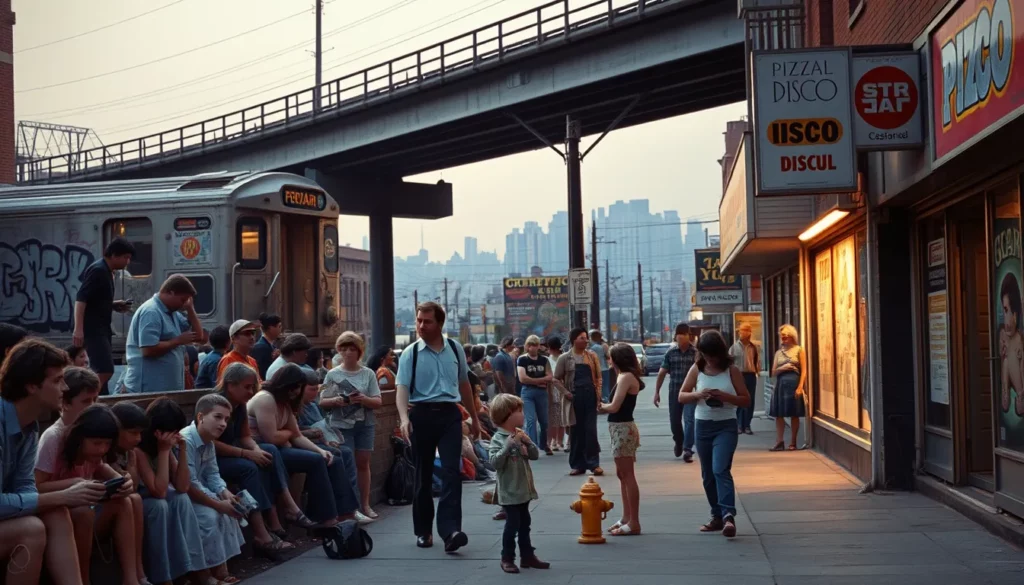
The climate in 1977 intensified the city’s sense of siege. The summer was unusually hot and humid. A heat wave in July pushed temperatures above 100°F three times in nine days, according to contemporary accounts; on July 13 severe thunderstorms moved through the region and lightning struck Consolidated Edison equipment in Westchester County. The weather made open fire hydrants, parks, and beaches essential refuges. The atmosphere was gritty: graffiti-covered trains, uncollected garbage in some neighborhoods, empty lots, and storefronts mixed with vibrant street life, discos, delis, and block parties.
Population & Economy
Estimates place the city’s population at roughly 7.1–7.2 million in 1977, down from 7.9 million in 1970. The decline reflected middle-class and white flight, deindustrialization, and suburbanization, as well as the city’s fiscal uncertainty. Neighborhoods changed unevenly: some Manhattan districts were gaining investment and nightlife, while parts of the Bronx, Brooklyn, and Queens lost population and housing stock.
The economy was still emerging from the fiscal crisis that had nearly pushed the city into bankruptcy in 1975. Unemployment was around 12 percent, and the municipal workforce had been cut through layoffs and attrition. The city depended on finance, corporate services, media, publishing, garment manufacturing, shipping, tourism, and entertainment, but manufacturing jobs were shrinking. Cost-of-living details from the period are stark: a subway ride cost 50 cents, a newspaper generally cost 15 to 25 cents, and rents varied widely by borough and neighborhood. Food and fuel prices were rising, and austerity had closed libraries and hospitals and reduced sanitation, fire, and police services.
Government & Politics
Abraham D. Beame was mayor at the start of 1977, governing under the shadow of the Emergency Financial Control Board and the Municipal Assistance Corporation. Governor Hugh Carey and state officials exercised unusual influence over city finances. The mayoral election dominated local politics: Beame lost the Democratic primary, Ed Koch defeated Mario Cuomo in a runoff, and Koch went on to win the general election in November. Campaign debates centered on fiscal discipline, crime, racial coalition-building, and the future of city services. At the national level, Jimmy Carter had been inaugurated president in January 1977, and New York officials watched Washington closely for aid and urban policy.
Industry
Finance and corporate services centered on Wall Street and midtown Manhattan. Media, advertising, publishing, and broadcasting remained major employers, as did the garment district, shipping, tourism, and entertainment. Consolidated Edison supplied power to the city and became central to public debate after the blackout. Manufacturing continued to decline, leaving vacant factories and warehouses in parts of Brooklyn, Queens, and the Bronx. Alongside the formal economy, street vending, informal labor, and small storefront businesses sustained many neighborhoods. Discos, clubs, and nightlife were also a cultural industry, drawing money and attention to Manhattan even as other boroughs struggled.
Education
The New York City public school system was enormous and under severe strain. Budget cuts had led to teacher layoffs, larger classes, and reduced programs, while dropout rates and school safety were persistent concerns. The City University of New York was still adjusting to the end of its free-tuition era; tuition had been introduced in 1976, and in 1977 students and faculty protested the change and the broader austerity. Private universities and parochial schools also educated large numbers of New Yorkers. Debates over bilingual education, desegregation, and basic literacy reflected the city’s changing demographics and its competing visions of public responsibility.
Transportation
The subway and bus system was the backbone of everyday movement, carrying millions of riders despite graffiti, breakdowns, and concerns about crime. The fare was 50 cents. Yellow cabs served Manhattan and the airports, while commuter railroads brought workers in from the suburbs. The West Side Highway had been closed since a 1973 collapse, and potholes and decaying infrastructure were common complaints. Bridges and tunnels connected the boroughs and the region. Walking remained essential in dense neighborhoods, and bicycles were used by workers and messengers. During the blackout, subway service stopped and many New Yorkers walked home through darkened streets.
Everyday Life
Housing ranged from rent-controlled apartments and co-ops to crowded tenements and abandoned buildings. In parts of the Bronx and Brooklyn, landlord neglect and arson devastated blocks, while in Manhattan rising rents and gentrification were beginning to change neighborhoods. Families often doubled up, and many households relied on extended kin networks. Food culture included delis, pizzerias, bodegas, Chinese takeout, street vendors, and church and block-party cooking. Clothing mixed practical workwear with disco fashion and the emerging punk styles visible at CBGB. Entertainment included television, radio, discos, movies, and baseball. Social customs were shaped by caution: many residents avoided certain subway lines at night, locked doors carefully, and carried cash. Yet street life remained dense and sociable, especially during the heat wave, when open hydrants and stoops became gathering places.
Major Events
- April 26: Studio 54 opens in Manhattan, becoming a symbol of disco-era nightlife and celebrity culture.
- July 13–14: A cascading power failure blacks out all five boroughs; looting, arson, and more than 3,700 arrests follow.
- July 1977: A severe heat wave and thunderstorms compound the city’s stress and strain public services.
- August 10: David Berkowitz, the so-called Son of Sam, is arrested in Yonkers, ending a highly publicized manhunt.
- September–November: The mayoral campaign culminates in Ed Koch’s election as mayor.
- October 18: The New York Yankees win the World Series, with Reggie Jackson hitting three home runs in Game 6.
- December: Saturday Night Fever is released, bringing disco culture to national audiences.
What Newspapers Were Reporting
The city’s newspapers—The New York Times, the New York Daily News, the New York Post, the Amsterdam News, and the Village Voice—covered a city of competing emergencies and pleasures. Front pages followed the Son of Sam killings and the hunt for the .44-caliber suspect; the blackout produced dramatic accounts of looting, fires, and residents helping neighbors; the mayoral race was treated as a referendum on the city’s survival. The Daily News and Times also tracked the fiscal crisis, subway crime, and the Yankees pennant race.
“The social costs of the blackout,” a special commission later wrote, “are difficult to measure.”
Newspapers also announced disco’s arrival. Studio 54’s opening and the celebrity nightlife scene were covered as spectacles, while the Village Voice chronicled punk, downtown art, and the darker side of urban nightlife. The press reflected both panic and fascination.
What People Were Talking About
Conversations in kitchens, bars, subway cars, and union halls circled around safety and survival. Would the city go bankrupt? Was the blackout a sign of institutional collapse? Why had looting broken out so quickly? The Son of Sam case fed rumors and fear, especially among young women and couples in parked cars. In the Bronx, residents talked about landlords, arson, and abandoned buildings; in Manhattan, about disco, real estate, and the mayoral race. Baseball gave the city a shared language of triumph.
Letters and diaries from the period suggest exhaustion mixed with defiance. New Yorkers complained about taxes, crime, and dirty streets, but many also defended the city’s energy and diversity. The phrase “the Bronx is burning” would become shorthand for the era, but it also obscured ordinary life: churchgoers, shopkeepers, teachers, and families continued to build community amid the ruins.
Historical Photographs
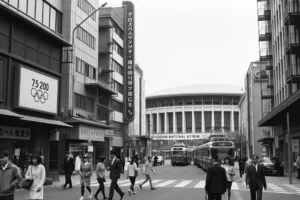
Photographs from 1977 are abundant. Getty Images and Newsday hold images of Harlem residents standing near an open fire hydrant after the blackout; newspaper archives contain pictures of looted storefronts, National Guardsmen, firefighters, and darkened avenues. The New York Daily News and New York Times photo archives document the Son of Sam manhunt, the mayoral campaign, and Studio 54’s velvet-rope scene. Photographers also captured the Yankees’ victory parade, graffiti-covered subway cars, and abandoned Bronx buildings.
These images are not neutral illustrations. They helped shape how the year was remembered—as a low point of urban decay or as a paradox of danger and glamour. Researchers should compare published photographs with contact sheets, negatives, and oral histories to understand how editors framed the city.
Documents & Primary Sources
- Municipal records: Mayor Abraham D. Beame’s papers, mayoral correspondence, budget files, and police and fire department reports in the New York City Municipal Archives.
- Newspapers: The New York Times, New York Daily News, New York Post, Amsterdam News, and Village Voice for 1977, available through libraries and digital archives.
- Blackout records: Consolidated Edison reports, state and city investigations, and the special commission’s summary report on the July 1977 blackout.
- Court and police records: documents related to the Son of Sam case and the arrest of David Berkowitz; NYPD arrest and incident summaries for July 13–14.
- Visual and oral sources: NYPL Digital Collections, Getty Images, Newsday archives, and oral history interviews with residents, business owners, and city workers.
1977 Timeline
| Date | Event |
|---|---|
| April 26 | Studio 54 opens in Manhattan, becoming a symbol of disco-era nightlife. |
| July 13–14 | A cascading power failure blacks out all five boroughs; looting, arson, and arrests follow. |
| July 1977 | A severe heat wave and thunderstorms compound the city’s stress. |
| August 10 | David Berkowitz, the so-called Son of Sam, is arrested in Yonkers. |
| September | Ed Koch wins the Democratic mayoral runoff against Mario Cuomo. |
| October 18 | The New York Yankees win the World Series, with Reggie Jackson hitting three home runs in Game 6. |
| November 8 | Ed Koch is elected mayor of New York City. |
| December | Saturday Night Fever is released, bringing disco culture to national audiences. |
What Changed Next
Ed Koch took office in January 1978 and became the face of a tougher, more managerial city. The fiscal crisis eased slowly through the late 1970s and 1980s, aided by federal loans, state oversight, and economic recovery, though austerity’s scars remained. The blackout commission’s findings contributed to later debates about utility reliability and emergency response. Crime remained high into the 1980s before declining later. Disco’s popularity peaked and then fragmented into new wave, hip-hop, and other forms. The Bronx continued to suffer fires and abandonment, but community groups and later reinvestment reshaped parts of the borough. The year 1977 became a reference point for urban crisis and resilience.
Sources
- PBS American Experience, The Night New York’s Lights Went Out, https://www.pbs.org/wgbh/americanexperience/features/night-new-yorks-lights-went-out/
- Jonathan Mahler, Ladies and Gentlemen, The Bronx Is Burning (Farrar, Straus and Giroux, 2005), https://academic.macmillan.com/academictrade/9780312424305/ladiesandgentlementhebronxisburning/
- New York City Municipal Archives, https://www.archives.nyc/
- New York Public Library Digital Collections, https://digitalcollections.nypl.org/
FAQ
What was the population of New York City in 1977?
Estimates place the city at roughly 7.1–7.2 million in 1977, reflecting continued decline from 7.9 million in 1970.
What major events happened in New York City in 1977?
Major events included the July 13–14 blackout, the arrest of Son of Sam in August, the mayoral election of Ed Koch, the Yankees’ World Series victory, the opening of Studio 54, and the release of Saturday Night Fever.
What primary sources are available for studying New York City in 1977?
Researchers can use newspapers, mayoral and municipal records, police and court documents, Consolidated Edison reports, photographs, and oral histories held by the New York City Municipal Archives, the New York Public Library, and newspaper archives.
How did daily life in New York City in 1977 differ from today?
Daily life was shaped by a 50-cent subway fare, high crime, graffiti-covered transit, fiscal austerity, and limited digital technology, while disco, block parties, and baseball provided popular escape.





Leave a Reply