
Short Answer
Quick Snapshot
London in 1888 was a city of staggering contradictions. As the capital of the British Empire and the largest urban centre on the planet, it boasted more than five and a half million inhabitants, yet many lived in conditions of squalor that shocked contemporary observers. The year is most remembered for the series of brutal murders in the Whitechapel district attributed to an unknown assailant dubbed ‘Jack the Ripper’, but it was also a year of labour unrest, municipal reform, and technological ambition. Gas lamps still lit the streets, but electric light was beginning to appear in select public buildings. Horse-drawn trams and omnibuses clogged the thoroughfares, while the world’s first deep-level electric railway was under construction. It was a city on the cusp of the modern age, yet still governed by ancient parish vestries and a patchwork of local boards.
Contemporary newspapers, from the sober Times to the sensational Illustrated Police News, provide a daily record of life, death, and debate. Diaries and letters reveal the anxieties of middle-class residents and the grim endurance of the poor. Photographs, though still a relatively young medium, captured the city’s architecture, its street life, and the faces of those who lived and died in its crowded courts and alleys. To study London in 1888 is to step into a world both recognisable and profoundly alien.
London in 1888
Geographically, London in 1888 was not a single administrative entity but a sprawling conurbation covering roughly 117 square miles, encompassing the ancient City of London, the surrounding County of Middlesex, and parts of Surrey, Kent, and Essex. The River Thames, busy with steamers, barges, and sailing vessels, remained the city’s commercial artery. The climate was typically English: a cold, damp winter gave way to a mild spring and a wet summer. Fog—often thickened by coal smoke into the notorious ‘pea-souper’—was a frequent and sometimes lethal presence, particularly in the autumn and winter months.
The atmosphere of the city varied dramatically by district. In the West End, broad avenues, fine shops, and elegant squares housed the wealthy and the professional classes. In the East End, particularly Whitechapel, Spitalfields, and Bethnal Green, narrow streets, overcrowded tenements, and sweatshops defined daily existence. The contrast was stark and widely commented upon by social reformers such as Charles Booth, whose monumental survey of London poverty was underway. The city’s soundscape was a cacophony of street cries, iron-wheeled traffic, church bells, and factory whistles. The smell of horse manure, coal smoke, and uncollected refuse was inescapable.
Population & Economy
The population of Greater London in 1888 is estimated at approximately 5,600,000, an increase of nearly 200,000 over the previous year, driven largely by migration from rural England and Ireland, as well as a steady influx of Jewish refugees fleeing persecution in Eastern Europe. The East End, in particular, absorbed thousands of these newcomers, leading to severe overcrowding. The census of 1891 would later record over 5.7 million, confirming the relentless growth.
London’s economy was diverse and dynamic. The Port of London was the busiest in the world, handling over 10 million tons of shipping annually. The docks employed tens of thousands of casual labourers, whose work was irregular and poorly paid. Manufacturing was largely small-scale and workshop-based, producing clothing, furniture, footwear, and processed food. The City of London was the financial capital of the globe, home to the Bank of England, the Stock Exchange, and countless insurance and trading firms. The cost of living varied enormously: a loaf of bread cost about 4 pence, a pint of beer 2 pence, and a cheap lodging house bed could be had for 4 pence a night. A skilled artisan might earn 30 to 40 shillings a week, while an unskilled labourer often struggled to make 15 shillings. For the poorest, rent for a single room in a tenement could consume a third of a family’s income.
Government & Politics
London’s governance in 1888 was notoriously fragmented. The City of London retained its ancient Corporation and Lord Mayor—Sir James Whitehead served for the 1887–88 term, succeeded in November by Sir Polydore de Keyser. The rest of the metropolis was administered by the Metropolitan Board of Works (MBW), established in 1855, which was responsible for main drainage, fire services, and major infrastructure, but not for housing, education, or poor relief. Those functions fell to dozens of parish vestries and district boards, often criticised as inefficient and corrupt.
The great political event of the year was the passage of the Local Government Act 1888, which received royal assent on 13 August. The Act created the County of London and established the London County Council (LCC), which would take over from the MBW in 1889. The first LCC elections were scheduled for January 1889, and throughout 1888 political parties and reform groups campaigned vigorously. The Progressive Party, a coalition of Liberals, radicals, and labour representatives, was already organising to challenge the Conservative-dominated vestries. Nationally, the government was led by the Conservative Marquess of Salisbury, but London politics were increasingly influenced by socialist and labour voices, as seen in the matchgirls’ strike.
Industry
London’s industrial landscape was dominated by small workshops rather than large factories. The clothing trade, centred in the East End and Soho, employed thousands of tailors, seamstresses, and pressers, many working in sweated conditions for piece rates. The furniture industry thrived in Shoreditch and Bethnal Green, while printing and publishing clustered around Fleet Street. The Bryant and May match factory in Bow was one of the few large-scale industrial enterprises, employing over 1,400 workers, mostly women and girls. In July 1888, these workers walked out in protest against low wages, fines, and the health risks of white phosphorus. The strike, led by Annie Besant and supported by the Fabian Society, ended in victory for the workers, leading to the formation of the Matchmakers’ Union—a landmark in British labour history.
Other notable industries included brewing (with giants like Whitbread and Truman, Hanbury & Buxton), engineering along the Thames, and the gas works that supplied the city’s lighting. The docks—West India, East India, London, St Katharine, and Surrey Commercial—were economic engines, though their casual labour system bred poverty and unrest.
Education
Elementary education in London was provided by the London School Board, established under the Elementary Education Act 1870. By 1888, the Board operated over 400 schools and educated more than 400,000 children. Attendance was compulsory for children aged 5 to 10, though enforcement was uneven, and many East End children still worked half-time or truanted. The Board schools were often large, austere brick buildings, but they offered a basic curriculum of reading, writing, arithmetic, and religious instruction. Literacy rates in London were higher than the national average, with perhaps 90% of adults able to read, though writing skills were less universal.
Secondary and higher education remained largely the preserve of the middle and upper classes. The ancient public schools—Eton, Harrow, Westminster—fed the universities of Oxford and Cambridge. University College London and King’s College London offered higher education to a broader social range, and the University of London examined external students. For the working classes, mechanics’ institutes, evening classes, and the polytechnics (such as the Regent Street Polytechnic) provided technical and commercial instruction. The year saw continued debate over free education and the extension of school leaving age, but no major legislative change.
Transportation
Londoners in 1888 moved through a city in transition. The streets were thronged with horse-drawn vehicles: hansom cabs, four-wheeled growlers, omnibuses, trams, carts, and private carriages. The London General Omnibus Company operated hundreds of horse buses along fixed routes, with fares from 1 penny to 6 pence depending on distance. Horse trams ran on rails in many suburbs, but were banned from the City and West End due to congestion. The underground railway—the Metropolitan and District lines—was steam-powered and smoky, but carried over 100 million passengers a year. The City and South London Railway, the world’s first deep-level electric tube, was under construction and would open in 1890.
The Thames remained a vital transport artery, with river steamers and ferries connecting Greenwich, Woolwich, and other riverside districts. For longer journeys, the mainline railway termini—Paddington, Euston, King’s Cross, St Pancras, Liverpool Street, Victoria, and Waterloo—linked London to the rest of Britain. The sheer volume of traffic led to chronic congestion, and the first serious proposals for an electric tramway system were being discussed. For the poor, walking was the most common mode of transport, and many never travelled more than a few miles from their birthplace.
Everyday Life
Daily life in 1888 London was shaped by class, gender, and geography. For the middle and upper classes, the day began with a cooked breakfast served by servants, followed by work in the City or professions, and an evening of dinner, theatre, or social calls. Gas lighting illuminated homes, though electric light was a novelty for the wealthy. Housing ranged from grand terraced houses in Kensington and Belgravia to modest suburban villas in Clapham and Hackney. The working classes lived in rented rooms, often sharing a single tap and privy with several families. In the worst slums of Whitechapel and St Giles, families of eight or more might occupy a single room, sleeping on straw or rags.
Food for the poor consisted mainly of bread, tea, potatoes, and occasional scraps of meat or fish. Street vendors sold hot eels, pea soup, baked potatoes, and fried fish. Beer was the universal drink, consumed even by children, though temperance movements were gaining strength. Clothing was largely second-hand for the poor, while the middle classes followed the fashions of the season—bustles were fading, and tailored jackets and skirts were in vogue for women. Entertainment ranged from music halls (the Empire, the Alhambra) and penny gaffs to public houses, parks, and the newly popular football matches. The Bank Holiday Act of 1871 had created leisure time, and excursions to Epping Forest, Hampton Court, or the seaside were popular in summer.
Major Events
The defining events of 1888 in London were the Whitechapel murders. Between April and November, at least five women—Mary Ann Nichols, Annie Chapman, Elizabeth Stride, Catherine Eddowes, and Mary Jane Kelly—were brutally killed in the East End. The murders, attributed to ‘Jack the Ripper’, caused widespread panic, intense press coverage, and a massive police investigation led by the Metropolitan Police Commissioner Sir Charles Warren. Vigilance committees were formed, and the government was criticised for its failure to catch the killer. The murders exposed the appalling conditions of the East End and prompted social reform debates.
Other significant events included the matchgirls’ strike in July, the passage of the Local Government Act in August, and the opening of the new Central Criminal Court extension at the Old Bailey. The year also saw the completion of the first section of the Thames Embankment’s electric lighting, and the continued construction of Tower Bridge, which would not open until 1894. In November, the Lord Mayor’s Show drew huge crowds, and the Christmas season brought the usual markets and pantomimes.
What Newspapers Were Reporting
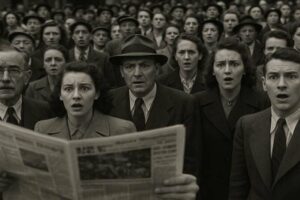
London’s newspapers in 1888 were numerous and influential. The Times, the paper of record, reported extensively on the Ripper murders, the Local Government Act, and imperial affairs. On 1 September, after the murder of Mary Ann Nichols, it wrote:
‘The discovery of the body of a woman, brutally mutilated, in Buck’s Row, Whitechapel, has caused a profound sensation in the East End. The police are pursuing their inquiries with energy, but no arrest has been made.’
The Illustrated Police News published lurid illustrations of the crime scenes, while the Pall Mall Gazette, edited by W. T. Stead, campaigned for social reform and published sensational interviews. The Star, an evening paper, was particularly aggressive in its coverage, at one point accusing the police of incompetence. The Daily Telegraph and Morning Post offered more conservative perspectives. Local papers like the East London Observer and the Hackney Gazette reported on vestry meetings, petty crime, and the matchgirls’ strike. The press played a crucial role in shaping public perception of the Ripper case, often mixing fact with speculation and fuelling anti-immigrant and anti-Semitic sentiment.
What People Were Talking About
Conversations in London in 1888 were dominated by the Ripper murders. Diaries and letters reveal a mixture of fear, morbid curiosity, and anger. Middle-class women wrote of avoiding the East End and carrying whistles or hatpins for protection. Working-class residents of Whitechapel complained of being treated as suspects and of the influx of journalists and sightseers. The matchgirls’ strike was also a major topic, with many expressing surprise that young women could organise so effectively. Political discussions centred on the new County Council and the possibility of progressive reform. In the clubs and drawing rooms of the West End, the conversation turned to the latest plays, the health of the Queen (who rarely visited London), and the growing tensions in Ireland. Among the poor, the daily struggle for food, rent, and work overshadowed all else, though the Ripper’s crimes added a new layer of terror to the night.
Historical Photographs
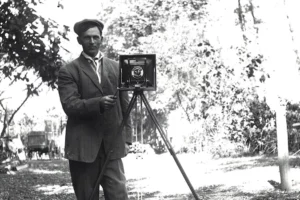
Photography in 1888 was a well-established but still cumbersome medium. The dry plate process allowed for faster exposures, and the first Kodak box camera was introduced that very year, though it would not become common until the 1890s. Surviving photographs of London in 1888 include street scenes by John Thomson, who documented the lives of the poor in Street Life in London (published 1877–78 but still widely circulated), and architectural views by Henry Dixon for the Society for Photographing Relics of Old London. The City of London Police photographed the Ripper crime scenes, and these images—grainy, stark, and deeply disturbing—remain among the most significant visual records of the year. They show the cramped, dark alleys and courtyards where the murders occurred, providing an unflinching look at East End poverty. Other photographs capture the construction of Tower Bridge, the bustling docks, and the grand new buildings of the West End. The visual record is fragmentary but powerful, offering a window into a city of extremes.
Documents & Primary Sources
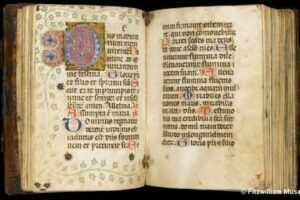
Historians studying London in 1888 rely on a rich array of primary sources. The Metropolitan Police files on the Whitechapel murders (held at The National Archives, MEPO 3/140–145) include witness statements, autopsy reports, and correspondence. The Charles Booth notebooks (London School of Economics Archives) contain detailed street-by-street surveys of poverty, with colour-coded maps. The census enumerators’ books for 1881 and 1891 provide demographic data, though the 1891 census is more useful for post-1888 analysis. Newspapers—The Times, Pall Mall Gazette, Illustrated Police News, and local titles—are available digitally and on microfilm. Diaries and letters, such as those of Beatrice Webb and the East End clergyman Samuel Barnett, offer personal perspectives. Parliamentary papers, including the Report of the Royal Commission on the Housing of the Working Classes (1885) and the Local Government Act 1888 itself, are essential. Maps, particularly the Ordnance Survey five-foot plans, show the physical layout of the city. Finally, the photographs mentioned above, along with illustrations in the Illustrated London News, complete the visual record.
1888 Timeline
| Date | Event |
|---|---|
| January | Severe cold and fog; Thames traffic disrupted. |
| March | First proposals for the London County Council elections published. |
| April 3 | Murder of Emma Elizabeth Smith in Whitechapel (not officially a Ripper victim but part of the series). |
| July 5–20 | Matchgirls’ strike at Bryant and May; workers win concessions. |
| August 7 | Murder of Martha Tabram in Whitechapel. |
| August 13 | Local Government Act 1888 receives royal assent, creating the County of London. |
| August 31 | Murder of Mary Ann Nichols, first canonical Ripper victim. |
| September 8 | Murder of Annie Chapman. |
| September 30 | Murders of Elizabeth Stride and Catherine Eddowes (the ‘double event’). |
| October | Vigilance committees formed; Sir Charles Warren resigns as Metropolitan Police Commissioner (effective November). |
| November 9 | Murder of Mary Jane Kelly, the last canonical Ripper victim. |
| November 10 | Lord Mayor’s Show; Sir Polydore de Keyser takes office. |
| December | Continued press speculation; no arrests made. Christmas markets and pantomimes proceed as usual. |
What Changed Next
The events of 1888 had lasting consequences. The Ripper murders, though never solved, led to reforms in police methods, including the increased use of photography and forensic science, and contributed to the eventual demolition of the worst East End slums. The matchgirls’ strike inspired further labour organisation, including the Great Dock Strike of 1889, which paralysed the Port of London and won significant improvements for dockers. The Local Government Act 1888 came into force in 1889, and the first London County Council elections in January 1889 produced a Progressive majority that would implement housing, education, and public health reforms. The construction of the deep-level tube, begun in 1888, would transform urban transport in the 1890s. In the immediate following years, London continued to grow, but the social conscience awakened by the events of 1888—particularly the exposure of East End poverty—would shape the reformist politics of the late Victorian and Edwardian eras.
FAQ
What was the population of London in 1888?
The population of Greater London in 1888 was approximately 5,600,000, making it the largest city in the world at the time.
What major events happened in London in 1888?
The most significant events were the Whitechapel murders by 'Jack the Ripper' (August–November), the matchgirls' strike at Bryant and May (July), and the passage of the Local Government Act 1888, which created the London County Council.
What primary sources are available for studying London in 1888?
Key primary sources include Metropolitan Police files on the Ripper case (The National Archives), Charles Booth's poverty survey notebooks (LSE Archives), contemporary newspapers like The Times and the Illustrated Police News, diaries and letters, census records, Ordnance Survey maps, and photographs of street scenes and crime scenes.
How did daily life in London in 1888 differ from today?
Daily life in 1888 London was marked by horse-drawn transport, gas lighting, widespread poverty and overcrowding, limited sanitation, and a rigid class system. Most people worked long hours in manual or clerical jobs, and entertainment was largely local—music halls, pubs, and parks. There was no radio, television, or internet, and communication relied on letters, telegrams, and newspapers.




Leave a Reply