
Short Answer
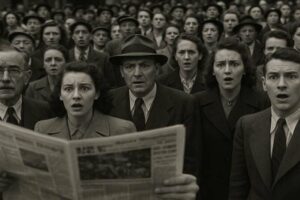
In the autumn of 1929, the financial pages of American newspapers had become front-page news. For years, the stock market had seemed a sure path to wealth, and daily papers reported every uptick with breathless enthusiasm. Then, in a single week in late October, the world of Wall Street collapsed. Crowds gathered outside the New York Stock Exchange, staring at the ticker tape in disbelief. The newspapers that had celebrated the boom now struggled to explain the bust. Their headlines—bold, contradictory, and often reassuring—shaped how millions of Americans understood the disaster unfolding before them.
What Happened?
The crash unfolded over several days of unprecedented trading. On October 24, 1929—later known as Black Thursday—a wave of selling swept the New York Stock Exchange. According to a United Press wire report, “Five billion dollars in market values were swept away today in the greatest selling wave in the history of the New York Stock Exchange.” Sales totaled 12,895,650 shares, a record at the time, with an additional 6,337,400 shares traded on the curb exchange. Bond sales reached $24,500,000. The break was sudden, coming after an opening that suggested a rally. “Frenzied traders fought on the floor to sell their stocks at the best available price,” the report noted. Then, “some of the nation’s most powerful bankers gave support which stopped the break.”
The respite was short-lived. On October 29, 1929—Black Tuesday—the market collapsed again with even greater force. The New York Times reported the following day: “Stock prices virtually collapsed yesterday, swept downward with gigantic losses in the most disastrous trading day in the stock market’s history.” Trading on the New York Stock Exchange aggregated 16,410,030 shares, and the curb exchange saw 7,096,300 shares. “From every point of view, in the extent of losses sustained, in total turnover, in the number of speculators wiped out, the day was the most disastrous in Wall Street’s history.” Yet even then, an impressive rally at the close brought many leading stocks back from 4 to 14 points off their lows, offering a glimmer of hope.
How It Was Seen at the Time
Contemporary observers struggled to reconcile the crash with the optimism that had defined the decade. Just weeks earlier, newspapers had celebrated the market’s strength. A New York Herald Tribune article, reprinted by PBS, described “a wave of buying” that “swept over the market,” noting that “the market appeared entirely confident from the opening gong.” The crash itself was often framed as a temporary correction, not a catastrophe. The New York Times editorial of October 26, 1929, sought to ease panic, though its exact words are lost to history. Bankers publicly expressed optimism, and the UPI report noted that “bankers optimistic, to continue aid” was the prevailing sentiment. The Times headline on October 30 read: “Stocks Collapse in 16,410,030-Share Day, but Rally at Close Cheers Brokers; Bankers Optimistic, to Continue Aid.” This juxtaposition—collapse and cheer—captured the confusion of the moment.
Historical Snapshot
| Aspect | Detail |
|---|---|
| Date | October 24–29, 1929 |
| Place | New York Stock Exchange, New York City |
| People | Speculators, brokers, bankers, and the investing public |
| What Happened | Record-breaking selling wiped out billions in market value; bankers intervened to support prices |
| Why It Mattered | Marked the beginning of the Great Depression, though contemporaries saw it as a severe but temporary setback |
Contemporary Newspaper Coverage
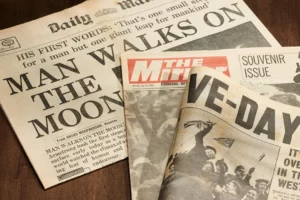
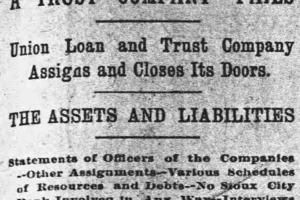
Newspapers were the primary source of information for most Americans, and their coverage evolved from euphoria to alarm. Throughout 1929, daily papers reported that the future looked bright for investors, even after the crash began. The PBS compilation of headlines shows how stock market news moved from the financial pages to the front pages as first-time investors grew in number. On October 24, the New York Times and other papers carried the UPI story of the $5 billion loss. The New York Times front page of October 30, 1929, exclaimed the massive loss while also working to ease fear among panicked investors. The paper’s own account described “hysteria” sweeping the country, with stocks “going overboard for just what they would bring at forced sale.” Yet the same article emphasized the closing rally and the bankers’ promise of continued support. This dual narrative—disaster and reassurance—was typical of the era’s reporting.
“Five billion dollars in market values were swept away today in the greatest selling wave in the history of the New York Stock Exchange.” — United Press, October 24, 1929
“From every point of view, in the extent of losses sustained, in total turnover, in the number of speculators wiped out, the day was the most disastrous in Wall Street’s history.” — The New York Times, October 30, 1929
What People Knew at the Time
| What People Knew Then | What We Know Now |
|---|---|
| The market had crashed, with billions lost and record trading volumes. | The crash was a symptom of underlying economic weaknesses, including speculative bubbles and weak banking structures. |
| Bankers were optimistic and promised support; many expected a quick recovery. | The crash led to a prolonged depression, exacerbated by policy failures such as contractionary monetary policy and trade tariffs. |
| Newspapers emphasized the rally at the close as a sign of resilience. | The rally was temporary; the market continued to fall for years, reaching its bottom in 1932. |
What People Feared
Fear was palpable. The New York Times reported that “hysteria swept the country” as stocks were sold “at any price.” Speculators who had bought on margin faced ruin as prices crumbled. The UPI article noted that “frenzied traders fought on the floor to sell their stocks at the best available price,” suggesting a desperate scramble for liquidity. Beyond the immediate losses, there was fear that the crash would spread to the broader economy, though many hoped the bankers’ intervention would contain the damage. The public’s anxiety was heightened by the unprecedented scale of the losses—$5 billion in a single day was an almost unimaginable sum in 1929.
What People Expected Would Happen Next
Most contemporaries expected a recovery. The bankers’ public optimism, reported in the press, reassured many. The New York Times headline on October 30 highlighted the “rally at close” and the bankers’ pledge to “continue aid.” The UPI article noted that the bankers’ support “stopped the break” on October 24, leading many to believe the worst was over. Even the Times editorial of October 26, though cautious, sought to calm investors. The prevailing view was that the crash was a correction, not a collapse. Few predicted the decade-long depression that followed. As Federal Reserve Chairman Alan Greenspan later noted, it was not the crash itself but “ensuing failures of policy” that led to the Great Depression—a view that would have surprised most Americans in November 1929.
How Historians See It Today
Modern historians, drawing on later evidence, have reframed the crash. While contemporaries saw it as a market event, scholars now understand it as a turning point that exposed structural weaknesses. The New York Times archive article by Floyd Norris, written decades later, notes that “even decades later, the crash of 1929 is remembered as an unnecessary disaster, a market event that need not have led to economic collapse.” Norris quotes Alan Greenspan’s congressional testimony: “While bubbles that burst are scarcely benign, the consequences need not be catastrophic for the economy.” The key, Greenspan argued, was policy response. The Federal Reserve’s failure to act as a lender of last resort, combined with protectionist trade policies, turned a stock market crash into a systemic depression. This interpretation contrasts sharply with the optimistic contemporary view that the bankers’ intervention would suffice.
The primary sources—newspapers, wire reports, and editorials—reveal a public caught between panic and hope. They show how the press, even in the midst of disaster, tried to maintain confidence. The crash of 1929 was not just a financial event; it was a crisis of perception, as Americans struggled to reconcile the promise of the Roaring Twenties with the reality of ruin. The newspapers of the day, with their bold headlines and contradictory messages, remain a vital window into that moment of collective shock.
FAQ
What was the immediate reaction of newspapers to the 1929 crash?
Newspapers initially reported the crash as a dramatic but potentially temporary setback. The New York Times on October 30, 1929, described it as 'the most disastrous trading day in the stock market's history' but also highlighted the closing rally and bankers' optimism. Many papers tried to reassure investors, emphasizing that powerful bankers were providing support.
How did the press cover the crash differently from modern reporting?
Contemporary reporting often mixed factual accounts with efforts to calm the public. Headlines like 'Bankers Optimistic, to Continue Aid' reflected a desire to prevent panic. Modern reporting tends to be more analytical and critical, focusing on systemic causes and policy failures, as seen in later analyses by figures like Alan Greenspan.





Leave a Reply