Short Answer
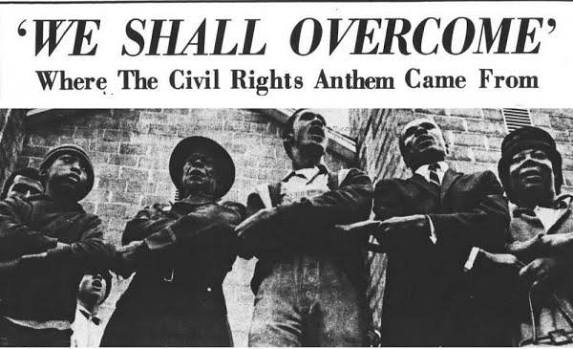
The civil rights movement of the 1950s and 1960s was a seismic upheaval that transformed the United States. But its record is not merely a chronicle of court decisions and legislative acts; it is a living tapestry of individual voices. The young student who walked through a jeering mob to enter Little Rock’s Central High School, the Birmingham worker who faced police hoses, the marcher who crossed the Edmund Pettus Bridge in Selma—these are the voices captured in oral history collections at the Library of Congress, the Birmingham Civil Rights Institute, and the National Archives. This article draws on those eyewitness accounts to reconstruct what it felt like to live on the front lines of the struggle, and the determination, the fear, and the hope of the people who made history.
What Happened?
The civil rights movement unfolded from the 1950s through the 1980s, as documented in the oral history collection “Voices of Freedom” by Henry Hampton and Steve Fayer, which draws on nearly one thousand interviews with activists, politicians, reporters, and Justice Department officials (Penguin Random House). The movement’s chronology includes the 1955–56 Montgomery bus boycott, the 1957 integration of Little Rock Central High School, the 1963 Birmingham campaign, and the 1965 Selma to Montgomery march. On March 7, 1965, some 600 people assembled at a downtown church in Selma, Alabama, knelt in prayer, and began walking silently, two-by-two through the city streets. Led by Hosea Williams of the Southern Christian Leadership Conference and John Lewis of the Student Nonviolent Coordinating Committee, the marchers were stopped at the Edmund Pettus Bridge by about 150 Alabama state troopers, sheriff’s deputies, and possemen. After a two-minute warning, the troops advanced, wielding clubs, bullwhips, and tear gas (National Archives). In Birmingham, the movement was carried by “foot soldiers”—men, women, and children—whose oral histories, collected in “Foot Soldiers for Democracy,” convey the real sense of fear and the risk of bodily danger they had to overcome (University of Illinois Press).
How It Was Seen at the Time
Contemporaries viewed the movement as a moral drama. The New York Times Book Review described “Voices of Freedom” as “a vast choral pageant that recounts the momentous work of the civil rights struggle” (Penguin Random House). The Library of Congress exhibition “Voices of Civil Rights” celebrated the donation of these oral histories, linking them to key collections (Library of Congress). The prevailing mood was one of defiant nonviolence in the face of brutality. The marchers in Selma walked silently, two-by-two, a deliberate act of peaceful protest. The National Archives recorded the tense moment: “One minute and five seconds after a two-minute warning was announced, the troops advanced, wielding clubs, bullwhips, and tear gas” (National Archives). This juxtaposition of serene determination and violent force defined the public’s understanding of the era.
Historical Snapshot
| Aspect | Detail |
|---|---|
| Date | 1950s–1980s (key events in 1957, 1963, 1965) |
| Place | Southern United States; key sites include Little Rock, Birmingham, Selma |
| People | Civil rights activists, students, politicians, police, ordinary citizens |
| What Happened | Protests, boycotts, and marches against segregation and voter disenfranchisement |
| Why It Mattered | Led to the Civil Rights Act of 1964 and the Voting Rights Act of 1965 |
Eyewitness Accounts
The oral histories preserved in the Library of Congress, the Birmingham Civil Rights Institute, and the National Archives give direct testimony from the front lines. The Library of Congress exhibition includes the account of the “Washington Freedom Riders Committee” in 1961, who hung signs from bus windows to protest segregation (Library of Congress). The “Foot Soldiers for Democracy” collection presents twenty-nine oral histories of the Birmingham movement, conveying “the real sense of fear and the risk of bodily danger people had to overcome to become the movement’s foot soldiers” (University of Illinois Press).
“One minute and five seconds after a two-minute warning was announced, the troops advanced, wielding clubs, bullwhips, and tear gas.” — National Archives, “John Lewis and the March from Selma to Montgomery, Bloody Sunday, 1965”
The book “Voices of Freedom” invites readers to “Join brave and terrified young people walking through a jeering mob and up the steps of Central High School in Little Rock” (Penguin Random House). These accounts capture the fear and courage of ordinary people.
Different Perspectives
The Activists
Activists saw themselves as nonviolent warriors for justice. Their testimonies in “Foot Soldiers for Democracy” describe the constant threat of violence and economic reprisal. The book notes that “policing was carried out when there were no cameras,” meaning many brutal acts went unrecorded (University of Illinois Press).
The Authorities
State and police officials used force to suppress demonstrations. The National Archives documents the use of clubs, bullwhips, and tear gas on the marchers at the Edmund Pettus Bridge (National Archives). This was part of a broader pattern of official violence against civil rights protests.
The Segregationists
Segregationists employed both legal and extralegal means to maintain the racial order, including economic terrorism. The “Foot Soldiers” book explicitly mentions “economic terrorism” as a tool of repression (University of Illinois Press).
What People Knew at the Time
| What People Knew Then | What We Know Now |
|---|---|
| News reports covered some of the violence, but many police actions were not filmed. | Oral histories and archives have revealed the full extent of police brutality and the systematic economic reprisals against activists. |
| The public saw the courage of the marchers, but not the daily fear of the foot soldiers. | We now have detailed records from the 29 oral histories in “Foot Soldiers for Democracy” that show the everyday life and risks of participation. |
Aftermath
The immediate aftermath of the Selma march was the passage of the Voting Rights Act of 1965, which dismantled the barriers to African American voting. The movement continued, as “Voices of Freedom” covers the period through the 1980s, including the rise of Black political power and economic justice struggles. The oral histories collected by the Library of Congress and the Birmingham Civil Rights Institute have become essential resources for understanding the movement’s legacy and the enduring fight for equality.
How Historians See It Today
Modern historians recognize that oral history is central to reconstructing the civil rights movement. The “Voices of Civil Rights” project, a collaborative effort of the Library of Congress, the Leadership Conference on Civil Rights, and AARP, has preserved thousands of accounts that might otherwise have been lost (Library of Congress). The “Foot Soldiers for Democracy” collection demonstrates that the movement was not just the work of famous leaders but was sustained by the courage of ordinary people. Historians now see the movement as a mass mobilization of grassroots activism, not merely a series of top-down legal victories. The oral histories have given us a nuanced understanding of the fear, the violence, and the determination that defined the era.
The eyewitness accounts of the civil rights movement are more than historical records; they are the living voices of those who risked everything for freedom. They remind us that the movement was not an abstract political event but a human story of courage, sacrifice, and hope. As we listen to these voices, we understand that the movement was a moment when ordinary people stood up and demanded that the promise of America be kept.
FAQ
What is the significance of the oral histories in the civil rights movement?
The oral histories, such as those collected by the Library of Congress and the Birmingham Civil Rights Institute, preserve the personal experiences of the activists and ordinary people. They reveal the fear, courage, and daily realities that official records often omit, giving a more complete and human picture of the movement.
What happened on Bloody Sunday?
On March 7, 1965, about 600 civil rights marchers were attacked by Alabama state troopers and police as they attempted to cross the Edmund Pettus Bridge in Selma, Alabama, on their way to Montgomery. The marchers were ordered to disperse, and after a two-minute warning, the troops advanced with clubs, bullwhips, and tear gas, injuring many. The event became a turning point in the voting rights campaign.



Leave a Reply