
Short Answer
In the early hours of April 28, 1944, the English Channel off Slapton Sands was a black, oily stretch of water. Eight American LSTs—Landing Ship, Tanks—loaded with thousands of troops, sailed in convoy toward a mock invasion rehearsal. The men were practicing for the real thing: the D-Day landings on Utah Beach. But at 1:30 a.m., the exercise turned into a slaughter. German E-boats, fast attack craft, slipped through the lightly guarded convoy and launched torpedoes. Three ships were hit; two went down quickly. Hundreds of men were thrown into the freezing, burning sea. The disaster was kept secret for years, and the survivors were sworn to silence. Only now, through the voices of men like Douglas Harlander and Richard Ferguson, do we know what truly happened on that forgotten night.
What Happened?
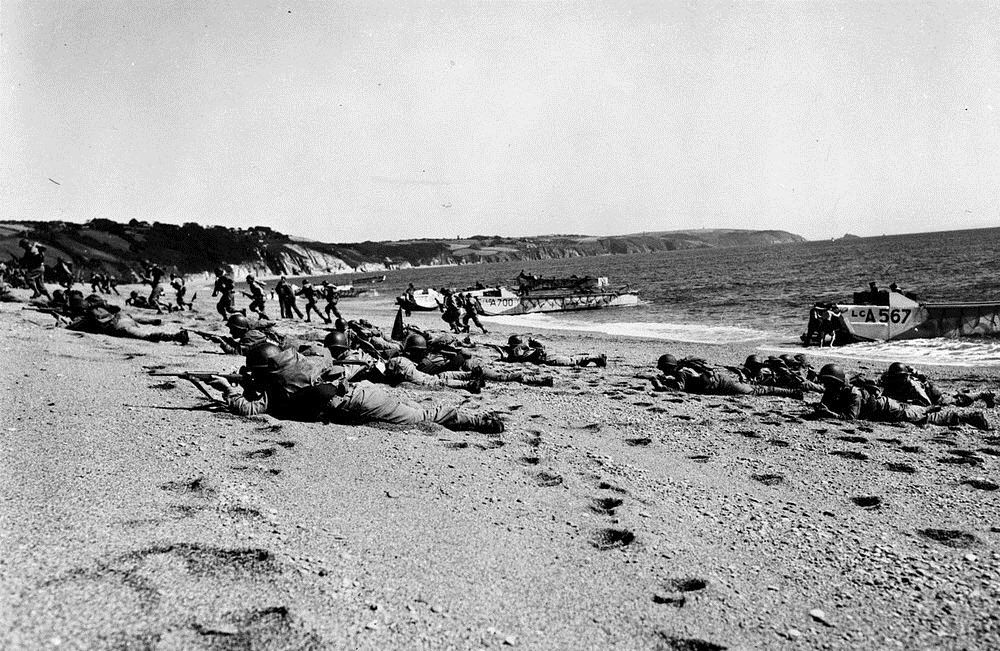
Exercise Tiger was a full-dress rehearsal for the Normandy invasion, planned for a stretch of English shore called Slapton Sands. On the morning of April 27, 1944, the convoy of eight LSTs left naval headquarters at Plymouth and headed through the English Channel. The destroyer that had been assigned to protect the convoy was called back to port for repairs—it never returned, and no replacement was sent. Instead, the ships were led by a small British trawler, an escort of little more than a fishing boat.
In the middle of the night, around 1:30 a.m., the convoy was spotted by German E-boats. The official history records that nine German gunboats sliced through the lightly guarded convoy and torpedoed three American LSTs. The ships were so close together that the torpedoes hit with devastating effect. LST 531 was struck by two torpedoes and sank quickly. Ensign Douglas Harlander, the navigation officer on LST 531, later recalled:
“When the attack happened, my ship was in the middle of a convoy of eight LSTs and on its way to join a mock invasion exercise being held on a stretch of English shore, called Slapton Sands.”
The death toll was staggering. More than 700 men—American soldiers and sailors—died in the water. The number exceeded the casualties suffered on the actual Utah Beach landing a month later. The disaster was immediately classified, and survivors were ordered not to speak of it. For decades, the families of the dead were told only that their loved ones had died in a training accident, or were simply listed as missing in action.
How It Was Seen at the Time
At the time, the event was shrouded in absolute secrecy. The US military feared that public knowledge of the disaster would undermine morale and reveal the D-Day plans. Survivors were warned that they would face court-martial if they spoke. Richard Ferguson, a survivor who was just a teenager at the time, later said:
“Families and loved ones of those killed never knew what had happened to them. Many were never even notified that they were dead.”
For the men who survived, the memory was a burden they carried for decades. Ferguson described the night as “the night the water turned to blood,” a phrase that captured the horror of seeing friends and fellow soldiers die in the oil-slicked sea. The prevailing mood was one of silence, shame, and fear. The men were told that they had failed, and that the disaster was their own fault. They were not allowed to attend funerals, and no memorial was erected. The event was effectively erased from the official record.
Historical Snapshot
| Aspect | Detail |
|---|---|
| Date | April 28, 1944 (early morning) |
| Place | Slapton Sands, English Channel, near Plymouth, England |
| People | US Army and Navy personnel; German E-boat crews |
| What Happened | German E-boats torpedoed three LSTs during a D-Day rehearsal |
| Why It Mattered | More than 700 Americans died; the disaster was covered up to protect D-Day secrecy |
Eyewitness Accounts
The most powerful evidence we have comes from the men who were there. Ensign Douglas Harlander, who served as navigation officer on LST 531, survived the sinking and later told his story to the Exercise Tiger Memorial. He described the moment of the attack:
“The middle of the night, it was 1:30, real dark. The torpedoes came and we didn’t have a chance. The ship was gone in a few minutes.”
Harlander was one of the few officers who survived. He spent the rest of the war with the memory of that night. Another survivor, Richard Ferguson, was a young soldier on a different LST. He described the scene of chaos and death:
“I was fighting for my life in a sea of blood. As darkness fell that evening, I was surrounded by 250 friends—but by morning they were all gone.”
Ferguson’s account, published in a local newspaper on the 60th anniversary in 2004, described him as “one of just 24 survivors of the war’s most costly training disaster.” His words are a stark reminder of the human cost of the tragedy.
What People Knew at the Time
| What People Knew Then | What We Know Now |
|---|---|
| Officially, the event was a “training accident” and was not to be discussed. | We know it was a deliberate attack by German E-boats, and the military’s cover-up was systematic. |
| Families were told that soldiers died in other incidents, or not told at all. | We know that over 700 men died, and that the loss exceeded the number of casualties on Utah Beach on D-Day. |
| The survivors were threatened with court-martial if they spoke. | We know that the survivors were silenced for decades, and the truth only emerged through the work of local historians like Ken Small. |
Aftermath
In the immediate aftermath, the military buried the dead in mass graves and sealed the records. The survivors were sent to the front lines, and many were told that they would be killed if they spoke. The disaster was not officially acknowledged for over forty years. It was only in the 1980s that Ken Small, a local historian from Slapton, began to uncover the story. He worked to memorialize the dead, and in 1984, a memorial was dedicated at Slapton Sands. His son, Dean Small, continues his father’s legacy today, and the Exercise Tiger Memorial Trust now preserves the memory of the fallen. The survivors, like Harlander and Ferguson, were finally able to speak openly in their old age, and their accounts have become the primary source for our understanding of the disaster.
How Historians See It Today
Modern historians view Exercise Tiger not as a minor footnote, but as a significant event in the preparation for D-Day. The loss of over 700 men was a severe blow, and the cover-up that followed is now seen as a betrayal of the soldiers and their families. Historians point out that the disaster could have been avoided if the convoy had been properly protected—the destroyer that was recalled for repairs was never replaced, and the small British trawler was no match for the German E-boats. The event is now understood as a tragic reminder of the dangers of wartime secrecy and the human cost of the war. The survivors’ accounts are now recognized as essential primary sources, and the memorial at Slapton Sands ensures that the dead are not forgotten.
The story of Exercise Tiger is a story of courage, secrecy, and the long road to truth. The men who survived the disaster carried the memory with them for decades, and their accounts, collected in the last years of their lives, give us a window into the horror and the heroism of that night. It is a lesson in the importance of bearing witness and the power of remembrance.
FAQ
How many people died during Exercise Tiger?
The exact number is disputed, but survivor accounts and military records indicate that over 700 American soldiers and sailors lost their lives when German E-boats torpedoed three LSTs on April 28, 1944. The NBC News report from 2004 states that 'Seven hundred and...' (the number was truncated) died, and the CBS News article notes that more lives were lost in the rehearsal than on Utah Beach on D-Day.
Why was Exercise Tiger kept secret?
The US military feared that public knowledge of the disaster would reveal the D-Day invasion plans and undermine morale. Survivors were ordered to remain silent, and the families of the dead were often not told the truth. The cover-up persisted for decades until local historians and survivors like Douglas Harlander and Richard Ferguson began speaking publicly in the 1980s and later.
What were the names of the ships sunk?
The three ships torpedoed were LST 531, LST 289, and LST 507. LST 531 was hit by two torpedoes and sank quickly. The exact details of the other ships are less documented, but the primary sources confirm that three LSTs were attacked and that LST 531 was one of them.










Leave a Reply