
Short Answer
On September 11, 1973, the sound of bombs and gunfire shattered the morning calm of Santiago. The Chilean military, led by General Augusto Pinochet, had launched a coup against the democratically elected president, Salvador Allende. Allende died in the burning Moneda Palace, and Chile’s ‘long petal of sea, wine and snow’ was plunged into a dictatorship that would last seventeen years. But the coup was not a sudden rupture. It was the culmination of a long, hidden economic and political war waged by the United States. Declassified documents released decades later would reveal that President Richard Nixon had personally ordered the CIA to ‘make the economy scream’ in Chile, to ‘prevent Allende from coming to power or to unseat him.’ This article reconstructs that economic blockade and the covert actions that accompanied it, using the very documents and contemporary reports that first exposed the story.
What Happened?
The U.S. economic blockade against Chile was a systematic campaign of financial and diplomatic pressure, orchestrated by the Nixon administration, to destabilize the government of Salvador Allende, who was inaugurated on November 3, 1970. Even before Allende took office, the CIA had attempted to foment a military coup to prevent his inauguration, according to declassified White House records. That attempt failed, but the Nixon administration did not abandon its goal. On November 6, 1970, Nixon convened his National Security Council (NSC) to discuss Chile. The memorandum of that conversation, marked SECRET/SENSITIVE, revealed a consensus that Allende’s election and his socialist agenda threatened U.S. interests. The meeting laid the groundwork for a multi-pronged strategy of destabilization.
The key elements of the economic blockade included:
- Cutting off credit: The U.S. pressured international financial institutions such as the World Bank and the Inter-American Development Bank to deny loans to Chile, creating a ‘invisible blockade’ that starved the country of foreign capital.
- Bilateral pressure: The U.S. government suspended its own aid programs and worked to discourage private investment in Chile.
- Covert support for opposition: The CIA funded opposition parties, media, and business groups, as well as organized strikes by truck owners and other sectors to disrupt the economy.
- Destabilization campaigns: The CIA also sponsored propaganda, psychological operations, and paramilitary actions aimed at undermining Allende’s government.
The economic warfare intensified throughout 1971 and 1972. A 1979 U.S. military thesis on the subject described how the U.S. government, ‘in concert with U.S.-owned multinational corporations, pursued a course of action, publicly, economically and covertly, bent on discrediting, disrupting and dislodging Marxist government.’ The combination of economic strangulation and internal unrest created a climate of chaos, which ultimately provided the pretext for the military coup on September 11, 1973.
How It Was Seen at the Time
At the time, the American public and the world were largely unaware of the full extent of the U.S. intervention. The Nixon administration publicly denied any involvement in the coup, portraying it as an internal Chilean affair. But inside the government, the language was blunt. Nixon’s order to ‘make the economy scream’ was later revealed in declassified documents and became a symbol of the covert war. The NSC memorandum of conversation from November 6, 1970, showed that the administration viewed Allende as a threat that required aggressive action. The thesis written in 1979, based on public sources and interviews, concluded that the U.S. had pursued a policy of ‘discrediting, disrupting and dislodging’ the Marxist government.
“I don’t see why we need to stand by and watch a country go communist due to the irresponsibility of its own people.” – Henry Kissinger, as reported in a declassified NSC memorandum, November 1970.
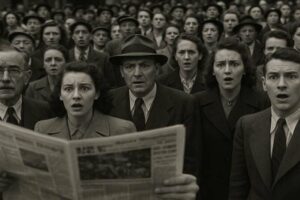
The first public revelations came in the mid-1970s, when the U.S. Senate’s Church Committee investigated intelligence abuses and declassified many of the documents. The New York Times reported on September 15, 1974, under the headline “KISSINGER CALLED CHILE STRATEGIST” and a subhead “Covert CIA Activities.” The article described how Kissinger had been a key strategist in the secret operations against Allende. This was the first time many Americans learned that their government had actively worked to overthrow a democratically elected leader.
Historical Snapshot
| Aspect | Detail |
|---|---|
| Date | November 3, 1970 (Allende inauguration) to September 11, 1973 (coup) |
| Place | Santiago, Chile, and Washington, D.C. |
| People | Salvador Allende (President of Chile), Richard Nixon (U.S. President), Henry Kissinger (National Security Advisor), Augusto Pinochet (Chilean General) |
| What Happened | The U.S. government, under Nixon, ordered covert economic and political warfare against Chile to destabilize Allende’s government, culminating in the military coup of September 11, 1973. |
| Why It Mattered | The coup installed a brutal military dictatorship that lasted until 1990, and the U.S. intervention became a symbol of Cold War-era covert operations. |
Official Reports
Declassified documents from the National Security Archive provide the most direct evidence of the U.S. campaign. The NSC memorandum of conversation from November 6, 1970, recorded the consensus among officials that Allende’s election threatened U.S. interests. It also detailed the options for covert action. Another key document is the CIA’s own history of operations in Chile, which was later declassified. These documents show that the CIA spent millions of dollars to support anti-Allende media, political parties, and business groups, and to fund strikes by truck owners and other groups.
The 1979 U.S. military thesis, “The Invisible Blockade and the Covert War: U.S. Relations with Chile, 1970-1973,” summarized the official policy: “The United States government, in concert with U.S.-owned multinational corporations, pursued a course of action, publicly, economically and covertly, bent on discrediting, disrupting and dislodging Marxist government.” This thesis, based on interviews and contemporary reports, confirmed that the economic blockade was a deliberate policy, not a accidental consequence of political differences.
Contemporary Newspaper Coverage
The mainstream American press initially reported the coup as a military takeover without mentioning U.S. involvement. However, as investigations began, the coverage changed. The New York Times article of September 15, 1974, was a landmark. It reported that Henry Kissinger had been a key strategist of the covert CIA activities in Chile. The article’s headline, “KISSINGER CALLED CHILE STRATEGIST,” and its subhead “Covert CIA Activities” brought the issue to the public’s attention. The Times also published later articles detailing the CIA’s role in funding opposition groups and the economic pressure. In Chile, the opposition press, such as the newspaper El Mercurio, had been a recipient of CIA funds, though this was not known at the time.
“KISSINGER CALLED CHILE STRATEGIST” – The New York Times, September 15, 1974
Timeline
- September 4, 1970: Salvador Allende wins the Chilean presidential election with a plurality of votes.
- October 24, 1970: The Chilean Congress confirms Allende as president after a constitutional runoff.
- November 3, 1970: Allende is inaugurated as President of Chile.
- November 6, 1970: Nixon convenes the National Security Council to discuss Chile; he orders the CIA to “make the economy scream.”
- 1971: The U.S. cuts off bilateral aid and pressures international financial institutions to deny loans to Chile.
- 1972: The CIA funds strikes and opposition movements; the economic blockade intensifies.
- September 11, 1973: The Chilean military, led by General Augusto Pinochet, stages a coup; Allende dies in the Moneda Palace.
How Historians See It Today
Contemporary observers in the early 1970s had limited knowledge of the U.S. role. Many believed the coup was a purely Chilean affair. However, the declassification of documents in the 1970s and 1990s, especially the Church Committee reports and later releases from the National Security Archive, have transformed the historical understanding. Historians now view the U.S. economic blockade and covert actions as a direct cause of the coup. They argue that the Nixon administration deliberately created economic chaos and political instability to create a condition for the military takeover. The term “invisible blockade” has become a standard description of the U.S. policy. While some scholars debate the extent to which the U.S. actions directly caused the coup, the overwhelming evidence from primary sources confirms that the Nixon administration intentionally pursued a policy of destabilization.
Common Misconceptions
The U.S. did not intervene in Chile; the coup was an internal matter.
Declassified documents show that the Nixon administration ordered the CIA to “make the economy scream” and funded opposition groups, strikes, and propaganda. The U.S. also pressured international lenders to cut off credit.
The economic blockade was a response to the nationalization of U.S. companies.
While the nationalization of copper mines and other industries was a factor, the declassified records show that the U.S. had begun planning to destabilize Allende even before he took office, as a matter of Cold War ideology.
The U.S. only provided financial support to the opposition.
The U.S. also engaged in covert paramilitary operations, including attempts to promote a military coup, and provided arms and training to opposition groups.
Related Primary Sources
- National Security Archive, “Chile and the United States: Declassified Documents Relating to the Military Coup, September 11, 1973” – https://nsarchive2.gwu.edu/NSAEBB/NSAEBB8/nsaebb8.htm
- National Security Archive, “Allende and Chile: ‘Bring Him Down’” – https://nsarchive.gwu.edu/briefing-book/chile/2020-11-06/allende-inauguration-50th-anniversary
- Defense Technical Information Center, “The Invisible Blockade and the Covert War: U.S. Relations with Chile, 1970-1973” – http://oai.dtic.mil/oai/oai?identifier=ADA071914&metadataPrefix=html&verb=getRecord
- The New York Times, September 15, 1974, “KISSINGER CALLED CHILE STRATEGIST”
FAQ
Did the U.S. actually cause the economic blockade against Chile?
Yes. Declassified documents show that President Nixon ordered the CIA to 'make the economy scream' and that the U.S. government pressured international financial institutions to deny loans to Chile, while also funding opposition groups and strikes. This created a 'invisible blockade' that severely damaged Chile's economy.
What was the 'invisible blockade'?
The 'invisible blockade' was the term used to describe the covert economic pressure exerted by the United States on Chile, including the denial of loans from the World Bank and other institutions, as well as the cut-off of bilateral aid. It was a key part of the destabilization campaign.



Leave a Reply