
Short Answer
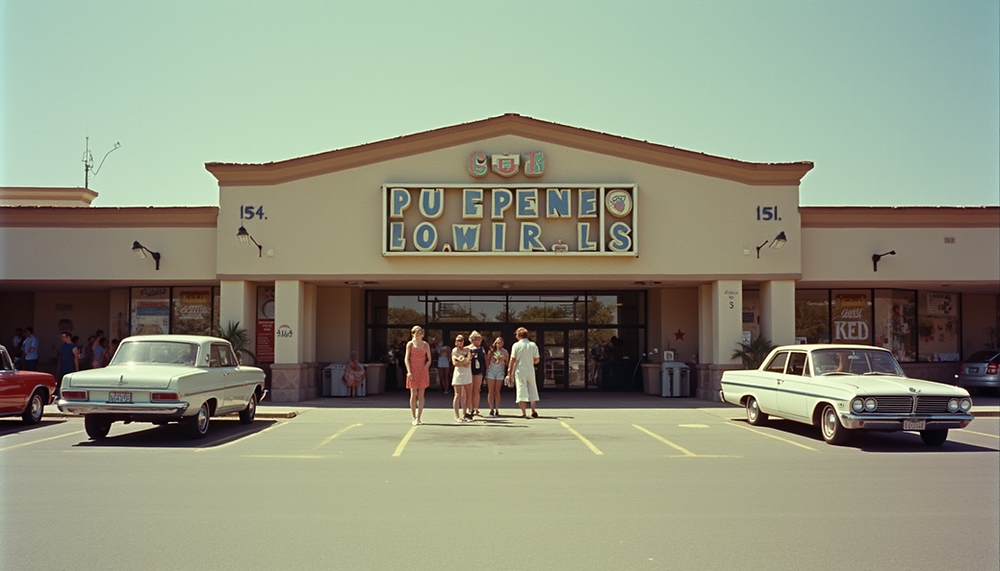
On an October morning in 1956, a crowd gathered in Edina, Minnesota, a suburb southwest of Minneapolis, to witness something never seen before in the United States: a fully enclosed, climate-controlled shopping center. The Southdale Center, anchored by two department stores and filled with natural light streaming through a skylit central court, promised shoppers a respite from the harsh Upper Midwest winters. For the families who came that day, many of them recent arrivals to the booming suburbs, the mall offered more than merchandise—it offered a new kind of public space, a place where one could stroll, meet neighbors, and shop without ever stepping outside. Few realized they were witnessing the birth of an institution that would define American life for the next half century.
What Happened?
The suburban mall was born of two converging forces: the explosive growth of the American suburbs and the imagination of an Austrian-born architect named Victor Gruen. Between 1947 and 1952, the population of U.S. suburbs rose by 43 percent, as veterans and young families moved to newly built residential communities outside the nation’s cities. These suburbs were largely residential-only, and residents depended on downtown shopping districts or small nearby stores for their needs (JSTOR Daily).
Gruen, who had emigrated from Vienna, saw an opportunity to give the scattered suburbanites a center. He envisioned the mall not as a mere retail space but as “the nucleus of a utopian experiment,” a master-planned, mixed-use community where residents could shop, work, and socialize without relying on automobiles (Scharoun, 2011). His design drew on European town centers, where a central square served as a gathering place for the entire community. He imagined climate-controlled “Main Streets” that would include post offices, supermarkets, and cafés, surrounded by larger complexes with schools, parks, and medical centers (Smithsonian).
The first fruit of this vision was Southdale Center, which opened in Edina, Minnesota, in 1956. It was the first fully enclosed, climate-controlled shopping mall in the United States. The center was a two-level structure with a central court beneath a skylight, with stores arranged around it. The design was intended to draw shoppers in and keep them browsing comfortably regardless of the weather.
The success of Southdale spawned a wave of imitators. Developers across the country began constructing similar malls, often on the outskirts of cities where land was cheap and highways were being built. By the early 1960s, the mall had become a standard feature of the American suburban landscape, and its rise coincided with the decline of downtown retail districts.
How It Was Seen at the Time
For many contemporaries, the mall was a marvel of modern convenience and a symbol of progress. Newspapers celebrated the opening of Southdale as a triumph of American ingenuity, describing it as a “shopping city” where families could spend an entire day. The climate-controlled interior was particularly praised; one early visitor described the sensation of stepping from a snowy parking lot into a warm, flower-filled atrium as nothing short of miraculous.
Victor Gruen himself, however, was already growing uneasy with what he had created. He had envisioned the mall as a tool to reduce car dependence and recreate the dense, walkable neighborhoods of European cities. But the developers who financed the malls were more interested in profit than in urban planning. The malls were built on the outskirts of towns, surrounded by vast parking lots, which encouraged driving rather than walking. Gruen later complained that his vision had been corrupted, and in 1978 he publicly disclaimed paternity of the development, saying, “I would like to take this opportunity to disclaim paternity once and for all. I refuse to pay alimony to those bastard developments. They destroyed our cities” (Smithsonian, 2017).
The prevailing mood among the public, though, was one of excitement. The mall was seen as a safe, clean, and convenient alternative to the city center—a place where the middle class could shop in comfort and security. For suburban housewives, the mall offered a social outlet and a respite from the isolation of the home. For teenagers, it would soon become a social gathering spot.
Historical Snapshot
| Aspect | Detail |
|---|---|
| Date | 1956 (opening of Southdale Center) |
| Place | Edina, Minnesota (suburb of Minneapolis) |
| People | Victor Gruen (architect), suburban shoppers, retail developers |
| What Happened | The first fully enclosed, climate-controlled shopping mall opened, setting a new standard for American retail. |
| Why It Mattered | The mall became the template for suburban commercial development, shaping American life for decades. |
Daily Life
To understand the mall’s appeal, one must understand the suburban life of the 1950s. The typical suburban family lived in a detached single-family home on a tree-lined street, with a car in the garage. The father commuted to work in the city; the mother stayed home to raise the children. Daily routines revolved around the car: trips to the grocery store, the school, the doctor, and the church. There was no central gathering place, no “town square.”
The mall filled that void. For the housewife, a trip to the mall was a chance to escape the isolation of the home, to see neighbors, to walk indoors in air-conditioned comfort. For children, the mall was an adventure, a place with escalators and fountains. For the family as a whole, the mall offered a place to spend a Saturday afternoon, eating at the new fast-food restaurants, watching a movie, or simply strolling the corridors. The mall was, in effect, a new kind of community space for scattered suburb-dwellers (JSTOR Daily).
But the mall also reinforced the car-centric culture that Gruen disliked. The mall was surrounded by vast parking lots, and it was impossible to reach without a car. The design encouraged driving, not walking. The mall was a private space, owned by a corporation, not a public square. It was open only during business hours, and its “public” areas were subject to the rules of the property owner.
What People Expected Would Happen Next
In the 1950s, contemporaries saw the mall as a harbinger of a bright, convenient future. They expected that malls would continue to multiply, that they would become the new heart of the suburbs, and that they would provide everything a family could need. Gruen’s original vision included not just shops but schools, parks, medical centers, and residences—a complete community under one roof (Smithsonian). Some developers even talked about building “mall cities” that would include housing and offices.
But the reality diverged. The mall did multiply, but the grand mixed-use vision was largely abandoned. Instead of becoming the nucleus of a utopian community, the mall became a commercial machine, focused on retail sales and built around the automobile. The enclosed climate-controlled space was a novelty that soon became a standard, but the social and civic functions that Gruen had imagined were rarely realized.
Contemporary Terminology
The language of the era reveals how new and unfamiliar the mall was. The term “shopping center” was used interchangeably with “shopping mall,” and early reports often described the mall as a “shopping village” or “shopping town.” The word “mall” itself was borrowed from the tree-lined pedestrian walkways of European cities, but it was applied to a very different kind of place. The architecture of the mall—the enclosed, climate-controlled interior—was described as “windowless” or “windowless.”
Another key term was “anchor store.” The large department stores that were placed at the ends of the mall, designed to draw customers, were called “anchors.” The central corridor, with its skylight and fountains, was often called the “court” or “atrium.” These terms reflected the mall’s dual nature: it was a commercial space designed to be a public space, but it was always a private property.
What People Feared
Not everyone welcomed the mall. Some urban planners and civic leaders feared that the malls would drain the life out of downtown shopping districts. They worried that the tax base would shrink as businesses moved to the suburbs, and that the city centers would become empty and blighted. These fears were not unfounded—many downtowns did decline as malls proliferated.
There was also a cultural anxiety. Some intellectuals and writers saw the mall as a symbol of a new, homogenized, consumerist society. They worried that the mall would replace genuine public space with a private, corporate-controlled space, and that the American public would become passive consumers rather than active citizens. These fears were expressed in magazines and books of the era, though they were often drowned out by the boosterish enthusiasm of the mall developers.
How Historians See It Today
Modern historians have a more complex view of the mall than the contemporaries did. On the one hand, they recognize the mall as a significant innovation in retail and urban planning. The mall was a direct response to the needs of the new suburban population, and it provided a convenient, safe, and comfortable shopping environment. It also created a new type of public space, albeit a privatized one, and it shaped the way Americans lived for decades.
On the other hand, historians are also critical of the mall’s effects. They note that the mall encouraged car culture, contributed to urban sprawl, and accelerated the decline of traditional city centers. The mall was also a space of exclusion, often designed to keep out certain groups, such as the poor and the non-white. The mall’s “public” space was a private property, and the owner had the right to exclude anyone. Historians also note the irony that Gruen, who hated cars, designed a building that made the car essential.
Today, as many malls are failing, historians and planners are looking back at the mall with a mixture of nostalgia and critique. The mall is now seen as a product of a particular era—the post-war boom of the 1950s—and its rise and fall is a story about the changing nature of American life.
The rise of the suburban mall in the 1950s was a moment of transformation in American life. It was a product of the postwar suburban boom, the car culture, and the imagination of one architect. The primary sources—the newspapers, the advertisements, the letters of the era—show us a time when the mall was a new and exciting place, a symbol of the future. But they also show us the fears and the criticisms that accompanied the mall’s rise. The mall was a place of convenience and comfort, but it was also a place of exclusion and a driver of car culture. The story of the mall is a story of how a single building type can reshape the way people live, and how the visions of a single person can be transformed, and often corrupted, by the forces of commerce.
FAQ
What was the first enclosed shopping mall in the United States?
The first fully enclosed, climate-controlled shopping mall was Southdale Center, which opened in Edina, Minnesota, in 1956. It was designed by architect Victor Gruen.
Did Victor Gruen like the malls he created?
No. By 1978, Gruen publicly disclaimed the malls, saying, 'I refuse to pay alimony to those bastard developments. They destroyed our cities.' He had envisioned the mall as a mixed-use community that would reduce car use, but the reality was a car-centric, retail-only complex.
Why were malls so popular in the 1950s?
Malls were popular because they offered a safe, clean, climate-controlled shopping environment in the suburbs, which were growing rapidly. They provided a new kind of community space for suburban dwellers who lacked a traditional town center.








Leave a Reply