Short Answer
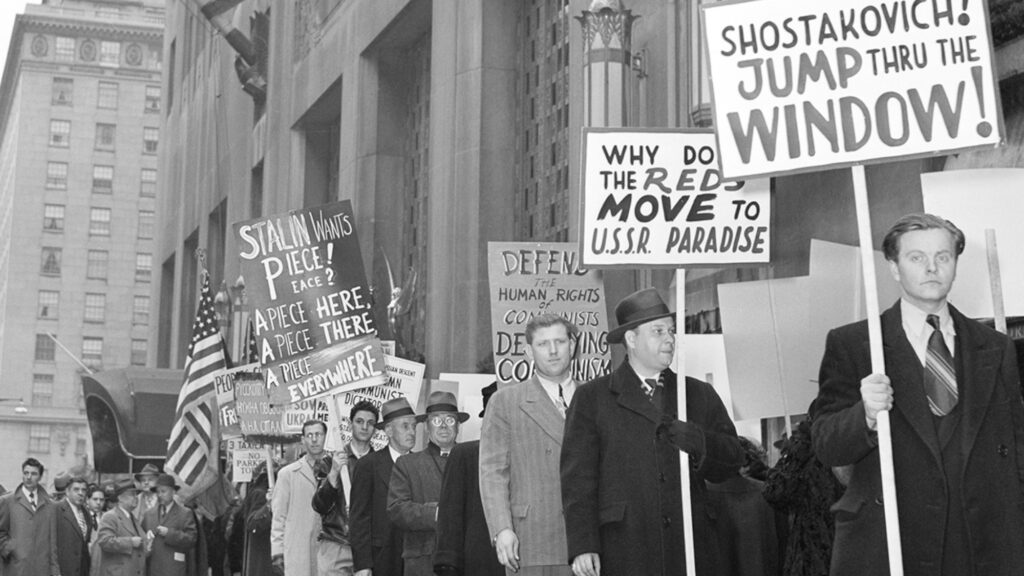
In the anxious years after World War II, the United States stood as a global superpower, but its citizens lived under a cloud of fear. The atomic bomb had ended the war but also introduced a new terror, and the Soviet Union’s expansion into Eastern Europe fed a belief that communist spies were hiding in every corner of American life. By 1949, when the Soviet Union tested its own atomic bomb and China fell to communism, the fear had become a frenzy. The House Un-American Activities Committee (HUAC) had already begun investigating the entertainment industry, and the first blacklists were taking shape. Americans began to watch their words, their associations, and their neighbors. As journalist Clay Risen later described, “If you had signed a petition, if you had given money to a group that was affiliated with communists, if you had a family member who had been a communist—suddenly you were running the risk of getting fired, of being called in front of a congressional committee” (Smithsonian). This was the world of the Red Scare—a time when loyalty oaths, book bans, and blacklists became the tools of a nation turned against itself.
What Happened?
The Red Scare, also known as the Second Red Scare, unfolded from 1947 to the mid-1950s (Britannica). It was a period of intense anti-communism, driven by government investigations, industry blacklists, and public hysteria. Key events included:
- 1947: HUAC begins hearings in Hollywood, leading to the imprisonment of the Hollywood Ten. According to the Library of Congress, “ten Hollywood screenwriters and directors were imprisoned and hundreds more in the industry were blacklisted.”
- 1949: The Soviet Union tests its first atomic bomb, and the Chinese Communist Party wins the Chinese Civil War, intensifying fears of a global communist conspiracy.
- 1950: Senator Joseph McCarthy of Wisconsin gives a speech in Wheeling, West Virginia, claiming to have a list of communists in the U.S. State Department, launching his rise to prominence.
- 1950–1954: McCarthy and other congressional committees conduct hearings; loyalty oaths become widespread; the careers of thousands of teachers, union activists, and civil servants are destroyed (NPR).
- 1954: The Army-McCarthy hearings are broadcast on television, exposing McCarthy’s bullying tactics. He is later censured by the Senate, effectively ending his influence.
Throughout this period, the entertainment industry—radio, film, and television—succumbed to pressure from advertisers and civic organizations to purge anyone suspected of communist ties (Library of Congress). The blacklist extended beyond Hollywood, affecting government employees, academics, and ordinary citizens.
How It Was Seen at the Time
Contemporaries viewed the Red Scare as a necessary defense against a genuine threat. Many Americans genuinely believed that communist agents were working to subvert the government and destroy the American way of life. The language of the era—”un-American,” “subversive,” “loyalty”—reflected a nation that feared internal enemies. The prevailing mood was one of suspicion and fear, as described by historian Clay Risen:
“If you had signed a petition, if you had given money to a group that was affiliated with communists, if you had a family member who had been a communist—suddenly you were running the risk of getting fired, of being called in front of a congressional committee.”
This atmosphere was not limited to Washington. In workplaces, schools, and neighborhoods, people were careful about their associations. The entertainment industry, particularly, was gripped by fear; the Library of Congress notes that “radio and television networks succumbed to intimidation from advertisers and civic organizations” during the period.
Historical Snapshot
| Aspect | Detail |
|---|---|
| Date | 1947–1954 (with roots in the earlier 1940s) |
| Place | United States, particularly Washington, D.C., and Hollywood |
| People | Joseph McCarthy, HUAC, Hollywood Ten, government employees, union activists, teachers |
| What Happened | A campaign of anti-communist investigations, loyalty oaths, and blacklists destroyed careers and suppressed dissent. |
| Why It Mattered | It curtailed civil liberties, created a climate of fear, and left a lasting impact on American politics and culture. |
What People Knew at the Time
| What People Knew Then | What We Know Now |
|---|---|
| Many believed that communist infiltration was a serious and immediate threat. | Declassified documents reveal that the threat was exaggerated, and many accusations were based on flimsy evidence. |
| People knew about the blacklists and the hearings, but the full extent of the damage was not always visible. | Historians now know that thousands of careers were destroyed, including those of teachers, union activists, and civil servants (NPR). |
| The public saw the investigations as a necessary defense of American values. | Modern scholars recognize that the investigations often violated due process and ruined innocent lives. |
What People Feared
The fears that drove the Red Scare were both rational and irrational. On one hand, the Soviet Union had developed an atomic bomb, and there were genuine cases of espionage, such as the Rosenberg case. On the other hand, the fear of a widespread communist takeover was exaggerated and often used to settle personal scores. Many Americans feared that communists had infiltrated the government, the military, and the entertainment industry. They feared that a fifth column was ready to aid a Soviet invasion. This fear was intensified by the outbreak of the Korean War in 1950. As a result, people were afraid to speak out, sign petitions, or associate with anyone who might be suspected of leftist views. The climate of fear was so pervasive that even the most innocuous actions—a donation to a charity, a membership in a club—could lead to suspicion.
Contemporary Terminology
- Red Scare: The widespread fear of communism and communist infiltration in American society.
- McCarthyism: The practice of making unfair accusations of subversion, often without evidence, named after Senator Joseph McCarthy.
- Blacklist: A list of people who were denied employment, particularly in the entertainment industry, because of their alleged communist ties.
- Loyalty oath: A pledge of allegiance to the United States, often required for employment in government and other institutions.
- Un-American activities: A phrase used to describe any activity that was considered subversive or disloyal to the United States, often used by HUAC.
Aftermath
After the Army-McCarthy hearings in 1954 and the subsequent censure of McCarthy, the intensity of the Red Scare subsided. However, the blacklist remained in place for many years, and the damage to individual lives was permanent. Many of those blacklisted were unable to return to their chosen professions, and the culture of fear continued to linger. The Supreme Court began to rule against some of the more egregious practices, but the legacy of the era was a chilling effect on free speech and political dissent. The Red Scare also contributed to the broader Cold War culture of the 1950s, which emphasized conformity and anti-communist rhetoric.
How Historians See It Today
Modern historians emphasize that the Red Scare was not simply the work of Joseph McCarthy, but a broader phenomenon that began before him and continued after his fall. As Clay Risen noted, “McCarthy comes along really chronologically halfway through the story, and there’s a lot that happened before he was even on the scene” (Smithsonian). Newly declassified documents have revealed the untold stories of those who were targeted, showing the human cost of the accusations. Historians also connect the era to contemporary political moments, warning of the dangers of fear and accusation (NPR). The Red Scare is now seen as a cautionary tale about the fragility of civil liberties in times of national anxiety.
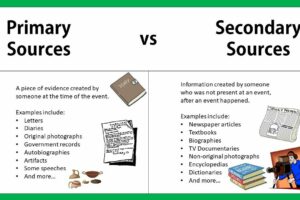
The primary sources of the Red Scare—the speeches, the testimony, the blacklists, and the letters of those who suffered—reveal a nation in the grip of fear. They show how easily a public can turn against its own citizens when fear is allowed to dominate reason. The story of this era is a reminder that the protection of civil liberties is a constant struggle, and that the past must be studied to avoid repeating its mistakes.
FAQ
What was the Hollywood Ten?
The Hollywood Ten were ten screenwriters and directors who were cited for contempt of Congress in 1947 for refusing to answer questions about their alleged communist ties. They were imprisoned and blacklisted from the industry.
How did the Red Scare affect ordinary Americans?
The Red Scare affected ordinary Americans through loyalty oaths, blacklists, and the threat of investigation. Many lost their jobs or were forced to testify before congressional committees, even for minor associations.




Leave a Reply