Short Answer
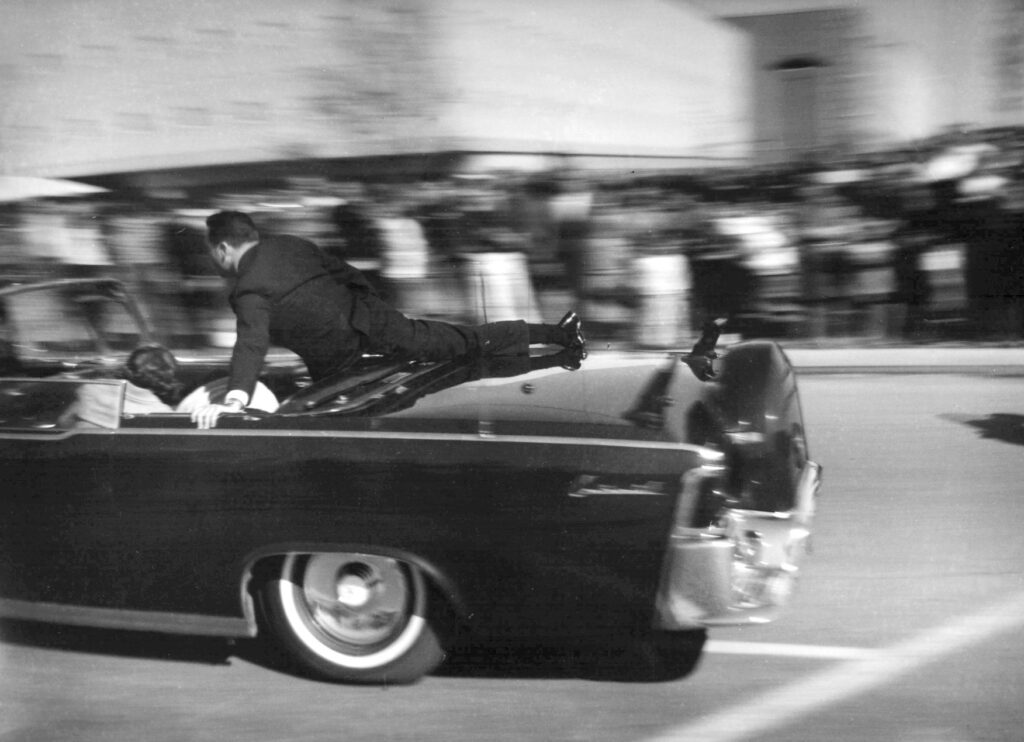
At 12:30 p.m. on November 22, 1963, President John F. Kennedy was shot while riding through Dealey Plaza in Dallas, Texas. Within minutes, the news began to ripple outward through a network of radio wires, telephone calls, and—for the first time in American history—a coordinated television network that would halt all regular programming and commercials for four days. Most Americans that afternoon were at work, at school, or in their cars; they learned of the shooting through a mix of radio bulletins, television interruptions, and the hurried extras of afternoon newspapers. The world would never again experience a major news event in the same way. This article reconstructs how people at the time learned of the assassination, using contemporary reports, eyewitness accounts, and the records of a media landscape on the cusp of transformation.
What Happened?
On Friday, November 22, 1963, President John F. Kennedy was assassinated while riding in a motorcade through downtown Dallas, Texas. The events unfolded in a matter of minutes:
- 12:30 p.m. (CST): Gunfire erupts in Dealey Plaza. Kennedy is struck in the head and throat; Texas Governor John Connally is also wounded.
- 12:36 p.m.: The first radio news bulletin is transmitted by a Dallas radio station, KDKL, which interrupts its broadcast to report the shooting.
- 1:00 p.m.: Radio and television networks break into their regular schedules with unconfirmed reports. The first relays of the news went out on radio, not television.
- 1:33 p.m.: White House press secretary Malcolm Kilduff confirms Kennedy’s death at Parkland Hospital.
- 2:00 p.m.: Television networks suspend all commercials and regular programming, committing to continuous coverage that lasted for four days—a wholly unprecedented move.
The news reached the public through a mix of media. Radio was the first to carry the initial reports, and many Americans heard the news on car radios or portable transistors. Television, still a relatively new medium in many homes, then took over, providing continuous, visual coverage that would reshape how the nation and the world experienced a tragedy.
How It Was Seen at the Time
At the moment of the assassination, Americans were not accustomed to the idea of a continuous news cycle. As Professor Barbie Zelizer, a scholar of media and communication, noted: “This was the very first time that TV brought the public together. The first relays of what had happened went out on radio, by the way. Television did what was unthinkable back then—it stopped all broadcasting and all commercials. It stayed with the story for four days.” The nation was stunned, and the immediate reaction was one of disbelief and grief. The language used in the first reports was cautious and unconfirmed; reporters emphasized that they had only “unconfirmed reports” of a shooting. As the day wore on, the tone shifted to one of solemnity and mourning, with broadcasters speaking in hushed, reverent tones.
Historical Snapshot
| Aspect | Detail |
|---|---|
| Date | November 22, 1963 |
| Place | Dealey Plaza, Dallas, Texas, USA |
| People | President John F. Kennedy, First Lady Jacqueline Kennedy, Texas Governor John Connally, Lee Harvey Oswald (later arrested), Vice President Lyndon B. Johnson |
| What Happened | Kennedy was shot and killed while riding in an open limousine; Connally was wounded. The shooter, later identified as Lee Harvey Oswald, was arrested that afternoon. |
| Why It Mattered | It was the first presidential assassination to be covered live on television, and it transformed the media landscape, creating a new model for continuous, national, and international coverage of major events. |
What People Knew at the Time
| What People Knew Then | What We Know Now |
|---|---|
| That the president had been shot and had died; the shooter was a man named Lee Harvey Oswald, who was arrested that day. The public also knew that Oswald was a former Marine and had lived in the Soviet Union, but details were sparse. | That Oswald acted alone, according to the Warren Commission (1964), and that he was killed by Jack Ruby two days after the assassination. The full details of Oswald’s background, his movements, and the investigation were not known to the public for months. |
| That the news was first carried on radio, and then television covered it continuously for four days. Many Americans learned of the event from a colleague or a neighbor, and some from a newspaper headline. | We now know that the assassination marked a turning point in media history, leading to the rise of 24-hour news channels and the expectation of immediate, continuous coverage. |
Eyewitness Accounts
Among the most vivid primary accounts is that of BBC reporter Peter Watson, who was at the United Nations in New York when the news broke. He later wrote a summary of his experience, published by the BBC on November 29, 1963:
“Friday morning was dull, even by United Nations standards. I remember writing a facetious piece on a subject which some seemed to think mighty important—the agreement of a document outlining the legal principles governing the exploration of outer space. Then we went down to the delegates lounge for a drink before lunch. We hadn’t been there long—Tony Wigan (my boss), John McVane of the American Broadcasting Company and I—when I saw Sylvia Gould (our temporary secretary) hurrying down the lounge. I said: ‘You look as if you had some news.’ She said: ‘I have; Kennedy’s been shot.’ The time then must have been about a quarter to two in New York and the President had in fact been shot.”
Watson’s account captures the sudden, ordinary disruption of the day and the way the news spread person-to-person before the media had even confirmed it. It also illustrates the international dimension—the world was watching the United States in real time.
Contemporary Newspaper Coverage
While radio and television carried the news first, newspapers played a crucial role in the aftermath. The Smithsonian Institution’s exhibit on the assassination notes that photographer Carl Mydans of LIFE magazine captured a photograph of commuters on a train reading about the news, illustrating how print media was still a primary source for many. On the afternoon of November 22, 1963, many newspapers rushed out special editions with large, black headlines. The Dallas Morning News, the local paper, printed a banner headline: “Kennedy Shot in Dallas” and later “Kennedy Dead.” Across the country, afternoon papers ran with similar urgency. The New York Times published a special edition at 2:30 p.m. with the headline “President Shot in Dallas; Johnson Sworn In.” These headlines were often the first written confirmation for many who had not been near a radio or television. The tone of the coverage was somber and respectful, with many papers devoting entire front pages to the story.
Timeline
- 12:30 p.m. – Kennedy is shot in Dallas.
- 12:31 p.m. – Radio reports begin; first bulletins on KDKA in Pittsburgh and other stations.
- 1:00 p.m. – Television networks break into programming; Walter Cronkite announces the shooting.
- 1:33 p.m. – Official confirmation of death.
- 2:00 p.m. – Networks suspend commercials; continuous coverage begins.
- 3:00 p.m. – Lee Harvey Oswald is arrested in a movie theater in Dallas.
- 4:00 p.m. – Lyndon Johnson is sworn in as President on Air Force One.
- 5:00 p.m. – Television broadcasts the swearing-in ceremony live.
- November 23-25 – Four days of continuous coverage, including the funeral and the killing of Oswald on November 24.
How Historians See It Today
Historians of media and journalism view the Kennedy assassination as a watershed moment. In her analysis, Professor Barbie Zelizer, author of Covering the Body: The Kennedy Assassination, the Media, and the Shaping of Collective Memory, argues that the event was the first time television brought a national audience together in a shared, real-time experience. She notes that the networks’ decision to stay with the story for four days was “unthinkable” at the time, and it set a new precedent for how news would be covered in the future. Modern historians also point out that the assassination exposed the power of the media to shape collective memory and public emotion. The event is often cited as the moment that created the modern “news cycle” and the expectation of continuous coverage. This interpretation is supported by the fact that, before 1963, news was delivered in scheduled, fixed broadcasts, and there was no precedent for a network to interrupt its schedule for days on end.
Ultimately, the primary sources from the era—radio transcripts, television broadcasts, newspaper headlines, and personal accounts like Peter Watson’s—reveal a world that was simultaneously connected and fragmented. The assassination was the first major global event to be experienced through the new medium of television, and it changed forever the way the world would learn about history.
FAQ
Was television the first medium to report the assassination?
No. Radio was the first to report the news. According to Professor Barbie Zelizer, 'The first relays of what had happened went out on radio.' Television then followed, and it was the first time television networks stopped all regular programming and commercials to cover a story continuously.
How long did the television networks stay on the air?
The networks stayed with the story for four days, from November 22 to November 25, 1963, covering the assassination, the arrest of Lee Harvey Oswald, his killing, and the funeral of President Kennedy. This was the first time television had done this.
What was the role of newspapers in the immediate aftermath?
While radio and television provided the first live reports, newspapers were still a primary source for many people, especially those who were not near a radio or television. Many newspapers issued special editions with banner headlines, and the Smithsonian notes that a LIFE magazine photographer captured commuters reading the news on a train.
How did people react to the news?
The immediate reaction was one of shock and disbelief. The BBC reporter Peter Watson described the atmosphere as 'a city in shock' and the nation's gloom. Television coverage was solemn, and the public often gathered around television sets in homes, offices, and public places to watch the continuous coverage.


Leave a Reply