
Short Answer
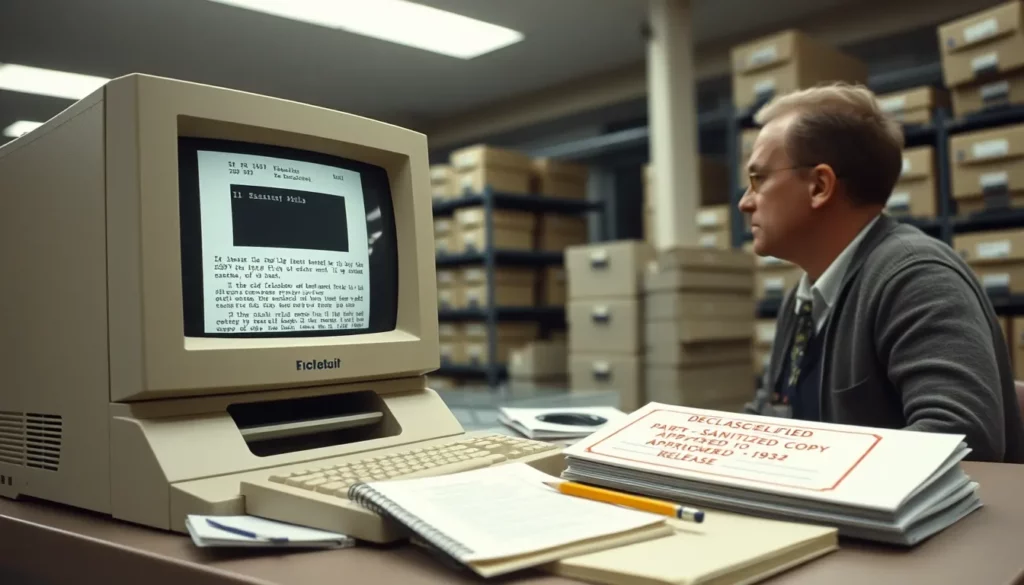
On a winter afternoon in the reading room of the National Archives at College Park, Maryland, a researcher waits her turn at one of a handful of stand-alone computer terminals. There are no call slips here, no acid-free folders: the CIA’s CREST collection — the agency’s Records Search Tool — sits on those machines and nowhere else, and the rule is first come, first served. She scrolls through a 1962 cable, past the letterhead, past the routing line, until she reaches a paragraph where whole sentences have been replaced by white rectangles. Above them a stamp reads: Declassified in Part — Sanitized Copy Approved for Release. Somewhere under those boxes is a name, a country, or a method; the rest of the page is hers to interpret. This article uses the phrase in its most common encyclopedic sense: the practical craft of reading records produced by intelligence and defense agencies — chiefly American, chiefly after 1947 — that have since been released, wholly or in part, to the public. Learning to read them means learning to read what their makers and their releasers did to them.
What Happened?
The modern declassified document is the product of a half-century argument between two doctrines: the Cold War principle of need to know and the statutory principle of a right to know. The milestones are administrative rather than dramatic, and each one changed what a reader would later hold in hand.
- 24 September 1951 — Executive Order 10290, signed by Truman, creates the first peacetime, government-wide classification system, replacing the ad hoc military markings of the war years.
- 4 July 1966 — President Johnson signs the Freedom of Information Act (5 U.S.C. § 552), establishing a presumption of disclosure subject to nine exemptions, the first of which covers properly classified national security information.
- 8 March 1972 — Executive Order 11652, issued by Nixon, introduces systematic review and the first automatic declassification timetable for most records.
- 21 November 1974 — Congress overrides President Ford’s veto of the FOIA amendments, strengthening judicial review and deadlines in the aftermath of Watergate.
- 1975–1976 — The Senate Select Committee chaired by Frank Church publishes fourteen reports on intelligence activities, and the documents printed in its volumes become the first mass reading public of secret government.
- 2 April 1982 — Executive Order 12356 (Reagan) reverses automatic declassification and permits reclassification of previously released material.
- 17 April 1995 — Executive Order 12958 (Clinton) restores a 25-year automatic declassification rule and creates the Interagency Security Classification Appeals Panel.
- 31 December 2006 — The 25-year deadline takes effect for records through 1981, producing the largest release wave since the 1970s.
- 29 December 2009 — Executive Order 13526 (Obama) sets the framework still in force, with its three levels and its categories of exempted information.
- 17 January 2017 — The CIA posts the full CREST archive, some thirteen million pages, to the open internet, ending the era of the reading-room terminal.
How It Was Seen at the Time
Contemporaries understood declassification as a contest over language, and they described it in the vocabulary of property and permission: an agency released, sanitized, or denied; a researcher requested and waited, sometimes for years. The 1970s generation of reporters treated a declassified page as a confession wrested from a reluctant bureaucracy. By the 2000s, researchers treated the same pages as a corpus — vast, uneven, and requiring its own philology. What did not change was the awe attached to the stamp. A document marked SECRET carries an authority that an identical paragraph in a newspaper does not, and both releaser and reader have always traded on that authority.

“’Top Secret’ shall be applied to information, the unauthorized disclosure of which reasonably could be expected to cause exceptionally grave damage to the national security…” — Executive Order 13526, § 1.2(a), 2009
The statute that made release possible was equally plain about its limits. Records may be withheld if they are “specifically authorized under criteria established by an Executive order to be kept secret in the interest of national defense or foreign policy and … are in fact properly classified pursuant to such Executive order” (5 U.S.C. § 552(b)(1)). Every white box on a declassified page is a claim under that sentence, and it can be tested.
Historical Snapshot
| Aspect | Detail |
|---|---|
| Date | 1951–2017: the era in which the modern declassified record was created, released, and made readable |
| Place | Washington, D.C. (the classifying agencies) and College Park, Maryland (the National Archives and the CREST terminals) |
| People | Presidents from Truman to Obama; Senator Frank Church; Daniel Ellsberg; FOIA requesters, archivists, and declassification reviewers |
| What Happened | A slow shift from presumptive secrecy to presumptive release, producing billions of pages of stamped, redacted, and portion-marked records |
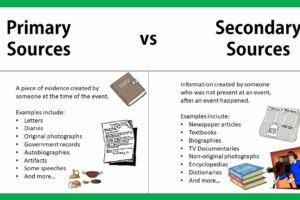
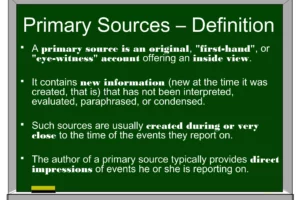
| Why It Mattered | Created an entire genre of primary source requiring specialist reading skills: markings, codes, acronyms, and silences |
Official Reports
The document itself is the first official report a reader must master. Its markings are a grammar, and they are read in a fixed order: the overall classification at top and bottom of every page; the portion markings preceding each paragraph; the reason for classification (a citation such as “1.4(c)” referring to a category in the executive order); the declassification instructions (“Decl on: X1,” “Derived from: multiple sources”); and the release stamp, which names the authority and the date.
Redactions follow their own code. A parenthetical such as “(b)(1)” or “(b)(3)” cites the FOIA exemption invoked; “25X1” is the long-standing agency shorthand for the protection of intelligence sources and methods. Records originating with a foreign service are frequently withheld under a third-agency rule even when the American portions are releasable — which is why a memo can arrive with its American paragraphs intact and its British or Israeli annexes entirely gone. A serious reader records these marks before reading the prose, because the marks determine what the prose can be made to mean.
Contemporary Terminology
The vocabulary inside these documents is period-bound and often misleading to modern eyes. Sanitize means to remove identifying detail, not to clean. Equities means the interests of other agencies that must be consulted before release. NOFORN means no foreign dissemination; NODIS means no distribution beyond the named addressees; SCI denotes compartmented intelligence requiring special clearance, and bigot — a Second World War coinage — was the list of those cleared for the invasion plans. The Glomar response, named for the Hughes Glomar Explorer, is the formula by which an agency “can neither confirm nor deny” that a record exists. Military documents compound the difficulty: a date-time group is written in Zulu time, and the same acronym may carry different meanings in different services, a problem the National Security Archive’s own reader’s guide warned of in 2009.
What the Sources Got Wrong
Declassified documents are not transcripts of reality; they are records of what an institution believed. Two notorious examples make the point. The Special National Intelligence Estimate of 19 September 1962 judged that the Soviet Union would not introduce offensive missiles into Cuba — a conclusion two weeks from catastrophe. And the intelligence estimates of 1957–1960 accepted, in varying degrees, the existence of a “missile gap” that McNamara effectively repudiated in 1961. A reader who mistakes an estimate for a fact reproduces the error rather than studying it.
The archive’s own guides also warn against assuming that an abbreviation has one meaning; the Department of Defense uses hundreds, and some overlap. Finally, the redactions themselves carry information. The length, position, and pattern of a deletion can indicate whether a name, a country, or a paragraph was removed — a caution familiar to anyone who has compared a sanitized copy with an unsanitized duplicate found in another agency’s files.
Different Perspectives
The Requester
The journalist or historian experiences declassification as a bureaucratic ordeal measured in months and fees; the University of Missouri’s library guide to FOIA advises researchers to identify the exact component, the date, the author, and the likely repository before writing, and warns that the process may demand “bulldog tenacity.”
The Classifying Agency
Reviewers experience the same documents as liabilities. Their task is to apply the harm test in the executive order, and their annotations — the equity referrals, the withheld annexes — are themselves primary evidence of institutional anxiety.
The Foreign Partner
Allied services expect that material they supplied will not be released unilaterally. The third-agency rule is the visible trace of that expectation, and its silences mark where a shared intelligence relationship once ran.
Key Documents
- Freedom of Information Act, 5 U.S.C. § 552 (1966; amended 1974, 1996, 2007, 2016) — the statutory engine of release.
- Executive Order 11652 (1972) — the first automatic declassification timetable.
- Executive Order 12958 (1995) — the 25-year rule and the appeals panel.
- Executive Order 13526 (2009) — the current classification framework and its exemption categories.
- Senate Select Committee Final Report (1976) — the model for reading intelligence documents as evidence of institutional behavior.
- John F. Kennedy Assassination Records Collection Act (1992) — created the review board whose releases established modern practice.
What the declassified page teaches, finally, is a discipline of suspicion that is not cynicism. The men who wrote these cables believed them; the officers who stamped them believed the stamps; the reviewers who released them believed the deletions were necessary. Reading well means holding all three beliefs in view at once, and then asking what the document cannot tell you. The white boxes are not failures of the record — they are part of it.
FAQ
How can I tell why a passage in a declassified document was redacted?
Look for the code typed beside or over the deletion. A parenthetical such as (b)(1), (b)(3) or (b)(6) cites the Freedom of Information Act exemption the agency invoked — national security, a specific statute, or personal privacy. A code such as 25X1 or a citation to section 1.4 of the governing executive order indicates that sources and methods were claimed. The release stamp at the top or bottom of the page names the reviewing authority and the date of release, which lets you check the document against the order in force at that time.
Does declassification mean the document is complete and accurate?
No. Declassification is a release decision, not a guarantee of completeness or truth. Records are frequently released 'in part,' with annexes, names, or entire paragraphs withheld; material originating with a foreign service may be withheld under a third-agency rule even when the rest is cleared. Nor does content equal fact: intelligence estimates record institutional belief. The September 1962 estimate on Cuba and the 'missile gap' estimates of 1957–1960 are well-known examples of documents that were authentic, formally correct, and wrong.
What are the most important markings to note before reading the text?
Read the markings before the prose. Note the overall classification at the top and bottom of every page, the portion markings before each paragraph, the stated reason for classification, the declassification instructions such as 'Decl on: X1' or 'Derived from: multiple sources,' and the release stamp naming the authority and date. Together these tell you who classified the material, under which order, and who later released it — information that conditions everything the text can be used to prove.
Why do declassified military documents contain so many unfamiliar abbreviations?
Because the Department of Defense and the military services developed hundreds of acronyms and internal codes over decades, and the same abbreviation can carry different meanings in different components. The National Security Archive's guidance for readers recommends consulting the Department of Defense Dictionary of Military and Associated Terms and the individual component websites, and advises readers to confirm an abbreviation against the document's own context rather than assuming a single national meaning.










Leave a Reply