
Short Answer
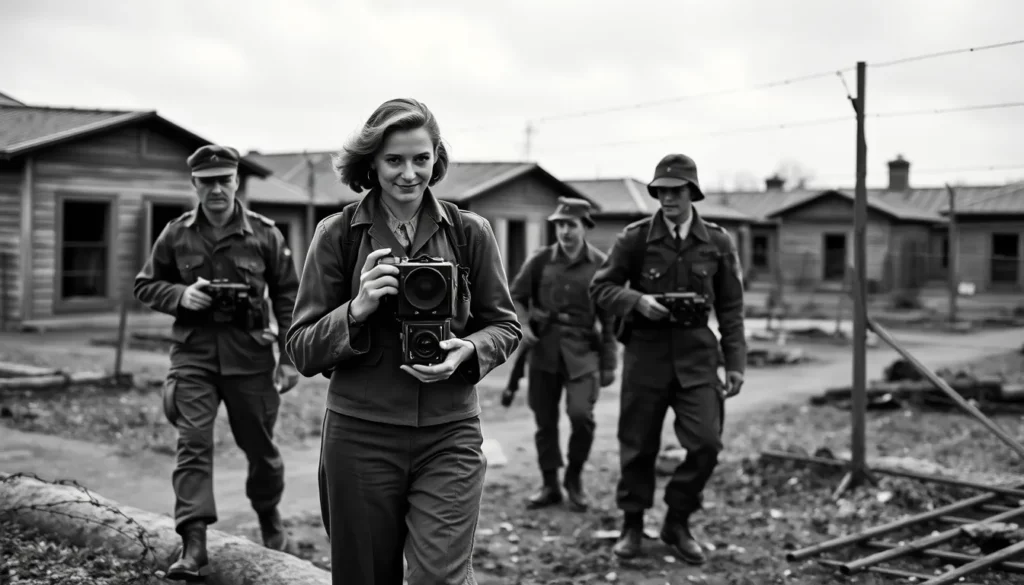
In April 1945, Margaret Bourke-White walked through the liberated Buchenwald concentration camp with a camera and a notebook, attached to Patton’s Third Army. She was forty years old, already famous as the photographer whose picture of Fort Peck Dam had appeared on the first cover of Life in 1936. Before Buchenwald she had photographed Soviet steel mills, Dust Bowl sharecroppers, and the Nazi occupation of Czechoslovakia; after it she would photograph Gandhi, apartheid South Africa, and the Korean War. For readers of the American picture press, she was a rare figure: a woman in a war zone who combined glamour, technical nerve, and a reporter’s instinct for the revealing detail. Her career traced the century’s violent passage from industrial modernity to total war and liberation, and her photographs taught Americans how to see events they could not witness themselves. At Buchenwald, the camera that had once celebrated the beauty of machines became an instrument of testimony.
What Happened?
Margaret Bourke-White was born Margaret White in the Bronx, New York, on June 14, 1904. She studied at Columbia, Michigan, Purdue, and Western Reserve before graduating from Cornell University in 1927. She opened a commercial studio in Cleveland and made her name with architectural and industrial photographs, including work for the Otis Steel Company. In 1929 Henry Luce invited her to become a staff photographer for Fortune, and in 1930 she became the first foreign photographer granted official access to industrial sites in the Soviet Union during the first Five-Year Plan. When Luce launched Life on November 23, 1936, Bourke-White’s photograph of Fort Peck Dam in Montana appeared on the first cover.
- June 14, 1904: Born in New York City.
- 1927: Graduates from Cornell University; begins commercial photography in Cleveland.
- 1929: Joins Fortune as a staff photographer.
- 1930: Receives official access to Soviet industrial sites; photographs steel, factories, and workers.
- November 23, 1936: Her Fort Peck Dam photograph appears on the first cover of Life.
- 1937: Publishes You Have Seen Their Faces with Erskine Caldwell, documenting rural Southern poverty.
- Late 1930s: Photographs the Nazi occupation of Czechoslovakia.
- 1941: Reports from Moscow during the German invasion of the Soviet Union.
- 1945: Accompanies Patton’s Third Army and documents the liberation of Buchenwald.
- 1948: Makes the last photographs of Mahatma Gandhi before his assassination.
- 1949: Photographs apartheid South Africa.
- Early 1950s: Covers the Korean War for Life.
Her wartime work made her one of the most visible American photojournalists of the 1940s. She was the first American female war photojournalist accredited with the U.S. Army Air Forces, and she worked for Life in Europe and later in Asia. Her Buchenwald photographs, made in the spring of 1945, were among the earliest visual records of the camp made by an American photographer.
How It Was Seen at the Time
For readers of Life, Bourke-White’s photographs arrived as evidence and as spectacle. The magazine’s picture essays presented the war as a sequence of visual shocks: the bombed city, the exhausted soldier, the liberated camp. Bourke-White was celebrated as a daring woman who went where few American women were expected to go. She was also marketed as a personality; her presence in a war zone became part of the story. In her own writing she described photography as an almost bodily encounter with the subject.
“The camera is a remarkable instrument. Saturate yourself with your subject, and the camera will all but take you by the hand and point the way.” — Margaret Bourke-White, Portrait of Myself (1963)
That comment was retrospective, but it captured how contemporaries understood her method: she did not merely record events from a distance; she tried to enter them. At Buchenwald, that method produced images that many readers found difficult to look at and impossible to forget. The camp photographs were understood at the time as proof of Nazi atrocity, even before the full scale of the Holocaust was widely known in the United States.
Historical Snapshot
| Aspect | Detail |
| Date | June 14, 1904 – August 27, 1971; major war and liberation work 1930s–1950s |
| Place | New York City; Cleveland; Soviet Union; American South; Czechoslovakia; Moscow; Buchenwald; India; South Africa; Korea |
| People | Margaret Bourke-White; Henry Luce; Erskine Caldwell; George S. Patton; Edward R. Murrow; Mahatma Gandhi |
| What Happened | Bourke-White became a pioneering industrial photographer, then a Life photojournalist who covered Depression poverty, World War II, the liberation of Buchenwald, India, South Africa, and Korea. |
| Why It Mattered | Her photographs gave mass audiences visual evidence of war, atrocity, poverty, and decolonization, and helped define American photojournalism in the mid-twentieth century. |
Contemporary Newspaper Coverage
Life was a magazine rather than a newspaper, but its picture journalism set the visual terms through which many Americans encountered the war. Metropolitan newspapers reported the liberation of Buchenwald through Army communiqués and correspondent dispatches; Life supplied the visual shock. When the first issue appeared on November 23, 1936, the cover line identified the picture as Fort Peck Dam, Montana, by Margaret Bourke-White. The magazine’s prospectus had promised a new kind of eyewitness journalism.
“To see life; to see the world; to eyewitness great events; to watch the faces of the poor and the gestures of the proud…” — Henry R. Luce, prospectus for Life, 1936
During World War II, Bourke-White’s photographs appeared in Life alongside captions that emphasized liberation, atrocity, and American victory. In May 1945, the magazine presented her Buchenwald photographs to a mass readership. The images were framed as incontrovertible evidence of Nazi crimes, and they became part of the public record of the camp’s liberation.
Eyewitness Accounts
Bourke-White’s photographs are themselves eyewitness documents. She worked inside the camp shortly after its liberation, photographing survivors, barracks, and the material traces of mass murder. Her camera made the camp visible to readers who would never set foot in Germany. Other eyewitnesses described the same scene in words. Edward R. Murrow, who broadcast from Buchenwald for CBS radio on April 15, 1945, struggled to convey what he had seen.
“I pray you to believe what I have said about Buchenwald. I have reported what I saw and heard, but only part of it. For most of it I have no words.” — Edward R. Murrow, CBS radio, April 15, 1945
Murrow’s words and Bourke-White’s photographs reinforced one another: the liberation was experienced by its witnesses as both a military event and an encounter with atrocity that exceeded ordinary language. For American readers, the combination of radio testimony and magazine photographs made Buchenwald a name they knew and a sight they could not avoid.
What People Knew at the Time
| What People Knew Then | What We Know Now |
| Reports and soldier accounts had revealed that Nazi camps existed and that prisoners suffered terribly. | Historians have documented the camp system in detail, including Buchenwald’s place within the wider network of forced labor and murder. |
| Life readers saw Bourke-White’s Buchenwald photographs as proof of Nazi atrocity, but the full scale of the Holocaust was not yet widely understood. | Postwar trials, survivor testimony, and archival research established the scale and organization of the Holocaust. |
| Bourke-White was celebrated as a pioneering woman photojournalist and a star of Life. | Scholars recognize her as one of many important wartime correspondents, while noting the corporate and patriotic frames that shaped her work. |
| Her Soviet photographs were presented as evidence of industrial progress and official access. | Researchers now see those images as shaped by Soviet authorities’ control over what foreign photographers could see. |
Contemporaries did not have the vocabulary or archives that later historians possess, but they did understand that the camp photographs marked a rupture. The images were not read as ordinary war reporting; they were read as evidence of a crime that demanded explanation.
Aftermath
The publication of Bourke-White’s Buchenwald photographs added a powerful visual dimension to American knowledge of Nazi crimes. Her photographs circulated in Life and entered the broader visual record of liberation. After the war she continued to work for the magazine. In 1948 she photographed Mahatma Gandhi shortly before his assassination, and in 1949 she brought attention to apartheid South Africa. She covered the Korean War in the early 1950s. Later in life she suffered from Parkinson’s disease and died in Stamford, Connecticut, on August 27, 1971. Her papers and negatives are held in archival collections, including the Margaret Bourke-White Papers at Syracuse University.
Her postwar career showed that the photographic authority she had built during the war could be turned toward other subjects: decolonization, racism, and the new political order of the Cold War. The Buchenwald photographs remained the darkest reference point in that career.
How Historians See It Today
At the time, Bourke-White was often presented as a fearless female photographer who brought back pictures from dangerous places. Modern historians of photography and journalism treat her more critically and more broadly. They recognize her technical skill, her commercial success, and her role in defining the picture essay, but they also examine how her access was shaped by corporate patrons, anti-communist politics, and the editorial needs of Life. Her industrial photographs of the 1920s and 1930s celebrated machines and productivity; her later documentary work exposed poverty and atrocity. Historians now see both phases as connected: the same eye that dramatized steel mills also dramatized war and liberation. Feminist scholarship has also asked how her gender shaped both her opportunities and the way she was marketed. The photographs remain primary evidence, but they are read today alongside captions, editorial decisions, and the conditions under which they were made.
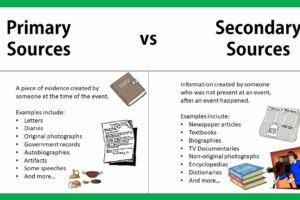
Margaret Bourke-White’s career shows how photography became a central means by which modern publics encountered war, suffering, and political change. Her images of Buchenwald did not end atrocity, but they made denial harder. Her photographs of Soviet industry, American poverty, Gandhi, apartheid, and Korea reveal a photographer moving through the major crises of the mid-twentieth century. The primary sources she left behind — negatives, magazine spreads, captions, and her own writings — remind us that witnessing is never simple. A camera can document, but it also selects, frames, and interprets. Bourke-White’s best work endures because it forces readers to confront that double truth: the image is evidence, and the image is also an argument about what should be seen.
FAQ
What did Margaret Bourke-White photograph at Buchenwald?
In April 1945, while attached to Patton’s Third Army, she photographed survivors, barracks, and evidence of mass murder at the liberated camp. Life published her images in May 1945. Her photographs are among the earliest visual records made by an American photojournalist inside Buchenwald.
Was Bourke-White the first woman war photographer?
She was not the first woman to photograph war, but she was a pioneer: the first American female war photojournalist accredited with the U.S. Army Air Forces and one of the first women to cover combat and liberation for a major American picture magazine. Contemporary “first woman” claims should be read with care.


Leave a Reply