Short Answer
Quick Snapshot
In 1929 New York City was the largest and most self-consciously modern city in the United States, a harbor metropolis of nearly seven million people whose skyline, subway, department stores, newspapers, theaters, and financial markets seemed to announce a new era. Wall Street was the symbolic center of that era. Brokers, bankers, and ordinary clerks spoke of stocks as if they were tickets to permanent prosperity, and the language of the year was full of blue skies, boundless opportunity, and the conviction that American capitalism had entered a higher stage.
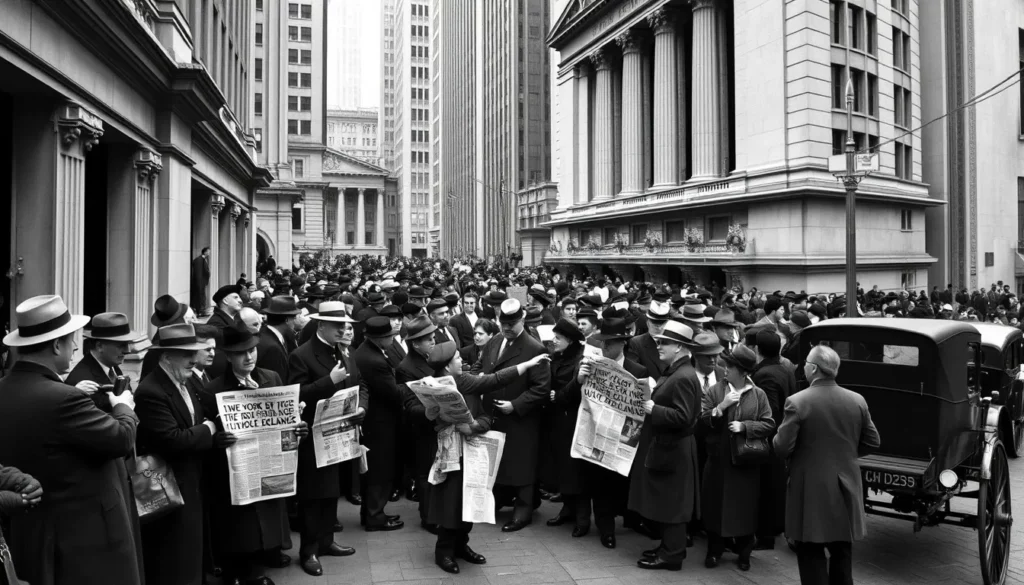
That confidence did not survive the autumn. On October 24, October 28, and October 29, 1929, the New York Stock Exchange suffered the most famous collapse in its history. The crash did not instantly create the Great Depression, but it shattered the illusion of effortless wealth and turned New York into the stage on which the nation watched its confidence break. The year therefore contains both sides of the decade: the optimism of the New Era and the fear that followed Black Tuesday.
New York in 1929
New York in 1929 was a city of five boroughs, a vast harbor, and a dense web of neighborhoods. Manhattan held the financial district, the garment center, the publishing houses, and the great entertainment districts; Brooklyn was a city of docks, factories, and row houses; Queens was expanding along the new subway and bridge lines; the Bronx was filling with apartment houses; and Staten Island remained more insular, linked to the rest by ferries. The city’s climate was humid and continental, with cold winters, hot summers, and weather that shaped street life, commuting, and the crowds that gathered outdoors in moments of public news.
The atmosphere was noisy, crowded, and intensely commercial. Construction cranes rose above the streets, automobiles competed with streetcars and horse-drawn wagons, newsboys shouted headlines, and the subway carried millions of riders for a nickel. Prohibition was still in force, yet speakeasies, nightclubs, and jazz flourished. Broadway and Times Square advertised talkies and stage shows. New York was not only the nation’s financial capital but also its media capital, its largest port, and one of its great manufacturing centers. The city felt like a machine for making the future, and in 1929 many New Yorkers believed that the machine could not stop.
Population & Economy
The 1930 federal census counted 6,930,446 people in New York City, and the 1929 population was already close to that figure. The city was a mosaic of immigrants and their children: Jewish communities on the Lower East Side and in Brooklyn, Italian neighborhoods in Manhattan and the Bronx, Irish and German communities across the boroughs, and a growing African American population in Harlem. The city was also a place of sharp inequality. Wealthy families maintained townhouses, country estates, and private railway cars, while many workers lived in crowded tenements and depended on wages that could vanish with a factory slowdown.
Finance, manufacturing, shipping, publishing, and entertainment drove the economy. Wall Street firms, banks, brokerages, and the New York Stock Exchange made lower Manhattan the center of American capital markets. The garment industry employed large numbers of immigrants and women; printing and publishing served the city’s many newspapers and magazines; the port handled freight and passengers; and construction, utilities, retail, and domestic service absorbed much of the labor force. Prices were modest by later standards: a subway ride cost five cents, a loaf of bread about nine cents, a quart of milk about fourteen cents, and a newspaper two or three cents. But rents, medical bills, and irregular employment could make city life precarious, and the stock market’s rise had convinced many middle-class New Yorkers that investment was the quickest route to security.
Government & Politics
New York City’s mayor in 1929 was James J. “Jimmy” Walker, a Democrat, Tammany Hall figure, and flamboyant man-about-town whose wit and charm matched the city’s self-image. Walker was re-elected in November 1929, defeating Fusion candidate Fiorello H. La Guardia and Socialist Norman Thomas. At the state level, Franklin D. Roosevelt became governor of New York in 1929, beginning the political ascent that would take him to the White House. Nationally, Herbert Hoover had been inaugurated as president in March 1929, promising continued prosperity and, in the campaign rhetoric of 1928, the eventual banishment of poverty.
City politics revolved around patronage, transit, housing, police, and Prohibition enforcement. Tammany Hall’s power was a subject of reform agitation, and corruption investigations would soon damage Walker’s administration, but in 1929 the mayor remained popular. The crash added a new political question: whether government should do more to steady the economy. In 1929 most officials still spoke the language of confidence and limited intervention, a stance that would be tested severely in the years that followed.
Industry
Wall Street was the city’s most famous industry, but it was not the only one. The New York Stock Exchange, the curb market, investment houses such as J.P. Morgan & Co., and commercial banks such as National City Bank and Chase National Bank linked New York to capital around the world. Brokerage offices and ticker-tape services spread through downtown and midtown, and the market’s daily fluctuations became a public spectacle. The garment industry, centered around Seventh Avenue and the Lower East Side, produced clothing for national markets. Printing plants, newspaper offices, publishing houses, and advertising agencies made New York the center of American information and entertainment.
The port employed dockworkers, sailors, warehouse men, and customs officials. Factories made furniture, clothing, food products, chemicals, machinery, and luxury goods. The Brooklyn Navy Yard and nearby shipyards supported maritime work. Construction was a major employer, as skyscrapers, apartment houses, bridges, and subway extensions reshaped the city. Radio, film, theater, and music added to the city’s economy and its sense of excitement. New York was a city of offices and factories, but also of stages, studios, and newsrooms.
Education
New York City had the largest public school system in the United States, serving hundreds of thousands of children in elementary and secondary schools. Night schools and citizenship classes served immigrants and working adults. The city’s private and religious schools added further variety. Higher education was well developed: Columbia University, New York University, City College, Hunter College, Fordham University, and other institutions drew students from the city and beyond. Literacy was high by the standards of the era, though language barriers and overcrowded classrooms remained problems in immigrant neighborhoods.
Educational reformers emphasized Americanization, vocational training, and progressive pedagogy, but schools also reflected the city’s social divisions. Access to high school and college was limited by family income and by the need for children to work. Still, public education was one of the city’s great engines of mobility, and the presence of so many colleges and cultural institutions gave New York an intellectual energy that matched its commercial bustle.
Transportation
New Yorkers moved through the city by subway, elevated train, streetcar, bus, ferry, taxi, and on foot. The subway was the circulatory system of the metropolis, carrying passengers for a nickel and making it possible for workers to live far from their jobs. The Interborough Rapid Transit and Brooklyn-Manhattan Transit systems served large parts of the city, and construction of new lines continued. Elevated trains rattled above streets in several boroughs, while streetcars and buses filled the gaps. Ferries linked Manhattan with Staten Island, New Jersey, and Brooklyn, and the harbor was crossed by the Brooklyn, Manhattan, Queensboro, and other bridges.
Automobiles were increasingly common, but traffic congestion, parking, and accident deaths made the streets contested space. Grand Central Terminal and Pennsylvania Station handled long-distance rail passengers, and the port welcomed ocean liners and freighters. Air travel was still in its infancy, with Newark Airport and local airfields serving the region. The city’s transportation network was impressive but strained, and the growth of the outer boroughs depended on further subway and bridge construction.
Everyday Life
Daily life in New York varied enormously by class and neighborhood. Wealthy New Yorkers lived in townhouses, luxury apartments, and suburban estates, with servants, private schools, and social seasons. Middle-class families occupied apartment houses and brownstones, often with radios, telephones, and installment-plan furniture. Working-class families crowded into tenements or small apartments, took in lodgers, and relied on kin and neighborhood networks. Food ranged from delicatessens, bakeries, and pushcart markets to automats, cafeterias, and grand restaurants. Clothing followed the fashions of the 1920s: men in suits and hats, women in shorter skirts and cloche hats, though many workers wore practical aprons, overalls, and shawls.
Entertainment was abundant. Broadway offered plays, musicals, and revues; movie palaces showed silent films and the new talkies; radio brought music, comedy, and news into homes; dance halls and jazz clubs pulsed at night. Baseball fans followed the Yankees, Giants, and Dodgers. Prohibition made drinking a matter of speakeasies, passwords, and police raids, and it fed organized crime. Social customs were changing, especially for young women, but family, church, synagogue, and neighborhood still shaped most lives. The stock market entered everyday conversation, and even people of modest means discussed tips, margins, and fortunes to be made.
Major Events
The year’s political calendar included Hoover’s inauguration in March and New York City’s mayoral election in November, but the defining events came in the autumn. On October 24, Black Thursday, prices fell sharply amid heavy trading; bankers tried to stabilize the market. On October 28, Black Monday, the decline resumed. On October 29, Black Tuesday, more than sixteen million shares changed hands in a frantic sell-off, and the illusion of permanent prosperity collapsed. The crash ruined speculators, frightened bankers, and cast a shadow over the city’s confidence.
Other events also marked the year. The Museum of Modern Art opened in New York in November 1929, a sign that the city remained a center of cultural innovation even amid financial panic. Walker’s re-election showed that municipal politics could proceed while the market shuddered. New Year’s Eve at the end of 1929 was far different from the celebrations that had greeted the year: the city was still crowded, still modern, and still noisy, but the mood was sober.
What Newspapers Were Reporting
New York’s newspapers in 1929 included The New York Times, the Wall Street Journal, the New York Daily News, the New York Herald Tribune, the Brooklyn Daily Eagle, the New York American, and the Amsterdam News. Before October, financial pages reported rising stock prices, new highs, and the wonders of the New Era. Society pages covered charity balls and nightclubs; local pages reported transit, crime, housing, and politics. After the crash, front pages were dominated by losses, panic, and attempts by bankers to restore order.
“The tremendous crowds which you see gathered outside the stock exchange are due to the greatest crash in the history of the New York Stock Exchange in market prices.” — newsreel announcer, 1929
The New York Times of October 30, 1929, reported a massive loss on Wall Street while also trying to calm panicked investors. Headlines emphasized the scale of the collapse and the bankers’ efforts to support the market. Newspapers also carried human stories: ruined speculators, worried depositors, and crowds pressing around the Exchange. The press helped spread both fear and reassurance, and its pages remain one of the best records of how New Yorkers experienced the crash.
What People Were Talking About
In offices, subway cars, lunch counters, and drawing rooms, New Yorkers talked about the market. Clerks and shopkeepers exchanged stock tips; brokers argued about margin calls; wives worried over family savings; and skeptics warned that prices had outrun reality. After October, the talk turned to suicides, bank failures, and whether the crash would spread to ordinary business. Rumors traveled faster than facts, as they often do in financial panics. People also debated Prohibition, crime, immigration, corruption, and the rapid changes in manners and morals.
Letters and diaries from the period show a mixture of bravado and anxiety. Some writers described the crash as a temporary setback; others sensed that a longer depression had begun. Harlem Renaissance writers and artists discussed race, art, and the city’s future. Workers talked about wages, rents, and union organizing. The year’s conversations reveal a city trying to reconcile the optimistic language of 1929 with the evidence of sudden loss.
Historical Photographs
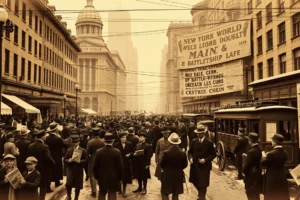
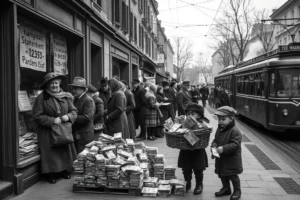
Photographs from 1929 New York are rich and varied. Press photographers captured crowds outside the New York Stock Exchange on Wall Street, men in fedoras reading ticker tape, brokers gesturing on the floor, and newspaper boys holding late editions. Images of Fifth Avenue, Times Square, subway platforms, tenement streets, and construction sites show the city’s density and modernity. Portraits of Mayor Jimmy Walker, bankers, and Broadway performers document the public faces of the year. The Library of Congress, the National Archives, the New York City Municipal Archives, the New-York Historical Society, and press-photo collections preserve many of these images.
These photographs are significant because they capture both the confidence and the shock of 1929. A picture of a smiling crowd before October and a picture of anxious men after the crash tell a story that words alone cannot. The visual record also shows the city’s social geography: wealth and poverty, native-born and immigrant, white and Black, all sharing the same streets but living very different lives.
Documents & Primary Sources
Historians studying New York in 1929 rely on a wide range of primary sources. The 1930 U.S. Census provides population, household, occupation, and immigration data for the city and its neighborhoods. The New York Times, Wall Street Journal, New York Daily News, Brooklyn Daily Eagle, and other newspapers offer daily reporting and advertisements. Mayor Jimmy Walker’s papers, city government records, police reports, transit records, and court documents illuminate politics and administration. Maps, city directories, tax records, and building permits show the physical city. Photographs, newsreels, and radio broadcasts capture the visual and aural culture. Letters, diaries, memoirs, and oral histories preserve individual experience.
1929 Timeline
| Date | Event |
|---|---|
| January 1 | New York enters 1929 amid the optimism of the New Era and a rising stock market. |
| March 4 | Herbert Hoover is inaugurated president of the United States. |
| Spring–Summer | Stock prices reach new highs; speculation and margin buying expand. |
| October 24 | Black Thursday: sharp selling and heavy volume shake the New York Stock Exchange. |
| October 28 | Black Monday: prices fall again as panic spreads. |
| October 29 | Black Tuesday: more than sixteen million shares trade in a massive sell-off. |
| November 5 | Mayor Jimmy Walker is re-elected. |
| November 7 | The Museum of Modern Art opens in New York. |
| December 31 | New Year’s Eve is subdued as the city confronts the crash’s consequences. |
What Changed Next
The crash of 1929 did not immediately produce the full Great Depression, but it marked a turning point. In the early 1930s, bank failures, unemployment, evictions, and budget cuts hit New York hard. Shantytowns appeared, charities were overwhelmed, and the city’s government struggled to meet relief needs. The optimism of the New Era gave way to a darker mood. Mayor Walker resigned in 1932 amid corruption investigations, and Fiorello La Guardia was elected mayor in 1933. Governor Roosevelt became President in 1933 and launched the New Deal, which would reshape American government and bring federal relief to New York. Prohibition was repealed in 1933. The Empire State Building, completed in 1931, and Rockefeller Center became symbols of a city that kept building even in hard times. The year 1929 thus closed one era and opened another.
Sources
- PBS American Experience, “The Crash of 1929” transcript, https://www.pbs.org/wgbh/americanexperience/media/pdf/transcript/Crash_of_1929_transcript.pdf.
- The New York Times, “Web Special: The Crash of 1929,” by Floyd Norris, https://archive.nytimes.com/www.nytimes.com/library/financial/index-1929-crash.html.
- John Kenneth Galbraith, The Great Crash 1929 (Boston: Houghton Mifflin, 1955).
- William K. Klingaman, 1929: The Year of the Great Crash (New York: Harper & Row, 1989).
- New York City Municipal Archives, municipal records and photographs, https://www.archives.nyc/.
FAQ
What was the population of New York in 1929?
New York City’s population was close to 6.8–6.9 million in 1929; the 1930 federal census counted 6,930,446 people.
What major events happened in New York in 1929?
The defining events were the Wall Street Crash of October 1929, including Black Thursday and Black Tuesday, along with Mayor Jimmy Walker’s re-election and the opening of the Museum of Modern Art.
What primary sources are available for studying New York in 1929?
Researchers use the 1930 U.S. Census, New York newspaper archives, Mayor Walker’s papers, municipal records, photographs, newsreels, maps, city directories, letters, diaries, and oral histories.
How did daily life in New York in 1929 differ from today?
Daily life was shaped by Prohibition, a five-cent subway fare, crowded tenements, limited air travel, radio rather than television, and a stock market that ordinary people discussed with intense hope and anxiety.



Leave a Reply