Short Answer
On a sunny day in early March 1921, Warren G. Harding took the oath to become the twenty-ninth president of the United States. He had won a landslide election by promising a “return to normalcy.” “Our supreme task is the resumption of our onward, normal way,” he declared in his inaugural address. The nation still reeled from the shock of World War I, the explosion of racial violence and political repression in 1919, and a lingering “Red Scare” sparked by the Bolshevik Revolution. Yet the decade that followed would be one of unprecedented economic growth, cultural ferment, and social change—a period that contemporaries themselves struggled to define. As the National Humanities Center notes, the 1920s was “a brief but defining period in American history, perhaps the first that seems immediately recognizable to us in the 21st century.” This article reconstructs the world as it was seen through the eyes of those who lived it, using primary sources from the era.
What Happened?
The 1920s began with the aftermath of World War I and the election of Warren G. Harding, who promised a return to prewar stability. His administration, followed by those of Calvin Coolidge and Herbert Hoover, presided over a period of rapid industrial expansion and consumerism. The decade saw the ratification of the 18th Amendment in 1920, which prohibited the sale of alcohol, and the 19th Amendment, which granted women the right to vote. The economy boomed as new technologies—automobiles, radios, and household appliances—transformed daily life. Charles Lindbergh’s solo transatlantic flight in 1927 captured the world’s imagination, and Babe Ruth became a national hero. However, the decade also witnessed deep social divisions: the resurgence of the Ku Klux Klan, the Scopes Trial over evolution, and the Harlem Renaissance, which celebrated African American culture. The stock market crash of October 1929 abruptly ended the prosperity, plunging the nation into the Great Depression.
How It Was Seen at the Time
Contemporaries were acutely aware of living in a new and rapidly changing age. The National Humanities Center’s “Becoming Modern” collection presents a range of primary sources that capture this sense of bewilderment and excitement. Framing questions from the collection ask: “What is this new age we live in? How do we feel about it? Where is it taking us?” Many Americans embraced the label “New Era,” believing that the economic boom and technological progress were permanent. Harding’s call for “normalcy” reflected a desire to return to a simpler past, even as the nation hurtled forward. The prevailing mood was one of optimism, but also anxiety about the pace of change. As the decade progressed, critics warned of moral decay and the dangers of speculation, yet most people remained confident in the future.
Historical Snapshot
| Aspect | Detail |
|---|---|
| Date | 1920–1929 |
| Place | United States (with global connections) |
| People | Warren G. Harding, Calvin Coolidge, Herbert Hoover, Charles Lindbergh, Babe Ruth, and millions of ordinary Americans |
| What Happened | Economic boom, Prohibition, women’s suffrage, cultural ferment, and the stock market crash |
| Why It Mattered | Set the stage for the Great Depression and the modern consumer society |
What People Knew at the Time
| What People Knew Then | What We Know Now |
|---|---|
| That the economy was booming and prosperity was permanent | That the boom was built on speculation and inequality, leading to the crash |
| That Prohibition would reduce crime and improve morality | That Prohibition fueled organized crime and was widely ignored |
| That new technologies like the radio and automobile were marvels | That these technologies reshaped society in ways not fully anticipated |
| That the “Red Scare” was a real threat to American institutions | That the threat was exaggerated and used to suppress dissent |
Contemporary Newspaper Coverage
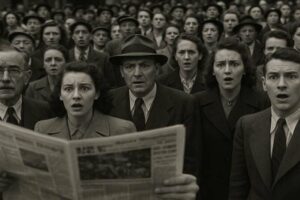
Newspapers and newsreels were the primary media of the era. The National Humanities Center’s collection includes newsreels from the Detroit News, which captured events as they unfolded. The press celebrated heroes like Lindbergh and Babe Ruth, while also covering sensational trials and scandals. Headlines often reflected the optimism of the age, but also its anxieties. For example, the Scopes Trial in 1925 was covered extensively, with many papers framing it as a battle between science and religion. The stock market crash of 1929 was initially downplayed by some financial leaders, but the press soon conveyed the panic. As the NHC notes, the era saw a “broad expansion of media,” including films, radio broadcasts, and comic strips, all of which shaped public perception.
Eyewitness Accounts
Primary sources from the era provide direct voices. President Harding’s inaugural address in 1921 is a key eyewitness statement: “Our supreme task is the resumption of our onward, normal way.” He also said, “America’s present need is not heroics, but healing; not nostrums, but normalcy; not revolution, but restoration.” These words captured the mood of a nation weary of war and reform. The National Humanities Center’s “The Age” section includes a 1931 retrospective, “Only Yesterday” by Frederick Lewis Allen, which offers a contemporary look back at the decade. Allen wrote about the “revolution in manners and morals” and the “new era” of prosperity. His account, while written after the crash, reflects the attitudes of many who lived through the 1920s.
Daily Life
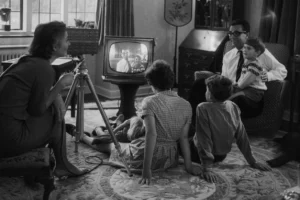
Daily life in the 1920s was transformed by consumer goods and new forms of entertainment. The American Yawp notes that the culture of consumption expanded as automobiles, radios, and household appliances became common. People listened to jazz on the radio, went to the movies, and followed sports heroes. Women, newly enfranchised, challenged traditional roles, and the “New Woman” emerged with bobbed hair and shorter skirts. However, not all shared in the prosperity. Farmers struggled, and racial and ethnic tensions simmered. The Klan’s resurgence and the Great Migration of African Americans to northern cities created new social dynamics. Daily routines varied widely by class and region, but the sense of change was universal.
How Historians See It Today
Modern historians view the 1920s as a period of cultural conflict and economic instability, rather than simply a “roaring” decade. While contemporaries saw the boom as permanent, historians emphasize the unequal distribution of wealth and the speculative bubble that led to the crash. The “New Era” ideology, which celebrated business and consumption, is now seen as a precursor to the Great Depression. Historians also highlight the decade’s social tensions—the Klan, the Scopes Trial, and the Red Scare—as evidence of deep divisions beneath the surface of prosperity. The primary sources from the era, such as those in the National Humanities Center’s collection, allow us to see both the optimism and the anxieties of the time, providing a more nuanced picture than the popular myth of the “Jazz Age.”
The 1920s were a time of profound transformation, and the primary sources from the era reveal how contemporaries grappled with the new world they were creating. Their words, images, and sounds capture the excitement and the unease of a decade that ended in catastrophe. By examining these sources, we gain a deeper understanding of how people experienced the past—not as a simple narrative, but as a complex, lived reality.
FAQ
What was the 'return to normalcy'?
It was Warren G. Harding's campaign promise in 1920 to return the United States to a state of calm and stability after the upheavals of World War I and the Progressive Era. He sought to restore traditional values and reduce government intervention.
What caused the economic boom of the 1920s?
The boom was driven by technological innovations, mass production, consumer credit, and a favorable business climate. However, it was also fueled by speculation and an unequal distribution of wealth, which contributed to the crash of 1929.








Leave a Reply