Short Answer
In the summer of 1893, Chicago’s Jackson Park glistened with the gleaming white facades of the World’s Columbian Exposition. The “White City,” as it was called, was a neoclassical model of progress and civilization, its halls filled with educational exhibits and its lagoons crossed by gondolas. But just to the west, along a narrow strip of land called the Midway Plaisance, a different world pulsed with color, noise, and spectacle. Here, the air carried the smells of unfamiliar foods, the sounds of exotic music, and the cheers of crowds. It was a place where the world’s peoples were put on display, where a giant steel wheel carried passengers high above the grounds, and where the very idea of amusement was being reinvented. This was the Midway—the fair’s entertainment district—and its influence would ripple through American culture for decades.
What Happened?
The Midway Plaisance was a one-mile-long, 220-yard-wide public park strip that connected Jackson Park on the east to Washington Park on the west, running between 59th and 60th streets in Chicago’s South Side. It had been intended as part of the city’s boulevard system, but for the 1893 World’s Columbian Exposition, it was transformed into a “Bazaar of Nations.” The Midway evolved into a mix of educational displays and outright amusements, a place where international villages, native settlements, theaters, and rides coexisted.
The centerpiece was the massive Ferris Wheel, designed by George Washington Gale Ferris Jr. and rising above the entire Midway. The wheel was a marvel of engineering and a major attraction, carrying visitors high above the fairgrounds. Along the strip, visitors could wander through recreated Egyptian streets, a “Cairo Street” with bazaars, a “Viennese Café,” a “Lapland” village, and many other exhibits. The Midway was also home to the famous “Dancing Girls of Java” and other performances.
The fair ran from May 1 to October 30, 1893, and drew an estimated 27 million visitors from around the world. The Midway was one of the most popular destinations, drawing crowds with its variety of entertainment and its international flavor. It was a place where the line between education and amusement was blurred, and where the public could experience a kind of immersive global tourism without leaving Chicago.
How It Was Seen at the Time
At the time, the Midway was seen as a stark contrast to the main fairgrounds. The White City was formal, educational, and designed to impress with its architecture and order. The Midway, on the other hand, was informal, showy, and designed to entertain. It was a place of “showbiz,” where the public could be amused and entertained rather than educated. As one contemporary description noted, “The Midway’s kaleidoscope of colors, languages, songs, foods, and items for sale had something for everyone.”
“The Midway consisted of a most unusual collection of almost every type of architecture known to man: international villages and bazaars, native settlements, theaters, amusement rides, and reproductions of ancient or historic sites.”
The Midway was also seen as a place of wonder and novelty. The Ferris Wheel, in particular, captured the public’s imagination. It was a symbol of American innovation and a source of both excitement and anxiety. Many visitors had never seen anything like it, and the experience of being lifted high above the fair was both thrilling and terrifying. The Midway was a place where the world came to be seen, and where the public could experience the “other” in a controlled setting.
Historical Snapshot
| Aspect | Detail |
|---|---|
| Date | May 1 – October 30, 1893 |
| Place | Midway Plaisance, Chicago, Illinois |
| People | George Washington Gale Ferris Jr. (engineer), fairgoers, international performers |
| What Happened | The Midway served as the entertainment district of the World’s Columbian Exposition, featuring the first Ferris Wheel and numerous international villages. |
| Why It Mattered | It introduced the term “midway” to the entertainment industry and set a precedent for immersive entertainment at fairs and amusement parks. |
Numbers at the Time
| Figure | Value | Source/Year |
|---|---|---|
| Total visitors to the Exposition | 27 million | World’s Columbian Exposition (1893) |
| Length of the Midway | 1 mile (1.6 km) | Chicago Park District |
| Width of the Midway | 220 yards (approx. 200 m) | Chicago Park District |
| Countries represented in pavilions | 46 | World’s Columbian Exposition |
Contemporary Terminology
The term “midway” was already in use for a street or road, but the 1893 exposition gave it a new meaning. Because the Midway Plaisance was the entertainment district, the word “midway” came to be associated with the area of a fair or amusement park that contains sideshows and amusements. The term was later applied to county and state fairs, and to amusement parks, where the “midway” is the main thoroughfare of attractions.
Other terms from the era include “White City,” which referred to the main fairgrounds with its white, neoclassical buildings, and “Ferris Wheel,” named after its inventor. The Ferris Wheel was also called the “Great Wheel” or “Observation Wheel.”
Aftermath
After the fair closed, the Midway Plaisance was returned to its original purpose as a park. The Ferris Wheel was moved to other locations, but the concept of the “midway” had been permanently embedded in American culture. The World’s Columbian Exposition had shown that entertainment could be a major draw, and the Midway’s combination of education and amusement became a model for future fairs and theme parks. The success of the Midway also influenced the development of Coney Island and other amusement parks, which incorporated the idea of a central thoroughfare with sideshows and rides.
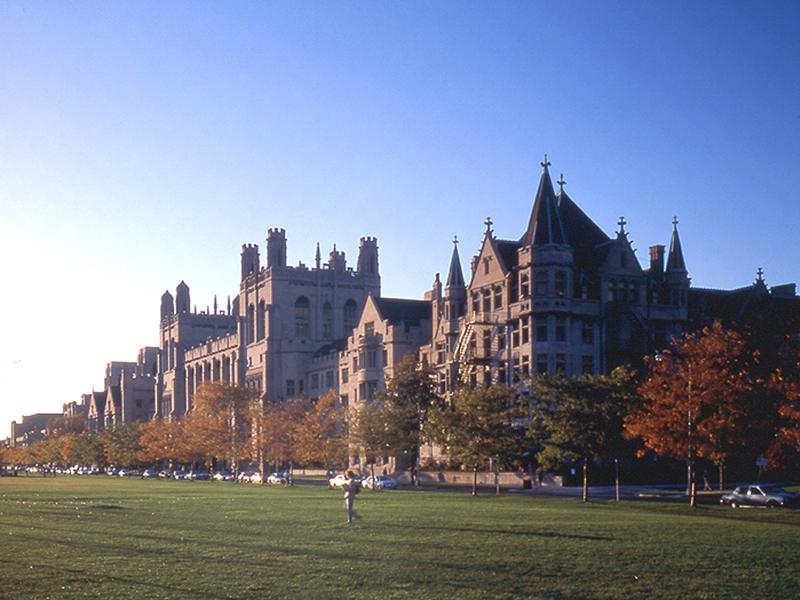
The Midway Plaisance itself remains a public park in Chicago, now flanked by the University of Chicago and other institutions. It is a quiet strip of green, but its historical significance is remembered. The term “midway” is now a generic term for any similar area at a fair, and the legacy of the 1893 Midway is seen in every amusement park that has a main street of attractions.
In the end, the Midway Plaisance was a place where the world was brought to Chicago, and where the idea of entertainment was expanded. Its influence can be seen in the modern amusement park, in the way we think about fairs, and even in the word we use for the main street of a carnival. The primary sources of the time—the descriptions, the photographs, and the statistics—show us that the Midway was a place of wonder, of curiosity, and of the beginning of a new era of public entertainment.
FAQ
What was the Midway Plaisance?
The Midway Plaisance was a one-mile-long, 220-yard-wide strip of land in Chicago that served as the entertainment district of the 1893 World's Columbian Exposition. It featured international villages, bazaars, and the first Ferris Wheel, and was the origin of the term 'midway' in amusement parks.
Why is the Midway Plaisance important?
It established the concept of a dedicated entertainment zone at world's fairs and amusement parks, and introduced the Ferris Wheel as a major attraction. It also gave the term 'midway' to the industry.








Leave a Reply