
Short Answer
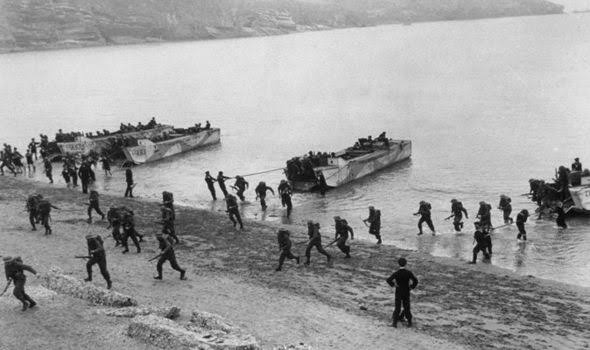
On the morning of June 6, 1944, the German 716th Coastal Defense Division was at a normal state of readiness along the Normandy coast. No reports had been received from higher command indicating an invasion in that sector. The men of the Atlantic Wall—Hitler’s “great fortress of concrete and steel”—believed they were prepared for any Allied landing. Yet within hours, the horizon filled with thousands of ships, and the sound of naval guns shattered the calm. For the Germans, D-Day was not a day of triumph but a day of bewildering surprise, desperate fighting, and the beginning of the end of their occupation of France.
What Happened?
By the spring of 1944, Germany had occupied western Europe for four years. In his Führer Directive No. 51, issued on 3 November 1943, Hitler warned of “consequences of staggering proportions” if the Allies gained a foothold. His ambition was to throw the invaders back into the sea. Yet Germany’s ability to resist was already severely compromised. The Luftwaffe had withdrawn nearly all its fighters to counter American daylight bombing raids over the Reich, and the Navy’s warships had been sunk or bottled up in ports. The U-boats would have almost no chance of penetrating the Allied naval screen.
On the night of 5–6 June, Allied airborne troops landed behind the beaches. The 716th Division, a static coastal defense unit, was not on alert. When the main landings began at dawn, the division was overwhelmed. The official operations report, completed on 23 June 1944 under the auspices of the Oberkommando des Heeres, drew on surviving logbooks, prisoner of war reports, and interviews with survivors. It concluded that the “Rommel doctrine”—the idea of defeating the invasion on the beaches—had failed within this divisional area. The division’s anti-tank guns and resistance nests were quickly silenced, and the German command structure was thrown into chaos.
The overall German response was hampered by the lack of air cover and naval power. The Luftwaffe could not contest the skies, and the Navy’s surface ships were unable to challenge the Allied fleet. Hitler’s directive had promised a furious counterattack, but the necessary reserves were not available. The 716th Division, and the entire German 7th Army, faced a battle they could not win.
How It Was Seen at the Time
Contemporary German accounts reflect a mixture of surprise and disbelief. The 716th Division’s operations report, compiled from the survivors’ testimony, gave “a reasonably clear indication of German perceptions of how the battle unfolded.” The report noted that the division had been at a normal state of readiness, with no warning from higher command. The prevailing mood among the defenders was not of fanatical resistance but of confusion and the realization that their much-vaunted Atlantic Wall was a paper fortress.
“The Rommel doctrine failed within this divisional area of operations.” — Oberkommando des Heeres report, 23 June 1944
As the day wore on, the Germans saw the Allies pouring ashore and establishing a permanent presence. The analogy of uninvited guests who refuse to leave—used by the National WWII Museum—captures the sense of intrusion and the growing certainty that the invaders would not be driven back. The German soldier on the ground knew that the expected counterattack was not coming, and that the war in the West had taken a fatal turn.
Historical Snapshot
| Aspect | Detail |
|---|---|
| Date | June 6, 1944 |
| Place | Normandy, France (beaches and inland) |
| People | German 716th Coastal Defense Division; Wehrmacht commanders; Hitler’s high command |
| What Happened | The Allied invasion of Normandy began; the 716th Division was caught by surprise and overwhelmed. |
| Why It Mattered | The failure of the Atlantic Wall and the German counterattack allowed the Allies to establish a permanent foothold in France. |
Official Reports
The most significant official document is the detailed operations report completed on 23 June 1944 by the Oberkommando des Heeres. It was based on surviving operations logbooks, prisoner-of-war reports, and interviews with survivors of the many small defensive battles along the seashore and inland at the gun batteries and resistance nests. The report was an attempt to understand why the German defense had collapsed so quickly. It noted that the 716th Division had been at normal readiness and that no warning had been received. The report also highlighted the failure of the Rommel doctrine, which had placed too much emphasis on counterattacks that never materialized.
Another official document is Hitler’s Directive No. 51, issued on 3 November 1943, which stated the importance of the western defenses and the need to throw the Allies back. However, the directive’s ambitious goals could not be met given the Luftwaffe’s absence and the Navy’s weakness.
Eyewitness Accounts
The Oberkommando report itself is a compilation of eyewitness testimony from German soldiers who survived the D-Day battles. It includes accounts from resistance nests, gun batteries, and inland positions. The report describes the moment when the Allied fleet appeared on the horizon, the heavy bombardment, and the rapid breakdown of communication. One survivor from the 716th Division recalled that they had been told the invasion would come at the Pas de Calais, not Normandy, and so they were completely surprised. The report notes that many defenders fought bravely but were too isolated and too outgunned to hold their positions.
“The report gives a reasonably clear indication of German perceptions of how the battle unfolded and why the Rommel doctrine failed within this divisional area of operations.” — Oberkommando des Heeres report, 23 June 1944
What People Feared
On the German side, there was a clear fear of the invasion’s consequences. Hitler had warned of “consequences of staggering proportions” if the Allies gained a foothold. The German high command feared the opening of a second front, which would stretch their already overextended forces. The Luftwaffe’s withdrawal and the Navy’s inability to resist meant that Germany could not contest the invasion. There was also a fear of the Allied air superiority, which had already devastated German cities. The soldiers on the coast feared being cut off and destroyed. The report from the 716th Division reveals the fear of being abandoned by higher command, as no reinforcements arrived in time.
Aftermath
The immediate aftermath was the collapse of the Atlantic Wall. The Allies did not leave. As the National Museum puts it, the Germans had uninvited guests who would not leave. The Allied forces pushed inland, and the German army in Normandy was slowly ground down. The failure of the German counterattack on D-Day and the subsequent days meant that the Allies would never be thrown back into the sea. By the end of June, the German forces were in retreat, and the liberation of France was underway. The report of the 716th Division was a post-mortem of a defeat that marked the beginning of the end of the Third Reich.
The primary sources from the German side—the official report, the diary of a soldier, and the testimony of survivors—paint a picture of a force that was surprised, unprepared, and ultimately defeated. They remind us that history is not only written by the victors but also by the defeated, and that the collapse of the Atlantic Wall was not inevitable but the result of human error, faulty intelligence, and the overwhelming power of the Allied military. The German defenders’ accounts give us a more complete understanding of the day that changed the course of World War II.
FAQ
Why was the German 716th Division caught by surprise on D-Day?
The 716th Division was at a normal state of readiness, and no reports had been received from higher command indicating an invasion in the Normandy sector. The German high command had expected the invasion to come at the Pas de Calais, so the Normandy landings were a strategic surprise.
What was the Rommel doctrine and why did it fail?
The Rommel doctrine was a strategy to defeat the Allied invasion on the beaches by using strong coastal defenses and immediate mobile counterattacks. It failed because the German reserves were not positioned close enough to the coast, and the Allies' naval and air superiority prevented the Germans from moving their forces in time. The 716th Division's report concluded that the doctrine failed within its area of operations.










Leave a Reply