
Short Answer
In October 1962, the world stood on the precipice of nuclear catastrophe. For thirteen days, the United States and the Soviet Union confronted each other over the discovery of Soviet ballistic missiles in Cuba. Americans, glued to their radios and newspapers, saw a hostile act of aggression that threatened their homeland. Soviets, reading Pravda and Izvestia, saw a defensive response to American imperialist threats and a necessary protection for revolutionary Cuba. The crisis—called the “Caribbean Crisis” by the Soviets and the “October Crisis” by Cubans—was a moment when two superpowers with incompatible worldviews nearly collided in a nuclear exchange. This article reconstructs how contemporaries in Washington and Moscow experienced and interpreted the events, using declassified Soviet and American documents, official reports, and eyewitness accounts to reveal the conflicting narratives that shaped history.
What Happened?
The Cuban Missile Crisis unfolded in a rapid, tense sequence of events. In the summer of 1962, Soviet leader Nikita Khrushchev authorized the surreptitious deployment of nuclear-capable SS-4 and SS-5 surface-to-surface missiles to Cuba, a decision made to counter American strategic superiority and to protect the Cuban revolution from a feared U.S. invasion. The Soviet operation relied on elaborate denial and deception, known in Russian as maskirovka, to hide the missile deployment from American intelligence.
- October 14–15: A U-2 reconnaissance flight over Cuba photographed SS-4 missile sites under construction near San Cristóbal.
- October 16: President John F. Kennedy was informed of the missile discovery. The Executive Committee of the National Security Council (EXCOMM) began secret deliberations.
- October 22: Kennedy delivered a televised address to the nation, announcing the presence of Soviet missiles and the imposition of a “quarantine”—a naval blockade—of Cuba.
- October 24: The quarantine went into effect. Soviet ships bound for Cuba slowed or turned back.
- October 26–27: Intense negotiations. On Saturday, October 27, a U.S. U-2 reconnaissance aircraft was shot down over Cuba, killing the pilot. That evening, Soviet Ambassador Anatoly Dobrynin met with Attorney General Robert F. Kennedy in a tense, informal meeting.
- October 28: Khrushchev announced that the Soviet Union would withdraw the missiles from Cuba in exchange for an American pledge not to invade the island. The secret removal of U.S. Jupiter missiles from Turkey was also part of the understanding.
The crisis ended on October 28, but the underlying conflict of narratives persisted. The United States claimed victory and the removal of the missiles; the Soviet Union claimed it had protected Cuba and achieved a guarantee against invasion. Both sides, however, had come closer to nuclear war than they had ever admitted.
How It Was Seen at the Time
At the time, the crisis was perceived in Washington and Moscow through radically different lenses. American officials and the public viewed the Soviet missiles as an unacceptable threat to the Western Hemisphere, a direct challenge to U.S. credibility. The word “quarantine” was deliberately chosen to avoid the legal implications of a blockade, but the message was unmistakable: the United States would not tolerate Soviet nuclear weapons in its backyard.
“Soviet deception in the Cuban missile crisis was the foundation of Khrushchev’s audacious Cuban venture. The craft of denying the United States information on the deployment of the missiles and deceiving US policymakers about the Soviet Union’s intent was the foundation of Nikita Khrushchev’s audacious Cuban venture.” — James H. Hansen, Studies in Intelligence, 2002
Soviet leaders, by contrast, saw the deployment as a legitimate defensive measure against the American bases in Turkey and the constant threat of invasion. They were surprised by the intensity of the American reaction. Soviet officials, and even Khrushchev himself, believed that the United States would accept the missiles as a fait accompli, as the United States had accepted Soviet missiles in its own backyard. The Soviet press described the American blockade as an act of aggression and a violation of international law.
Historical Snapshot
| Aspect | Detail |
|---|---|
| Date | October 16–28, 1962 |
| Place | Cuba, United States, Soviet Union (primarily Washington and Moscow) |
| People | John F. Kennedy, Nikita Khrushchev, Robert F. Kennedy, Anatoly Dobrynin, Fidel Castro |
| What Happened | The Soviet Union secretly deployed nuclear missiles to Cuba; the U.S. imposed a naval quarantine; after intense negotiations, the missiles were removed in exchange for a U.S. pledge not to invade Cuba and the secret removal of Jupiter missiles from Turkey. |
| Why It Mattered | It brought the world to the brink of nuclear war and marked the peak of Cold War tensions. |
What People Knew at the Time
| What People Knew Then | What We Know Now |
|---|---|
| The U.S. public knew that Soviet missiles were in Cuba and that the U.S. imposed a quarantine. | The U.S. public was not told of the secret deal to remove Jupiter missiles from Turkey, which was part of the final agreement. |
| The Soviet public was told that the U.S. was threatening Cuba and that Soviet missiles were a defensive response. | Soviet citizens were not informed of the extent of the missile deployment or the secret negotiations. |
| The U.S. government initially believed the Soviet Union would not risk a direct confrontation. | Declassified Soviet documents later revealed that Soviet commanders in Cuba had nuclear warheads and were authorized to use them in case of an invasion. |
| The U.S. government believed that the missiles were not yet operational. | Later evidence showed that the SS-4 missiles were almost operational, and tactical nuclear weapons were already in place. |
Eyewitness Accounts
The most dramatic eyewitness account from the crisis comes from the meeting between Robert F. Kennedy and Soviet Ambassador Anatoly Dobrynin on the evening of October 27, 1962. According to a detailed account published in the Cold War International History Project Bulletin, the meeting was the most dangerous moment of the crisis. The report states:
“The most dangerous moment of the Cuban Missile Crisis was the evening of Saturday, 27 October 1962, when the resolution of the crisis—war or peace—appeared to hang in the balance. While Soviet ships had not attempted to break the U.S. naval blockade of Cuba, Soviet nuclear missile bases remained on the island and were rapidly becoming operational, and pressure on President Kennedy to order an air strike or invasion was mounting, especially after an American U-2 reconnaissance was shot down over Cuba that Saturday afternoon and its pilot killed.” — Jim Hershberg, Cold War International History Project Bulletin, 1995
Dobrynin later recounted in his memoirs that Robert Kennedy told him, “If the situation continues much longer, the President is not sure that the military will not overthrow him and take power,” and that the United States was determined to remove the missiles. The meeting, held in a tense atmosphere, was a direct communication channel that ultimately helped resolve the crisis.
Different Perspectives
American Perspective
The American government and public saw the Soviet missiles as a violation of the Monroe Doctrine and a direct threat to U.S. security. The U.S. intelligence community, however, was initially uncertain about the nature of the Soviet deployment. The discovery of the missiles was a shock, as the CIA had not expected the Soviet Union to place nuclear weapons in the Western Hemisphere. The Kennedy administration, as described in the OSTI report, framed the crisis as a test of American resolve and leadership. The quarantine was presented as a limited, defensive measure, not an act of war.
Soviet Perspective
The Soviet Union, as Raymond L. Garthoff explains in his study of the crisis, saw the deployment as a necessary measure to protect Cuba and to restore the strategic balance. The Soviet leadership believed that the United States would not respond to the deployment with force, because the U.S. had already placed missiles in Turkey and Italy. The Soviet press and official statements emphasized that the missiles were a “defensive” response to American aggression. The Soviet story, long suppressed, was that Khrushchev acted to prevent a U.S. invasion of Cuba and to counter the U.S. strategic advantage.
What the Sources Got Wrong
Many contemporary accounts and reports contained significant errors or omissions. The CIA’s initial intelligence failed to detect the Soviet missiles until they were nearly operational, and the U.S. government underestimated the Soviet willingness to take such a risk. The Soviet deception, as detailed in the CIA study, was extensive and effective. The Soviet Union, for its part, misjudged the American reaction, believing that the U.S. would accept the missiles as a fait accompli. Both sides also missed the danger of escalation: the U.S. did not know that Soviet commanders in Cuba had nuclear warheads, and the Soviet Union did not anticipate the U.S. quarantine. The secret deal to remove Jupiter missiles from Turkey was not disclosed to the public at the time, leading to later confusion and criticism.
How Historians See It Today
Modern historians, using declassified Soviet and American documents, have a more nuanced view. The crisis is now seen as a near-nuclear catastrophe that was resolved largely by the personal diplomacy of Kennedy and Khrushchev, as well as by the back-channel communications between Robert Kennedy and Anatoly Dobrynin. The Soviet story, once hidden, is now known: the Soviet Union deployed the missiles to protect Cuba and to counter U.S. strategic superiority. Historians also recognize the role of fear and misperception on both sides. The crisis led to the Partial Test Ban Treaty and the establishment of the hotline between Washington and Moscow, as both sides sought to reduce the risk of accidental nuclear war. The conflicting accounts from 1962 are now reconciled in the broader historical record, but the crisis remains a powerful reminder of the dangers of nuclear brinkmanship.
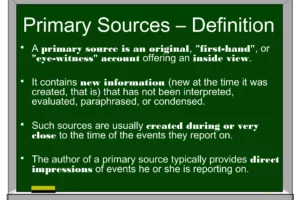
The Cuban Missile Crisis stands as a testament to the power of primary sources to reveal the divergent realities that shape international crises. The American and Soviet narratives, each with their own truths, almost led to a war that no one wanted. The documents, letters, and eyewitness accounts from October 1962 remind us that history is not a single story, but a complex interplay of perspectives, fears, and hopes. The crisis was a moment when the world’s two superpowers came close to destroying each other, and the lessons of that confrontation continue to resonate today.
FAQ
Why did the Soviet Union place missiles in Cuba?
The Soviet Union placed missiles in Cuba to counter the U.S. strategic advantage, to protect the Cuban revolution from a feared American invasion, and to respond to U.S. missiles in Turkey. Khrushchev believed the deployment would be a fait accompli and would not be challenged by the U.S.
What was the role of the Dobrynin–Kennedy meeting?
The meeting between Soviet Ambassador Anatoly Dobrynin and Attorney General Robert F. Kennedy on October 27, 1962, was a critical back-channel communication. Kennedy conveyed the U.S. determination to remove the missiles and offered a secret pledge to remove U.S. Jupiter missiles from Turkey, which helped resolve the crisis.
What was the 'quarantine' in the Cuban Missile Crisis?
The quarantine was a naval blockade of Cuba imposed by the U.S. on October 24, 1962, to prevent Soviet ships from delivering offensive weapons to Cuba. The term was used to avoid the legal implications of a blockade, but the effect was the same.







Leave a Reply