
Short Answer
In March 1917, the streets of Petrograd were filled with striking workers and desperate women queuing for bread. The Tsarist autocracy, already strained by three years of war, cracked under the pressure of a spontaneous uprising. Across Europe and the United States, newspaper offices telegraphed for the latest dispatches, and readers in London, Paris, and New York followed the drama with a mixture of excitement and dread. The Russian Revolution was not a single event but a series of convulsions that toppled the Romanov dynasty in February and brought the Bolsheviks to power in October. For contemporaries, the news arrived in fragments, often contradictory, filtered through the lenses of censorship, national interest, and editorial bias. This article explores how the revolution was reported and interpreted at the time, using the surviving newspaper collections and primary source archives that have been digitized by libraries and universities.
What Happened?
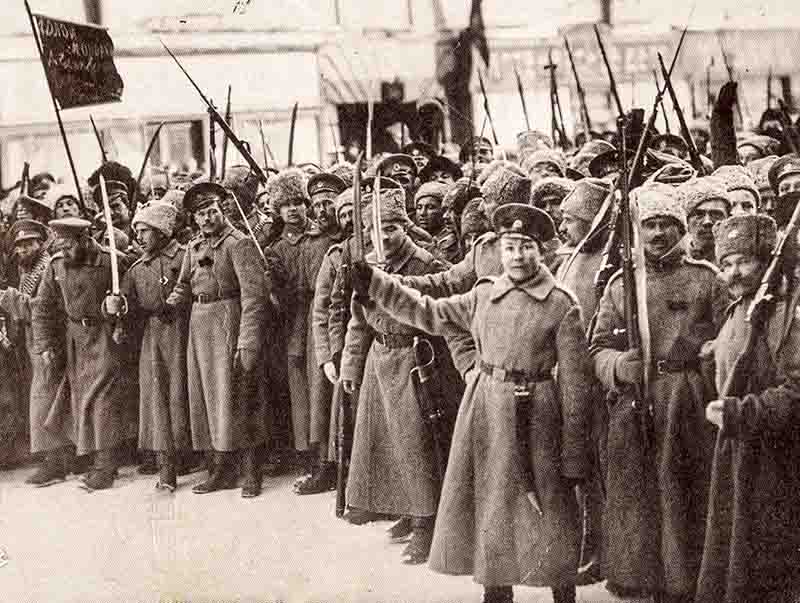
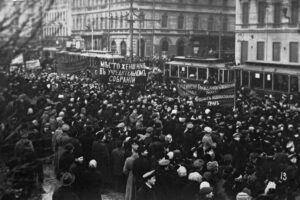
The Russian Revolution of 1917 unfolded in two main phases. The first, known as the February Revolution (March 8–15 in the Gregorian calendar), began with International Women’s Day demonstrations on March 8, when female textile workers marched through Petrograd demanding bread and an end to the war. Within days, the protests grew into a general strike, and troops sent to suppress the crowds instead joined the revolutionaries. On March 15, Tsar Nicholas II abdicated, ending the 300-year-old Romanov dynasty. A Provisional Government, led by moderate liberals and socialists, took power, but it shared authority with the Petrograd Soviet, a council of workers and soldiers.
The second phase, the October Revolution (November 7 in the Gregorian calendar), saw the Bolshevik Party, led by Vladimir Lenin, seize control of the government in a nearly bloodless coup. The Bolsheviks, who had gained influence in the soviets and the army, overthrew the Provisional Government and established the world’s first communist state. The revolution did not end there; it triggered a brutal civil war, foreign intervention, and the eventual consolidation of the Soviet Union.
Key events according to contemporary reports:
- March 8, 1917: International Women’s Day demonstrations in Petrograd, with women demanding bread and the return of soldiers from the front.
- March 11–12: Soldiers of the Petrograd garrison mutiny, joining the protesters.
- March 15: Nicholas II abdicates; the Provisional Government is formed.
- November 7: Bolsheviks seize key points in Petrograd and overthrow the Provisional Government.
How It Was Seen at the Time
Contemporary observers were often confused and divided. Many newspapers in the West initially welcomed the fall of the Tsar as a blow against autocracy and a step toward democracy. The Manchester Guardian reported on the events with a mixture of hope and caution, noting the risks of civil war and the continuation of the war against Germany. Russian newspapers, such as Novoe Vremya, which had been a conservative voice, had to adjust to the new political reality. The abdication of Nicholas II was reported with solemnity and uncertainty; the Tsar himself wrote in his diary:
“In the midst of the great struggle against the external enemy, I have been compelled to abdicate the throne of the Russian Empire and to lay down the supreme power.”
This quote, widely printed in newspapers at the time, captured the sense of an epochal shift. Many contemporaries believed that the revolution would bring democracy and an end to the war, while others feared that it would plunge Russia into chaos and radicalism.
Historical Snapshot
| Aspect | Detail |
|---|---|
| Date | February 1917 (March 8–15 Gregorian) and October 1917 (November 7 Gregorian) |
| Place | Petrograd (now St. Petersburg), Russia |
| People | Tsar Nicholas II, Alexander Kerensky, Vladimir Lenin, Leon Trotsky, the Bolsheviks, the Provisional Government, workers and soldiers |
| What Happened | The fall of the Tsarist autocracy and the establishment of a provisional government, followed by the Bolshevik seizure of power |
| Why It Mattered | The revolution led to the creation of the Soviet Union and reshaped the political, social, and economic order of the twentieth century |
Contemporary Newspaper Coverage
Newspapers around the world covered the Russian Revolution with intensity, though their reporting was often colored by national interests and limited access. The Manchester Guardian (now The Guardian) published a series of reports from Petrograd, and its archive includes a front-page article from 9 March 1917 with the headline “Revolution Breaks Out in Russia,” as noted in the newspaper’s own historical archive. The Novoe Vremya of Petrograd, one of the most prominent Russian newspapers, carried detailed accounts of the events, as preserved in the digital collection of the Bavarian State Library. The library’s project “Russian Revolutions of 1917 in Newspaper Articles” republishes daily articles from Russian and international newspapers exactly 100 years after the events, allowing readers to reconstruct the course of the revolution day by day. Similarly, the Harvard Library’s collection “1917 Russian Revolutions in Newspaper Reports” gathers reports from different countries and languages, sorted by month and date, providing a rich primary source for researchers. These collections show that newspapers in Russia, Britain, France, Germany, and the United States all covered the revolution, often with very different interpretations.
Eyewitness Accounts
Eyewitness accounts from the revolution, though not always published in newspapers, were often quoted or reprinted in the press. The American journalist John Reed, who was in Petrograd during the October Revolution, later wrote Ten Days That Shook the World, but his dispatches to American newspapers were also read widely. One notable eyewitness account is the diary of the Russian soldier and worker, which was often published in the socialist press. For example, a worker in Petrograd wrote in a letter to a friend:
“We are fighting for bread and peace, and we are ready to die for it.”
Such letters were frequently printed in the newspapers of the time, giving voice to the ordinary participants. However, the accuracy of these accounts varied, and many were filtered through the political bias of the newspaper.
Different Perspectives
Russian Perspective
Russian newspapers, especially those close to the Provisional Government, initially celebrated the revolution as a victory for democracy. The Novoe Vremya, which had been a conservative paper, attempted to adapt to the new political climate, while the Bolshevik press, such as Pravda, called for a complete break with the war and the transfer of power to the soviets. The Russian press was deeply divided, and the coverage reflected the political tensions that would eventually lead to the October Revolution.
British and American Perspective
British and American newspapers generally welcomed the revolution as a blow to German autocracy and a sign of democratic progress. The Manchester Guardian reported on the revolution with a mix of hope and concern, noting that the future of the war and the stability of Russia were uncertain. The New York Times and other American papers also covered the events, often focusing on the personalities of the leaders. However, the October Revolution and the Bolshevik seizure of power were met with alarm, and many Western newspapers began to portray the Bolsheviks as a radical threat to the existing order.
What People Feared
Contemporaries feared several outcomes. Many Russians feared that the revolution would lead to a complete breakdown of order, with the army disintegrating and the country descending into anarchy. Others feared the spread of socialism to their own countries, and the British and French governments worried that the revolution would lead to a separate peace between Russia and Germany, freeing German troops for the Western Front. In the newspapers, there were also fears of a return to Tsarist autocracy if the revolution failed. The Bolshevik seizure of power in October was seen by many as the realization of the worst fears—a radical, violent regime that would plunge Russia into civil war.
What People Expected Would Happen Next
In the spring of 1917, many observers expected that the revolution would lead to a democratic Russia that would continue the war against the Central Powers. The Provisional Government, led by Alexander Kerensky, pledged to keep Russia in the war, but the Russian army was exhausted and the soldiers were deserting. The Bolsheviks, on the other hand, promised “peace, land, and bread,” and they gained popular support. Many foreign observers underestimated the Bolsheviks’ ability to seize power, believing that they would remain a minority. When the Bolsheviks took over in November, the world was shocked. The expectation of a stable democratic Russia was shattered, and the subsequent civil war and the rise of the Soviet Union were not foreseen by most contemporaries.
Timeline
- March 8, 1917 (Feb. 23 O.S.): International Women’s Day demonstrations in Petrograd.
- March 11–12: Strikes and mutiny of the Petrograd garrison.
- March 15: Tsar Nicholas II abdicates; Provisional Government formed.
- April 1917: Lenin returns from exile in Switzerland.
- July 1917: The July Days, a failed Bolshevik uprising in Petrograd.
- October 1917 (Nov. 7 Gregorian): Bolsheviks seize the Winter Palace and the Provisional Government.
- 1918: The Russian Civil War begins.
Aftermath
The immediate aftermath of the October Revolution was the consolidation of Bolshevik power, the dissolution of the Constituent Assembly, and the signing of the Treaty of Brest-Litovsk with Germany in March 1918, which ended Russia’s involvement in the war. The civil war between the Red Army (Bolsheviks) and the White Army (anti-Bolshevik forces) lasted until 1922, leading to the formation of the Soviet Union. The revolution also inspired communist movements worldwide and shaped the entire twentieth century. The newspapers of 1917, preserved in archives, remain a vital record of how the world witnessed one of the most significant events in modern history.
The enduring significance of the Russian Revolution of 1917 lies not only in its political outcome but in the way it was reported and perceived. The contemporary newspapers, with their headlines, dispatches, and editorials, offer a window into the hopes, fears, and misunderstandings of the time. They remind us that historical events are not just a series of facts but are also the product of human interpretation and communication. The primary sources preserved in libraries and archives allow us to reconstruct the past as it unfolded, and to understand that the revolution was not a single moment but a complex, contested, and deeply human process.
FAQ
What did newspapers report about the Russian Revolution in 1917?
Newspapers around the world reported the revolution with a mix of hope, fear, and confusion. They covered the fall of the Tsar, the formation of the Provisional Government, and the Bolshevik seizure of power, often with national biases and limited access to reliable information.
Where can I find primary sources of contemporary newspapers from the Russian Revolution?
Several archives provide digitized newspapers from 1917, including the Harvard Library's '1917 Russian Revolutions in Newspaper Reports,' the Bavarian State Library's project, and the Guardian's historical archive.







Leave a Reply