
Short Answer
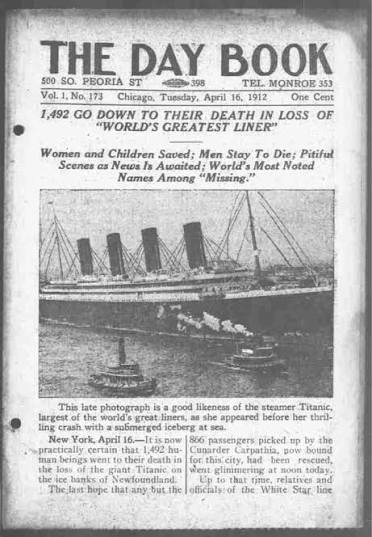
On the morning of April 15, 1912, the world woke to a jumble of telegraph dispatches from the North Atlantic. The RMS Titanic, the largest and most luxurious ocean liner ever built, had struck an iceberg and was reported to be sinking. But the first bulletins were wildly contradictory. Some newspapers, relying on wireless messages that were still fragmentary, declared that all passengers had been saved; others reported that the ship was still afloat and being towed to port. As the day wore on, the truth became undeniable: the Titanic had gone down in the early hours, and more than 1,300 people had perished. For the next several days, newspapers across the United States and Europe scrambled to piece together the story, publishing a torrent of headlines, interviews, and editorials that would shape how the world understood this unprecedented catastrophe.
What Happened?
The RMS Titanic, on her maiden voyage from Southampton to New York, struck an iceberg at approximately 11:40 PM on April 14, 1912. The ship, widely touted as “unsinkable,” sank in the early hours of April 15, 1912. According to the Library of Congress’s guide to the event, “On April 15, 1912, over 1,300 people died in one of the worst maritime disasters in history.” The ship carried more than 2,000 passengers and crew, but the lifeboats could hold only a fraction. As the ship went down, the band famously played a hymn—often reported as “Nearer My God to Thee”—to calm the passengers.
The key events, as reported in contemporary newspapers, include:
- April 14, 1912, 11:40 PM: The Titanic collides with an iceberg.
- April 15, 1912, 2:20 AM: The ship sinks beneath the waves.
- April 15, 1912: The Cunard liner Carpathia arrives on the scene and rescues about 700 survivors.
- April 16, 1912: First reports reach newspapers, often inaccurate.
- April 17, 1912: More accurate accounts begin to appear as survivors are interviewed.
As the Library of Congress notes, the sinking was “one of the worst maritime disasters in history,” and the loss of life was staggering.
How It Was Seen at the Time
At the time, the Titanic was considered “unsinkable” because of her watertight compartments and advanced safety features. This belief was shattered in an instant. Contemporary newspaper accounts captured the shock and disbelief. The Library of Congress guide describes how “lulled into a false sense of security, Titanic passengers continue their lively parties and return to their beds after an iceberg deals a fatal blow to the ‘unsinkable’ ship.” Hours later, panic swept through the more than 2,000 passengers as the ship began sinking and the few lifeboats filled.
The prevailing mood was one of disbelief and grief. Newspapers used language like “awful catastrophe,” “terrible disaster,” and “world’s greatest sea tragedy.” The Evening Bulletin of April 15, 1912, ran the headline “All Titanic Passengers Saved,” which was later proven false. That headline, perhaps more than any other, illustrates the confusion and the hope that initially prevailed.
“All Titanic Passengers Saved.” — Evening Bulletin, April 15, 1912
As more information arrived, the tone turned to mourning and outrage. The press began to question the lack of lifeboats and the speed at which the ship had been driven through icy waters.
Historical Snapshot
| Aspect | Detail |
|---|---|
| Date | April 14–15, 1912 |
| Place | North Atlantic Ocean, approximately 375 miles south of Newfoundland |
| People | RMS Titanic, Captain Edward Smith, Bruce Ismay (White Star Line), the ship’s band, and over 2,200 passengers and crew |
| What Happened | The Titanic struck an iceberg and sank within hours, with more than 1,300 deaths. |
| Why It Mattered | It was the deadliest peacetime maritime disaster of its time, and it led to major changes in maritime safety regulations, including the requirement of enough lifeboats for all aboard. |
Contemporary Newspaper Coverage
Newspapers were the primary source of information for the public in 1912. The disaster was one of the first major international news stories to be covered by the telegraph and the wireless. The Evening Standard (Ogden City, Utah) of April 15, 1912, ran the headline “Passengers From the Titanic Rescued” on its front page, which was later shown to be false. The Evening Bulletin (San Francisco) went further with “All Titanic Passengers Saved.” These early reports were based on incomplete wireless messages that suggested the ship was still afloat.
In Europe, the French newspaper Le Petit Parisien ran an early story on April 16, 1912, under the headline “World’s biggest ocean liner sunk.” The Europeana collection notes that “newspapers around the globe featured daily updated stories and reports as more and more details of the tragedy became apparent.” The coverage was not uniform: some papers were sensational, others were more measured, but all were eager to get the latest news.
The Library of Congress’s guide advises that “many newspapers published detailed accounts of the sinking with more accuracy beginning on April 17th, when additional information was becoming available.” Indeed, by April 17, survivors had been landed at New York, and their interviews began to fill the pages.
“World’s biggest ocean liner sunk.” — Le Petit Parisien, April 16, 1912
The tone of the coverage shifted from initial confusion to deep sorrow and then to anger as the full story of the lack of lifeboats and the ship’s speed became known. The disaster was a major news event for weeks, with newspapers publishing special editions and full-page obituaries of the victims.
What the Sources Got Wrong
The most notable error in contemporary reporting was the claim that all passengers had been saved. The Evening Bulletin’s headline “All Titanic Passengers Saved” was printed on April 15, 1912, and was based on early wireless reports that the ship had not yet sunk and that all were being transferred to another vessel. In reality, the Titanic had already gone down, and many had drowned. Similarly, the Evening Standard’s headline “Passengers From the Titanic Rescued” was premature.
Another error was the belief that the ship itself was unsinkable. This belief was so pervasive that many passengers and even the captain did not take the iceberg threat seriously. The newspapers also initially reported that the ship was being towed to Halifax, which was false.
It was not until April 17 that the true scale of the disaster was known. The Library of Congress notes that “be aware that many newspapers published detailed accounts of the sinking with more accuracy beginning on April 17th.” The early reports were based on incomplete wireless messages, which had been misinterpreted.
What People Feared
At the time, the public feared for the safety of the ship and its passengers. The first fears were that the ship might sink and that there were not enough lifeboats. But even before the full truth was known, there was a deep anxiety about the fate of the many prominent passengers aboard, including millionaires and celebrities. Families of the passengers rushed to the offices of the White Star Line in New York and Southampton, waiting for news.
There was also a fear that the disaster might be even worse than reported—that the number of dead might be higher, or that the survivors might be stranded without food or water. The public also feared that the ship’s wireless system had been inadequate, and that more lives could have been saved if help had been summoned sooner. As the facts emerged, those fears turned into anger and demands for investigations.
Aftermath
In the immediate aftermath, the Carpathia rescued about 700 survivors and carried them to New York, arriving on April 18, 1912. Newspapers covered the arrival with intense interest, interviewing survivors and publishing their accounts. The public was shocked by the loss of life and the fact that many of the dead were women and children, while many men survived because they had been able to board the lifeboats. The disaster prompted official inquiries in both the United States and Britain, leading to new international regulations that required sufficient lifeboats for all passengers, mandated 24-hour wireless watch, and established the International Ice Patrol.
The newspapers continued to cover the story for weeks, publishing the names of the dead, the survivors’ stories, and the investigations. The Titanic disaster became a touchstone for the dangers of overconfidence in technology, and its memory was preserved through the press.
How Historians See It Today
Historians today recognize the Titanic disaster as a pivotal event in the history of maritime safety and of journalism. The contemporary newspapers, with their initial errors and subsequent corrections, provide a valuable case study of how the media can misreport a breaking story under the pressure of time. Historians also note that the disaster was one of the first to be covered by wireless telegraphy, and the delays and miscommunications were part of the new technology’s limitations. Modern scholarship has also pointed out that the number of deaths, often cited as 1,300, was actually 1,517 (or 1,514), but the contemporary reports used the figure of over 1,300. The discrepancy is due to the fact that the exact number of passengers was not known. The Library of Congress’s guide states “over 1,300” and that is what the contemporary sources used. Modern historians have refined the numbers, but the primary sources are still the basis for the narrative.
The newspapers of April 1912 gave the world its first, imperfect glimpse of the disaster. They captured the confusion, the fear, and the grief. They also showed how quickly news could travel—and how unreliable it could be. The Titanic’s sinking, as told through the newspapers, is not just a story of a ship; it is a story of how the modern world learned to cope with a tragedy in real time.
FAQ
What was the first newspaper report about the Titanic disaster?
The first reports appeared on April 15, 1912, but they were highly inaccurate. For example, the Evening Bulletin of that day ran the headline 'All Titanic Passengers Saved,' based on incomplete wireless messages. Accurate reports only began to appear on April 17, 1912.
Why did newspapers initially report that all passengers were saved?
The initial reports were based on early wireless telegraphy messages that suggested the ship was still afloat and that rescue was underway. The messages were incomplete and did not convey the true severity of the situation. The Titanic had actually sunk at 2:20 AM, but the news took time to reach the press.









Leave a Reply