
Short Answer
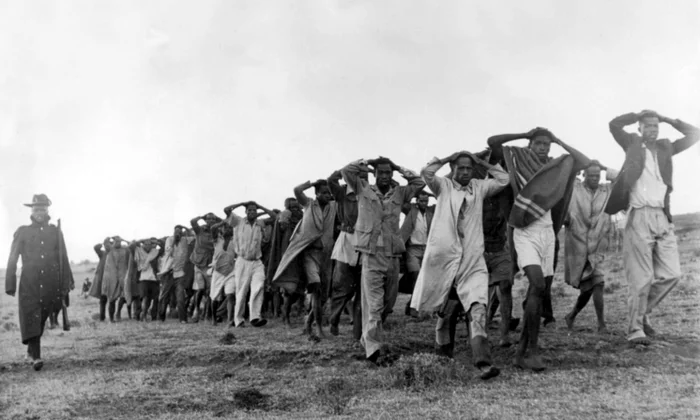
In the highlands of colonial Kenya, the early 1950s crackled with tension. The Gikuyu people, dispossessed of land and rights by decades of British rule, had taken to the forests to fight for what they called “land and freedom.” The colonial government responded with a state of emergency, troops, and a network of detention camps. For those who lived through it, the Emergency was a time of fear, betrayal, and violence. The Imperial War Museums’ Sound Archive holds over 33,000 recordings of interviews, many lasting several hours, that capture the voices of this conflict—from British officers to Kikuyu insurgents, from loyalist home guards to ordinary villagers. These primary sources reveal a war that was not a simple story of heroism and villainy, but a deeply tangled web of allegiances and aspirations.
What Happened?
The Mau Mau Uprising, also known as the Kenya Emergency, was a conflict that devastated Kenya from 1952 to 1956. The IWM blog describes it as “one of the most violent episodes in Britain’s retreat from Empire.” The uprising was led by insurgents belonging to the Gikuyu tribe, who fought against the British colonial administration and the Chief-led loyalists. The roots of the conflict lay in the violent colonial conquest of the 1890s and the subsequent decades of land seizures and racial injustice. Thousands of Kenyans took to the forests, from where they waged a guerrilla war against the colonial state.
Key events include:
- October 1952: The British colonial government declares a state of emergency in Kenya, beginning the Emergency.
- 1952–1956: The conflict spreads across the Central Province and the Rift Valley, with insurgents attacking settler farms and colonial outposts, and the colonial military and home guards carrying out reprisals.
- 1953–1954: The colonial administration intensifies its counterinsurgency, including the “pipeline” of detention camps and the forced relocation of the Kikuyu population.
- 1956: The capture of the Mau Mau leader Dedan Kimathi marks the effective end of the armed uprising.
According to the IWM blog, the conflict pitted “insurgents belonging to the Gikuyu tribe, fighting for ‘land and freedom’, against the British colonial administration and Chief-led loyalists.” The war left an estimated 100,000 Kenyans dead, though precise figures remain contested.
How It Was Seen at the Time
Contemporaries viewed the Emergency through a lens of fear and racial prejudice. The colonial administration and many white settlers portrayed Mau Mau as a savage, atavistic movement, a “return to barbarism” that threatened to wipe out civilization in Kenya. This narrative dominated British and settler newspapers. However, the primary sources that survive in archives like the IWM tell a more complex story. The IWM blog notes that “sources considering late-colonial wars still overwhelmingly originate from white administrators,” but there are items in the collections that allow for “intertwining narratives and a more perceptive understanding of such insurgencies.”
“In the bowels of the Imperial War Museum, or to be specific in a climate-controlled warehouse in Cambridgeshire, one can find a wealth of private papers. Among these are a few dozen typescript of storytelling, narrating thirteen months of conflict in colonial Kenya.”
This quote from the IWM blog highlights the existence of firsthand accounts that go beyond the official colonial record. The voices of the insurgents, the loyalists, and the ordinary Kikuyu villagers are captured in oral histories and personal narratives, offering a more nuanced view of the conflict.
Historical Snapshot
| Aspect | Detail |
|---|---|
| Date | 1952–1956 |
| Place | Kenya, primarily the Central Province and the Rift Valley |
| People | Gikuyu insurgents, British colonial administration, Chief-led loyalists, European settlers |
| What Happened | An armed uprising against colonial rule, marked by guerrilla warfare, detention camps, and mass violence |
| Why It Mattered | It was a major step toward Kenyan independence and a stark example of the violence of colonial counter-insurgency |
Eyewitness Accounts
The Imperial War Museums’ Sound Archive is a particularly rich source of eyewitness testimony. It contains over 33,000 recordings, mostly interviews that often last several hours, providing a detailed oral history of Britain’s involvement in conflict. These interviews include participants from all sides of the Mau Mau Emergency. The IWM blog notes that these recordings are “a granular, rich, and often emotional oral history” of the conflict.
Another key eyewitness account is the autobiography Mau Mau from Within: Autobiography and Analysis of Kenya’s Peasant Revolt by Don Barnett, which is available on the Internet Archive. Barnett, who was a participant and later an analyst, provides a firsthand account of the uprising from the perspective of the insurgents. The book offers a rare inside look at the motivations, struggles, and internal dynamics of the Mau Mau movement.
These personal accounts stand in contrast to the official colonial records, which often portrayed the insurgency as a purely criminal or irrational outburst. The oral histories and autobiographies reveal the political and social grievances that drove the uprising.
Different Perspectives
The Colonial Administration
The British colonial administration framed the conflict as a “Mau Mau” rebellion, a term they used to denote an atavistic and evil force. They emphasized the need for law and order and the protection of white settlers. Official reports and propaganda described the insurgents as “terrorists” and “gangsters,” and the administration implemented mass detention and forced rehabilitation programs.
Gikuyu Loyalists
The loyalists, often Kikuyu chiefs and their followers, sided with the colonial government. They saw the Mau Mau as a threat to their own positions and to the stability of the local order. Their perspectives are documented in the IWM’s collections, which include the stories of the “home guard” and other loyalist forces. The IWM blog mentions the “Chief-led loyalists” as the primary opponents of the insurgents.
Mau Mau Insurgents
The insurgents, who called themselves “the Land and Freedom Army,” fought for the return of their lands and an end to colonial oppression. Their voices are heard in the oral histories and in autobiographies like Barnett’s. They saw themselves as patriots, not terrorists, and their testimonies reveal the brutal conditions they faced in the forests and the deep personal sacrifices they made.
What People Knew at the Time
| What People Knew Then | What We Know Now |
|---|---|
| Most contemporaries relied on official colonial narratives that depicted Mau Mau as a criminal, atavistic movement. | Primary sources, including oral histories and personal papers, reveal the movement’s political and social roots in land grievances and colonial injustice. |
| Little was known about the internal dynamics of the insurgents or the extent of the colonial counter-insurgency. | Archives like the IWM Sound Archive and private papers give a fuller picture of the conflict, including the voices of the insurgents and the loyalists. |
| The conflict was often seen as a racial clash between Europeans and Africans. | Modern scholarship emphasizes the ethnic and class dimensions, as well as the role of the Kikuyu loyalists. |
Contemporary Terminology
Understanding the language of the era is crucial to interpreting primary sources. The term “Mau Mau” itself was a colonial invention, often used with a sense of horror and mystery. It was not a term the insurgents used; they called themselves the Kenya Land and Freedom Army. The word “Emergency” was the official euphemism for the war, used by the colonial administration to avoid the legal implications of a state of war. Other terms include:
- Home Guard: Kikuyu loyalists who were organized into a militia to fight the Mau Mau.
- Gikuyu: The largest ethnic group in Kenya, also spelled Kikuyu, who were the main participants in the uprising.
- Detention camps: Camps where the colonial administration held suspected insurgents or sympathizers, often without trial.
- Land and Freedom: The rallying cry of the insurgents, reflecting the central grievances of land dispossession and political rights.
These terms were not neutral; they carried strong connotations and shaped how the conflict was understood both in Kenya and abroad.
How Historians See It Today
Modern historians have moved beyond the colonial narrative of a criminal revolt. They now see the Mau Mau Uprising as a pivotal anti-colonial movement that drew on deep-seated grievances over land, labor, and political exclusion. The primary sources—oral histories, personal letters, and autobiographies—have been crucial in this reinterpretation. The IWM blog emphasizes that the archive contains “intertwining narratives” that allow for a more nuanced understanding. Historians today recognize the complexity of the conflict, including the role of Kikuyu loyalists, the brutality of the colonial counter-insurgency, and the international dimension of the fight against colonialism. The Emergency is now seen as a precursor to Kenyan independence, which came in 1963.
The primary sources from the IWM and other archives have transformed our understanding of the Mau Mau Uprising. They give voice to the silent, allowing us to hear the fears, hopes, and grievances of all those who lived through the Emergency. They remind us that history is not a single story but a multitude of voices, each with its own truth.
FAQ
What is the Mau Mau Uprising?
The Mau Mau Uprising, also known as the Kenya Emergency, was a conflict between 1952 and 1956 in colonial Kenya. It was an armed struggle led by the Gikuyu people against British colonial rule, fighting for land and freedom. The colonial administration declared a state of emergency and responded with a brutal counter-insurgency.
What primary sources exist for the Mau Mau Uprising?
Primary sources include oral histories recorded in the Imperial War Museum's Sound Archive, which has over 33,000 recordings, many of them interviews with participants. Other sources include private papers, such as the typescript of storytelling in the IWM collections, and autobiographies like 'Mau Mau from Within' by Don Barnett.
How did the British government view the Mau Mau at the time?
The British colonial administration portrayed the Mau Mau as a criminal, atavistic movement, a 'return to barbarism.' They used the term 'Mau Mau' to denote a secret, evil force, and depicted the insurgents as terrorists. This narrative was widespread in the media and official reports.
What was the role of the Gikuyu loyalists?
Gikuyu loyalists, often led by chiefs, sided with the colonial administration. They formed the Home Guard and fought against the insurgents. Their perspective is recorded in the primary sources, showing a complex conflict where not all Gikuyu supported the uprising.


Leave a Reply