
Short Answer
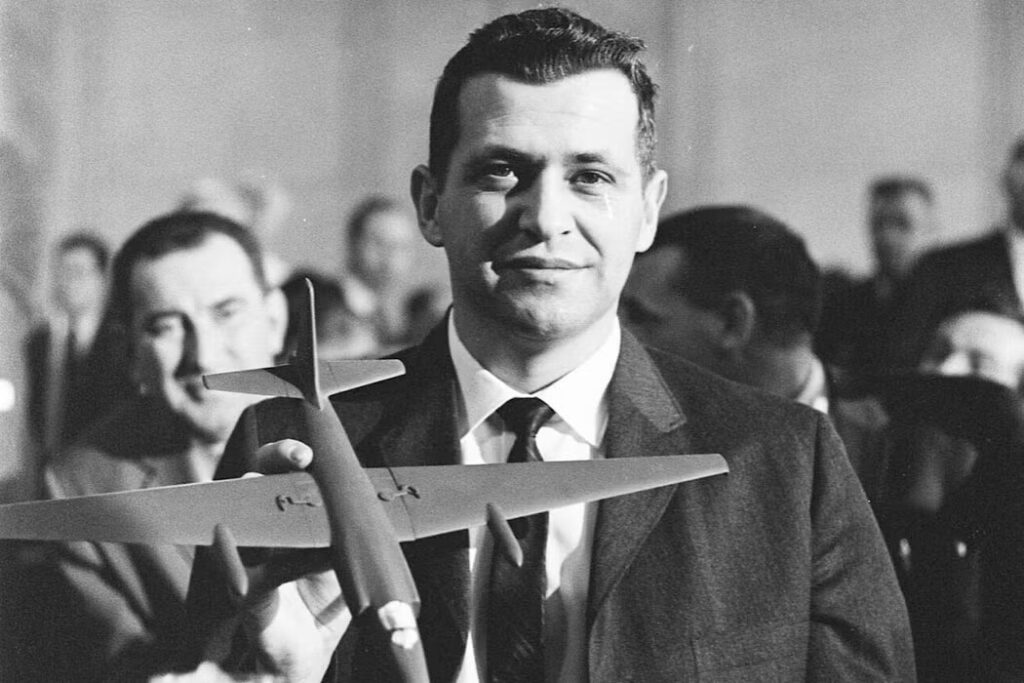
On the first day of May 1960, as the Soviet Union celebrated May Day with military parades and displays of missile power, an American U-2 spy plane was shot down deep inside Soviet territory. The pilot, Francis Gary Powers, was captured alive. Within days, the United States government first denied the mission, then was forced to admit it had been conducting espionage flights over the USSR. The incident shattered the fragile hopes for a Paris summit, escalated Cold War rhetoric, and exposed the secret intelligence war that had been raging for years. To contemporaries, it was a shocking, almost unbelievable crisis—a spy plane brought down on the eve of a major diplomatic meeting, with a live American pilot in Soviet hands. The world watched as the superpowers traded accusations, and ordinary people on both sides felt a new chill of danger.
What Happened?
According to the official history of the U.S. Department of State, on May 1, 1960, a U.S. U-2 reconnaissance aircraft piloted by Francis Gary Powers was shot down while flying through Soviet airspace. The plane had taken off from a base in Adana, Turkey, on a mission to photograph Soviet missile installations and other military sites. The incident came at a particularly delicate moment: a Paris summit was scheduled for later in the month, where leaders of the United States, the Soviet Union, Britain, and France were to discuss disarmament, the status of Berlin, and the relaxation of tensions.
The Soviet Union, under Premier Nikita Khrushchev, announced on May 5 that a foreign aircraft had been shot down. The U.S. government initially responded by claiming that a NASA weather research plane was missing. In a note dated May 6, the U.S. Embassy in Moscow stated:
“As already announced on May 3, a United States National Aeronautical Space Agency unarmed weather research plane based at Adana, Turkey, and piloted by a civilian American has been missing since May 1.”
The cover story was soon exposed. The Soviet Union produced the wreckage of the U-2, and more importantly, the captured pilot, Francis Gary Powers, who confessed to his espionage mission. On May 7, Khrushchev announced that the pilot had been captured and that the plane was a spy aircraft. The U.S. was forced to admit the truth. President Eisenhower took responsibility, acknowledging that the overflights were necessary for national security. The Paris summit, which opened on May 16, collapsed on its first day when Khrushchev stormed out after demanding an apology and a halt to U.S. spy flights. Eisenhower refused, and the summit ended without any agreements.
How It Was Seen at the Time
At the time, the U-2 incident was seen as a catastrophic diplomatic failure and a profound embarrassment for the United States. The initial official cover-up, followed by the admission of espionage, left the American public confused and the Soviet Union triumphant. The U.S. government tried to frame the incident as a necessary act of self-defense against a hostile power. The Soviet Union, on the other hand, used it as proof of American aggression and hypocrisy. The incident was widely covered in newspapers, with headlines such as “U.S. Admits Spy Flight” and “Khrushchev Demands Apology.” The mood was one of heightened anxiety: many feared that the incident could lead to a direct military confrontation. The U.S. State Department’s own historical account notes that the fallout resulted in the cancellation of the Paris Summit, which was supposed to discuss the ongoing situation in divided Germany and arms control.
Historical Snapshot
| Aspect | Detail |
|---|---|
| Date | May 1, 1960 |
| Place | Soviet airspace, near Sverdlovsk |
| People | Francis Gary Powers (pilot), Nikita Khrushchev, Dwight D. Eisenhower |
| What Happened | A U-2 spy plane was shot down; pilot captured; U.S. initially denied, then admitted espionage |
| Why It Mattered | Collapsed the Paris Summit, escalated Cold War tensions, exposed U.S. intelligence operations |
Contemporary Newspaper Coverage
Newspapers around the world reported the incident in breathless tones. The initial U.S. press, following the official line, ran stories about a missing NASA weather plane. The New York Times of May 3, 1960, reported that the plane was a “weather research aircraft” and that its loss was being investigated. But within days, the coverage changed dramatically. After Khrushchev announced the capture of Powers, the Washington Post ran the headline “Soviet Says It Holds U.S. Pilot” and detailed the U.S. government’s admission. The Times of London described the incident as a “grave setback” to the East-West talks. The Soviet press, led by Pravda, denounced the U.S. as a “provocateur” and printed full transcripts of Khrushchev’s speeches. The U.S. State Department’s official note, published in the Department of State Bulletin, was widely reprinted. The tone of coverage was alarmist and accusatory, with each side using the incident to score propaganda points.
Official Reports
The key official document is the United States Note to the U.S.S.R., dated May 6, 1960, which is reproduced in the Department of State Bulletin of May 23, 1960. In this note, the U.S. government acknowledges the statement of Khrushchev that a foreign aircraft crossed the border on May 1 and was shot down. The note then repeats the false NASA cover story, claiming the plane was an unarmed weather research plane. The note is a masterclass in diplomatic obfuscation. However, after the Soviet Union produced the wreckage and the pilot, the U.S. government issued a revised statement, admitting that the plane was on an intelligence mission. This later statement, released on May 7, is not included in the Avalon Project’s collection, but it is referenced in the State Department’s history. The official reports show a deliberate attempt to mislead, followed by a reluctant admission.
Different Perspectives
The American Perspective
The U.S. government, led by President Eisenhower, viewed the U-2 flights as essential for national security. The State Department’s historical account notes that “as early as 1955, officials in both Moscow and Washington had grown concerned about the relative nuclear capabilities of the Soviet Union and the United States.” Eisenhower had proposed an “open skies” plan at the Geneva conference in 1955, but the Soviet Union rejected it. The U.S. thus relied on aerial reconnaissance. After the incident, Eisenhower took personal responsibility, stating that the flights were necessary to prevent a surprise attack. The American public was divided: some saw it as a justified measure, while others criticized the administration for lying.
The Soviet Perspective
The Soviet Union, under Khrushchev, saw the U-2 flight as a violation of its sovereignty and an act of provocation. Khrushchev’s speech before the Supreme Soviet on May 5, as noted in the U.S. note, described the flight as a “foreign aircraft crossed the border of the Soviet Union” and that it was shot down “on orders of the Soviet Government.” The Soviet press portrayed the incident as a victory against imperialist spying. The capture of Powers was used as propaganda. The Soviet perspective was that the U.S. had been caught red-handed, and they demanded an apology and a halt to such flights. The Soviet Union’s stance led to the collapse of the Paris Summit, as Khrushchev refused to participate unless Eisenhower apologized.
Aftermath
The immediate aftermath was the cancellation of the Paris Summit. On the first day of the summit, May 16, 1960, Khrushchev delivered a condemnation of U.S. spy activities and walked out. The summit was never reconvened. The incident also led to a hardening of Cold War positions. Powers was put on trial in Moscow in August 1960, convicted of espionage, and sentenced to 10 years in prison. He served about two years before being exchanged in 1962 for Soviet spy Rudolf Abel. The U-2 incident also had a domestic political impact in the United States; it hurt Eisenhower’s prestige and contributed to the notion of a “missile gap” that the Democrats exploited in the 1960 election. The incident also led to a brief suspension of U-2 overflights, but they resumed later with the use of other aircraft.
How Historians See It Today
Modern historians view the U-2 incident as a turning point in the Cold War. They agree that the overflights were a critical intelligence-gathering operation that provided vital data on Soviet missile capabilities. The incident itself was a diplomatic disaster, but it also revealed the limits of secrecy and the dangers of espionage. Historians have also noted that the U.S. government’s initial cover-up was a mistake, as it eroded trust and gave the Soviet Union a propaganda victory. The incident is often seen as a forerunner of later spy crises, such as the Berlin Wall and the Cuban Missile Crisis. The State Department’s official history now acknowledges that the U-2 incident was a major setback to Eisenhower’s attempts to ease Cold War tensions. The primary sources, including the official notes and the contemporary press, show how the event was understood at the time—a spy plane shot down, a cover-up exposed, and a summit collapsed—and how the world was shocked by the revelation of the secret intelligence war.
In conclusion, the U-2 incident of May 1, 1960, was a dramatic episode that exposed the raw nerves of the Cold War. Contemporary reports reveal the initial confusion and the subsequent admission of espionage, the diplomatic fury of the Soviet Union, and the deep anxiety of the American public. The incident not only destroyed the Paris Summit but also set the stage for a more dangerous phase of superpower rivalry. The primary sources—the official notes, the speeches, and the press coverage—capture the moment when the world learned that the two superpowers were willing to risk war to gather intelligence, and that the peace was more fragile than anyone had imagined.
FAQ
What was the U-2 incident?
On May 1, 1960, an American U-2 spy plane piloted by Francis Gary Powers was shot down over the Soviet Union. The Soviet government captured Powers and the plane's wreckage, forcing the U.S. to admit to espionage, which led to the collapse of the Paris Summit.
Why did the U.S. initially claim it was a weather plane?
The U.S. government first claimed the plane was a NASA weather research aircraft to avoid acknowledging its espionage mission. The cover story collapsed when the Soviet Union produced the captured pilot and the plane's parts.
What happened to Francis Gary Powers after the incident?
Powers was tried and convicted of espionage in August 1960 and sentenced to 10 years in prison. He was exchanged for Soviet spy Rudolf Abel in February 1962.











Leave a Reply