
Short Answer
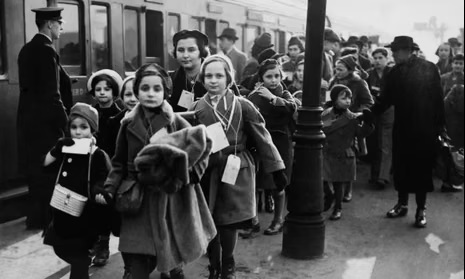
In the weeks and months following the November Pogrom of 1938, a remarkable rescue effort began on the European continent. Between December 1938 and the outbreak of war in September 1939, some 10,000 unaccompanied Jewish children were sent from Germany, Austria, and Czechoslovakia to Great Britain on the Kindertransport. These children, many clutching small suitcases and farewell notes, wrote letters home and kept diaries that survive as some of the most poignant records of the era. Their words capture the confusion, fear, and hope of children caught between worlds—children who wrote in German, then gradually in English, who switched between Sütterlin and Latin script, and who struggled to express what it meant to become refugees in a country they had never seen. This article draws on those contemporary letters, diaries, and eyewitness accounts to reconstruct what these children knew, feared, and expected as they crossed borders into an uncertain future.
What Happened?
The Kindertransport was a rescue operation that took place from December 1938 to the outbreak of World War II in September 1939. It was organized by British Jewish and Quaker groups, who secured the British government’s permission to admit unaccompanied children under the age of 17. The first Kindertransport left Berlin on December 1, 1938, and arrived in the Netherlands before continuing to Britain. Among the first group was Marianne Mosevius, a 15-year-old Berlin girl whose father worked as head of the migrant welfare and passport office for the Jewish congregation of Berlin. Her family believed his position gave her the chance to be saved.
Over the following months, children traveled by train across Germany and the Netherlands, then by ship to Harwich, England. The Jewish Central Information Office (JCIO) in Amsterdam collected 356 reports in the weeks and months after the November Pogrom, including transcripts of letters from children in transit. These letters were often written on the train or during stops in Holland, and they were sent to parents who remained behind. The children wrote of their journeys, their new foster homes, their first experiences of English food and language, and their fears for the families they had left.
The rescue was not universal. Many parents could not afford the fees, and many children were too old or too ill to qualify. The Kindertransport saved thousands, but it also separated families permanently. Most parents who stayed in Germany and Austria would later be deported to ghettos and camps, and most never saw their children again.
How It Was Seen at the Time
Contemporaries understood the Kindertransport as a humanitarian rescue, but also as a painful rupture. The children themselves often expressed gratitude, guilt, and anxiety. In the diaries and letters, they wrote of wanting to be “good” and “brave,” and of not wanting to worry their parents. A recurring theme is the desire to assimilate, to learn English quickly, and to fit in. As one later wrote, “I so wanted to be English”—a sentiment that appears in diaries and memoirs from the era.
“I am well, I am safe, I am learning English. Do not worry.”
Such reassurances, repeated in many letters, reveal both the children’s desire to comfort their parents and the reality of their separation. The letters were often censored or self-censored, with children avoiding descriptions of hardship or loneliness. The prevailing mood among the refugees was one of uncertainty: they did not know if they would ever return home, and they did not know what had happened to their families.
Letters & Diaries
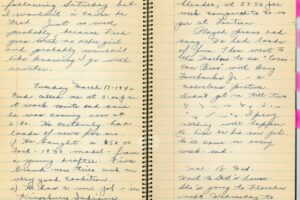
The personal writings of Kindertransport children are the most direct source of their experiences. These documents are rare because children often destroyed them later, or because they were lost in the chaos of war. But those that survive offer an intimate view of daily life in exile.
One of the most remarkable collections is the letters of Marianne Mosevius, who left Berlin on December 1, 1938. Her letters, preserved by her family, describe her journey and her early days in England. She wrote in German, but gradually incorporated English phrases. Her daughter noted that her mother never spoke much about her experiences, but the letters show a girl who was determined to adapt, who wrote about her host family, her school, and her hopes for the future.
Another collection is the letters written by children while in transit, collected by the JCIO in Amsterdam. These letters were written on the trains and in the holding centers in Holland. They describe the journey, the crossing, and the arrival. One letter reads:
“We are on the train now, and it is dark. We are going to Holland, and then to England. We are all together and we are not afraid.”
The diaries of six other Kindertransport refugees, studied in 2026 by Monja Stahlberger, show a translingual negotiation between German and English. The children switched between languages, borrowed words, and gradually shifted their syntax. They also switched between Sütterlin and Latin script, reflecting their attempt to adapt to their new environment while preserving their German identity.
The diary-memoir narratives of Edith Bown-Jacobowitz and Elisabeth Orsten, studied by scholars, show how the children later reconstructed their childhood experiences. They wrote about the day they left, the trains, the sea crossing, and the arrival in England. They wrote about the foster homes, the schools, and the feeling of being different. Their testimonies show that the children were not passive victims, but active agents in their own survival.
Eyewitness Accounts
Eyewitness accounts from the time come from the children themselves, from the volunteers who accompanied them, and from the staff of the JCIO. The JCIO reports, collected in the months after the November Pogrom, contain transcripts of letters from children in transit. These reports were gathered by Herr Flörsheim, the JCIO director in Amsterdam, and they were used to inform the British public about the conditions of the children.
One of the most striking eyewitness accounts is from a child who wrote to her parents:
“Dear Mummy and Daddy, I am writing this on the train. It is dark outside. We are in Holland now. The Dutch people gave us milk and bread. I am a little hungry, but I am fine. I will write again when we are in England. Please do not worry.”
These accounts are precious because they capture the children’s voices at the moment of separation. They are not filtered by memory or by adult interpretation. They show the children’s resilience and their anxiety. They also show the kindness of strangers: the Dutch volunteers who met the trains, the British families who took the children in, and the teachers who taught them English.
What People Knew at the Time
| What People Knew Then | What We Know Now |
|---|---|
| Children were being sent to Britain for their safety, and the operation was a success. | The Kindertransport saved thousands, but it also separated families permanently; most parents perished in the Holocaust. |
| The children were expected to assimilate and become “English” as quickly as possible. | Many children experienced lifelong trauma from the separation and the loss of their families and language. |
| Letters from children were often optimistic and reassuring. | Letters were often censored or self-censored, hiding hardship to protect parents. |
Different Perspectives
The Children
The children’s perspective is best captured in their letters and diaries. They were grateful but also confused. They missed their parents, but they were also excited about the adventure of the train journey and the sea crossing. They wanted to learn English, but they also struggled to preserve their German identity. They wrote about the food, the weather, and the kindness of their hosts.
The Parents
Parents wrote letters to their children, but these letters are rarely preserved. From the children’s replies, we know that parents urged their children to be good, to learn English, and to be grateful. They also sent news of the family and of friends, but they often withheld the worst news. They did not want to worry the children.
The British Public
The British public was encouraged to see the Kindertransport as a humanitarian act. Newspapers and the JCIO reports emphasized the innocence of the children and the success of the rescue. The public responded with donations and by opening their homes to the children. But there was also ambivalence: some voices worried about the “Jewish refugees” and the impact on British society.
What People Feared
The children feared that they would never see their parents again. This fear was often unspoken, but it appears in their letters and diaries. They also feared that they would not be able to learn English, that they would be sent away, or that they would be a burden to their foster families. The parents feared that their children would be harmed, or that they would not be able to send for them. The British public feared the influx of refugees, but this fear was mitigated by the sympathy for the children.
There were also rumors that the children would be sent to the camps, or that the transport would be canceled. These fears were not unfounded, but they did not materialize for most of the children. The children were also afraid of being identified as “refugees” and of being treated differently.
What People Expected Would Happen Next
The children and their parents expected that the war would end quickly and that the family would be reunited. They did not expect the Holocaust. They wrote letters with hope, and they kept their suitcases packed. They expected to return to Germany and Austria after the war. This expectation was wrong. The war lasted for six years, and most of the parents were murdered. The children were to become permanent exiles, and they had to build new lives in Britain, in the United States, and in Israel.
Historical Snapshot
| Aspect | Detail |
|---|---|
| Date | December 1938 – September 1939 |
| Place | Germany, Austria, Czechoslovakia, Netherlands, Great Britain |
| People | Approximately 10,000 Jewish refugee children |
| What Happened | Unaccompanied children were sent to Britain by train and ship |
| Why It Mattered | It saved thousands of lives, but it also separated families and created a lifelong identity and belonging. |
Numbers at the Time
| Statistic | Value | Source |
|---|---|---|
| First Kindertransport left Berlin | December 1, 1938 | Marianne Mosevius family records |
| Number of children rescued | ~10,000 | Established historical consensus |
| JCIO reports collected | 356 | Wiener Library |
| Age of the children | Under 17 | Kindertransport regulations |
Timeline
- November 9–10, 1938: The November Pogrom (Kristallnacht) in Germany and Austria.
- November 15, 1938: British government agrees to admit unaccompanied children.
- December 1, 1938: First Kindertransport leaves Berlin.
- December 1938 – September 1939: Approximately 10,000 children are transported to Britain.
- September 1, 1939: Outbreak of World War II; the Kindertransport is halted.
Key Documents
- Letters from Kindertransport children in transit (December 1938): Collected by the JCIO in Amsterdam, these letters describe the journey and the children’s state of mind.
- Marianne Mosevius’s letters (December 1938–1939): A child’s letters to her mother, preserved by her family, showing the process of adaptation.
- Diaries of six Kindertransport refugees (1938–1940): Analyzed by Monja Stahlberger, these diaries show the translingual negotiation of identity.
Aftermath
After the war, the children were left in Britain. Many of them learned that their parents had been murdered. They had to decide whether to remain in Britain, to emigrate to the United States, to Palestine, or to return to Germany. Most stayed in Britain. They were given British citizenship, and they became adults, married, and had children. But the trauma of separation remained. Many of them never spoke of their experiences until the 1980s, when the Kindertransport reunions began. The letters and diaries were then rediscovered and donated to archives.
How Historians See It Today
At the time, the Kindertransport was celebrated as a rescue and a humanitarian success. Historians today see it more critically. They emphasize that the rescue was limited, that the children were not always well-treated, and that the separation had lifelong psychological consequences. They also emphasize the children’s agency, their resilience, and their complex identity. The study of their letters and diaries has become a way to understand the refugee experience, and it has been used to inform debates about child refugees today.
Common Misconceptions
Related Primary Sources
- The Wiener Library for the Study of the Holocaust and Genocide, London: Holds the JCIO reports and the letters of the children in transit.
- Leo Baeck Institute, New York: Holds the Marianne Mosevius family papers.
- EHRI (European Holocaust Research Infrastructure): Online portal to the Kindertransport documents.
FAQ
What was the Kindertransport?
The Kindertransport was a rescue effort that brought approximately 10,000 unaccompanied Jewish children from Germany, Austria, and Czechoslovakia to Great Britain between December 1938 and September 1939. The children traveled by train and ship, and they were placed with foster families, in hostels, and in schools.
Why did children write letters and diaries?
Children wrote letters and diaries to stay in touch with their parents, to record their experiences, and to make sense of their new lives. These writings often served as a way to maintain a connection to their families and their past, and they are now valuable primary sources for historians.
What happened to the children's parents?
Most of the parents who remained in Germany and Austria were deported to ghettos and concentration camps and were murdered. Very few families were reunited after the war. The children often grew up as orphans in Britain.
How did the children feel about becoming English?
Many children wanted to become English as quickly as possible, but they also felt a deep sense of loss for their German language and culture. Their diaries show a complex negotiation between assimilation and identity, as they switched between German and English, and between the Sütterlin and Latin scripts.



Leave a Reply