
Short Answer
In the winter of 1917, Petrograd was a city trembling on the edge of history. Workers filled the streets, soldiers mutinied, and the Tsar’s government teetered. For those who lived through it, the revolution was not a single event but a cascade of chaotic days, each bringing new rumors, new hopes, and new fears. Contemporary sources—diaries, letters, newspapers, and photographs—capture this uncertainty with an immediacy that later histories cannot. As the digital project Project 1917 demonstrated, readers today can still eavesdrop on those intimate conversations, trenchant commentary, and ferocious debates that marked the year (Fontanka, 2026). This article draws on those contemporary records to show what it was like to be alive at that moment, when the Tsar fell, the Provisional Government struggled, and the Bolsheviks seized power.
What Happened?
The year 1917 saw two revolutions in Russia. In February (March, New Style), widespread strikes and food riots in Petrograd led to the abdication of Emperor Nicholas II and the formation of a Provisional Government. In October (November, New Style), the Bolsheviks, led by Vladimir Lenin, overthrew that government in a nearly bloodless coup. The key events, as recorded in contemporary accounts, unfolded as follows:
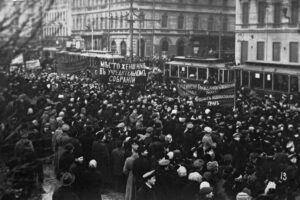
- February 23–27 (March 8–12): International Women’s Day protests in Petrograd escalate into a general strike. Troops refuse to fire on demonstrators.
- March 2 (March 15): Nicholas II abdicates, ending the 300-year Romanov dynasty. A Provisional Government is formed under Prince Georgy Lvov.
- April 16 (April 29): Lenin returns from exile in a sealed train and issues the April Theses, demanding “All Power to the Soviets.”
- July 3–7 (July 16–20): The “July Days” see spontaneous armed demonstrations against the Provisional Government, brutally suppressed.
- September 9–14 (September 22–27): General Lavr Kornilov’s attempted military coup fails, discrediting the Provisional Government.
- November 7 (October 25, Old style): Bolshevik forces storm the Winter Palace, arrest the Provisional Government, and seize power. The Second All-Russian Congress of Soviets approves the transfer of power.
How It Was Seen at the Time
Contemporaries did not understand the revolution as a predetermined march of history. They saw it as a chaotic, unpredictable struggle. The British and American witnesses, as Harvey Pitcher writes, “could see more of the game” because they were outsiders, yet even they were stunned. The diary entries and letters of the time are filled with astonishment and fear. The Project 1917 feed, which delivers posts from those who lived through the year, shows that readers could “eavesdrop on intimate conversations, trenchant commentary and ferocious debates on all sides of the revolutionary struggle” (Fontanka). One recurring theme was the suddenness of the Tsar’s fall; few expected it to happen so quickly. In March, the Petrograd 1917 book notes, the city was filled with “drama and terror,” as ordinary people struggled to understand what was unfolding (Pinfold).
Eyewitness Accounts
The most vivid records come from the eyewitnesses themselves. The book Petrograd, 1917: Witnesses to the Russian Revolution assembles extracts from letters, journals, diaries, and memoirs of Russians and foreign nationals who were present. These accounts are supplemented by photographs of the Romanovs and the violence in the streets, as well as propaganda posters and postcards. Harvey Pitcher’s Witnesses of the Russian Revolution collects the writings of British and American witnesses—diplomats, newspaper correspondents, military personnel, and even an English governess. Among them were the American radical John Reed, author of Ten Days That Shook the World, and the children’s author Arthur Ransome, who married Trotsky’s secretary. Their accounts, as Pitcher notes, “have been unread since 1917,” yet they offer a unique, close-up view of the revolution (Penguin).
“The reaction was remarkable: posts were ‘liked’ and ‘retweeted’ by thousands, many of them prompting real-time responses, as if readers hoped to strike up a direct conversation with figures from the past.” — Fontanka on Project 1917
Contemporary Newspaper Coverage
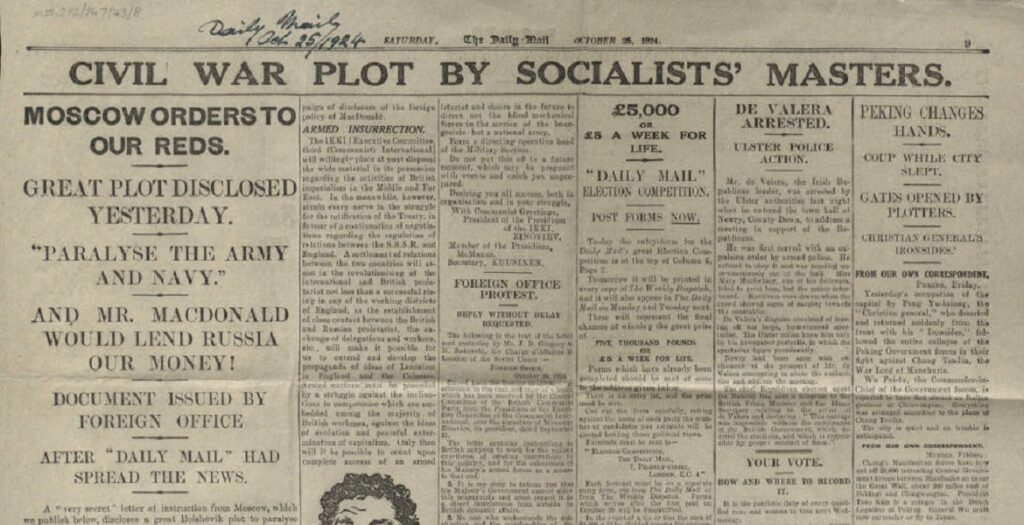
Newspapers played a critical role in the revolution, both as recorders and as actors. The Presidential Library’s 1917 collection includes selected editions and newspaper clippings, showing how the press reported the events as they happened. In February, the liberal press hailed the fall of the Tsar; by October, the Bolshevik papers like Pravda and Izvestia were demanding all power to the Soviets. Foreign correspondents sent dispatches to London, Paris, and New York, often with a lag of days or weeks. The tone of the coverage varied: the British press initially welcomed the revolution as a blow to autocracy, but later grew alarmed at the Bolsheviks’ radicalism. As the Petrograd 1917 book shows, the newspapers also printed propaganda posters and postcards, blending news with visual propaganda.
Letters & Diaries
The diaries and letters of ordinary Russians and foreigners are the most intimate records. The Project 1917 initiative, led by writer Mikhail Zygar, presented these personal documents as a daily feed on social media, allowing modern readers to follow the events in real time. The letters and diaries of the revolutionaries themselves, like those of Lenin and Trotsky, are well known, but the accounts of ordinary people are equally revealing. For example, the diary of a Petrograd housewife might record the queues for bread, the rumors of German spies, or the sound of gunfire. The letters from soldiers at the front describe their exhaustion and their growing support for the Bolsheviks’ promise of peace. These personal documents show the human cost of the revolution, which official histories often overlook.
Different Perspectives
British and American Witnesses
Foreign witnesses saw the revolution from a unique vantage point. As Harvey Pitcher writes, “As outsiders, they could see more of the game.” They were not directly involved in the political struggle, but they were close enough to observe the moods of the crowd, the soldiers, and the politicians. Their accounts often emphasize the chaos and the unpredictability of the events. For instance, Arthur Ransome, who later wrote Swallows and Amazons, was in Petrograd during the revolution and reported on the Bolsheviks for the British press. He later married Trotsky’s secretary, giving him a unique insider-outsider perspective.
Russian Eyewitnesses
Russian witnesses, from aristocrats to workers, had different fears and hopes. The letters and diaries of the Russian elite often express the loss of a world they knew, while those of workers and soldiers show a sense of liberation. The Presidential Library’s collection includes records from state institutions and organizations, which give a more official view. But the personal documents show the deep divisions in Russian society, which would later lead to civil war.
What People Feared
Fear was a constant companion in 1917. The Petrograd 1917 book describes “the drama and terror of those days” (Pinfold). Many feared that the revolution would lead to a full-scale civil war or foreign intervention. The German advance threatened Petrograd in the spring, and the Provisional Government’s decision to continue the war was deeply unpopular. The Bolsheviks were seen by many as German agents. In the summer, the streets were filled with rumors of counter-revolutionary plots and of the Tsar’s supporters planning a restoration. The crowds feared food shortages, which were real: bread lines were long, and the price of food skyrocketed. The fear of anarchy was palpable. The Project 1917 feed shows that people wrote to each other about their fears of the future, of the possibility of a military dictatorship, or of a return to the old regime. Some feared the revolution would be crushed, others feared it would go too far.
How Historians See It Today
Modern historians interpret the revolution differently from contemporaries. At the time, many observers saw it as a spontaneous, chaotic event, with the Bolsheviks as a minority that seized power by accident. But after the fall of the Soviet Union, historians have emphasized the deep social and economic factors that led to the revolution, including the strains of World War I, the land hunger of the peasants, and the radicalization of the workers. The contemporary sources, however, show the contingency of the events—how the revolution could have taken different paths. The primary sources also reveal the importance of rumors and misinformation. For example, the “Kornilov affair” was widely believed to be a coup attempt, but historians now see it as a complex event with multiple interpretations. The Presidential Library collection, which includes archival materials, allows historians to compare the official records with the personal accounts, revealing the discrepancies and the gaps in the record.
Conclusion
The Russian Revolution of 1917 was not a single event but a series of experiences, each captured in the letters, diaries, and newspapers of the time. These contemporary sources show us the hopes, fears, and expectations of the people who lived through it. They remind us that history is not a neat narrative, but a chaotic, human story. By reading the words of the witnesses, we can begin to understand what it was like to be alive in that extraordinary year, and how the events of 1917 were seen by those who had no idea what would come next.
FAQ
What are the best primary sources for the Russian Revolution?
The best primary sources include the diary and letters of witnesses, such as those collected in the book 'Petrograd, 1917: Witnesses to the Russian Revolution' and Harvey Pitcher's 'Witnesses of the Russian Revolution'. Additionally, the Project 1917 digital archive presents these sources in a daily feed, and the Presidential Library's collection includes official records, newspapers, and photographs.
How reliable are the eyewitness accounts of the revolution?
Eyewitness accounts are valuable but must be used critically. They reflect the personal biases and limited knowledge of the observers. For example, British and American witnesses often had a 'outsider' perspective but could miss the nuances of Russian politics. Modern historians compare multiple sources to reconstruct a more accurate picture.
What did the newspapers report about the revolution?
Newspapers in 1917 were deeply partisan. The liberal press initially celebrated the fall of the Tsar, while the Bolshevik papers like 'Pravda' and 'Izvestia' called for Soviet power. Foreign newspapers reported the events with a mix of curiosity and alarm, and many of their articles are preserved in the Presidential Library's collection.




Leave a Reply