
Short Answer
In March 1917, the world woke to a stunning piece of news: the Russian Empire, the last great autocracy of Europe, had overthrown its Tsar. In London, New York, and Paris, editors rushed to print. The United Press correspondent Ed L. Keen, writing from London on March 16, 1917, declared: “Russia has stepped from archaic autocracy to ultra-modern democracy in three short days.” The cost in blood, he added, “has been almost insignificant considering the immensity of the transaction.” For readers across the globe, the Russian Revolution seemed not a violent upheaval but a smooth, almost inevitable leap into the democratic camp of the Allies. They did not know—could not know—that this was only the first act of a drama that would end with the Bolsheviks in power and Russia out of the war. This article reconstructs how the world learned of the fall of the Tsar, through the newspapers of 1917.
What Happened?
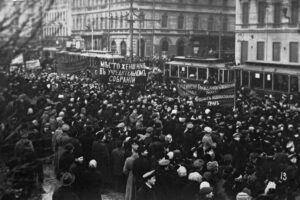
The events that became known as the February Revolution (by the Julian calendar then in use in Russia) began in early March 1917 in the Gregorian calendar. Food shortages, strikes, and war-weariness ignited mass protests in Petrograd (now St. Petersburg). By March 12, the army had sided with the demonstrators, and the Tsar, Nicholas II, was forced to abdicate on March 15, 1917. A provisional government, led by Prince Georgy Lvov, was established. The United Press report of March 16, 1917, described the transition as remarkably smooth: “The cost in blood has been almost insignificant considering the immensity of the transaction.” The report emphasized the joy of the Allied nations, who saw Russia’s new democracy as a strengthening of the war effort against Germany.
Key events as reported in contemporary sources:
- March 8 (February 23, Old Style): International Women’s Day demonstrations in Petrograd, which grew into general strikes.
- March 11-12 (February 26-27, Old Style): Troops mutiny; the Duma refuses to dissolve.
- March 15 (March 2, Old Style): Tsar Nicholas II abdicates, ending three centuries of Romanov rule.
- March 16: The world learns of the abdication; UPI reports from London.
How It Was Seen at the Time
Contemporary observers interpreted the revolution as a triumph of democracy over autocracy. The UPI report of March 16, 1917, captured this mood: “The joy of the allied nations was unbounded today. Russia’s spectacular casting off of the Old Man of the Sea, who undeniably had gravely imperiled the war’s success, was hailed as an epochal event.” The report argued that an effective alliance between autocratic Russia and democratic France and England was impossible, but now “that alliance will now be cemented by the strength of the complete democracy of all peoples concerned.” The prevailing mood was one of relief and hope: the revolution was seen as a guarantee that Russia would fight the war more effectively and more ethically.
“Russia has stepped from archaic autocracy to ultra-modern democracy in three short days. The cost in blood has been almost insignificant considering the immensity of the transaction.” — United Press, March 16, 1917
Historical Snapshot
| Aspect | Detail |
|---|---|
| Date | February Revolution (Julian) / March Revolution (Gregorian) 1917 |
| Place | Petrograd, Russia |
| People | Tsar Nicholas II, Provisional Government, Russian workers and soldiers, Allied diplomats |
| What Happened | Mass strikes and mutinies forced Tsar Nicholas II to abdicate; a provisional government was formed. |
| Why It Mattered | Russia became a democracy, raising Allied hopes for the war effort, but it also set the stage for the October Revolution. |
Contemporary Newspaper Coverage
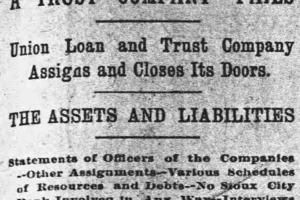
The world’s press covered the revolution with a mix of amazement and optimism. The UPI article from March 16, 1917, is a prime example. The headline “Russia steps from autocracy to democracy” was typical of the tone. The article emphasized the speed and the low cost of the revolution. Other newspapers, as documented by the Harvard University library’s collection of “1917 Russian Revolutions in Newspaper Reports,” included reports from different countries in different languages, all sorted by month and date. The Bayerische Staatsbibliothek (Bavarian State Library) has also created a digital compilation of newspaper articles from the February and October Revolutions, including the Russian-language newspaper Novoe vremya from Petrograd. These sources show that the press was not just reporting events but also interpreting them for a global audience.
“The joy of the allied nations was unbounded today. Russia’s spectacular casting off of the Old Man of the Sea, who undeniably had gravely imperiled the war’s success, was hailed as an epochal event.” — United Press, March 16, 1917
What People Knew at the Time
| What People Knew Then | What We Know Now |
|---|---|
| Russia had become a democracy and would continue fighting in World War I as a reliable ally. | Russia would eventually leave the war after the October Revolution in November 1917, and the democratic government would be overthrown by the Bolsheviks. |
| The revolution was quick and relatively bloodless. | While the February Revolution was less bloody than feared, the subsequent period brought civil war and immense suffering. |
| Russia’s new government was stable and legitimate. | The Provisional Government was weak, sharing power with the Petrograd Soviet, and was unable to address the people’s demands. |
What People Expected Would Happen Next
As the City Research Online article by J. Rodgers (2020) notes, the British newspaper coverage of the February Revolution was “unduly optimistic” on the question of Russia’s continuing as an ally in World War I. The impression conveyed to readers was that Russia would fight on, and that the revolution would strengthen the Allied cause. The article argues that “the desire to believe that Russia would fight on was so strong that it eclipsed other interpretations of events, and meant that readers—including policy makers—were ill prepared for what would eventually come to pass.” Contemporary observers expected a stable, democratic Russia that would continue the war. They did not anticipate the Bolshevik seizure of power or the Treaty of Brest-Litovsk in 1918.
How Historians See It Today
Modern historians, building on primary sources and later evidence, have a more nuanced view. The City Research Online article argues that the British press coverage was influenced by political factors and that correspondents, despite the difficulties of reporting, were able to convey vivid impressions of a city in the throes of massive political change. However, the overall impression was one of optimism that was not borne out. Historians now recognize that the February Revolution was not a smooth transition to democracy but a complex event with deep social and political tensions that would lead to the October Revolution and the rise of the Bolsheviks. The newspapers of 1917, in their desire for good news, missed the signs of fragility.
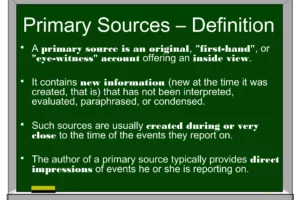
The primary sources—the newspaper reports, the telegrams, the letters—are invaluable for understanding the moment of the fall of the Tsar. They show us a world that was hopeful, but also blind to the cracks that would soon widen. The revolution that seemed a “leap over three centuries of despotism” was in fact the beginning of a much longer and more tragic struggle.
FAQ
How did newspapers in 1917 report the fall of the Tsar?
Newspapers reported the fall of the Tsar as a swift and democratic revolution, with many expressing joy and hope that Russia would become a strong ally in World War I. The UPI report of March 16, 1917 described it as a step from 'autocracy to democracy' in three days.
What did contemporaries expect to happen after the February Revolution?
Most contemporaries expected Russia to become a stable democracy and to continue fighting in World War I. The optimistic coverage led readers and policy makers to be unprepared for the subsequent October Revolution and Russia's exit from the war.







Leave a Reply