
Short Answer
In the autumn of 1956, Budapest became a city where ordinary citizens turned to pen and paper to make sense of extraordinary events. As the Hungarian Revolution erupted on October 23, students, writers, and even preadolescent boys began keeping diaries—not as private reflections, but as urgent attempts to document history as it unfolded. A student’s diary, covering October 16 to November 1, captures the tense days before the uprising and the first week of fighting. The celebrated writer Gyula Illyés, who had hidden his own diary in a wooden box in his attic, recorded the revolution from October 25 onward, fearing it would be used as evidence in political trials. Even two boys—twelve-year-old Gyula Csics and thirteen-year-old János Kovács—collaborated on an illustrated chronicle of the events, acting as self-styled reporters. These diaries, along with the journal of an American journalist detained by Soviet forces, offer a deeply personal, often harrowing window into how Hungarians experienced a revolution that would be crushed by Soviet tanks by November 4. They show not only what happened, but what people feared, hoped, and expected in those chaotic weeks.
What Happened?
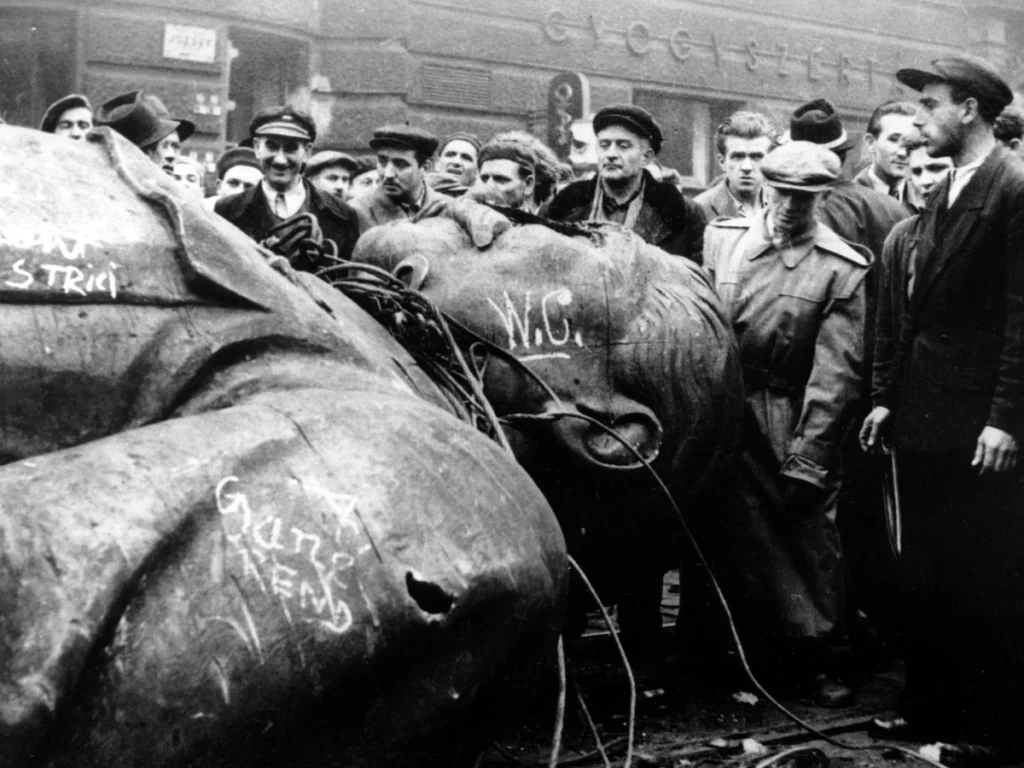
The Hungarian Revolution erupted on October 23, 1956, when students and workers in Budapest demonstrated against the Soviet-backed government, demanding democratic reforms and the withdrawal of Soviet troops. The protests soon turned into a nationwide uprising, with the Hungarian army and police often siding with the rebels. The revolutionaries briefly gained control of the city, and a new government led by Imre Nagy announced Hungary’s withdrawal from the Warsaw Pact. However, on November 4, Soviet forces launched a massive invasion to crush the uprising. The fighting was brutal, and within days the revolution was suppressed.
- October 23: Student demonstrations begin in Budapest, sparking the revolution.
- October 25: Gyula Illyés starts his diary, covering the early days of the uprising.
- October 28: The Soviet army begins to retreat temporarily, but the political situation remains fluid.
- November 1: The student’s diary ends, as the revolution is still alive but under threat.
- November 4: Soviet forces launch a full-scale invasion, ending the revolution.
- November 1956–March 1957: The two boys continue their collaborative diary, recording the Soviet occupation and its aftermath.
These events are documented in the diaries of contemporaries, each providing a unique perspective. The student’s diary, published in London in 1957 as A Student’s Diary Budapest, October 16–November 1, 1956, covers the initial phase of the revolution. Gyula Illyés’s diary, found in 2014, spans from October 25 to January 31, capturing the revolution and the early days of Soviet retaliation. The boys’ diaries, analyzed by Gergely Kunt, cover the period from October 1956 to March 1957, documenting the Soviet occupation and the gradual return of communist rule.
How It Was Seen at the Time
At the time, Hungarians saw the uprising as a desperate attempt to break free from Soviet domination. The language of the diaries is often that of hope and fear. Gyula Illyés, a major writer, hid his diary because he feared that if the police found it, it could be used as evidence in political trials against his friends and other actors of the Revolution. The two boys, Gyula Csics and János Kovács, described themselves as reporters, copying each other’s diaries and focusing on public events. They were aware of the historical significance of their actions. In his diary, the student, whose name is recorded as Beke, Laszlo, and others, captures the initial excitement and then the growing dread as the Soviet military response became inevitable.
“The missing 1956–57 part of the Diary of Gyula Illyés (1902–1983) was found in the attic of the family house in Buda, in April 2014, in an envelope, hidden among miscellaneous papers in a wooden box. It covers the days of the Revolution and the early days of the Soviet retaliation, from 25 October to 31 January.” — Hungarian Review
Contemporary observers were aware that their diaries might be read by others, and they wrote accordingly. The boys’ diaries, for instance, were not private; they were collaborative projects, meant to be shared and copied. This indicates a desire to create a collective memory of the events. The American journalist, who was detained by Soviet forces, kept a diary that later became part of a Wilson Center e-Dossier, revealing the experience of foreign journalists caught in the revolution.
Historical Snapshot
| Aspect | Detail |
|---|---|
| Date | October 23 – November 4, 1956 (revolution); diaries continue into 1957 |
| Place | Budapest, Hungary |
| People | Students, writers, journalists, children, Soviet military |
| What Happened | A popular uprising against Soviet control, crushed by Soviet invasion |
| Why It Mattered | It exposed the limits of Soviet control in Eastern Europe and became a symbol of resistance |
Letters & Diaries
The diaries left by contemporaries are the most intimate primary sources of the Hungarian Revolution. They offer unfiltered views of the daily chaos, the fear, and the hope that defined Budapest in 1956. The student’s diary, which was published as a book in 1957, is a rare example of a contemporaneous record that was made available to the public soon after the events. The diary, authored by László Beke and others, includes 125 pages of observations and emotions, capturing the period from October 16 to November 1.
Gyula Illyés’s diary, found in 2014, is another crucial document. The Hungarian Review describes how Illyés, a major literary figure, concealed his diary to protect his friends. The diary covers the revolution and the early Soviet retaliation, offering a writer’s perspective on the events. The two boys’ collaborative diary, analyzed by Gergely Kunt, provides a unique child’s-eye view of the revolution. The boys, Gyula Csics and János Kovács, were twelve and thirteen years old, and they acted as reporters, creating their own chronicles of the events transpiring between October 1956 and March 1957. They focused on public events, rather than their private lives, and they copied each other’s diaries to create a shared record.
Eyewitness Accounts
In addition to the diaries of Hungarian citizens, the Wilson Center’s e-Dossier includes the diary of an American journalist from Radio Free Europe (RFE) who was detained during the revolution. The journalist, along with two other RFE journalists, was held by the Soviet military for over a week before the US Department of State intervened. The diary, kept by the journalist, provides a unique perspective on the Soviet suppression of the revolution. It also sheds light on the role of RFE broadcasts, which were the subject of much discussion and research. According to the Wilson Center, “Some authors have focused on whether RFE fomented revolution and urged Hungarians to wage a hopeless fight against the Soviet Army (it did not), while others focused on whether Hungarian listeners concluded from the tone of some RFE commentaries and the very existence of RFE Hungarian broadcasts that Western powers would intervene on their behalf (many did).”
What People Feared
Contemporaries feared the Soviet retaliation, and the diaries reflect this. Gyula Illyés hid his diary because he feared that it would be used as evidence in political trials. This fear was well-founded: after the revolution, many participants were arrested, and the diary would have been a dangerous document. The student’s diary, written during the uprising, also conveys the fear of Soviet invasion and the uncertainty of the future. The boys’ diaries, which continued into March 1957, record the Soviet occupation and the atmosphere of repression. The RFE journalists feared for their lives while in Soviet custody, and their diary documents the anxiety of being held without trial. These fears were not unfounded: the Soviet military did suppress the revolution, and many Hungarians were executed or imprisoned.
Aftermath
After the Soviet invasion, the revolution was crushed, and the Soviet-backed government of János Kádár was installed. Many Hungarians fled the country, and thousands were killed or imprisoned. The diaries of the revolution were often hidden or destroyed to avoid persecution. Gyula Illyés’s diary was hidden in an attic and only discovered in 2014. The boys’ diary was preserved, and later published as an academic study. The student’s diary was published in London in 1957, providing a contemporary account for the Western world. The RFE journalists’ diaries were later released and are now part of the Wilson Center’s archives. These diaries have become valuable historical sources, offering a glimpse into the personal experiences of those who lived through the revolution.
How Historians See It Today
Historians today recognize the importance of these diaries as primary sources that capture the subjective experiences of the revolution. Contemporary accounts, such as the student’s diary, were written in the heat of the moment, with the outcome uncertain. Modern historians, however, have the benefit of hindsight and can analyze the events in the broader context of the Cold War. The RFE broadcasts and their impact on the Hungarian public have been studied, and the diary of the RFE journalist provides a nuanced view of the role of the media. The collaborative diaries of the two boys have been analyzed by scholars like Gergely Kunt, who examines the construction of memory and the role of children in recording historical events. The diaries are not just historical records; they are also literary works that reflect the hopes and fears of a generation.
These diaries and letters from Budapest in 1956 remind us that history is not just a series of events, but a collection of human experiences. They capture the fear, the hope, and the courage of those who lived through the revolution. The primary sources teach us that the Hungarian Revolution was not a monolithic event, but a series of personal experiences, each unique and valuable. The diaries preserve the voices of those who might otherwise be forgotten, and they continue to speak to us today, offering a direct connection to the past.
FAQ
Why are diaries important primary sources for the 1956 Hungarian Revolution?
Diaries provide a personal, first-hand perspective of the events as they unfolded. They capture the emotions, fears, and hopes of ordinary people, which are often missing from official records. The diaries of students, writers, and children reveal the daily experience of the revolution and the Soviet suppression, offering a more intimate and complex view of history.
What happened to the diary of Gyula Illyés?
Gyula Illyés's diary was hidden in an attic in his house in Buda, in a wooden box, to protect his friends from political persecution. It was found in April 2014 and covers the period from October 25, 1956, to January 31, 1957, providing a detailed account of the revolution and the early Soviet retaliation.




Leave a Reply