
Short Answer
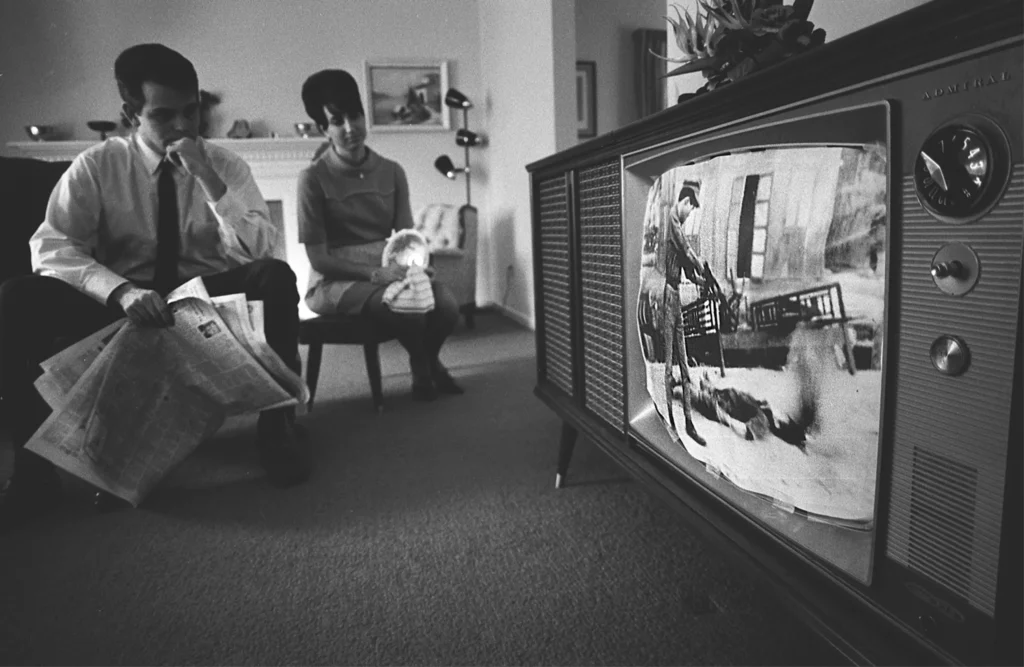
In the summer of 1965, American families gathered in their living rooms each evening as the network news anchors—Walter Cronkite on CBS, Chet Huntley and David Brinkley on NBC, and Howard K. Smith on ABC—delivered the day’s events. That year, the Vietnam War became the first televised conflict in American history. Nightly, viewers saw film of airplanes flying, often dropping bombs, and troops on patrol, sometimes in combat. Then, on August 5, 1965, CBS News correspondent Morley Safer filed a report from the hamlet of Cam Ne that changed everything. The footage showed U.S. Marines torching thatched huts with flamethrowers, Zippo lighters, and matches, as villagers—old women and men, young women and babies—stumbled from their homes in shock. Broadcast on the CBS Evening News with Walter Cronkite, the report “ignited a powder keg of suspicion, even hatred,” in Safer’s words. It made Safer’s career, put his life in danger, and ultimately changed how war is covered in America.
What Happened?
The Vietnam War was the first to be televised. In their living rooms watching the evening news, Americans regularly saw film of airplanes flying, often dropping bombs, and troops on patrol, sometimes in combat. This daily exposure was unprecedented in the history of warfare and journalism.
The pivotal moment of 1965 came on August 5, when Morley Safer, a young foreign correspondent for CBS News, filed a story from the hamlet of Cam Ne. The footage showed U.S. Marines on a search-and-destroy mission torching thatched huts—using flamethrowers, Zippo lighters, and matches—as villagers stumbled from their homes in shock. Safer described the operation in stark terms:
“The Marines went on a search-and-destroy mission, but it really was a destroy mission. What was in the village were a lot of old women and men, young women and babies, and the Marines went in shooting and burning.”
Key events of 1965:
- March 1965: The first U.S. combat troops were deployed to South Vietnam
- August 5, 1965: Morley Safer’s CBS News report from Cam Ne is broadcast on the CBS Evening News with Walter Cronkite
- The report was an uncensored look at the war, a first for American television
- The report ignited controversy, made Safer’s career, and put his life in danger
The Cam Ne report was a watershed moment in war journalism. It was the first time American television had shown uncensored footage of American troops in a destructive action against civilians, and it changed how war is covered in America.
How It Was Seen at the Time
The Cam Ne report “ignited a powder keg of suspicion, even hatred,” in Morley Safer’s words. The report was immediately controversial because it was an uncensored look at the war in Vietnam. It contradicted the official narrative of a just and noble cause, showing images of American Marines burning the homes of Vietnamese villagers.
At the time, the prevailing mood was that the war was a necessary struggle against communist expansion. The Cam Ne report shocked many viewers and raised intense debate about the role of the press in wartime. The fact that the report aired on the CBS Evening News with Walter Cronkite—the most trusted anchor in America—gave it enormous weight. Some officials and viewers saw it as a betrayal; others saw it as the truth finally being told.
Historical Snapshot
| Aspect | Detail |
|---|---|
| Date | August 5, 1965 (key event); the war spanned 1965–1975 |
| Place | Cam Ne, South Vietnam; American living rooms via television |
| People | Morley Safer, Walter Cronkite, U.S. Marines, Vietnamese villagers |
| What Happened | Safer’s CBS report showed U.S. Marines burning the village of Cam Ne |
| Why It Mattered | The first uncensored television report from the war; changed war coverage forever |
Eyewitness Accounts
Morley Safer’s own account of the Cam Ne operation is the most direct eyewitness testimony available. He was a young foreign correspondent for CBS News in 1965, bringing stories of the Vietnam War into America’s living rooms. His description of the scene was stark and unsparing:
“The Marines went on a search-and-destroy mission, but it really was a destroy mission. What was in the village were a lot of old women and men, young women and babies, and the Marines went in shooting and burning.”
Safer’s testimony is significant not only for its content but for its context: it was broadcast on the CBS Evening News with Walter Cronkite, reaching millions of Americans. The footage of the burning village was the first time many viewers had seen the reality of the war with their own eyes.
What the Sources Got Wrong
A major misconception that emerged from this era was the belief that nightly news programs were filled with graphic pictures of battle, the dead, the dying, and the wounded. However, analysis of the content of actual news broadcasts between 1965 and 1975 does not support this contention. The analysis found that while the Vietnam War dominated television news programs more than any other event of the period, the nightly news programs were not filled with pictures of battle, or the dead, dying and wounded.
This discrepancy between public perception and actual content is one of the most significant findings of the content analysis. The public believed that television was saturated with graphic violence, but the actual broadcasts were far less graphic than popularly believed.
Common Misconceptions
How Historians See It Today
Michael Mandelbaum, writing in 1982, noted: “It is widely believed that the first feature was the cause of the second”—that is, that television coverage caused the United States’ defeat in Vietnam. However, the content analysis of actual broadcasts suggests that television news was not as graphic as the public believed. The war was the first to be televised, and it was the first in which the United States suffered a clear defeat. Whether television caused the defeat remains a central question in the historiography of the war.
Historians today recognize that the relationship between television and the Vietnam War is complex and not the simple “television lost the war” narrative. The content of the news broadcasts was less graphic than popularly believed, but the cumulative effect of the coverage—even without graphic images—had a profound impact on public perceptions. The Cam Ne report of 1965 was a turning point, the first uncensored look at the war, and it changed how war is covered in America.
The summer of 1965 marked a turning point in the history of American journalism and warfare. The Vietnam War became the first televised conflict, and the Cam Ne report of August 5, 1965, was a watershed moment that changed how war is covered in America. The primary sources—Safer’s testimony, the content analyses, and the historical record—reveal a war that was televised but not as graphic as popularly believed, and a moment that brought the reality of war into American living rooms. The legacy of 1965 is that the Vietnam War became the first television war, and the American public would never experience war the same way again.
FAQ
What was the Cam Ne report?
The Cam Ne report was a CBS News broadcast from August 5, 1965, by correspondent Morley Safer. It showed U.S. Marines torching thatched huts in the Vietnamese hamlet of Cam Ne using flamethrowers, Zippo lighters, and matches, as villagers fled. It was the first uncensored television report from the Vietnam War and ignited controversy, changing how war is covered in America.
Was the nightly news filled with graphic battle footage?
No. Content analysis of actual news broadcasts between 1965 and 1975 found that nightly news programs were NOT filled with pictures of battle, or the dead, dying and wounded. While the Vietnam War dominated television news, the actual content was less graphic than the public believed.
Did television coverage cause the United States to lose the Vietnam War?
It was widely believed at the time that television caused the U.S. defeat, but historians now recognize that the relationship is complex. The content analysis shows that the news was less graphic than the public believed, and the connection between television and the war's outcome remains debated.





Leave a Reply