Short Answer
In 1944, a German SS officer stood on the railway ramp at Auschwitz-Birkenau and raised his camera as a transport of Jews from Hungary arrived. The shutter captured the moment of separation—families divided, some assigned to forced labor, others sent directly to the gas chambers. The photograph, like hundreds of others taken by Nazi personnel at camps and killing sites across occupied Europe, was not intended as a record of crime. It was framed as a document of order, discipline, and the triumphant efficiency of the Nazi project. Yet today these same images are among the most powerful and contested pieces of evidence of the Holocaust. The story of how the Nazi regime made these photographs, how they deceived contemporaries who trusted the camera’s eye, and how historians now read them is a lesson in the fragility of visual truth.
What Happened?
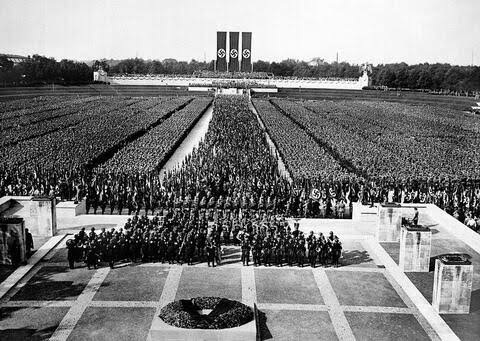
Between 1933 and 1945, the Nazi regime systematically deployed photography as a propaganda tool. The Ministry of Public Enlightenment and Propaganda, under Joseph Goebbels, understood that a photograph carried an authority that mere words could not match. A photograph appeared to be a direct imprint of reality, and the Nazis exploited this faith in the camera’s objectivity to a devastating effect.
In occupied Poland from 1939 to 1945, Nazi propaganda deliberately exploited the faith in still photography as a neutral depiction of reality. Photographers were dispatched to ghettos, camps, and killing sites to produce images that served the regime’s narrative. By far the greatest number of photographs of Nazi sites of violence were taken by the perpetrators themselves. During deportations, in the camps and extermination centers, and at the sites of mass shootings, only Gestapo officers, SS men and women, or other authorized personnel were officially permitted to use cameras. Some Jews did work as official photographers in the ghettos, but their work was constrained by the same regime that would eventually murder them.
The Auschwitz Album is among the most studied examples. These photographs, taken by German SS officers at Auschwitz-Birkenau in 1944, depict the arrival and selection of transports of Jews from areas controlled by Hungary. Others show SS officers and auxiliaries seemingly enjoying their lives at the camp. The photographs were not records of murder; they were records of order, discipline, and the normalcy of the camp as the SS wanted to see it.
How It Was Seen at the Time
For contemporaries—both German citizens and international observers—the photographs produced by the Nazi regime appeared to be faithful records of the events they depicted. The common wisdom held that “the camera does not lie.” Nazi propagandists exploited this assumption, presenting images of orderly camps, of contented soldiers, and of “resettlement” operations that concealed the reality of mass murder.
The photographs served multiple purposes. They were used to reassure the German home front that the war was conducted with dignity and that the “enemies of the Reich” were being handled humanely. They were also used to intimidate, with images of deportations and selections presented as warnings to potential resisters. As Barbie Zelizer wrote in Remembering to Forget: Holocaust Memory through the Camera’s Eye, photographs were central to how the Holocaust was understood, both at the time and after.
One of the most striking examples is the Auschwitz Album. The photographs were taken by the SS and show the arrival and selection process in a starkly matter-of-fact style: families descending from the trains, being separated into lines, children clinging to their mothers. The photographs do not show the gas chambers or the crematoria. They show only the orderly beginning of the process. For the SS officers who took them, these images were documents of the camp’s efficiency. For the victims, they were the last recorded moments of their lives.
Historical Snapshot
| Aspect | Detail |
|---|---|
| Date | 1933–1945 (Nazi era); 1939–1945 (occupied Poland) |
| Place | Nazi Germany and occupied Europe, particularly Poland |
| People | SS officers, Gestapo, Nazi propagandists, Jewish ghetto photographers, camp prisoners |
| What Happened | The Nazi regime systematically produced photographs of camps, ghettos, and deportations, presenting them as neutral records while concealing the reality of mass murder. |
| Why It Mattered | The photographs deceived contemporaries and later became crucial evidence for the Holocaust; historians now analyze them as artifacts of the perpetrator’s perspective. |
What People Knew at the Time
| What People Knew Then | What We Know Now |
|---|---|
| Photographs were considered neutral, objective records of reality. | Photographs are constructed, framed, and selected by the photographer; Nazi photographers systematically exploited this authority. |
| The “orderly” camps depicted in the photographs were taken at face value. | The photographs are now understood as artifacts of the perpetrator’s perspective, showing only what the SS wanted to show. |
| Some believed the photographs proved the humane treatment of prisoners. | The photographs were selective and deliberately excluded the gas chambers, crematoria, and mass killings. |
Different Perspectives
The Perpetrators’ Perspective
The SS officers and Nazi propagandists who took these photographs saw themselves as documenting the orderly and successful conduct of the Nazi project. The Auschwitz Album photographs show SS officers enjoying their lives at the camp, a deliberate self-presentation of the camp as a place of comradeship and duty rather than murder. The camera was an instrument of their worldview.
The Victims’ Perspective
For the victims, the camera was an instrument of the regime. Some Jews worked as official photographers in the ghettos, but their images were constrained by the same Nazi oversight. Their photographs, when they survived, often show the same scenes from a different angle—the hunger, the degradation, the suffering—but they could not photograph the mass killings themselves.
The International Perspective
For international audiences, the photographs were initially taken as evidence of the Nazi regime’s claims. When the camps were liberated in 1945, the Allied forces seized the photographs and used them in war crimes prosecutions. The same photographs that had been used to deceive were now used to document the crimes.
What the Sources Got Wrong
The greatest error in the contemporary understanding of these photographs was the assumption that they were neutral records of reality. The Nazi regime exploited this belief to construct a false narrative of its own conduct. The photographs were not records of “resettlement” or “evacuation”—they were records of the process of mass murder, deliberately framed to conceal it.
One specific error is the assumption that the Auschwitz Album photographs depict the entire process. In fact, the photographs stop at the moment of selection. They do not show the gas chambers, the crematoria, or the bodies. The camera was present for the “orderly” part of the process—the arrival, the selection, the sorting of belongings—but not for the murder itself.
Another error is the belief that all Holocaust photographs were taken by victims or by Allied photographers. In fact, the majority of photographs of Nazi sites of violence were taken by the perpetrators. The camera was a weapon of the Nazi regime, not a neutral observer.
How Historians See It Today
Modern historians have developed a rigorous methodology for analyzing photographs as historical sources. The Yad Vashem critical analysis framework, developed by S. Ochayon, emphasizes that photographs must be interrogated with a series of questions: Who took the photograph? What was the photographer’s purpose? What was included in the frame? What was excluded? What was the photograph intended to show?
This approach has shifted the historiographical understanding of Holocaust photography. Historians no longer treat photographs as transparent evidence of what happened. Instead, they read them as evidence about the perpetrators themselves—their self-perception, their methods of deception, and the ways they wanted the world to see their actions. The work of scholars such as Judith Levin and Daniel Uziel, whose article “Ordinary Men, Extraordinary Photos” is a foundational study, has been central to this shift.
The photographs that were once used to deceive are now used as evidence of the deception itself. The camera’s eye, which the Nazi regime exploited, has become a window into the mindset of the perpetrators—and a reminder of the power of visual media to shape understanding.
Common Misconceptions
How Historians See It Today
The photographs taken by the Nazi regime are among the most important and most difficult sources for the Holocaust. They were created to deceive, and they were used to deceive. But they also preserve a record of the perpetrators’ actions, their self-presentation, and their methods. The discipline of reading these photographs—asking who took them, what they intended to show, and what they excluded—is essential to understanding the Holocaust and the power of visual propaganda.
Modern scholarship has shifted from treating the photographs as transparent evidence of the camps to understanding them as artifacts of the perpetrator’s perspective. The photographs are now read as evidence of the Nazi regime’s worldview, its obsession with order, and its deliberate concealment of murder. The camera, which was used as a weapon of deception, has become a tool of historical truth.
Aftermath
When the camps were liberated in 1945, the photographs taken by the Nazi regime were seized by the Allied forces and used as evidence in the Nuremberg trials and subsequent war crimes prosecutions. The photographs that had been used to deceive were now used to document the crimes. The same images that had been framed as propaganda were now framed as evidence. This dual life of the photographs—as propaganda and as evidence—is a testament to the power of the visual record and the importance of the historian’s task.
The photographs taken by the Nazi regime are a reminder that the camera is never neutral. The photographer’s eye is always a point of view, and the photograph is always a construction. The Nazi regime exploited this fact to deceive the world. But the same photographs, when read with the discipline of historical analysis, reveal the truth of the Holocaust. They show the perpetrators’ self-perception, their methods, and their crimes. The task of the historian is to read these images against the grain—to ask what the photographer did not want to show, and to see the victims who were deliberately excluded from the frame.
FAQ
Why are Nazi propaganda photographs considered unreliable as historical evidence?
Nazi propaganda photographs were deliberately constructed to deceive. Photographers chose what to show and what to hide, and they often excluded the gas chambers, crematoria, and mass killings from the frame. Historians must analyze the photographer, context, and purpose to read them critically.
Who took the majority of photographs of Nazi sites of violence?
By far the greatest number of photographs of Nazi sites of violence were taken by the perpetrators. Only Gestapo officers, SS men and women, or other authorized personnel were officially permitted to use cameras during deportations, in camps, and at mass shooting sites. Some Jews worked as official photographers in the ghettos, but their work was constrained by the same regime.





Leave a Reply