
Short Answer
In February 1917, Petrograd—the imperial capital of Russia—was a city frozen in the grip of war and hunger. Bread lines stretched for hours, factory workers muttered in anger, and the snow-covered streets carried rumors of mutiny. By the end of the month, the tsarist order had collapsed under the weight of strikes, protests, and a soldiery that refused to fire on its own people. For those who lived through it, the revolution was not a single event but a series of chaotic, terrifying, and exhilarating days. As the Englishman Stinton Jones, an eyewitness in Petrograd, later recalled, the city seemed to transform overnight. From the working-class districts to the Duma chamber, ordinary people became actors in a drama they could barely comprehend. This article draws on the diaries, letters, and memoirs of those who were there—both Russians and foreigners—to show how the revolution was seen, feared, and understood at the moment it happened.
What Happened?
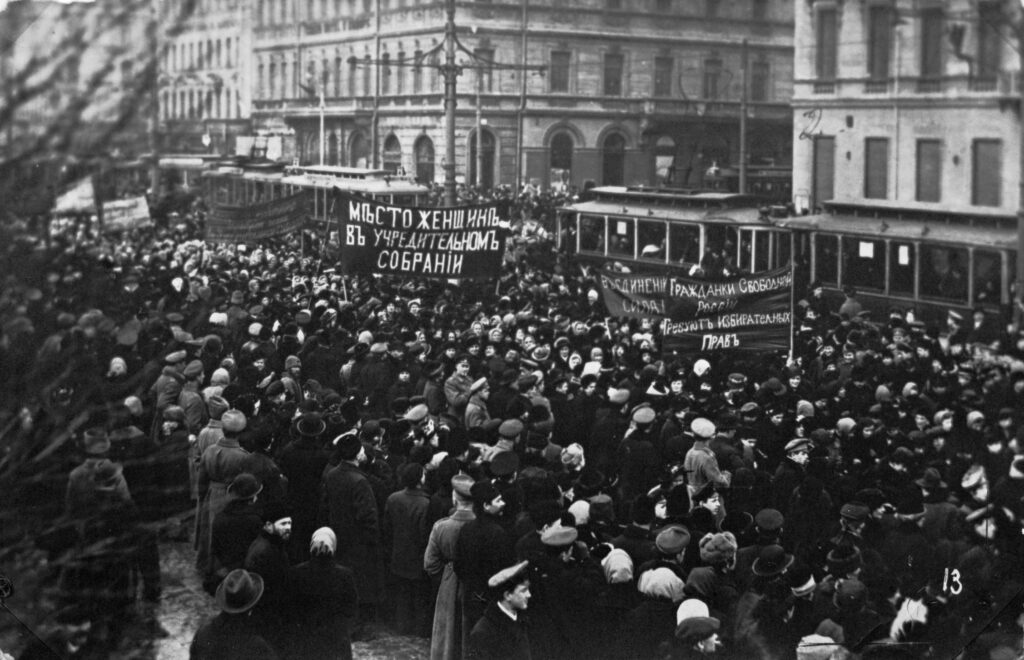
The February Revolution unfolded over roughly a week, from February 23 to March 2, 1917 (Julian calendar). It began with International Women’s Day demonstrations in Petrograd, where women textile workers marched for bread and the return of their husbands from the front. The protests quickly swelled as industrial workers joined, and the city’s tram systems stopped. On February 25, the strike became a general strike, and the tsar ordered the military to restore order. But the soldiers, many of them raw recruits, began to refuse to fire on the crowds. On February 26, the Volhynian Regiment mutinied, and within days most of the garrison had sided with the protesters.
Meanwhile, the Duma (the Russian parliament) ignored the tsar’s decree of dissolution and formed a Provisional Committee, which later became the Provisional Government. Tsar Nicholas II, traveling from the front, was persuaded to abdicate on March 2, first in favor of his son, then his brother Michael, who declined the throne. The same day, the Petrograd Soviet of Workers’ and Soldiers’ Deputies was revived, creating a dual power that would shape the following months. In Moscow, events mirrored Petrograd, with the city’s garrison joining the revolution by March 1, as recorded in Nikolai Morozov’s diary, “Seven Days of Revolution! Events in Moscow.” The old order collapsed with astonishing speed, leaving a vacuum of power that would only be resolved in October.
How It Was Seen at the Time
Contemporaries saw the revolution as a sudden, overwhelming eruption of popular will. The language was of “freedom” and “the people,” but also of confusion and fear. The diary of Nikolai Morozov, a scientist and writer who witnessed the events in Moscow, captures the breathless urgency of those days. The very title of his diary, Seven Days of Revolution!, conveys the sense of compressed time and extraordinary happenings.
“Seven days of revolution! Events in Moscow.”
Foreign observers shared this mixture of awe and apprehension. The British eyewitness Nelson Fell, whose diary and letters are preserved in the University of Gloucestershire repository, recorded the revolutionary events between February and March 1917, providing a vivid account of the chaos. Stinton Jones, an Englishman in Petrograd, later published his experiences under the title Russia in Revolution, describing the upheaval as it unfolded. For many, the revolution seemed to be a promise of a better world, but also a descent into the unknown.
Historical Snapshot
| Aspect | Detail |
|---|---|
| Date | February 23 – March 2, 1917 (Julian calendar); March 8 – March 15, 1917 (Gregorian) |
| Place | Petrograd (St. Petersburg) and Moscow, Russian Empire |
| People | Nelson Fell (British engineer), Stinton Jones (English writer), Nikolai Morozov (Russian scientist), workers, soldiers, the Petrograd Soviet, the Provisional Government |
| What Happened | Mass strikes and mutiny of the Petrograd garrison led to the abdication of Tsar Nicholas II and the formation of a Provisional Government. |
| Why It Mattered | It ended the Romanov dynasty and set the stage for the October Revolution later that year. |
Eyewitness Accounts
The revolution is best understood through the eyes of those who were present. The book “Petrograd, 1917: Witnesses to the Russian Revolution” (Bodleian Library Publishing) assembles extracts from letters, journals, diaries, and memoirs of a remarkably diverse cast—both Russians and foreign nationals. These accounts range from the violence in the streets to the propaganda posters and postcards sent to loved ones. The drama and terror of those days are captured in the raw, unfiltered words of ordinary people.
“The drama and terror of those who were there when the revolution came.”
One of the most detailed eyewitness sources is the diary of Nelson Fell, an Englishman who lived in Petrograd. His diary and letters, now held in the University of Gloucestershire repository, provide a day-by-day record of the events. Similarly, Stinton Jones’s book “Russia in the Revolution” offers a personal narrative of the upheaval. These accounts show the revolution not as a single event but as a series of human moments: a soldier refusing to shoot, a woman crying for bread, a student reading a proclamation to a crowd.
Letters & Diaries
The personal writings of contemporaries are invaluable for understanding the emotional and psychological impact of the revolution. Nelson Fell’s diary and letters, as described in the University of Gloucestershire research repository, “provide an insight into the revolutionary events taking place between February and March 1917.” Fell, an English businessman, was an outside observer, but his writings reveal the uncertainty and excitement that gripped the capital.
“The following extracts from the diary and letters of Nelson Fell provide an insight into the revolutionary events taking place between February and March…”
Nikolai Morozov’s diary, “Seven Days of Revolution! Events in Moscow,” is a rare Russian eyewitness account. Morozov, a scientist and revolutionary, had been imprisoned for decades, and his diary captures the sense of liberation that swept through Moscow when the tsarist regime collapsed. The diary, held by the Presidential Library, is a testament to how the revolution was experienced beyond Petrograd.
What People Feared
Fear was a constant companion during the revolution. Many feared that the chaos would lead to a civil war or to foreign intervention. The German army was still at the front, and there were worries that the revolution would weaken Russia’s ability to fight. Others feared that the revolution would be crushed by a counter-revolutionary movement, or that the street crowds would turn into a destructive mob. The diaries and letters of the time reflect these anxieties. Stinton Jones, for example, wrote of the uncertainty and the constant rumor of counter-revolutionary plots. The fear was not unfounded: the tsarist secret police still existed, and there were reports of loyalist officers attempting to rally troops. Yet the revolution seemed to have its own momentum, and the fears of a rapid counterattack were not realized in the immediate term.
What People Expected Would Happen Next
Most contemporaries expected the revolution to lead to a liberal democratic republic, with the Provisional Government and the Petrograd Soviet cooperating. Many believed that the war would continue, and that Russia would honor its commitments to the Allies. The expectation was that the tsarist autocracy would be replaced by a constitutional government, and that the people would finally have their say. The idea of a Bolshevik takeover was not widely anticipated; even the Bolsheviks themselves were surprised by the speed of events. The diaries of the period show a mood of cautious optimism mixed with fear. Nelson Fell, for example, noted the hopes for a new, free Russia. But as the months passed, the Provisional Government’s failure to address the land question and the war led to the October Revolution, which none of these eyewitnesses could have predicted.
Aftermath
The immediate aftermath of the February Revolution was a period of dual power between the Provisional Government and the Petrograd Soviet. The Tsar and his family were placed under house arrest, and the political prisoners were released. In Moscow, the revolution was consolidated by March 1, and the city’s garrison pledged allegiance to the new order. However, the deep social and economic problems remained unresolved. The war continued, and the Provisional Government’s unpopular decisions led to the Bolshevik seizure of power in October. The eyewitness accounts of the February Revolution thus serve as a prelude to the more radical and violent events that followed. For those who lived through the February days, the promise of freedom quickly faded into the reality of a new, more authoritarian revolution.
How Historians See It Today
Modern historians view the February Revolution as a spontaneous and largely unplanned uprising, driven by the desperation of the working class and the collapse of the tsarist authority. Contemporary observers, however, often saw it as a sudden, almost miraculous event. The diaries and letters of the time emphasize the personal and emotional dimension, while historians today focus on the structural causes, such as the strain of the war, the weakness of the autocracy, and the growing radicalization of the urban workers. The eyewitness accounts remain crucial for understanding the texture of the revolution, but they are now read with a critical eye, recognizing that each observer had his or her own biases and limited perspective. The shift in historiography has been from a heroic narrative of the people’s victory to a more nuanced view that emphasizes the chaos, contingency, and the deep social divisions that the revolution exposed.
Common Misconceptions
Myth: The February Revolution was a single, well-organized coup.
It was a series of spontaneous strikes and mutinies that escalated over a week, with no single leader or plan.
Myth: The revolution was entirely bloodless.
There were violent clashes, and the military police fired on the crowd on February 26, causing deaths.
Myth: All Russians supported the revolution.
Many officers, aristocrats, and even some workers opposed the revolution, and the future was uncertain.
Related Primary Sources
- Nelson Fell’s diary and letters, University of Gloucestershire Research Repository – https://eprints.glos.ac.uk/7795/
- “Petrograd, 1917: Witnesses to the Russian Revolution,” Bodleian Library Publishing (via University of Chicago Press) – https://press.uchicago.edu/ucp/books/book/distributed/P/bo26345400.html
- Nikolai Morozov, “Seven Days of Revolution! Events in Moscow” (1917), Presidential Library – https://www.prlib.ru/en/node/443970
- Stinton Jones, “Russia in Revolution; being the experiences of an Englishman in Petrograd during the upheaval,” Internet Archive – https://archive.org/details/russiainrevolut00jone
The eyewitness accounts of the Russian Revolution of 1917 are not mere historical documents; they are voices from a world that was being destroyed and remade. They remind us that history is not a clean sequence of events but a chaotic, human experience. Through the diaries of Nelson Fell, the diary of Nikolai Morozov, and the many others who wrote in the heat of the moment, we can hear the hopes and fears of a people who lived through one of the most extraordinary revolutions in modern history. Their words continue to challenge us to understand the fragility of order and the power of collective action.
FAQ
What did the eyewitnesses see during the February Revolution?
Eyewitnesses like Nelson Fell and Stinton Jones recorded the chaos of strikes, mutinying soldiers, and the rapid collapse of the tsarist government. Nikolai Morozov's diary captures the same events in Moscow, showing the spread of the revolution.
How reliable are the eyewitness accounts of the Russian Revolution?
Eyewitness accounts are valuable but subjective. They provide immediate impressions and emotions, but historians today cross-check them with other sources to reconstruct the full picture.










Leave a Reply