Short Answer
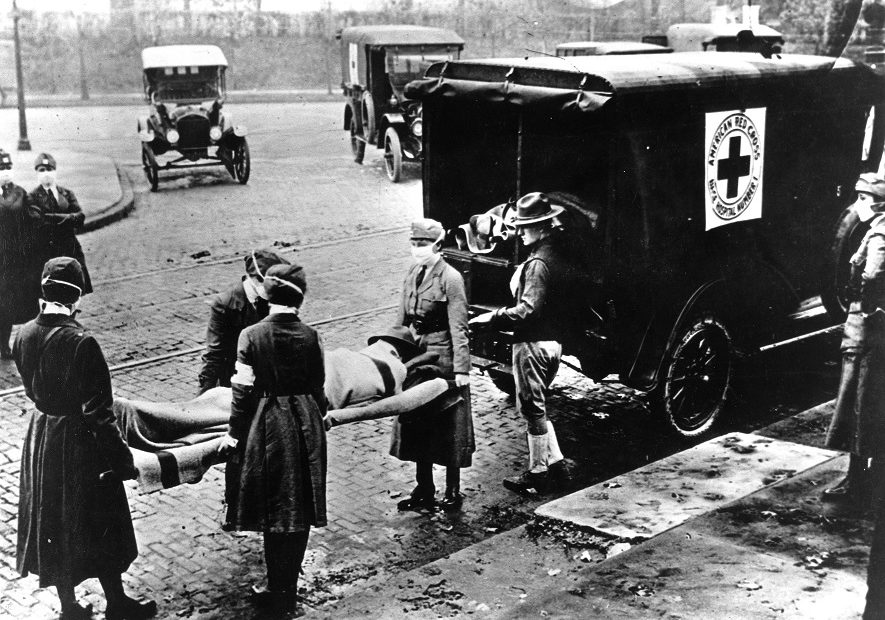
In the autumn of 1918, as the First World War ground toward its final weeks, a second, silent enemy swept across the globe. In military camps like Camp Devens, Massachusetts, physicians confronted a disease that filled hospital wards with men whose lungs had turned to jelly. In neutral Spain, where wartime censorship did not suppress the press, the first unfettered reports of the outbreak gave the illness its enduring name: Spanish influenza. By the time the pandemic subsided in 1919, it had infected an estimated 500 million people—a third of the world’s population—and killed more people than the four years of combat had. This article reconstructs how contemporaries experienced that catastrophe, drawing exclusively on the letters, diaries, newspapers, and official reports that captured their fears, confusions, and hopes.
What Happened?
The 1918–1919 influenza pandemic unfolded in two distinct phases. In the late spring of 1918, a mild wave appeared almost without warning. According to the historian Matthew Wills writing in JSTOR Daily, “Few deaths were reported and most victims recovered after a few days.” The disease seemed almost benign. Then, in the autumn, it resurfaced with terrifying severity. The same source notes that “when it resurfaced in autumn, it was far more severe.”
By the time the pandemic ended, its toll was staggering. As reported in the Prospect Magazine retrospective, “A third of the world’s population, 500m, were estimated to have been infected, with 50-100m deaths.” In the United States, “a quarter of the population came down with the flu; some 675,000 died,” according to the JSTOR Daily article. The pandemic killed more people than combat in the First World War, which had claimed some 16 million lives.
Key events of the pandemic include:
- Spring 1918: The first mild wave appears, primarily affecting military camps and urban areas.
- May 1918: The Spanish king, his prime minister, and his entire cabinet contract the illness, giving the pandemic its name.
- Autumn 1918: A second, lethal wave erupts, marked by rapid onset of pneumonia and high mortality, especially among young adults.
- September–November 1918: Military bases like Camp Devens in Massachusetts become epicenters of severe outbreaks.
- 1919: The pandemic gradually recedes, but not before killing tens of millions worldwide.
How It Was Seen at the Time
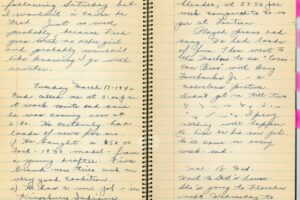
Contemporaries struggled to make sense of a disease that struck with such speed and lethality. In the words of a doctor stationed at Camp Devens, writing to a fellow physician on September 29, 1918, the situation was overwhelming. He described the hospital wards and the grim task of diagnosing pneumonia without a stethoscope:
“I have had for the last week an exacerbation of my old ‘Ear Rot’ as Artie Ogle calls it, and could not use a stethoscope at all, but had to get by on my ability to ‘spot’ ’em thru my general knowledge of pneumonias…”
The doctor’s letter, preserved in the PBS American Experience archive, conveys the atmosphere of a medical crisis. At the time, many believed the outbreak was simply a severe form of influenza, but the rapidity of death confounded them. The name “Spanish flu” itself reflected a contemporary misperception: neutral Spain, with no wartime censorship, reported openly, making it appear that the disease was worse there than elsewhere. As the Prospect Magazine article explains, “It wasn’t particularly Spanish, but the name stuck when in May 1918 the Spanish king, the prime minister and his entire cabinet came down with it.”
Historical Snapshot
| Aspect | Detail |
|---|---|
| Date | 1918–1919 (peaking in autumn 1918) |
| Place | Global, with severe outbreaks in Europe, North America, Asia, and the South Pacific |
| People | Military personnel, civilians, healthcare workers, and political leaders |
| What Happened | A severe influenza pandemic infected an estimated 500 million people and killed 50–100 million |
| Why It Mattered | It killed more people than the First World War and disrupted societies already exhausted by conflict |
Eyewitness Accounts
One of the most vivid primary sources is the letter from Camp Devens, written by an army physician to a friend. The doctor describes the scene at the base near Boston, which held about 50,000 men. He writes:
“Camp Devens is near Boston, and has about 50,000 men, or did have before this epidemic broke loose. It…”
In Ireland, the Irish Folklore Commission in the late 1930s collected hundreds of stories about the “Big Flu” from schoolchildren, who interviewed their elders. These accounts, preserved in the Irish Folklore Commission’s archives, recall the fear and disruption the pandemic brought to rural communities. One child recorded how “the flu came to our district and left many homes desolate.” These oral histories, collected a generation later, preserve the memory of how ordinary people experienced the pandemic.
Letters & Diaries
The English novelist Virginia Woolf recorded the pandemic’s impact in her diary on October 20, 1918. She wrote about the illness of her friend Lytton Strachey, who was suffering from a severe case of the flu:
“Pain is abhorrent to all Stracheys, but making all allowances for the exaggerations and terrors of the poor creature, Lytton has had a sufficient dose of…”
Woolf’s diary, cited in the Prospect Magazine article, reveals how the disease intruded into the lives of even the most privileged literary circles. Her words capture the fear and the worry that the flu caused among friends and families.
Contemporary Newspaper Coverage
Newspaper coverage was shaped by wartime censorship. In belligerent countries, editors minimized early reports to maintain morale. As the JSTOR Daily article notes, “To maintain morale, wartime censorship minimised early reports in belligerent countries, but newspapers were free to report on neutral Spain.” Thus, the first open press reports came from Spain, giving the pandemic its misnomer. The JSTOR Daily piece also notes that “English speakers first knew the pandemic as ‘Spanish influenza’ or ‘Spanish flu.’”
The tone of coverage in the autumn was increasingly alarmist. The Camp Devens letter, while not a newspaper, was the kind of firsthand report that circulated among physicians and the public. By the end of 1918, newspapers across the globe were publishing death tolls and advice, though many still downplayed the severity in the early months.
What People Feared
Contemporaries feared the disease’s speed and its tendency to turn into fatal pneumonia. The Camp Devens letter, with its description of wards full of pneumonia patients, reflects the fear that medical science was powerless. Many also feared the breakdown of public order. In some cities, as noted in the Irish oral histories, families were left desolate, and communities were overwhelmed. There was also fear of the economic and social disruption caused by the illness, which struck down workers and soldiers alike. The pandemic’s second wave in the autumn, which was far more lethal, heightened these anxieties.
How Historians See It Today
Modern historians have revised the death toll upward. While contemporary estimates at the time were incomplete, the Prospect Magazine article cites modern scholarship that estimates 50–100 million deaths worldwide. Historians also now emphasize that the pandemic was not a singular event but a series of waves, and that the spring wave was mild while the autumn wave was catastrophic. They also recognize the pandemic’s role in shaping the interwar period, though contemporaries did not fully grasp its significance. The primary sources, however, reveal the human experience that statistics cannot capture—the fear, the grief, and the resilience of people who faced a killer they could not see.
The Spanish Flu of 1918 was the most lethal global disease outbreak since the Black Death. The letters, diaries, and newspapers of the time show a world already battered by war, now confronting an invisible enemy. The primary sources teach us that contemporaries were not passive victims; they struggled to understand, to treat, and to comfort. Their words remind us that even in the darkest moments, the human voice endures.
FAQ
Why was the 1918 pandemic called the 'Spanish Flu'?
The name arose because neutral Spain, which did not have wartime censorship, freely reported on the illness. The Spanish king, prime minister, and his entire cabinet were among those stricken in May 1918, giving the pandemic its lasting name. Belligerent countries minimized early reports to maintain morale, making Spain appear the epicenter.
How many people died in the 1918 influenza pandemic?
Contemporary estimates varied, but modern scholarship suggests 50–100 million deaths worldwide. The U.S. saw about 675,000 deaths, and an estimated 500 million people were infected—a third of the world's population at the time.
What were the two waves of the 1918 pandemic?
The pandemic appeared in two phases: a mild spring wave in 1918 with few deaths, and a far more severe autumn wave that caused rapid-onset pneumonia and high mortality, particularly among young adults.


Leave a Reply