
Short Answer
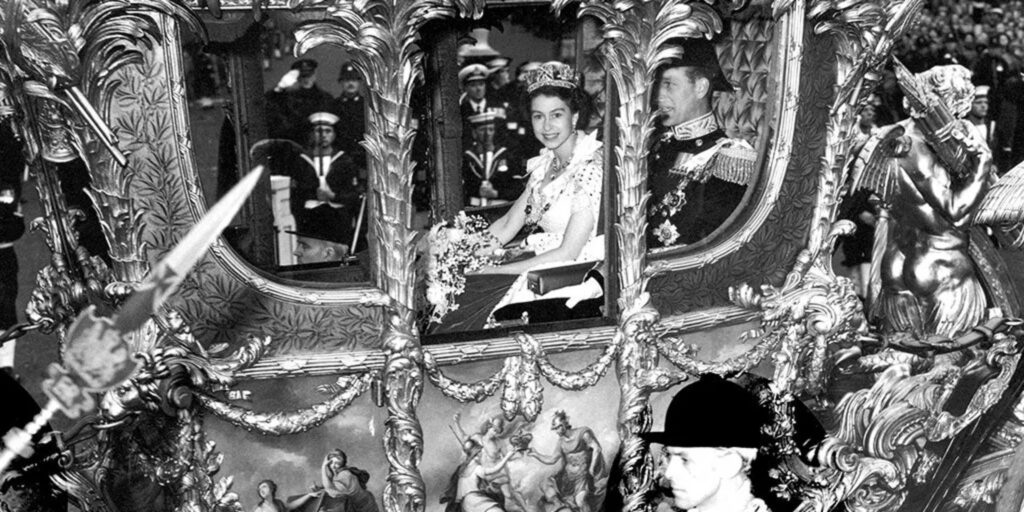
On the morning of 2 June 1953, a grey London summer descended over a city that had not yet shaken off post-war austerity. Yet in homes, pubs, and community centres across Britain, a flickering black-and-white screen held the new nation’s gaze. For the first time, the coronation of a British monarch was to be broadcast live on television. The people of the United Kingdom—and the world—were about to witness a ceremony that had remained sealed behind the walls of Westminster Abbey for centuries. The BBC had installed cameras inside the Abbey with the Queen’s personal permission, and millions of viewers, many of whom had never seen a television before, prepared to watch history unfold in real time. The day would not only crown a new sovereign but also mark the coming of age of television itself.
What Happened?
The coronation of Queen Elizabeth II took place at Westminster Abbey on Tuesday, 2 June 1953. The ceremony began at 10:15 a.m. and was broadcast by the BBC for seven hours, from the Queen’s procession to the Abbey through the state procession and her final appearance on the balcony of Buckingham Palace. The BBC’s coverage included, for the first time, cameras installed inside the Abbey, allowing viewers to see the actual service. The Queen had given her personal permission for this departure from tradition, despite official advice against it. More than 20 million people in Britain watched the service on television, outnumbering the radio audience for the first time in history. According to the BBC, 10.4 million watched in the homes of friends and neighbours, and 1.5 million watched in public places such as pubs and cinemas. The broadcast lasted seven hours and used 29 microphones placed throughout the Abbey to capture the full sound of the ceremony.
How It Was Seen at the Time
Contemporaries understood the coronation as both a solemn religious ceremony and a national celebration. The mood was one of excitement and unity, with many families gathering around newly purchased television sets, often in the homes of neighbours who had been the first to buy them. As the Science Museum notes, ‘Homes, pubs and community centres were packed with people, all eyes staring at the grainy, black-and-white images from the television set.’ The BBC’s own account described how ‘the Coronation brought the nation together’—a phrase that captured the spirit of the day. For many, it was the first time they had seen a television at all, and the broadcast became a communal experience, with people sharing the small screens in a way that would become familiar in the decades to come.
Historical Snapshot
| Aspect | Detail |
|---|---|
| Date | 2 June 1953 |
| Place | Westminster Abbey, London, and across the United Kingdom |
| People | Queen Elizabeth II, the BBC, and millions of television viewers |
| What Happened | The first live television broadcast of a British coronation, with cameras inside the Abbey |
| Why It Mattered | It made television a mainstream medium and modernised the monarchy |
What People Knew at the Time
| What People Knew Then | What We Know Now |
|---|---|
| That the Queen had personally allowed cameras inside the Abbey, against official advice. | That this decision was a strategic move to modernise the monarchy and connect with the public. |
| That the BBC would broadcast the entire service and procession. | That this broadcast would become the single most important catalyst for television adoption in Britain. |
| That the event was a historic and solemn occasion. | That it marked the beginning of the televised royal era, shaping all future royal events. |
Numbers at the Time
| Statistic | Figure | Source |
|---|---|---|
| Total television viewers in Britain | Over 20 million | BBC |
| Viewers in private homes (friends/neighbours) | 10.4 million | BBC |
| Viewers in public places (pubs, cinemas) | 1.5 million | BBC |
| Duration of BBC live coverage | 7 hours | BBC |
| Number of microphones in the Abbey | 29 | BBC |
Aftermath
Immediately after the coronation, television ownership in Britain surged. The event had demonstrated the power of the medium to bring the nation together, and sales of television sets increased dramatically in the following months. The BBC’s coverage set a new standard for live broadcasting and paved the way for future royal events, such as the wedding of Princess Margaret and the State Opening of Parliament. The coronation also marked a shift in the relationship between the monarchy and the public; the Queen’s willingness to allow cameras inside the Abbey signalled a modernisation that would continue throughout her reign.
How Historians See It Today
Modern historians and media scholars agree that the coronation was a turning point in the history of television. The BBC’s official history states that the event ‘did more than any other to make television a mainstream medium’ and ‘marked the coming of age of television, as well as the modernisation of the monarchy.’ This interpretation, which emerged in the years after the event, contrasts with the contemporary view that saw the broadcast as simply a magnificent spectacle. Today, historians also note that the coronation was the first time that the British public could see the ceremony from within the Abbey, and that this visual access fundamentally changed the relationship between the crown and its subjects.
The coronation of Queen Elizabeth II on 2 June 1953 was more than a royal ceremony; it was a cultural watershed. The primary sources—the BBC’s own accounts, the Science Museum’s recollections, and the memories of the millions who watched—reveal a day when the nation gathered around the television and, in doing so, entered a new era. The grainy black-and-white images that flickered across the screens of 1953 were the first of countless moments that would be shared through the medium, and the coronation stands as the moment when the television became an inseparable part of modern life.
FAQ
Why was the coronation of Queen Elizabeth II important for television?
It was the first time a coronation was broadcast live on television, and it attracted over 20 million viewers, outnumbering the radio audience for the first time. The event made television a mainstream medium in Britain.
How many people watched the coronation on television?
According to the BBC, more than 20 million people watched the service on television. This included 10.4 million in homes of friends and neighbours and 1.5 million in public places like pubs and cinemas.
Did the Queen allow cameras inside Westminster Abbey?
Yes, Queen Elizabeth II gave her personal permission for cameras to be installed inside Westminster Abbey, against official advice, allowing the public to see the ceremony for the first time.







Leave a Reply