
Short Answer
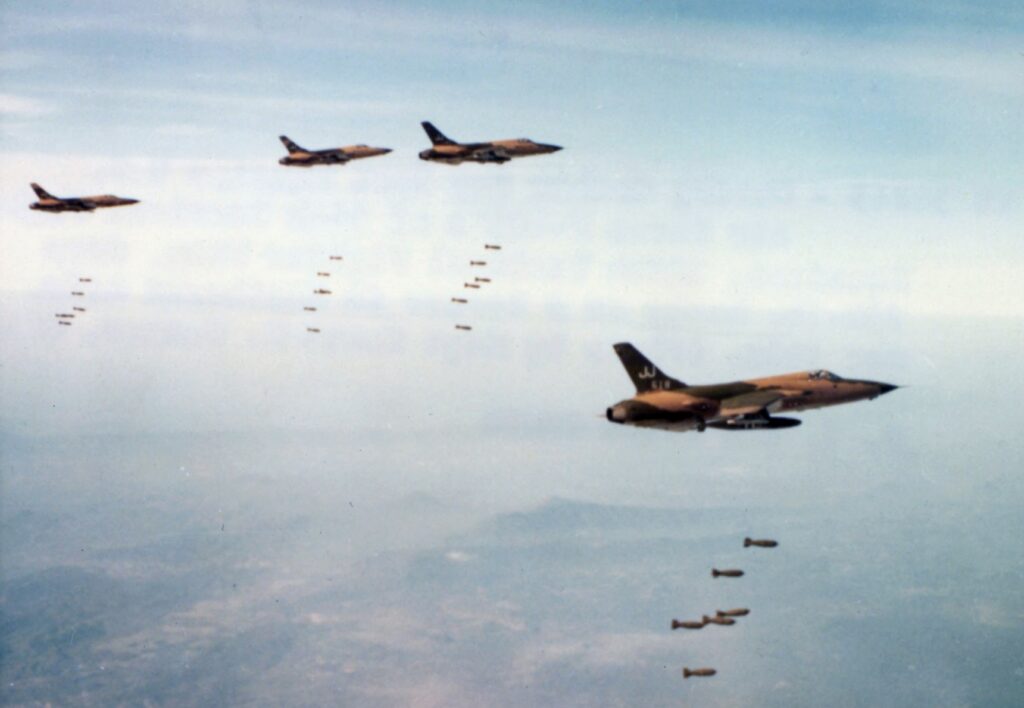
On March 2, 1965, as dawn broke over the Gulf of Tonkin, American pilots climbed into their cockpits for the opening strikes of Operation Rolling Thunder. The targets were modest—an ammunition depot at Xom Bang, ten miles north of the Demilitarized Zone, and a naval base at Quang Khe, sixty-five miles from the DMZ. The orders had been crafted in Washington, D.C., not in the field. For the pilots and their backseaters, the mission was a mix of routine and dread: they knew the skies over North Vietnam were thick with anti-aircraft fire and, increasingly, surface-to-air missiles. Their voices, recorded on cockpit tapes and preserved in archives, capture the tension, the fear, and the professional calm of men who flew into harm’s way day after day.
What Happened?
Operation Rolling Thunder was a sustained aerial bombardment of North Vietnam ordered by President Lyndon B. Johnson. It began on March 2, 1965, and continued until November 1, 1968. The stated goal was to break the North Vietnamese willingness to support the communist insurgency in South Vietnam. The campaign was unique in its tight control from Washington: target selection, timing, and even the number of sorties were decided in the Pentagon and the White House, not by commanders in the theater.
The first mission on March 2, 1965, was modest. Air Force F-105s, F-100s, and B-57s struck an ammunition depot at Xinhang, while Navy and South Vietnamese aircraft bombed a naval base at Quang Khe. As Ambassador Maxwell D. Taylor later observed, the enemy was not impressed. In the following months, the campaign expanded to include more targets, but always with restrictions that frustrated pilots—many of the most important industrial and military sites around Hanoi and Haiphong were off-limits for fear of provoking a wider war with China or the Soviet Union.
The aircraft involved included the F-4 Phantom II, a two-seat fighter with a pilot and a radar/navigator in the back. The F-105 Thunderchief, a single-seat fighter-bomber, also flew the majority of the Air Force’s strikes. The Navy flew F-8 Crusaders and A-4 Skyhawks. The campaign was punctuated by pauses and resumptions, often tied to diplomatic overtures. By the time it ended, the United States had dropped more than 643,000 tons of bombs on North Vietnam, but the North’s will to fight was not broken.
How It Was Seen at the Time
Contemporary observers—politicians, generals, and pilots—had mixed views of the campaign. Many believed that a short, sharp bombing campaign would compel Hanoi to stop supporting the Viet Cong. Others, like Ambassador Taylor, were skeptical. After the first two weeks, he remarked: “I fear that to date Rolling Thunder in their eyes has merely been a few isolated thunderclaps.” His words reflected a broader frustration among the military and political leadership that the campaign was too cautious and too limited.
For the pilots, the mood was one of grim determination. The recorded radio conversations between F-4 pilots and navigators, preserved in the Lee Downer collection at the U.S. Air Force Academy, capture the constant tension. Pilots called out “SAMs” and “MiGs” as they broke formation to dodge missiles. The transcripts reveal the vulnerability of the crews and the tight coordination required to survive. As one navigator later said, “You never knew if you’d be coming back.” The prevailing mood was not bravado but a quiet, professional acceptance of the risks.
Historical Snapshot
| Aspect | Detail |
|---|---|
| Date | March 2, 1965 – November 1, 1968 |
| Place | North Vietnam (airspace over the Hanoi, Haiphong, and the DMZ) |
| People | President Lyndon B. Johnson, U.S. Air Force and Navy pilots, navigators, North Vietnamese defenders |
| What Happened | Sustained aerial bombardment of North Vietnam to break support for the Vieta |
| Why It Mattered | It was the longest and most intense bombing campaign of the Vietnam War, but it failed to achieve its political goals. |
Eyewitness Accounts
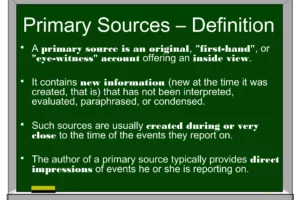
Primary source records of the pilots’ experiences come from two key archives: the recorded radio transmissions preserved in the Lee Downer collection and the memoir of F-105 pilot Ed Rasimus. The Lee Downer collection, donated to the U.S. Air Force Academy in 2020, contains recordings of pilot-navigator communications during missions in 1967. These tapes capture the intensity of the air war: the calm callouts of “SAMs” and “MiGs,” the urgent warnings, and the occasional relief when a missile missed its mark.
Ed Rasimus, in his memoir When Thunder Rolled, describes the daily routine of an F-105 pilot over North Vietnam. He wrote of the fear of the dense anti-aircraft fire and the frustration with the “rules of engagement” that often forced pilots to fly predictable patterns. Rasimus’s account is a personal testament to the courage and the cost of the campaign. He described the missions as “a rollercoaster of adrenaline and fatigue,” and his memoir is a vivid record of what it was like to fly into the teeth of the enemy’s defenses.
Contemporary Newspaper Coverage
The American press reported on the early strikes but was limited by the government’s refusal to release detailed statistics or names of targets. The first mission was covered as a limited action, not a full-scale war. The New York Times and other papers carried headlines like “U.S. Jets Strike North Vietnamese Bases” (March 3, 1965), but the tone was cautious. As the campaign continued, the press became more critical, questioning the effectiveness of the bombing. However, the full extent of the restrictions and the number of sorties was not publicly known. The quote from Ambassador Taylor, reported in the Air & Space Forces Magazine retrospective, reflects the skepticism that was already present in 1965.
What People Feared
Pilots feared the obvious: anti-aircraft artillery, surface-to-air missiles, and MiG fighters. The radio transcripts reveal that the most dreaded threat was the Soviet-supplied SA-2 SAM, which could strike at high altitude. Pilots also feared being shot down and captured. For those who did eject, the prospect of a brutal captivity in North Vietnamese prison camps was a constant fear. On the home front, the public feared a widening war—that the bombing might draw China or the Soviet Union into direct conflict. Many Americans worried that the campaign would escalate into a larger Asian war, reminiscent of the Korean War.
What People Expected Would Happen Next
At the outset, many officials expected the bombing to be a short, decisive blow. They believed that the North Vietnamese would quickly realize they could not win and would come to the negotiating table. The first two weeks, however, were slow and limited, leading to the expectation that the campaign would be expanded. Pilots expected the campaign to intensify, and they prepared for a long struggle. They expected that the targets would eventually include Hanoi and Haiphong, but those strikes were repeatedly postponed. By 1967, the expectation was that the war would go on for years, and that the bombing would become a permanent part of the strategic landscape.
How Historians See It Today
Modern historians view Operation Rolling Thunder as a strategic failure. The campaign did not break the North’s will, did not prevent the flow of supplies to the South, and cost the United States more than 900 aircraft and the lives of hundreds of airmen. Historians now emphasize the political constraints that made the campaign ineffective. The Navy’s official history, published in 2015, describes the campaign as a “frustrating experience” for the military, with the restrictions imposed by Washington. The primary-source records—the radio transcripts, the memoirs, and the official reports—are now used to illustrate the gap between the optimistic expectations of 1965 and the sobering reality that followed. Historians also point out that the campaign’s failure contributed to the U.S. shift toward Vietnamization and the eventual withdrawal.
The enduring significance of Operation Rolling Thunder lies not only in its military outcome but in the records left behind. The radio tapes, the diaries, and the memoirs of the pilots give us a raw, unvarnished look at the daily courage and fear of the airmen. They remind us that the strategic decisions made in Washington had a direct, life-and-death impact on the men who flew the missions. These primary sources are not just artifacts; they are the voices of the past, telling us what it meant to live through the first full-scale American bombing campaign of the Vietnam War.
FAQ
What were the main threats to pilots during Operation Rolling Thunder?
Pilots faced anti-aircraft artillery, surface-to-air missiles (SAMs), and MiG fighters. The SA-2 SAM was the most feared, as it could reach high speeds and altitudes. The radio transcripts and memoirs from pilots describe the constant vigilance required to avoid these threats.
How did the pilots record their missions?
Many pilots had cockpit voice recorders that captured their communications with navigators and other aircraft. The Lee Downer collection at the U.S. Air Force Academy preserves these recordings, which provide a primary source for the experiences of the aircrews.




Leave a Reply