Short Answer
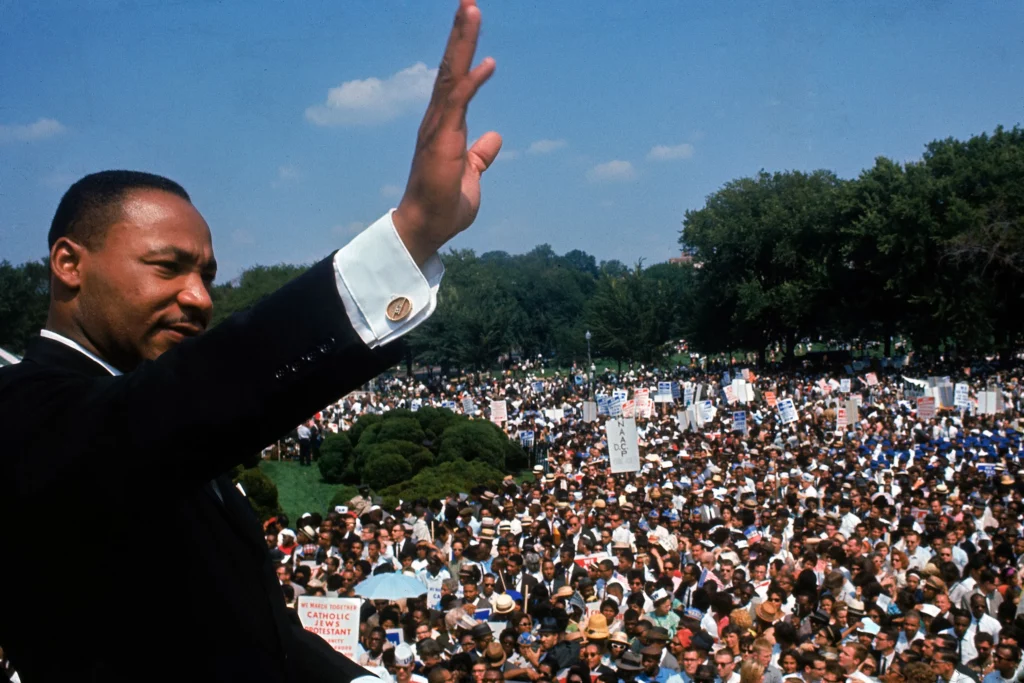
Washington, D.C., August 28, 1963. The late-summer heat pressed down on the National Mall as more than 200,000 people—by some counts a quarter million—packed the grassy expanse between the Washington Monument and the Lincoln Memorial. They came by planes, trains, cars, and buses from every corner of the country: Black and white, young and old, ministers and union members, students and grandmothers. They carried hand-lettered signs demanding jobs and freedom. They sang hymns and freedom songs. And they waited, under the sun, to hear the speakers who would address the most momentous civil rights demonstration in American history. The event had been a dream for more than two decades, born of a labor leader’s vision and nurtured through years of struggle. On this day, the dream took physical form on the nation’s front lawn, and the eyes of the world were fixed on it.
What Happened?
The March on Washington for Jobs and Freedom took place on August 28, 1963. More than 200,000 demonstrators, and by some estimates 250,000, took part in the demonstration in the nation’s capital. The event was organized to pressure the administration of President John F. Kennedy to introduce a strong federal civil rights bill in Congress, and to protest racial discrimination and the exclusion of African Americans from employment and full citizenship.
The idea for the march was not new. In the summer of 1941, A. Philip Randolph, founder of the Brotherhood of Sleeping Car Porters and the Negro American Labor Council, called for a march on Washington to draw attention to the exclusion of African Americans from positions in the national defense industry. That job market was closed to Black workers even as it expanded to supply the Allies in World War II. The threat of 100,000 marchers pushed President Franklin D. Roosevelt to issue Executive Order 8802, which created the Fair Employment Practices Commission to investigate racial discrimination charges. The 1963 march was the culmination of that earlier vision, revived and expanded.
The day unfolded as a coordinated program of speeches, songs, and prayers from the steps of the Lincoln Memorial. The crowd stretched along the Reflecting Pool, and the mood, by all accounts, was solemn and hopeful. The event was sponsored by a coalition of student, civil rights, and labor organizations. The marchers demanded the passage of the Civil Rights Act, which the Kennedy Administration was attempting to push through a gridlocked Congress. The size of the event and the potential for violence worried some congressional opponents, who attempted to block the demonstration through legislative maneuvers. Representative Albert Watson (D-SC) proposed House Concurrent Resolution 186, calling for a cessation of all mass protests while the Civil Rights bill was being considered. Representative William Tuck (D-VA) introduced H.R. 7329, a bill to prohibit interstate movement with the intent to incite to riot. Both bills were referred to committee and never became law.
Martin Luther King, Jr., delivered his memorable “I Have a Dream” speech during the event, a speech that would become one of the most famous orations in American history. The march was a success in pressuring the Kennedy administration to initiate a strong federal civil rights bill in Congress, which later became the Civil Rights Act of 1964.
How It Was Seen at the Time
Contemporaries understood the March on Washington as a dramatic, unprecedented plea to the federal government. The National Archives records that the marchers were “frustrated by the inaction of a gridlocked Congress” and came to “petition their duly elected government.” The language of the time was the language of protest and petition—of jobs and freedom. The event was widely described as the largest gathering for civil rights of its time, a peaceful demonstration of moral urgency. The prevailing mood among participants was one of disciplined hope. The marchers sang, prayed, and listened; they did not riot, despite the predictions of some. The speeches, including King’s, were framed as a moral appeal to the conscience of the nation. The press and the public saw the event as a testament to the power of nonviolent protest, and the day was generally reported with a mixture of awe and relief.
“Frustrated by the inaction of a gridlocked Congress, the marchers called for Congress to pass the Civil Rights bill.” — National Archives, The March on Washington for Jobs and Freedom
Historical Snapshot
| Aspect | Detail |
|---|---|
| Date | August 28, 1963 |
| Place | National Mall, Washington, D.C., between the Washington Monument and the Lincoln Memorial |
| People | More than 200,000–250,000 demonstrators; organized by A. Philip Randolph and a coalition of civil rights, labor, and student groups; speakers included Martin Luther King Jr. |
| What Happened | A mass demonstration to protest racial discrimination, employment exclusion, and to support the Civil Rights Act pending in Congress |
| Why It Mattered | It pressured the Kennedy administration to push for a strong civil rights bill, and it became a landmark of American civic activism |
What People Knew at the Time
| What People Knew Then | What We Know Now |
|---|---|
| The march was a single-day protest in Washington, D.C., with about 200,000 to 250,000 participants. | Modern scholarship confirms the attendance estimates of 250,000 and notes it was one of the largest single-day protests in American history. |
| Contemporaries saw the march as a moral petition to a gridlocked Congress. | Historians view it as the culmination of a decades-long movement, including Randolph’s 1941 threat that led to Executive Order 8802. |
| The event was seen as a peaceful, orderly demonstration. | The threat of violence was a real concern among opponents, who tried to stop the march through legislative maneuvers. |
Contemporary Newspaper Coverage
Newspapers across the country covered the march extensively, with the event making front pages for days before and after. The press focused on the size of the crowd, the orderliness of the demonstration, and the speeches. The Washington press corps described the scene in vivid terms—the heat, the sea of signs, the singing, and the powerful words of the speakers. The coverage was not uniform, however. Some Southern newspapers were hostile, and some commentators feared the event would turn violent. The tone of most mainstream coverage, however, was respectful and even awed. The event was described as a “demonstration” and a “petition,” reflecting the civic language of the day. The press also noted the legislative attempts to stop the march, such as the bills introduced by Representatives Watson and Tuck, which were reported as unsuccessful maneuvers.
“It was the largest gathering for civil rights of its time.” — National Park Service, March on Washington for Jobs and Freedom
Eyewitness Accounts
Eyewitness accounts from the day describe the scene in vivid detail. The National Park Service records that “an estimated 250,000 people attended the March on Washington for Jobs and Freedom on August 28, 1963, arriving in Washington, D.C. by planes, trains, cars, and buses from all over the country.” The Library of Congress photograph by Marion S. Trikosko shows demonstrators marching in the street, a crowd stretching as far as the eye could see. Participants remembered the heat, the singing, and the sense of shared purpose. Many recounted the moment when Martin Luther King Jr. began to speak, and the crowd fell silent, then erupted in applause. The mood was described as solemn, joyful, and resolute. One participant, a young student, recalled that it was the first time she had seen so many people of different races standing together for a common cause. The NPS notes that the event was the culmination of an idea born more than 20 years before, and the participants knew they were part of history.
“Demonstrators marching in the street during the March on Washington, 1963” — Photo by Marion S. Trikosko, Library of Congress
What People Feared
The March on Washington was accompanied by a number of fears. Some congressional opponents, as the National Archives records, predicted that the March would end in rioting. This fear was so real that Representative Albert Watson proposed a resolution to stop all mass protests while the Civil Rights bill was being considered, and Representative William Tuck introduced a bill to prevent interstate movement “with the intent to incite to riot.” The potential for violence was a genuine concern, given the tense racial climate and the history of civil rights demonstrations met with violence. The organizers themselves were determined to ensure a peaceful event, and they succeeded. The fears of violence proved unfounded, but they shaped the legislative attempts to block the march. There was also a fear, among supporters, that the march would be a failure—that too few people would come, or that the message would be drowned out. Those fears were also proven wrong by the massive turnout.
What People Expected Would Happen Next
Contemporaries expected that the March would put direct pressure on President Kennedy to push the Civil Rights Act through Congress. The march was successful in pressuring the administration to initiate a strong federal civil rights bill. Many participants and observers expected that the bill would pass, though they knew it would face a difficult fight. Some, including the organizers, hoped the march would be the beginning of a new phase of political momentum. Others, especially opponents, feared that the march would lead to further disorder and a backlash. The immediate aftermath saw the introduction of the Civil Rights Act, which was signed into law in 1964. The march was widely seen as a turning point that made the legislation possible, though the legislative battle would continue for many months.
How Historians See It Today
Modern historians view the March on Washington as a pivotal moment in the civil rights movement, but they also place it in a longer context. The Stanford Institute notes that the march had precedents, most notably A. Philip Randolph’s 1941 call for a march on Washington, which led to Executive Order 8802 and the Fair Employment Practices Commission. Historians today see the march not as a single-day event, but as the culmination of a two-decade-long campaign. They also emphasize the “Jobs and Freedom” aspect, which is sometimes overshadowed by the focus on the “I Have a Dream” speech. The march was a labor and economic rights demonstration as much as a civil rights one. The historiography has also shifted to highlight the role of women, who were largely excluded from the speaking program, and the internal tensions within the organizing coalition. The primary sources—the photographs, the newspaper accounts, and the official records—remain the foundation of the modern interpretation, but scholars now read them with a more critical eye, noting the silences and the tensions that contemporaries may have missed.
The March on Washington for Jobs and Freedom was a moment of hope and a call to the conscience of a nation. The primary sources—the photographs, the newspaper accounts, the official records, and the memories of the participants—show us a day of ordinary people who came together to demand that the nation live up to its promises. They show us the fears and the expectations, the order and the joy. They remind us that history is made by the people who show up, and that the dream of freedom is a long and difficult struggle. The march was a turning point, and the primary sources preserve the voices and the faces of those who made it happen.
FAQ
How many people attended the March on Washington in 1963?
Estimates range from more than 200,000 to approximately 250,000 people. The National Park Service and Britannica both cite 250,000, while Stanford's King Institute says more than 200,000.
Who organized the March on Washington?
The original idea came from A. Philip Randolph, founder of the Brotherhood of Sleeping Car Porters and the Negro American Labor Council. The march was sponsored by a coalition of student, civil rights, and labor organizations.
What was the purpose of the march?
The march aimed to protest racial discrimination, employment exclusion, and to support the Civil Rights Act that the Kennedy administration was trying to pass through a gridlocked Congress.






Leave a Reply