
Short Answer
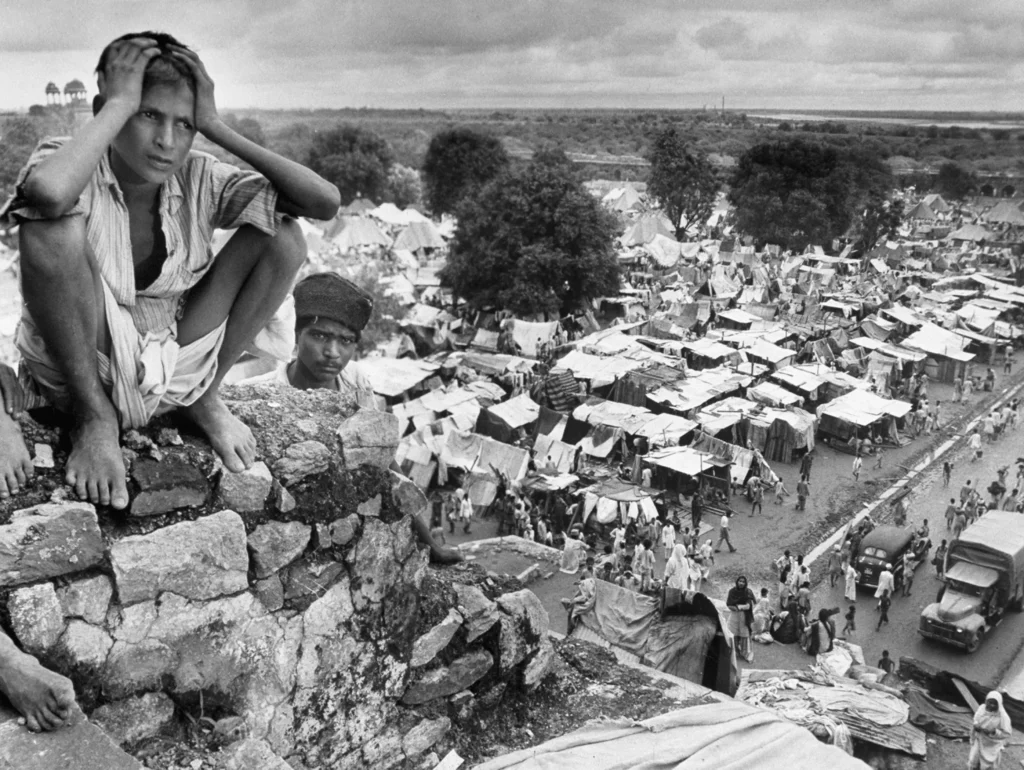
During the night of 14–15 August 1947, as the clock struck midnight, the British Empire in India formally came to an end. In the cities of Delhi and Karachi, crowds gathered to celebrate the birth of two new nations: India and Pakistan. But the celebrations were overshadowed by a human catastrophe in the making. The partition of India—the division of British India into two independent dominions—set off the largest mass migration in history. Over 12 million people were uprooted from their ancestral homes, and between half a million and a million lost their lives in the ensuing violence (BBC News). Tens of thousands of women were abducted (BBC News). This was not a single event but a convulsion of terror, displacement, and loss that would leave lasting scars on the subcontinent.
What Happened?
The partition was set forth in the Indian Independence Act 1947, which provided for the creation of two independent dominions: the Union of India and the Dominion of Pakistan. The Act, which took effect on 15 August 1947, also involved the division of the provinces of Bengal and the Punjab, based on district-wide non-Muslim (mostly Hindu and Sikh) or Muslim majorities (Wikipedia). The British Indian Army, the Royal Indian Navy, the Indian Civil Service, the railways, and the central treasury were all divided between the two new states.
The actual movement of people began even before the official partition. As the borders were drawn by the Radcliffe Commission, millions of Hindus and Muslims found themselves on the “wrong” side of the line. Fearing violence and persecution, they fled in enormous numbers. The scale of the migration took almost everyone by surprise. The Conversation notes that “the migration on the enormous scale that followed took the vast majority of contemporaries by surprise.”
Key events of the partition:
- June 1947: The Mountbatten Plan announced the partition of British India.
- 14–15 August 1947: India and Pakistan become independent.
- August–September 1947: Massive communal violence erupts in the Punjab, Bengal, and other regions.
- December 1947: The refugee crisis continues, with over 12 million people displaced.
How It Was Seen at the Time
Contemporaries understood the partition as a “last-minute” mechanism for British independence, but few understood what it would entail or what its results would be. The Conversation observed that “At the time, few people understood what Partition would entail or what its results would be.” The prevailing mood was a mixture of hope and anxiety. Leaders like Mahatma Gandhi and Jawaharlal Nehru had long argued for a unitary state, but the Muslim League under Muhammad Ali Jinnah had campaigned for a separate nation. The partition was seen as a painful but necessary compromise.
“Perhaps the biggest movement of people in history, outside war and famine.” — BBC News
This description from the BBC captures the scale of the displacement. Yet, at the time, the official language focused on the creation of two states, and the human cost was often reduced to statistics. The violence, the refugee columns, and the suffering were reported in newspapers, but the full scope was not immediately grasped.
Historical Snapshot
| Aspect | Detail |
|---|---|
| Date | 14–15 August 1947 |
| Place | British India, specifically Bengal and Punjab |
| People | Hindus, Muslims, Sikhs, British officials, leaders like Gandhi, Nehru, and Jinnah |
| What Happened | British India was divided into two independent states: India and Pakistan |
| Why It Mattered | Led to the largest mass migration in history, with millions displaced and hundreds of thousands killed |
Contemporary Newspaper Coverage
Newspapers in India and Britain reported the partition with a mix of official optimism and growing alarm. The Times of India and the Manchester Guardian covered the violence, the refugee columns, and the difficulties of the new governments. The tone shifted from celebration to concern as the scale of the disaster became clear. The BBC News article states that the partition was “Perhaps the biggest movement of people in history,” a sentiment that echoed the reports of the time.
However, the early coverage often relied on official figures, which were incomplete. The example, the abduction of tens of thousands of women was not widely reported in the immediate aftermath. The NEH article notes that “the history books I read in my Florida high school spoke about Mahatma Gandhi’s peaceful marches… but never mentioned the bloodletting,” reflecting the contemporary lack of attention to the human cost.
Eyewitness Accounts
The 1947 Partition Archive, a collection of oral histories, has documented the experiences of survivors. These accounts provide a vivid sense of the chaos and terror. For example, Amarnath Kaustabh, who was interviewed in Sultanpur Lodhi, Punjab, India, described the confusion and fear of the time (NEH). Such accounts are essential for understanding the human toll, as they reveal the emotional and psychological impact that statistics cannot capture.
“We did not know where to go. We just walked, carrying whatever we could.” — A survivor, quoted in the 1947 Partition Archive
These eyewitness accounts, collected decades later, are now considered crucial primary sources for historians. They show the fear, the violence, and the resilience of those who lived through it.
Numbers at the Time
The exact numbers of refugees and deaths were uncertain at the time. Official records were incomplete, and the chaos made accurate counting impossible. The following table presents the figures that have been cited:
| Statistic | Estimate | Source |
|---|---|---|
| Refugees | 12 million | BBC News (2017) |
| Refugees (higher estimate) | 14 million | NEH (2022) |
| Deaths | 500,000 to 1 million | BBC News |
| Deaths (higher estimate) | 3 million | NEH |
| Women abducted | Tens of thousands | BBC News |
These numbers were not known at the time; they are modern estimates. Contemporary reports spoke of “millions of refugees” but did not provide precise counts. The discrepancies reflect the difficulty of measuring a tragedy of this magnitude.
Aftermath
The immediate aftermath of the partition was continued violence and displacement. The new governments of India and Pakistan were overwhelmed by the influx of refugees. The partition of the Punjab and Bengal created borders that were not easily enforced, and the violence continued into 1948. The BBC article notes that the legacy of partition is still felt today: there are no direct flights between India and Pakistan, a symbol of seven decades of mutual suspicion and tension.
The human consequences were long-lasting. The 1947 Partition Archive and other oral history projects have documented the stories of those who were abducted, separated from their families, and who lived with the trauma for the rest of their lives. The partition was not just a political event but a human tragedy that shaped the identities of the two nations.
How Historians See It Today
Modern historians have shifted the focus from the political leaders to the human cost of the partition. For decades, the narrative was dominated by the actions of Gandhi, Nehru, and Jinnah. However, recent scholarship, including the oral histories of the 1947 Partition Archive, has brought new perspectives, revealing the experiences of ordinary people—the refugees, the women, and the children. The NEH article highlights how the archive has “recorded an oral history interview in Sultanpur Lodhi, Punjab, India, with Amarnath Kaustabh, a witness of the 1947 Partition.” These stories have corrected the earlier accounts that often overlooked the violence and suffering.
Historians now recognize that the partition was not a simple transfer of power but a chaotic event that resulted in the largest mass migration in history. The estimates of the death toll have been revised upward, and the social and psychological consequences are being studied. The partition is now understood as a central event in the history of the subcontinent, with lasting consequences for India and Pakistan.
In conclusion, the partition of 1947 remains one of the most consequential events of the twentieth century. The primary sources—newspapers, official documents, and eyewitness accounts—reveal a human catastrophe of enormous proportions. The numbers we have today are uncertain, but they point to a tragedy of millions displaced and hundreds of thousands killed. The partition teaches us about the fragility of peace and the importance of understanding the human cost of political decisions. The primary sources remind us that history is not just a list of dates and events but the story of people, their fears, and their suffering.
FAQ
How many people died during the Partition of India?
The exact number is unknown. Estimates range from 500,000 to 1 million deaths, with some estimates as high as 3 million. The violence and chaos made accurate counting impossible. The BBC reports between half a million and a million, while the NEH article cites up to 3 million.
Why did the Partition happen?
The Partition was a result of the Indian Independence Act 1947, which divided British India into two states based on religious majorities. The Muslim League, led by Muhammad Ali Jinnah, demanded a separate nation for Muslims, while the Indian National Congress, led by Gandhi and Nehru, initially opposed partition. The British, weakened by World War II, decided to withdraw quickly, leading to the partition.











Leave a Reply